
Few criminal proceedings in Caribbean history have carried the cultural weight of the Vybz Kartel case. From the night police surrounded a New Kingston hotel room in September 2011 to the moment Jamaica’s Court of Appeal declared there would be no retrial in July 2024, the case gripped the island nation and reverberated across the global dancehall community for more than a decade.
For anyone seeking the Vybz Kartel case explained in full, this definitive timeline documents every major legal development, the evidence at the center of the prosecution’s case, the landmark ruling that ultimately set the artist free, and where things stand today in 2026.
Who Is Vybz Kartel?
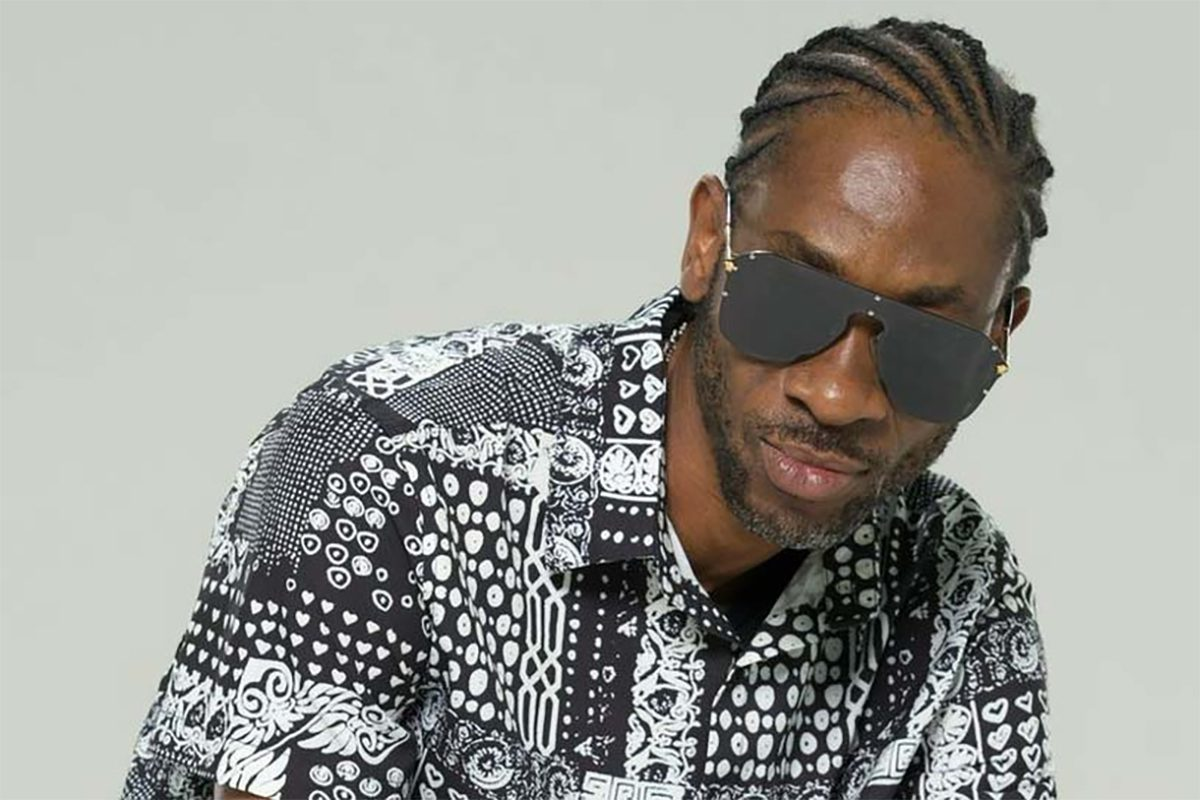
Before the courtroom drama began, Adidja Azim Palmer, professionally known as Vybz Kartel, was already one of the most dominant forces in Jamaican popular music.
The musician, real name Adidja Palmer, is a popular artist in Jamaica and is well known internationally for his 2009 Major Lazer collaboration “Pon De Floor,” which was heavily sampled on Beyonce’s “Run the World (Girls).
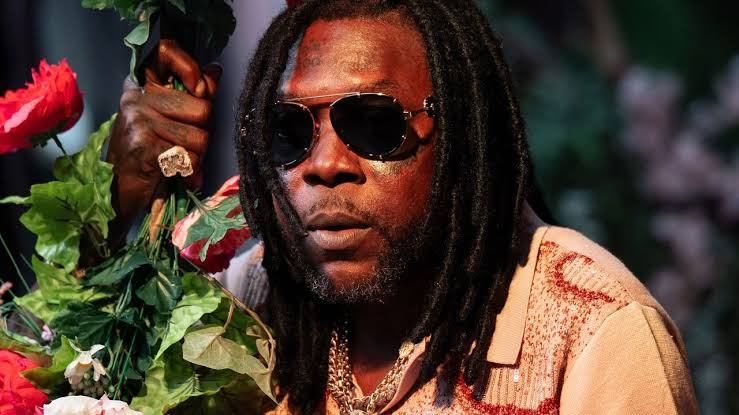
The singer also became the first dancehall artist to star in his own reality TV show, Teacha’s Pet. His success led to hit records including “Clarks,” “Ramping Shop,” and “Summer Time,” and he also launched lines of shoes, alcohol, and condoms.
His influence within Jamaican culture was immense and, at times, deeply contested. Although Kartel had been arrested several times by Jamaican authorities, including a detention for two weeks in July 2010, his September 2011 arrest marked the first time he had been formally charged with a crime.
Phase One: The Arrests (September to October 2011)
The Initial Marijuana Charge
On September 30, 2011, Vybz Kartel was arrested at a New Kingston hotel by members of the Flying Squad division of the Jamaica Constabulary Force and was charged with possession of a small quantity of marijuana confiscated in a hotel room where he was staying during the filming of his reality dating show Teacha’s Pet.
When Kingston’s Flying Squad first surrounded his hotel room, he was not arrested for murder. After locking him behind bars for three days on the marijuana charge and seizing his phone, police slapped him with murder charges.
The First Murder Charge: Barrington ‘Bossie’ Burton
Following his arrest, Jamaica’s Major Investigation Taskforce (MIT) charged controversial dancehall superstar Vybz Kartel with murder, conspiracy to murder, and illegal possession of a firearm.
Police charged that on Monday, July 11, 2011, Kartel, along with other men, conspired to murder Barrington ‘Bossie’ Burton, a 27-year-old businessman and music promoter based in the Kingston suburb of Portmore. Burton was murdered while standing with friends along Walkers Avenue in the Gregory Park area of Portmore.
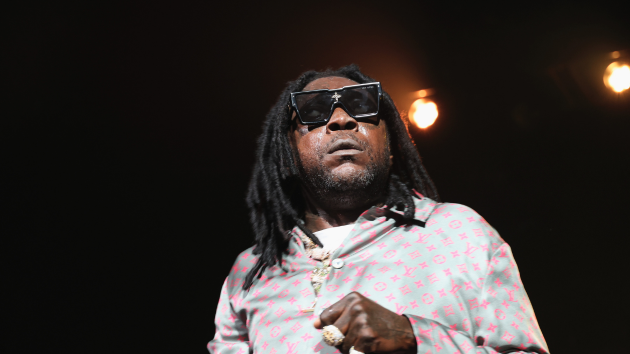
Kartel was granted bail for $3,000,000 after being denied bail on October 4, 2011, but he remained in jail in connection with a second murder, that of Clive ‘Lizard’ Williams.
The Second Murder Charge: Clive ‘Lizard’ Williams
Within the same month, police levied a second, far more consequential charge. Police charged 35-year-old dancehall star Vybz Kartel in the August slaying of a Jamaican man nicknamed “Lizard.”
According to a statement from Lizard’s family, the 27-year-old was a dancehall fan who was “lured into the company” of Vybz’s Gaza Empire. Vybz’s alleged motive for slaying Lizard revolved around two missing guns.
The prosecution’s account of what happened on August 16, 2011, was methodically assembled over the following years.
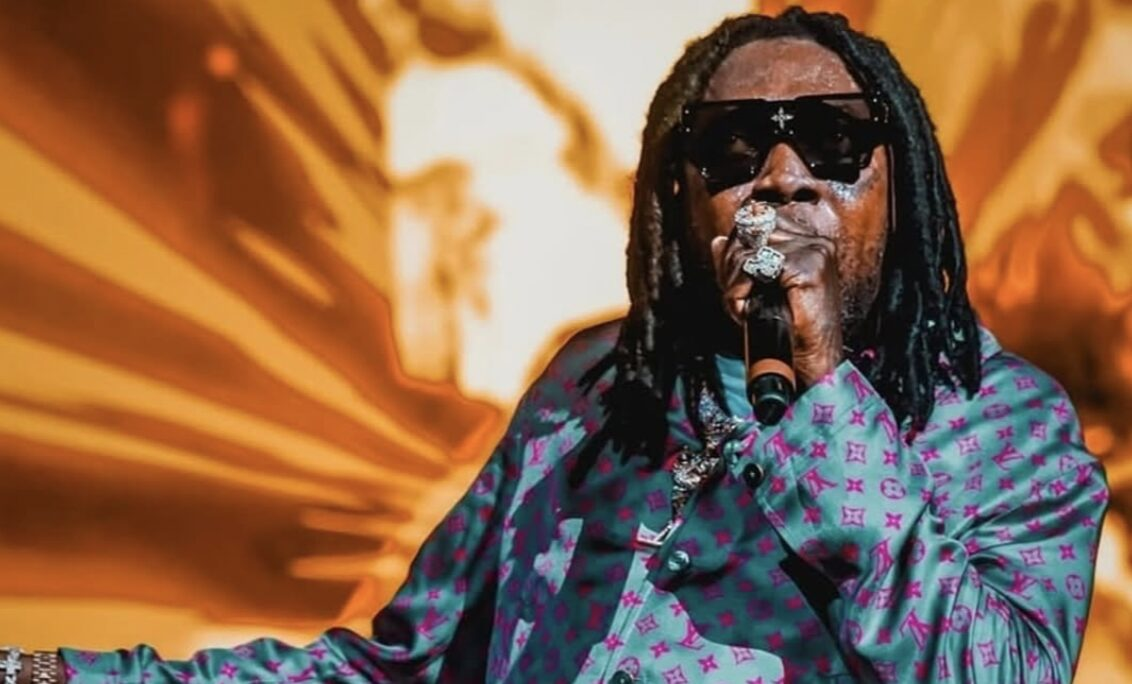
At the 2014 trial, prosecutors said that victim Clive Williams and another man, Lamar Chow, had been given two unlicensed firearms belonging to Kartel for safekeeping. When they failed to return them at an agreed time, they were summoned to Kartel’s house in August 2011.
Chow told the trial that they were attacked and the last thing he saw was Clive Williams, who was never seen alive again, lying motionless on the ground. The house burned down days later and Williams’ body has never been found.
The Burton case did not survive the journey to trial. In 2013, the murder case against Kartel and two other co-defendants related to Barrington ‘Bossy’ Burton collapsed after prosecutors failed to produce evidence to support the allegations.
Phase Two: The Trial (November 2013 to April 2014)
The Longest Trial in Jamaican History
The trial for the murder of Clive ‘Lizard’ Williams opened in November 2013 and became a landmark event in the island’s legal history.
After a 64-day trial in the Kingston Home Circuit Court, the longest in Jamaica’s history, Kartel and his co-defendants were sentenced to life in prison in April 2014.
Kartel and his co-accused Shawn Campbell, Kahira Jones, and Andre St John always maintained their innocence but were convicted and jailed for life, with Kartel told he would spend a minimum of 35 years in prison.
During the initial trial, hundreds of Jamaicans gathered outside the court chanting “free Kartel” while police in riot gear guarded barricaded streets outside Kingston’s Supreme Court.
The Evidence: Phones, Voice Notes, and a Key Witness
The prosecution built its case on a combination of eyewitness testimony and digital evidence extracted from mobile devices. Prosecutors relied on cellphone records and testimony from Lamar “Wee” Chow, the sole eyewitness, who said that Lizard was killed at Kartel’s home in Havendale, St. Andrew, in August 2011.
Williams’ body was not found, but the prosecution relied on common design, circumstantial evidence, voice notes, and text messages to prove the case against the men.
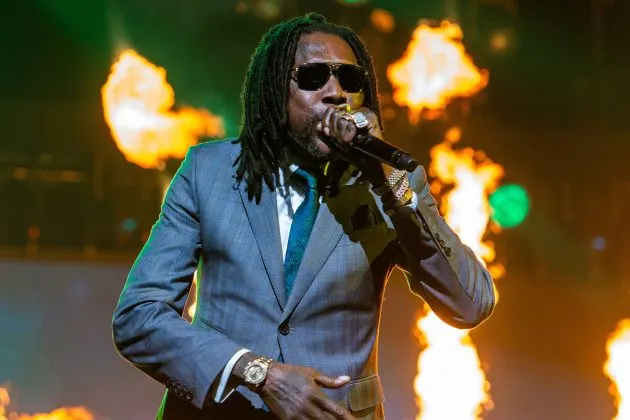
Among the most damaging pieces of evidence was a text message recovered from a Blackberry seized from Kartel. At the time of the case, Jamaican police testified that Kartel’s phone held a text stating that Williams’ body was turned to “mincemeat.”
The prosecution maintained the incriminating message was sent three days after Williams was killed. Some of the voice notes, believed to be from an accused in the murder trial, were leaked to the public after being played for jurors in the Home Circuit Court.
In some of those voice notes, dated August 14, 2011, the sender said that he was informed that his two “new shoes” were missing and that the guilty party would be killed if they were not returned by eight o’clock that evening. The term “new shoes” was widely interpreted as coded language for the missing firearms.
The Defence Challenge to Digital Evidence
From the outset, Kartel’s legal team mounted serious challenges to the integrity of the phone evidence. Solicitor Tom Tavares-Finson, one half of Kartel’s father-son legal team, said he would lodge an appeal on the grounds of discrepancies, inconsistencies, missing data, and mismanagement in the collection of evidence.
A major concern was the trial judge permitting specific phone evidence that investigating officers admitted had been used after being seized.
The defence later retained a British specialist to examine the evidence more closely. The investigation was carried out by David-John Martin Woodgate of UK-based Forint Digital Investigations.
In his findings, Woodgate noted that the video which placed Kartel at the scene of the crime was not in alignment with his actual location.
The forensic digital expert further noted that the cellphone was used to make calls after it was confiscated from the deejay and was not kept in a sealed evidence bag.
Defence lawyers also raised the issue of metadata timestamps. One of the attorneys representing Shawn Storm argued that evidence presented during the 2014 murder trial showed that the metadata for a key text message was created on July 6, 2011, a shocking six weeks before prosecutors claimed Williams was killed.
Prosecutors countered that it was the file folder containing the message, not the message itself, that was created on that date, and maintained that the video, text messages, and voice notes all carried a date and a time stamp, “which are important to prove the provenance of the forensic evidence.”
Phase Three: The Appeals (2014 to 2020)
After his conviction, Kartel and his co-defendants pursued multiple rounds of appeals within Jamaica’s court system. A three-member Jamaican court of appeals panel upheld Vybz Kartel’s 2014 murder conviction, and the Kingston court released a 235-page opinion on April 3 detailing its reasoning in dismissing the appeals of Kartel and his co-defendants.
On April 17, 2020, the Court of Appeal allowed appeals against sentences to the extent of taking account of time spent in custody awaiting trial.

The period of imprisonment to be served by each appellant before becoming eligible for parole was reduced by two years and six months. This reduced Kartel’s minimum term from 35 years to 32 and a half years.
Conditional Leave to the Privy Council
The Jamaican courts having ruled against the defendants on conviction, the case moved toward a higher appellate body.
On September 25, 2020, Vybz Kartel and his co-accused were granted conditional leave to go to the Privy Council in the United Kingdom to challenge their murder conviction.
Kartel appealed first to courts in Jamaica before taking his case to the Privy Council in London, which serves as the highest court of appeal in Jamaica and other Commonwealth countries.
Phase Four: The Privy Council (2024)
The Hearing in London
The final appeal process took place on February 14 and 15 of 2024, with Kartel and his co-appellants presenting arguments challenging the validity of their convictions.
Their attorneys argued that the judge in the original trial had mishandled allegations that a person on the jury had offered J$500,000, equivalent to approximately $3,200, to other jury members if they returned verdicts of “not guilty.”
The defence team highlighted alleged flaws in the original trial, including claims of tampering with evidence and jury misconduct.
They also argued that crucial pieces of evidence had been improperly handled, potentially compromising the integrity of the trial.
The Landmark Ruling: March 14, 2024
On March 14, 2024, the Judicial Committee of the Privy Council ruled that the appellants’ convictions should be quashed on the grounds of juror misconduct, and that the case should be remitted to the Court of Appeal of Jamaica to decide whether to order a retrial.
The Privy Council’s written judgment identified a specific and fatal error by the original trial judge. After reviewing the case, the appeals court ruled that the judge in charge of the trial made a “fatal” error by permitting the jury to come to a verdict despite information that one of the jurors had tried to bribe other jury members. That juror was not removed, and the jury went on to issue its guilty verdict.
The Privy Council was direct in its assessment of the constitutional dimensions. In the board’s view, there should have been no question of allowing Juror X to continue to serve on the jury.
Allowing Juror X to remain on the jury was deemed “fatal to the safety of the convictions which followed.” The ruling stated it was also “an infringement of the appellants’ fundamental right to a fair hearing under the Jamaican Constitution.”
The Privy Council acknowledged the difficult position the original trial judge found himself in. The court showed some sympathy for the judge, who learned on the trial’s final day that the juror had made the bribery attempt, because he then faced a difficult choice.
Since another juror had already been discharged for a separate matter, his only choice was to completely end the trial after weeks of testimony or allow the case to move on to a verdict.
The ruling overturned Kartel’s conviction and his 32-year prison sentence, but he could still face a retrial on the same accusations. The appeals court said that Jamaican courts would decide whether such a trial would take place.
Phase Five: No Retrial and Freedom (July 2024)
The Court of Appeal Rules Against a Retrial
With the Privy Council’s ruling returned to Kingston, Jamaica’s Court of Appeal was left to determine whether a retrial was in the interests of justice.
Several factors weighed heavily against ordering one. Justice Marva McDonald-Bishop explained the decision, citing the “egregious nature and seriousness of the offence,” the elapsed time, insufficient witnesses and evidence, and the significant cost of a retrial.
She also noted Kartel’s declining health, stating, “We conclude that the interests of justice do not require a new trial.”
In addition to the artist’s health situation, the appeal court said the amount of time elapsed and the lack of witnesses and financial resources also played a role in the decision against a retrial.
The practical barriers to a credible retrial were significant. The alleged events dated back to August 2011, Williams’ body had never been recovered, and more than a decade had passed since the original trial proceedings began.
Release: July 31, 2024
The Court ruled on Wednesday, July 31, that “the interests of justice do not require a new trial to be ordered,” and the musician, real name Adidja Palmer, was declared a free man.
A celebratory scene broke out as fans were sent into a frenzy outside the Jamaican courthouse after learning that Vybz Kartel would be walking away free.
Fans broke down barriers to mob attorney Isat Buchanan as he emerged from the Court of Appeal in downtown Kingston.
In July, Jamaica’s most influential living artist walked out of a Kingston prison after 13 years, drove straight to his mother’s house for a tearful reunion over steamed fish and okra, and dove immediately into preparations for Freedom Street, his first performance since his release and the biggest concert the country would see in nearly 50 years.
The Music Career Behind Bars
One of the most remarkable subplots of the Vybz Kartel case is that, even while imprisoned, the artist never stopped releasing music.
Despite being behind bars, Kartel managed to release a steady stream of recordings, including a number of full-length albums.
Even behind bars, he never stopped making music, managing to secretly record and release five projects that would reach the top 10 of Billboard’s Reggae Albums chart.
The global reach of his back catalogue also expanded during his incarceration in unexpected directions. Not only did Kartel release his own music, he was also featured in a posthumous song called “Royalty” by XXXTentacion.
The continuous flow of music reinforced the “Free Kartel” movement and kept his name at the centre of dancehall discourse throughout the 13-year legal saga.
Health: Graves’ Disease and Prison Conditions
Throughout the latter years of his imprisonment, Kartel’s physical condition became a significant concern and eventually a factor in legal proceedings.
Kartel had been diagnosed with Graves’ disease, an autoimmune disorder, along with a preexisting heart condition. His lawyer, Isat Buchanan, voiced how his client was “fighting for his life” and was in terrible shape while in prison.
Kartel was kept in solitary confinement for up to 23 hours per day, and his attorneys argued he was being prevented from getting clean air.
In the court’s final decision, judges cited the potential that Kartel would not be able to complete a potentially longer sentence if there were to be a retrial, given his condition.
After Freedom: Life Post-Release (2024 to 2026)
The Immediate Comeback
Kartel’s return to freedom was matched by an immediate return to music. Less than a day after his release, he dropped a 12-track EP titled “First Week Out.” The project featured fellow dancehall artist Squash and immediately generated global attention.
The comeback concert, Freedom Street, featured explosive appearances by Spice, Popcaan, Busta Rhymes, and other dancehall heavyweights, setting the stage for Kartel’s incredibly busy 2025.
Music Milestones
In January 2025, Kartel released the 10th Anniversary edition of his album Viking (Vybz Is King), featuring seven new tracks recorded post-release.
One year on from his release, the dancehall veteran stands not just as a free man, but as a Grammy-nominated artist, a global performer, and a renewed cultural voice in Jamaican music.
Health and Personal Life
Kartel has spoken openly about prioritizing his health after years of incarceration. He continues to manage Graves’ disease and other related conditions with regular doctor visits and a commitment to daily workouts and clean eating.
In his personal life, he confirmed his engagement to longtime partner Sidem Ozturk in late 2024 and has remained closely involved with his children, particularly his sons pursuing music careers.
In early 2025, Vybz Kartel also relocated to South Florida, where he has been recording new music and re-establishing his presence in the U.S. entertainment scene.
What the Vybz Kartel Case Means for Jamaican Law
The Vybz Kartel case stands as a watershed moment in Jamaican legal history on multiple grounds.
Trial length. The trial lasted 65 days, the longest in Jamaica’s history. That record alone guaranteed the case a place in the island’s legal chronicles.
Digital evidence standards. The defence’s sustained challenge to the integrity of phone evidence, voice notes, and metadata highlighted the vulnerability of digital forensic procedures in Caribbean courts. The Director of Public Prosecutions ordered a change in the protocol as to how evidence is to be kept in the department following the trial.
Jury management. The Privy Council’s determination that the trial judge’s handling of jury misconduct was “fatal to the safety of the convictions” established a clear precedent for how Jamaican courts must respond when allegations of juror corruption arise mid-trial.
The Privy Council’s role. The Privy Council is the court of last resort for some countries in Britain’s Commonwealth of Nations, including Jamaica.
The Kartel case demonstrated precisely how that appellate pathway can deliver outcomes that domestic courts were unable or unwilling to reach, and renewed debate in Jamaica about whether the country should sever its final-appeal ties to London.
The victim. It is essential, in any full account of this case, to acknowledge that Clive “Lizard” Williams was a 27-year-old man whose body was never recovered and whose family has never received a formal verdict of legal accountability.
According to a statement from Williams’ family, he was a dancehall fan who was “lured into the company” of Gaza Empire. His disappearance and death are confirmed facts.
The legal question of who bears responsibility for that death remains, by operation of the court’s ruling, formally unresolved.
Quick-Reference Timeline
September 30, 2011 – Kartel arrested at New Kingston hotel on marijuana charges; phone seized.
October 2011 – Charged with murder of Barrington ‘Bossie’ Burton and, separately, the murder of Clive ‘Lizard’ Williams.
2013 – Burton murder case collapses; prosecution fails to produce sufficient evidence.
November 2013 – Trial for the murder of Clive ‘Lizard’ Williams opens at Kingston’s Home Circuit Court.
March 13, 2014 – Kartel and co-defendants Shawn Campbell, Kahira Jones, and Andre St. John found guilty by an eleven-member jury.
April 2014 – Kartel sentenced to life imprisonment with a minimum of 35 years before parole eligibility.
April 3, 2020 – Jamaica’s three-member Court of Appeal upholds convictions in a 235-page ruling; minimum term subsequently reduced to 32.5 years to account for pre-trial custody.
September 25, 2020 – Conditional leave granted to appeal to the Privy Council.
February 14 and 15, 2024 – Final appeal heard before the Judicial Committee of the Privy Council in London.
March 14, 2024 – Privy Council unanimously quashes all four convictions on grounds of juror misconduct; case remitted to Jamaica’s Court of Appeal to decide on a retrial.
July 31, 2024 – Jamaica’s Court of Appeal rules no retrial is required; Vybz Kartel and co-defendants walk free.
Conclusion
The Vybz Kartel case explained across its full 13-year arc is ultimately a story about several things operating simultaneously: the prosecution of a culturally towering figure, the systemic vulnerabilities of a high-profile criminal trial conducted under enormous public pressure, and the slow grind of appellate justice.
The Privy Council did not rule that Kartel was innocent. It ruled that the process by which he was convicted was constitutionally indefensible.
That distinction matters enormously, both for dancehall fans celebrating his freedom and for the legal scholars who will study this case for years to come.
As of 2026, Adidja Palmer is a free man, a Grammy-nominated recording artist, and a father. Clive “Lizard” Williams remains missing. The case, in its fullest moral dimensions, is anything but closed.