
When most people say “Bam Bam riddim,” they are referring to one of the most far-reaching rhythmic events in the entire history of Jamaican music: Sister Nancy’s 1982 recording of “Bam Bam,” which itself rides the foundational Stalag riddim produced by Winston Riley.
The story of how a single instrumental track recorded in 1973 gave birth to a dancehall anthem that has since been re-recorded and sampled over 80 times is one of the genre’s most instructive origin tales, touching copyright battles, hip-hop crossover moments, and the enduring economics of the riddim system
The Foundation: What Is the Bam Bam Riddim?
To understand the Bam Bam riddim, one must first understand the Stalag riddim, because the two are inseparable.
The Stalag riddim is a popular reggae riddim that came to prominence in the 1980s. It was originally written and recorded as “Stalag 17” (named after the 1953 war film) by Ansel Collins and released by Winston Riley’s Techniques record label in 1973.
The infectious bassline rumbles beneath crisp, swaggering drums and syncopated guitar rhythm, punctuated by triumphant horns and warm, soothing organs.
The session that produced the original instrumental had an unusual origin. Ansel Collins and Santa Davis both recalled in separate interviews that Winston Riley’s brother Buster was the one who organized the recording session that produced “Stalag 17.”
The Rileys ran a jukebox business, and Davis recalls that Winston was busy with those on the day of the recording at Harry J Studio.
Collins said Buster’s idea was to have him play with the Soul Syndicate on seven tunes, and he went into the session with the idea for “Stalag 17,” told the musicians the style he wanted, and everyone came up with their own parts.
The riddim quickly demonstrated staying power. Arguably one of the most recognisable and ubiquitous reggae riddims of all time, it has been used in some form or fashion for over 300 different reggae songs and sampled hundreds more by artists in other genres.
Billboard has separately estimated that the evergreen Stalag 17 rhythm has provided the musical foundation for an estimated 400 songs.
Winston Riley: The Architect
No conversation about the Bam Bam riddim is complete without a full accounting of the man behind it. Winston Riley (14 May 1943 to 19 January 2012) was a Jamaican singer, songwriter and record producer.
He formed the band The Techniques in 1962 and recorded material with that group. His hits as a producer included the (primarily) instrumental “Double Barrell” by Ansell Collins, punctuated by the animated shouts of Dave Barker, which topped the UK charts in May 1971.
Kingston-born Winston Riley made his mark as a singer, songwriter and producer, launching the careers of several of the biggest reggae and dancehall artists of all time, most notably Buju Banton, Sister Nancy, General Echo, Cutty Ranks and Tenor Saw.
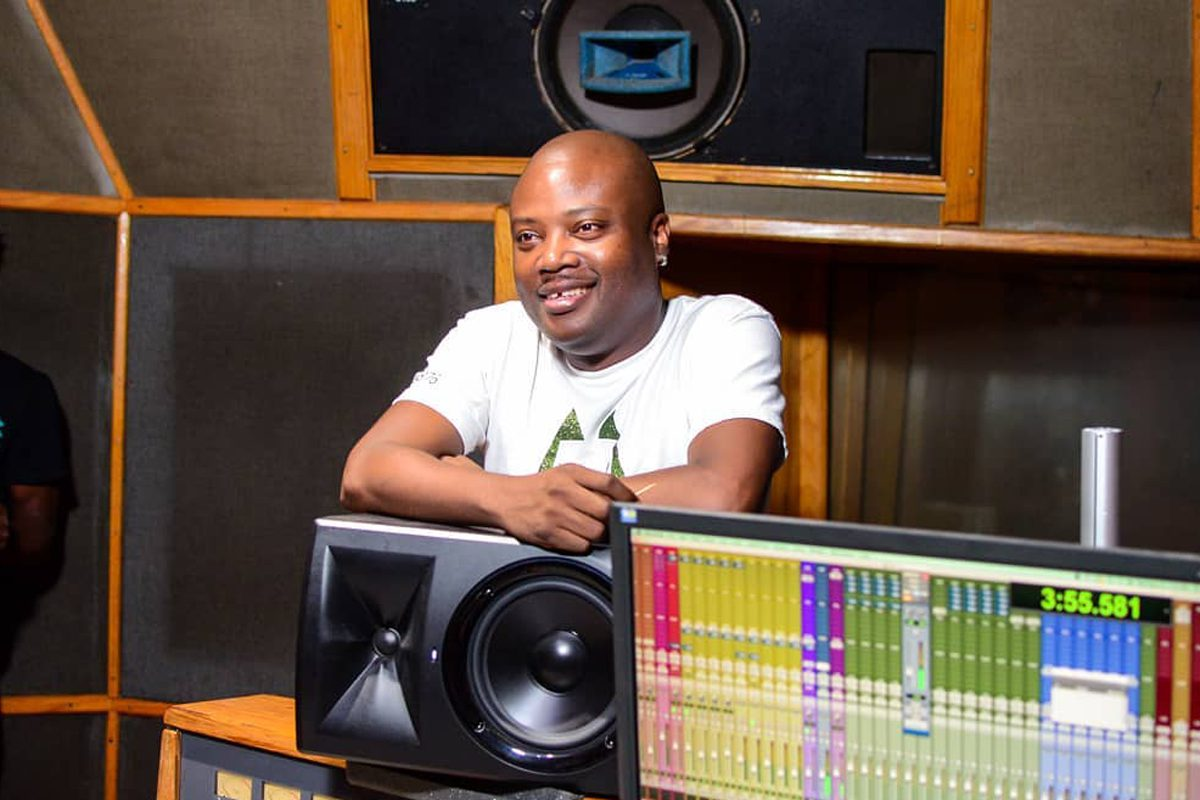
Unlike his contemporaries who shunned dancehall music, Riley embraced contemporary reggae and had several big hits during the 1980s.
Musicologist Kingsley Goodison, who knew Riley for more than 40 years, said he was one of the people responsible for introducing reggae to England.
His legacy was cut tragically short: on 1 November 2011, Winston was shot in the head at his home in Kingston.
According to police, he had been the subject of several earlier attacks. After being in a coma since the shooting, he died on 19 January 2012.
Sister Nancy and the Defining Version
Returning to the studio to complete what would be her first and only album, One Two, in 1982, Nancy lent her voice to a haunting, minimalist version of Riley’s Stalag riddim, a popular instrumental track voiced by countless artists since 1973.
The song was recorded at Channel One Studios, released on Techniques Records, and produced by Winston Riley.
The song’s chorus was inspired by the 1966 song of the same name by Toots and the Maytals and Byron Lee and the Dragonaires.
Co-opting a lyrical refrain from Toots the Maytals’ identically-named 1966 hit, Nancy created an anthem of female empowerment, repurposing the skepticism she encountered as the lone woman on the sound system circuit into a supremely confident mission statement.
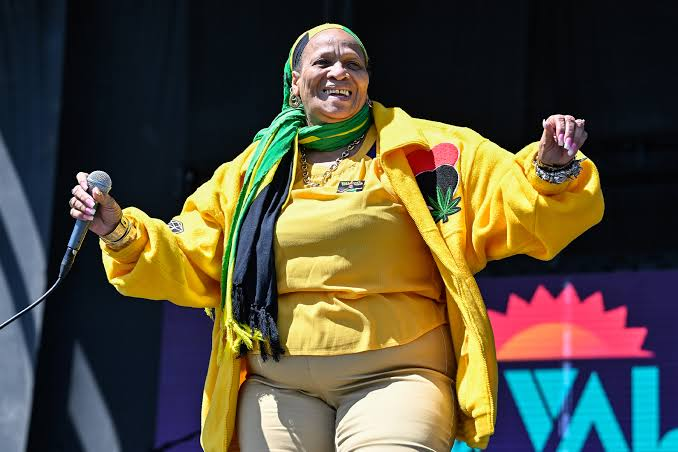
Amazingly, the ethereal song was not a hit for Nancy when it was released. Little heard at the time of its release, “Bam Bam” would find its audience in New York, first in the city’s Caribbean diaspora and then in hip-hop.
In the early 1990s, it was sampled by golden-era rap acts Main Source and Pete Rock and CL Smooth, and remixed into a hip-hop version by legendary radio DJ Stretch Armstrong.
The song has been labeled as a “well-known reggae anthem” by the BBC and a “classic” by The Observer. According to Billboard, since 1991, when Luminate began electronically tracking music sales, “Bam Bam” has garnered over 185.4 million official on-demand U.S. streams and 329,000 digital downloads.
The Copyright Battle Behind the Song
The story of “Bam Bam” cannot be told without acknowledging one of the most painful legal disputes in dancehall history. It was the use of “Bam Bam” in the soundtrack for the 1998 film Belly, a crime drama featuring Nas, DMX, and Method Man, that brought the song to a new mainstream audience.
But Sister Nancy’s path to recognition came at a cost. She discovered that she had unwittingly signed over all her rights to the song to Riley in the original recording session and as a result had not received a penny of the royalties the song had earned over the previous two decades.
Unfortunately this is a common story in Jamaican music, as many songwriters were paid session fees of a few dollars to record a song but were rarely attributed the rights to the lyrics they wrote.
Sister Nancy’s case was eventually settled out of court, and she received 50% of the royalties the song earned for the preceding decade, which allowed her to quit her job as a bank clerk and revive her music career.
Sister Nancy relocated to New Jersey in 1996 and did not put out another album until 2007’s Sister Nancy Meets Fireproof, but the undying legacy of “Bam Bam” helped influence several new generations of female dancehall DJs, including icons like Lady Saw (now Minister Marion Hall), Macka Diamond, Spice, and Shenseea.
Major Songs Built on the Bam Bam / Stalag Riddim
The Stalag/Bam Bam riddim family is arguably the single most versioned rhythmic framework in Jamaican music. Below are the key recordings that define its legacy.
The anchor version. The first and arguably the most important milestone in the history of Stalag 17 was in 1982, when Winston Riley sampled it on Sister Nancy’s song “Bam Bam.”
By adding these iconic vocals to the tune, it became far more interesting, and this version has been sampled even more often than the original and is the centerpiece of many great songs.
Riley produced deejay General Echo’s number one Jamaican hit “Arleen” in 1979 on the Stalag rhythm, as well as Echo’s widely influential album. This recording pre-dates Sister Nancy’s version and stands as one of the riddim’s earliest hit deejay cuts.
While Sleng Teng sparked numerous versions, classic rhythm tracks made by traditional studio bands still dominated the dance, and top of the pile in the summer of 1985 was a funk-infused cut which a young MC known as Tenor Saw rode into the dance with his soundclash anthem “Ring the Alarm.”
In a rare interview in 1985, a nineteen-year-old Tenor Saw described how he originally came up with the lyrics at a sound clash between four different sound systems. At the clash, Saw came up with the lyrics and performed them, leading his crew to victory.
Tenor Saw’s “Ring the Alarm” has since been sampled by several hip-hop artists.
The depth of the riddim’s artist catalog is extraordinary. Key artists recorded on the Stalag riddim include Al Campbell, Alozade, Anthony Red Rose, Barrington Levy, Beres Hammond, and Bounty Killer, among many others.
Additional notable voices across multiple recut versions include Buju Banton, Johnnie Osbourne, Junior Reid, Half Pint, Garnett Silk, and Cocoa Tea, as documented by riddim databases.
Public Enemy, 311, and Sublime are among the rock and rap artists who have leaned heavily on Riley’s foundational track.
The Hip-Hop Crossover: From Kingston to Global Playlists
The Bam Bam riddim’s penetration of hip-hop is without parallel in the dancehall catalog. From Madlib and DJ Premier to Pete Rock and Lauryn Hill, hip-hop has given Sister Nancy and her seminal recording “Bam Bam” as many lives as there are producers still excited to chop the 1982 dancehall anthem.
The song’s profile reached its commercial zenith in the 2010s with two landmark placements. Her 1982 song “Bam Bam” was picked up by Kanye West for his Life of Pablo single “Famous,” and Jay-Z followed suit, using the song on his 4:44 track “Bam” featuring Damian Marley. Jay-Z’s “Bam” prominently features Damian Marley and samples verses from works by Sister Nancy.
The track was accompanied by a six-minute documentary-style video filmed in Jamaica and later certified Gold in the United States.

Jay-Z traveled to Jamaica to shoot the “Bam” video, which includes a cameo from Sister Nancy. “I spent three days down there with him,” she said of the experience.
Sister Nancy has been candid about which placement she values most. When it comes to her favorite use, she highlights Jay-Z’s “Bam” on his 2017 album 4:44.
Ultimately, he went above and beyond in taking care of her financially, and when it came time to shoot the music video, he not only went to Jamaica but also rolled out the red carpet for her.
Other confirmed hip-hop and R&B acts who have sampled the track include Lauryn Hill, Logic, and Chris Brown, as well as, going further back, CL Smooth and Pete Rock, Too Short, and Gang Starr.
The Documentary and Continuing Legacy
The song’s popularity has extended well beyond Jamaica, with numerous uses in film, television, and advertising.
A documentary about Sister Nancy’s life and the song, titled “Bam Bam: The Sister Nancy Story,” was released in 2025. The documentary film was directed by Canadian filmmaker Alison Duke.
Though not a chart hit upon its release, the song has grown into an indisputable classic around the world, a perennial musical announcement of summer’s arrival.
In the world of dancehall, where a riddim’s worth is measured by the number of artists it has inspired and the number of generations it has outlasted, the Bam Bam riddim stands alone.
From a Kingston recording studio in 1973, through a Channel One session in 1982, through the sound systems of New York in the 1990s, to certified-Gold hip-hop releases in the 2010s and a documentary in 2025, Winston Riley’s creation and Sister Nancy’s voice have proven truly, and permanently, indestructible.