
The best female reggae singers have shaped one of the most globally beloved music genres for more than six decades, from the rocksteady clubs of Kingston in the 1960s to Grammy stages in the 21st century.
Despite a genre landscape long dominated by male artists, women have provided much of reggae’s moral backbone, harmonic richness, and commercial reach.
This ranked list surveys the 25 greatest female reggae singers of all time, weighting career longevity, recorded output, cultural influence, and confirmed achievements. Each entry is supported by documented sources.
The Pioneers (Nos. 25 to 21)
25. Doreen Shaffer
Doreen Shaffer, vocalist of the Skatalites, was among the women whose voices appeared on ska records in the early 1960s, placing her at the very founding moment of the Jamaican popular music tradition from which reggae sprang.
24. Hortense Ellis
Sister of Alton Ellis, Hortense Ellis was a great vocalist in early reggae, known for her emotional delivery in songs like “Woman of the Ghetto,” highlighting social struggles and themes of empowerment. She belongs to that first wave of women who gave roots reggae its conscience.
23. Lila Ike
Today, women continue to lead a new generation of artists in reggae and dancehall, with Lila Ike among them.
The young singer-songwriter from Manchester, Jamaica, represents a deeply roots-minded strand of the genre’s current renaissance.
22. Xana Romeo
Daughter of reggae legend Max Romeo, Xana Romeo (born Azana Makeda Smith) is carrying on the roots reggae tradition with a modern, conscious twist.
With her hypnotic voice and thought-provoking lyrics, she represents a new wave of reggae artists committed to preserving its powerful messages of resistance and self-awareness.
21. Carlene Davis
With a career spanning decades, Davis has evolved from dancehall singer to gospel reggae powerhouse, using music as a spiritual and healing tool.
Her longevity across multiple Jamaican music eras earns her a spot among the genre’s essential female voices.
The Influential Voices (Nos. 20 to 16)
20. Althea and Donna
Althea and Donna operated at the nexus of reggae and lovers rock, a romantic style of reggae, scoring a landmark British chart hit with “Uptown Top Ranking” in 1978 and demonstrating that young Jamaican women could top international pop charts on their own terms.
19. Jennifer Lara
Jennifer Lara operated at the nexus of reggae and lovers rock, carving out a cherished place in the genre’s softer, more romantic wing with a voice of exceptional warmth.
18. Susan Cadogan
Susan Cadogan rose to international fame in the mid-1970s with her breezy, soulful cover of “Hurt So Good,” produced by the legendary Lee “Scratch” Perry.
Her delicate, breathy vocal style became a hallmark of the early lovers rock sound, providing a soft, melodic contrast to the heavier roots reggae of the era.
17. Nadine Sutherland
Nadine Sutherland established herself as a mainstream recording and performing artist in the tradition opened by the pioneering women before her, and in the 1990s and 2000s she was among the female artists who made the biggest waves with number one hits.
16. Phyllis Dillon
Reggae and rocksteady singer Phyllis Dillon hailed from Linstead, St. Catherine. At a performance in Kingston, rocksteady pioneer Lynn Taitt discovered Dillon and connected her with Duke Reid.
Her original composition “It’s Rocking Time” was later recorded by Alton Ellis as “Rock Steady,” giving its name to an entire era.
She died on 24 April 2004 and was posthumously honoured by the Jamaican government with an Order of Distinction.
The Standard Bearers (Nos. 15 to 11)
15. Sister Carol
Sister Carol helped pave the way for Rasta women in reggae music and was among the first reggae artists to be featured in a Hollywood movie, “Wild Thing,” and perform the title track on its soundtrack album. Her deejay style and conscious lyrics bridged roots and dancehall for a generation.
14. Patra
In the 1990s and 2000s, Patra was one of the female artists who made the biggest waves, with hits like “Pull Up to My Bumper” rocking fans around the world.
Her internationally distributed recordings placed female dancehall on mainstream radar long before streaming made global reach easy.
13. Diana King
Diana King pioneered dancehall style and crossed over to mainstream pop success with “Shy Guy,” which reached number one and helped define how reggae and dancehall were received internationally in the mid-1990s. Her crossover work brought a new audience to the genre.
12. Tanya Stephens
Tanya Stephens is one of the most prominent female reggae artists to emerge from Jamaica. She began her singing career in 1997 with the release of her debut album “Big Things a Gwaan.”
Stephens is known for her sharp, socially conscious lyrics that address issues like inequality, women’s rights, and social justice.
She holds a Grammy nomination for Best Reggae Album for “Lyrically Potent,” which at the time was a very rare feat for a female reggae artist.
11. Lady G
Born Janice Fyffe, Lady G is a reggae and dancehall singer from Spanish Town. After finishing secondary and technical school, Fyffe began working with famous dancehall reggae DJ Lord Sassafrass.
Her career gained momentum in the late 1980s as a result of her entertaining performances at the Sting stage show in Jamaica.
Lady G pioneered dancehall style alongside Diana King and Lady Saw, cementing the role of women in the genre’s most commercially dominant form.
The Icons (Nos. 10 to 6)
10. Etana
Known as “The Strong One,” Etana blends conscious reggae with soulful melodies.
In 2013, Etana partnered with producer Shane Brown for her third LP, “A Better Tomorrow,” recorded at Kingston’s legendary Tuff Gong Studios.
The album brought Etana back to reggae’s foundation via vintage sounds and one-drop rhythms, earning praise from the Associated Press for its “mature and confident sound,” top-notch lyrical content, and unique vocals. A roots reggae singer-songwriter, she has earned multiple Grammy nominations.
9. Queen Ifrica
Ventrice Morgan (born 25 March 1975), better known by the stage name Queen Ifrica, is a reggae singer and disc jockey from the hills above Montego Bay, Jamaica.
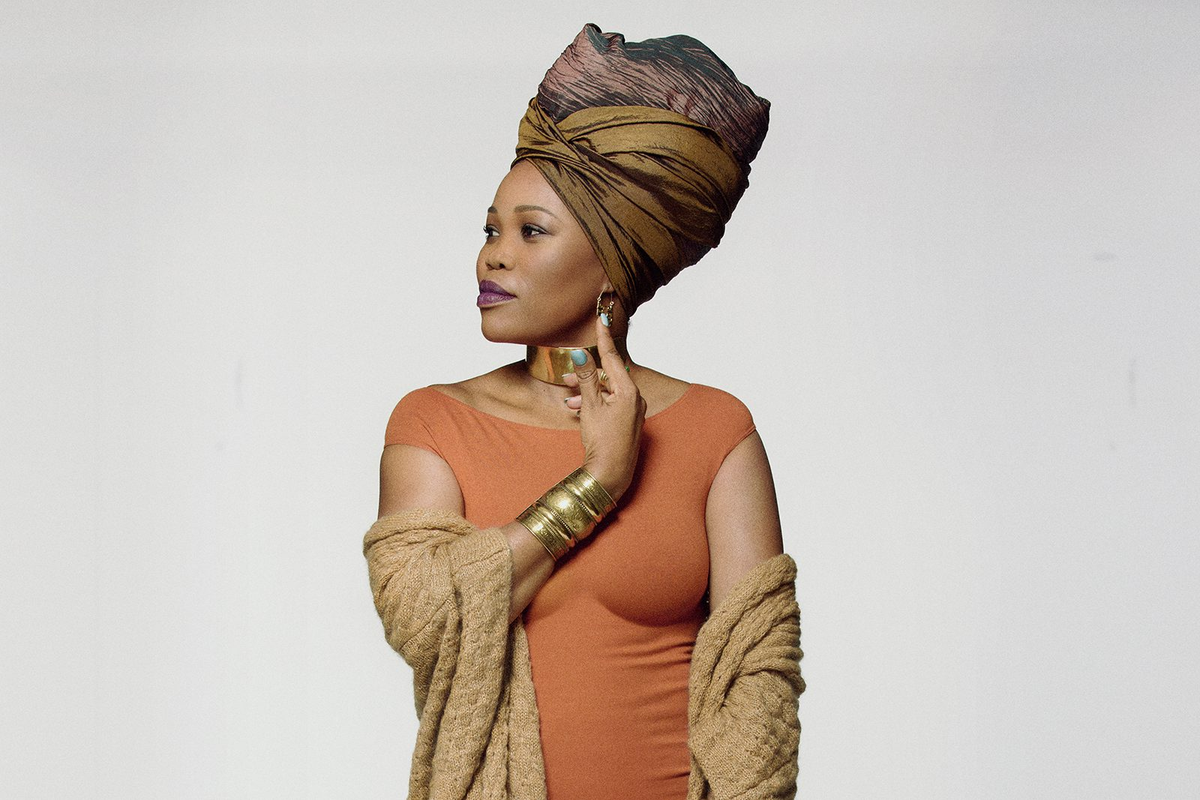
She is the daughter of ska music legend Derrick Morgan. With her socially conscious lyrics and powerful vocals, Queen Ifrica has made an impact with hits like “Below the Waist,” “Daddy,” and “Lioness on the Rise.”
From 1998 she began working with Tony Rebel’s Flames Productions and has gone on to perform all over the world in music festivals including Reggae on the River in California and Reggae Sumfest in Jamaica.
8. Sister Nancy
Born Ophlin Russell on 2 January 1962, Sister Nancy is a Jamaican dancehall deejay and singer known as the first female dancehall DJ and described as a “dominating female voice for over two decades” on the dancehall scene.
One of her most famous songs is “Bam Bam,” labeled as a “well-known reggae anthem” by the BBC and a “classic” by The Observer.
“Bam Bam” has been sampled countless times in hip-hop and electronic music.
She went on to perform at Reggae Sunsplash, making her the first female deejay ever to perform there, and she is also the first female Jamaican deejay to tour internationally.
In 2012, she was inducted into the International Reggae and World Music Awards Hall of Fame.
7. Millie Small
The first major international Jamaican hit recording was by one of Jamaica’s female pioneers, Millie Small, with her 1964 million-selling single “My Boy Lollipop.”
The song reached number two in both the UK and US charts and sold over seven million copies worldwide.
The title track has been credited by NME with sparking the popularity of reggae and ska, as well as opening doors for other genres of Jamaican music on the global stage.
Small passed away on 5 May 2020, but her place at the start of reggae’s international story is permanent.
6. Rita Marley
The widow of Bob Marley and a key member of the I-Threes, Rita Marley is both a singer and an activist.
She played a crucial role in preserving Marley’s legacy while releasing hit songs like “Harambe” and “One Draw.”
Rita Marley operated at the nexus of reggae and lovers rock and remains one of the most recognizable names in the genre’s global history.
The Greatest (Nos. 5 to 1)
5. Koffee
Born Mikayla Simpson, Koffee rose to fame in 2017 at age 17 with a tribute song to Usain Bolt. She skyrocketed into the public eye after Bolt reposted her song, then followed up with singles like “Burning” and “Raggamuffin.”
By 18, Koffee had signed a record deal with Columbia UK and released “Rapture,” a five-song EP. At 19 years old, she won the Best Reggae Album Grammy for her 2019 EP, “Rapture,” making history as the first woman and the youngest artist ever to take home that award.
Koffee represents a seamless fusion of roots messaging and contemporary production that has placed reggae back at the centre of a global conversation.
4. Lady Saw
Lady Saw, born Marion Hall in 1972, was the most commercially successful female artist in the history of Jamaican dancehall.
Lady Saw pioneered dancehall style across more than two decades, and her raw, unapologetic lyricism pushed the boundaries of what women were permitted to say in a male-dominated genre.
Now a gospel singer retired from reggae, her more explicit days may be behind her, but Lady Saw’s contributions to the dancehall genre will not soon be forgotten.
3. Judy Mowatt
One-third of the I-Threes, reggae’s most influential female vocal trio, Judy Mowatt helped to turn the last recordings of Bob Marley into enduring classics.
Her sensuous harmonies strengthened albums by Peter Tosh, Jimmy Cliff, Big Youth, Pablo Moses, Freddie McGregor, U-Roy, and the Wailing Souls.
Her solo recordings, including “Black Woman” in 1980 and “Only a Woman” two years later, marked her as a powerful spokesperson for Rastafarian and feminist causes.
The “Black Woman” album is considered by many critics to be the greatest reggae album by a female artist. It was also the first reggae album recorded by a woman acting as her own producer.
She became the first female singer nominated for a Grammy in the category of reggae music when her “Working Wonders” LP was nominated in 1985.
In recognition of her contributions to music, the Jamaican government honored Judy Mowatt in 1999 by making her an Officer of the Order of Distinction.
2. Marcia Griffiths
In a genre traditionally dominated by male artists, Marcia Griffiths is arguably the best-known and most influential woman in the history of reggae.
Griffiths began her professional singing career in 1964 with Byron Lee and The Dragonaires band.
She scored a number-one Jamaican hit with “Feel Like Jumping” in 1968, recorded with Bob Andy as Bob and Marcia and entered the pop top five in the UK with “Young, Gifted and Black” in 1970, and with Judy Mowatt and Rita Marley formed the I-Threes as the backing group for Bob Marley in 1975.
Her 1982 track “Electric Boogie” went on to inspire the popular dance the Electric Slide, giving the song a new life as a perennial dance staple.
Globally, her best-known song is “Electric Boogie,” especially the 1989 remix, which powers the Electric Slide dance and is the best-selling single ever by a female reggae artist.
On October 16, 2023, Griffiths was awarded the Order of Jamaica (OJ), the only Jamaican female artist to receive that honor.
In 2024, Marcia Griffiths marked 60 years since her first stage performance with special concerts in Florida and Jamaica under the name “Marcia Griffiths and Friends.”
1. The I-Threes (Marcia Griffiths, Judy Mowatt, and Rita Marley, collectively)
While individual rankings rightly place Griffiths and Mowatt in the top two, no article on the best female reggae singers can close without recognizing that the three greatest voices of the genre’s golden era functioned as a single, world-changing unit.
In 1974, the I-Threes vocal trio, comprising Marcia Griffiths, Judy Mowatt, and Rita Marley, lifted and reinforced Bob Marley’s messages on stage and on studio albums.
As reggae’s most influential female vocal trio, the I-Threes helped to turn the last recordings of Bob Marley into enduring classics.
Their individual output, surveyed above, stands as some of the most important work by any women in popular music.
Together, they are simply the greatest collective of female reggae singers the world has ever produced.
Why Female Voices Matter in Reggae History
From the freedom sounds of ska to reggae’s conscious lyrics and grooving downbeat, which originated in the late 1960s before catching fire worldwide the following decade, to the sexually suggestive, digitized and dubbed-out world of dancehall that sprung up in the 1980s, women are the largely unheralded backbone of these sounds.
The 25 artists on this list represent every era and every subgenre, from rocksteady and roots to lovers rock, dancehall, and the contemporary streaming age.
They have also produced, written, arranged, and innovated in a space where women often had to fight twice as hard for recognition.
Revisiting their catalogs is not nostalgia. It is a correction of the historical record.