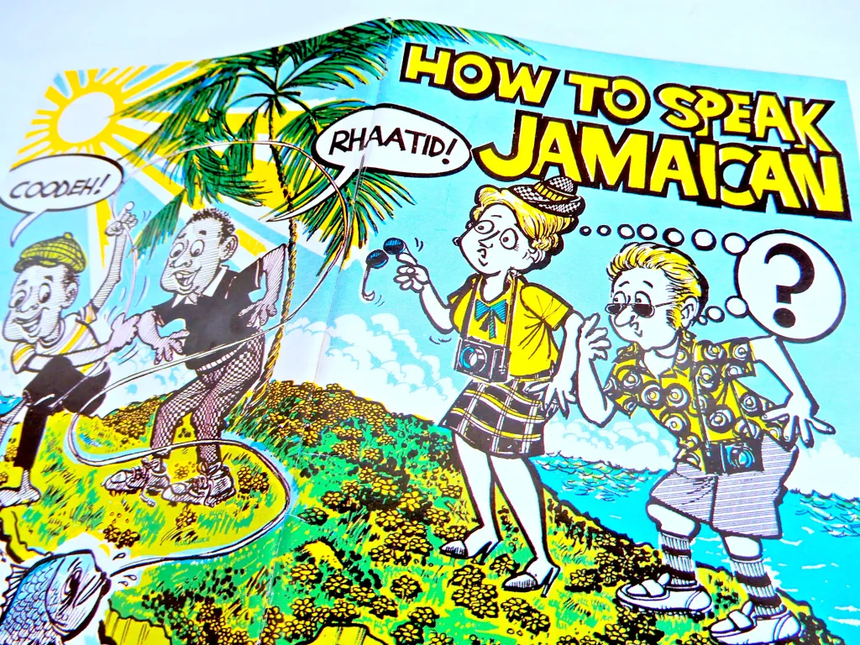

Learning how to speak patois means stepping into one of the most linguistically rich and culturally significant creole languages in the world.
Jamaican Patois, known locally as Patwa or Patwah and referred to as Jamaican Creole by linguists, is an English-based creole language with significant West African influences.
It is spoken primarily in Jamaica and among the Jamaican diaspora, and the majority of Jamaicans consider it their native language.
For travelers, heritage learners, and music lovers drawn in by reggae and dancehall, a grounded understanding of the language’s structure, pronunciation, and history is the fastest path from tourist to genuine communicator.
This guide covers all of that, beginning where every serious student should: the history that shaped the tongue.
What Exactly Is Jamaican Patois?
Before you learn a single phrase, it helps to understand what kind of language you are dealing with. Jamaican Patois is more than just a dialect or “broken English.” It is a fully formed, vibrant language with its own distinct grammar, rhythm, and rules.
Recent investigations have led linguists to confirm that Patois has systemized components, thus separating it from standard English.
Because it is a hybrid of the languages spoken by the two groups of people that came into contact, it exists on a continuum that ranges from more dissimilar to less dissimilar to English.
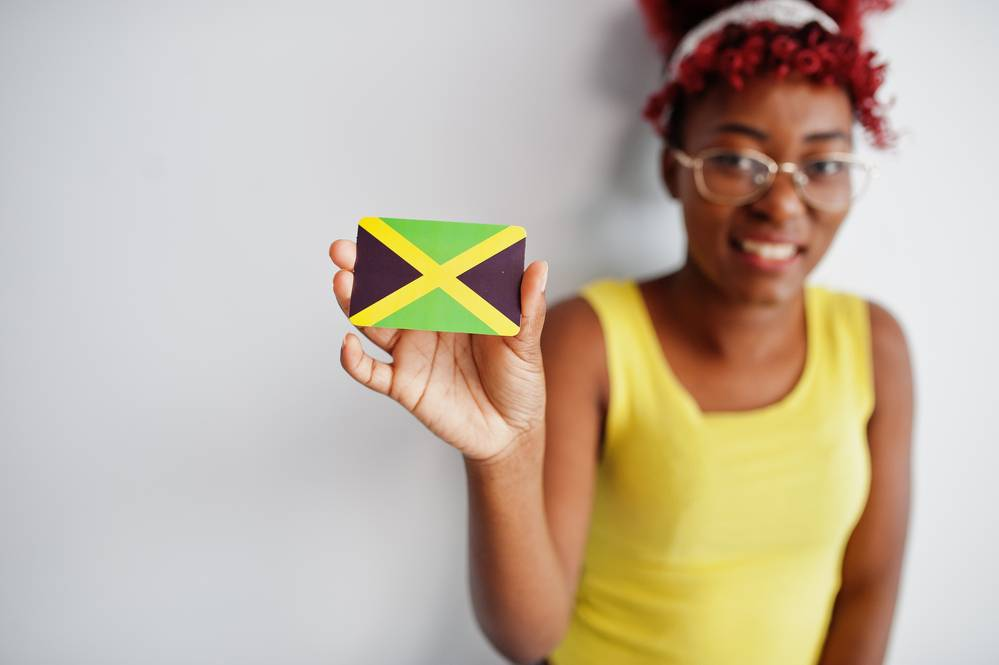
The terms for the classes in the continuum are the acrolect (variations which are closest to English), the basilect (variations which are furthest from English), and the mesolect (variations which are in between).
In practice, this continuum shapes every conversation. A Jamaican professional might deploy near-standard English in a boardroom and switch fluently to basilectal Patois at home, a practice linguists call “code-switching.”
As a beginner, you will most likely encounter and want to learn the mesolectal register: the everyday middle ground used in markets, on buses, and with friends.
A Brief History: Why Patois Sounds the Way It Does
Understanding how to speak patois is inseparable from understanding where it came from. The roots of Jamaican Patois are firmly planted in the transatlantic slave trade.
The language emerged from African languages that were brought over by enslaved Africans from diverse regions of West and Central Africa.
Since these Africans spoke different languages, a new language was formed by combining aspects of African languages with English, Spanish, and Portuguese.
African slaves shared their speech and a “pidgin” was formed, a way of communicating based on a combination of features from different languages.
The pidgin continuously evolved to meet the needs of the people. Eventually the grammar regularized and it became a full-fledged language, at which point linguists refer to it as a “creole.”
The linguistic inputs were remarkably diverse. The influences of early Indigenous populations, Spanish and English colonizers, and West African slaves can all be found in the Patwa spoken today.
Around the 1500s, Spain seized control of the island, and the primarily Arawak-speaking Taino people were largely exterminated through enslavement and disease.
Spanish rule ended when Britain invaded in 1670. In addition to Spanish and English, the language of Irish and Scottish soldiers also contributed to the nation’s dialects.
The African contribution, however, is the most structurally consequential. While the majority of its vocabulary comes from English, its grammatical structures and phonological features are heavily influenced by West African languages, particularly Akan (especially Twi) and Igbo.
Many of the African-derived words in Jamaican Patois relate to food, spirituality, the body, interpersonal relationships, and social behavior, reflecting the cultural priorities and lived experiences of enslaved communities.
For example, “duppy” (ghost) is believed to derive from Akan or Ga languages, while “nyam” (to eat) may come from Twi or Fula.
Jamaican Patois is a spoken language that is also heavily used for musical purposes, especially in reggae and dancehall.
Although standard British English is used for most writing in Jamaica, Jamaican Patois has been gaining ground as a literary language for almost a hundred years.
How Many People Speak Patois?
The scale of the language is significant. Over ninety percent of the population of Jamaica speaks Jamaican Patois, though it is not the official language.
Estimates of total speakers vary by source and methodology. Jamaican Patois is spoken by over 3 million inhabitants on the island and by Jamaicans across the diaspora globally.
Communities are prominent in the United States, particularly in major urban centers with large Caribbean populations such as New York City (especially Brooklyn, Queens, and the Bronx), South Florida (including Miami), Hartford, and Washington, D.C.
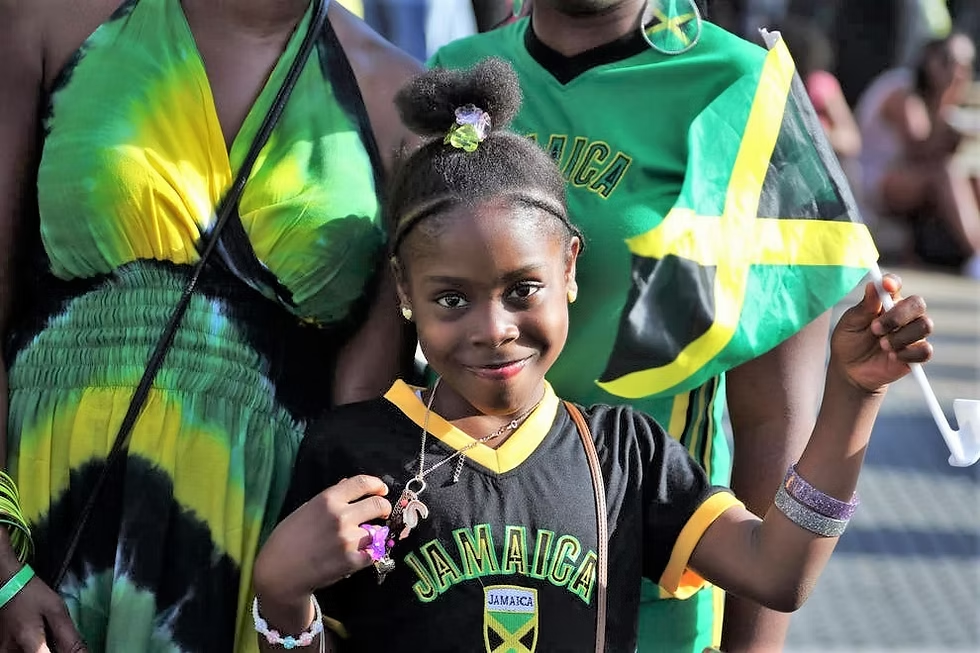
The language has also achieved remarkable global reach through music. The most important driving force behind the global spread of Jamaican Creole outside the diaspora is the worldwide success of Jamaican reggae and dancehall music.
The language has played a crucial role in the evolution and development of various Jamaican music genres, including reggae, ska, and dancehall.
However, it is the music genre of dancehall that has had the most significant impact on the spread and recognition of Jamaican Patois worldwide.
The Patois Continuum: Where to Begin as a Learner
Because Jamaican speech runs across a continuum from deep creole to Jamaican-accented standard English, choosing your starting point matters.
Jamaican speech runs as a continuum from deep creole grammar to Jamaican-accented standard English, and speakers move along it constantly according to who they are talking to.
The middle of that range, roughly what a Kingston speaker uses with someone they have just met, is the most useful place to start and the part most heritage learners already half-understand.
Start with grammar rather than vocabulary, because if you read English you already have most of the words. Learn the six pronouns first, then the tense markers that sit in front of the verb, then the copula, then plurals, then negation.
Those five pieces account for almost everything that makes a Patois sentence look unlike an English one, and each is small enough to finish rather than merely start.
Core Grammar Rules You Need to Know
The pronoun system in Patois differs from English in important ways. “Mi” replaces both “I” and “me” depending on context. “Dem” denotes a group of individuals, whereas “di” is used to refer to a single person or a specific thing.
Additionally, there are no possessive pronouns in Jamaican Patois such as “your,” “her,” “his,” “its,” “ours,” and “theirs.”
Jamaican Patois is a distinct language that has its own grammar that differs from standard English. Its grammatical structure is simpler, with fewer verb tenses and no articles or plural forms.
There is only one verb form for the present tense, regardless of the number of subjects. This means that the verb “run” would be the same for “I run” and “we run.”
Rather than conjugating verbs, Patois places preverbal markers in front of the verb to indicate tense and aspect.
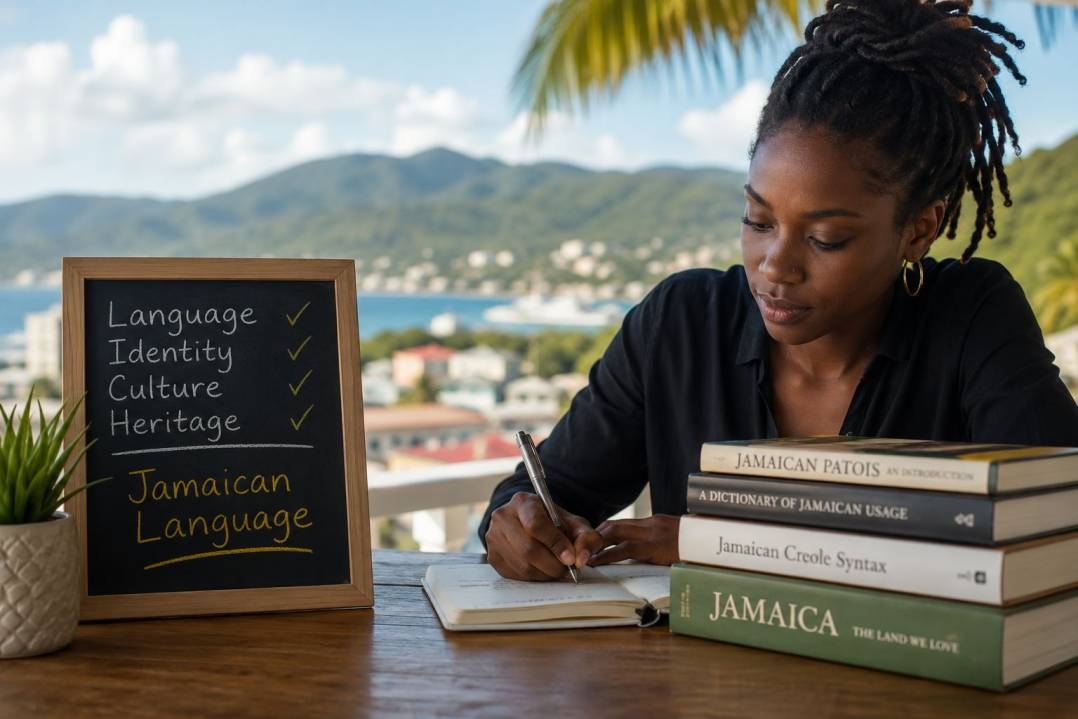
Using the scholarly notation documented by linguist Peter Patrick, the marker “did” or “ben” signals past tense, while the marker “a” (or “da/de”) placed before a verb signals progressive or continuous action.
The progressive can also be used to refer to future time in a periphrastic construction, a/da/de + go + V, corresponding to English “going to + V. In a more decreolized version, the form “gwain” replaces the pre-verbal marker.
Common markers of negation in Jamaican Patois include “nuh” (not/don’t/doesn’t), “cyaa” or “cyaan” (can’t), and “neva” (never).
The use of the verb “to be” is often omitted in Jamaican Patois, a characteristic found in many West African languages. This means a sentence like “She is tall” may simply be rendered as “She tall” in Patois.
Mastering when to omit the copula and when a preverbal marker replaces it is one of the key grammatical skills for any beginner.
Jamaican Patois is significantly influenced by African languages, extending beyond vocabulary to include elements like rhythm, tone, and syntax.
Notably, it features serial verbs, tonal emphasis, and a lack of subject-verb agreement, which are characteristics aligned with African linguistic patterns.
How to Speak Patois: Pronunciation Guide
Pronunciation is where most beginners either gain credibility or lose it immediately. One of the most distinctive features of Jamaican Patois is its phonology, or sound system.
Words are often pronounced differently than in standard English, with vowel sounds and consonants being altered or dropped.

Jamaican Patois uses a different vowel system than standard English. The vowels are often stretched or modified, giving the language its melodic quality. For example, the “a” sound in words like “man” or “hand” might sound more like “ah,” similar to the “a” in “father.”
The “e” sound can be pronounced like “ay” or “eh,” and the “i” sound can be similar to “ee.” The “o” sound can vary quite a bit, sometimes sounding like “oh” or even “oo.”
Several consonant shifts are consistent enough to memorize as rules:
- The “th” shift: The “th” sound, as in “this” or “that,” often becomes a “d” sound. So, “the” becomes “di,” and “that” becomes “dat.”
- The “h” drop and gain: Patois has a unique rule for the letter “H.” Words that begin with an “H” in English usually drop it in Patois, so “head” becomes “ed.” Conversely, words that start with a vowel will often gain an “H,” so “all” becomes “hall.”
- The “t” softening: The “t” sound is sometimes softened, especially at the end of words. So “what” might sound like “wah.”
- The “ting” pattern: The word “thing” is often pronounced as “ting” in Patois. This th-to-t shift runs throughout the language.
Patois is characterized by its own unique pronunciation and rhythm. It is known for its distinct sound, with a strong emphasis on syllables and a distinctive accent.
One practical way to internalize this rhythm is active listening: the best way to master pronunciation is to listen to native speakers.
Reggae music is an excellent resource. Pay attention to how artists pronounce words and try to mimic them.
Essential Jamaican Patois Phrases for Beginners
The following phrases are the bedrock of any first conversation. Spellings follow the most common conventions used among Jamaican writers.
- “Wah gwaan?” The cornerstone greeting. Pronounced “waa gwaan,” the literal translation is “what’s going on,” but when used as a greeting, it also means “What’s up?” Different variations may be used, including “wah deh gwaan,” “whatta gwaan,” or “waguan” (pronounced wa-goo-ahn).
- “Mi deh yah, yuh know” The standard reply. This literally translates to “Everything is okay, you already know,” and can also mean “I’m doing well.” The phrase is commonly used in response to “Wah gwaan.”
- “Irie” The mood-setter of Jamaican Patois. One of the most recognizable Jamaican terms, it captures the relaxed vibe of the islands and is commonly used to convey a sense of “All is well.” Responding to “How yuh stay?” with “Mi irie” is perfectly acceptable, as it means “I’m okay” or “I’m cool.”
- “Weh yuh ah seh?” Very similar to “Wah gwaan,” this phrase means literally “What are you saying?” In Jamaica, it is used in casual conversations to ask someone how they are doing.
- “Likkle more” means “See you later.” Useful phrases for visitors also include “Tank yuh” for “Thank you,” “Ya mon” for “Yes, okay, or no problem,” and “Walk good” for “Take care.”
- “Bless up” A general greeting or farewell, often used to wish someone well.
- “Big up yuhself” Translates to “Give yourself some respect” or “Take pride in yourself,” and is often used to acknowledge someone’s efforts or success.
- “Ya mon” Perhaps the most famous Jamaican phrase of all, it is an expression of affirmation meaning “Yes” or “Of course,” and has become synonymous with the relaxed and positive vibe of Jamaica.
- “Everyting irie” Translates to “Everything is alright” or “All is good,” and is often used to express contentment and a relaxed state of mind.
- “Nyam” Drawn directly from African roots, this verb means “to eat.” The word “nyam” (to eat) may come from Twi or Fula.
- “Nuh watch no face” Translates to “Don’t mind anyone” or “Don’t worry about what people think,” and is a phrase used to encourage confidence and positive vibes.
Writing in Patois: The Question of Spelling
One of the first things beginners discover is that Patois has no single universally codified orthography, which can make reading it online confusing.
For generations, Patois was passed down purely through spoken word. It was the voice of the people, shared in songs, stories, and daily life.
Because it was an oral language for so long, trying to learn it from social media or random internet comments can be incredibly confusing. You will find a dozen different spellings for the exact same word.
Academics have developed the Cassidy/JLU orthography, a phonemic writing system recognized in linguistic literature.
For everyday learners, resources such as JamaicanPatwah.com use a community-based system. Rather than focusing solely on phonetic accuracy, that approach prioritizes the common spellings used by Jamaicans when writing in Patois.
By combining these familiar spellings with practical guidelines, it allows for a more accessible and authentic way to express Jamaican Patois in writing.
The practical advice for beginners: pick one consistent reference resource and stick with it until the sound patterns are internalized, then expand from there.
The Cultural Weight of the Language
Learning how to speak patois carries responsibilities that go beyond memorizing vocabulary. While Patois has been treated as a “lower” form of language for part of its history, it has since been reclaimed as a language of freedom and Jamaican independence.
Jamaican Patois is deeply embedded in Jamaican history and culture, and as an integral part of Jamaican national identity, it deserves to be approached with respect.
Using Patois phrases also demonstrates cultural respect. Jamaica has a rich heritage, and its language is a reflection of resilience, creativity, and identity.
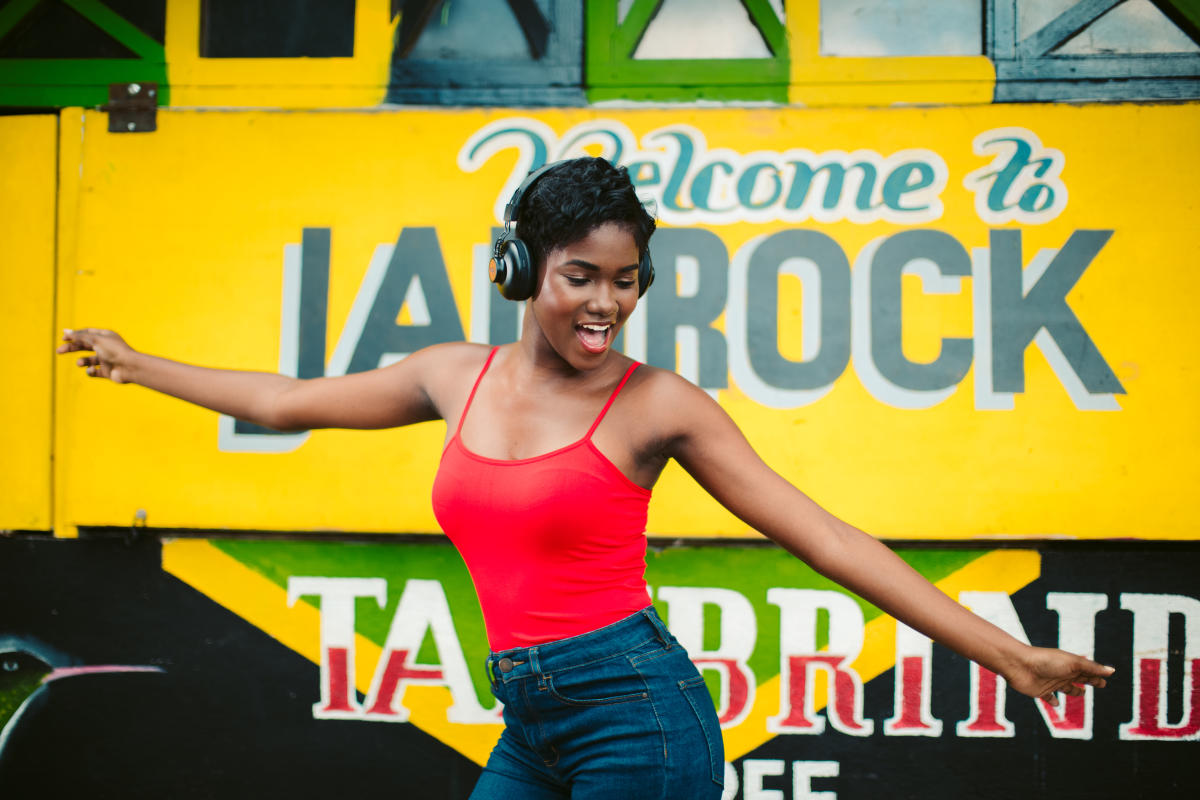
When visitors make an effort to use authentic expressions, it signals appreciation for the culture rather than just being a tourist observer.
That means learning context, not just vocabulary. Phrases carry social registers. A greeting that is perfectly warm between peers can read differently in a formal setting.
Observe, listen, and ask Jamaican friends to correct you. That openness to correction is itself a mark of cultural respect.
How to Keep Improving: Resources and Practice Tips
YouTube is a strong resource. Search for Patois lessons or interviews with Jamaicans to get a feel for the rhythm and intonation of the language.
Documentary content, news interviews featuring Jamaican speakers, and commentary from Jamaican podcasters all provide natural, unscripted examples of the mesolectal register most useful to learners.
JamaicanPatwah.com (jamaicanpatwah.com) offers an extensive free dictionary, phrase examples with context sentences, and structured lesson content.
The platform’s dictionary cross-references Patois entries with their English equivalents and often includes usage notes.
LearnPatois.com (learnpatois.com) provides structured grammar-first lessons, explicitly addressing the tense marker system, pronoun rules, negation, and the copula in a sequence designed for English-speaking beginners.
Beyond social interactions, knowing Patois helps you understand music, media, and humor. Reggae, dancehall, and comedy often rely on clever wordplay or idioms unique to Patois.
Recognizing phrases like “irie” (everything’s good) or “small up yuhself” (make some room) enhances your experience and keeps you from missing nuances in conversations or lyrics.
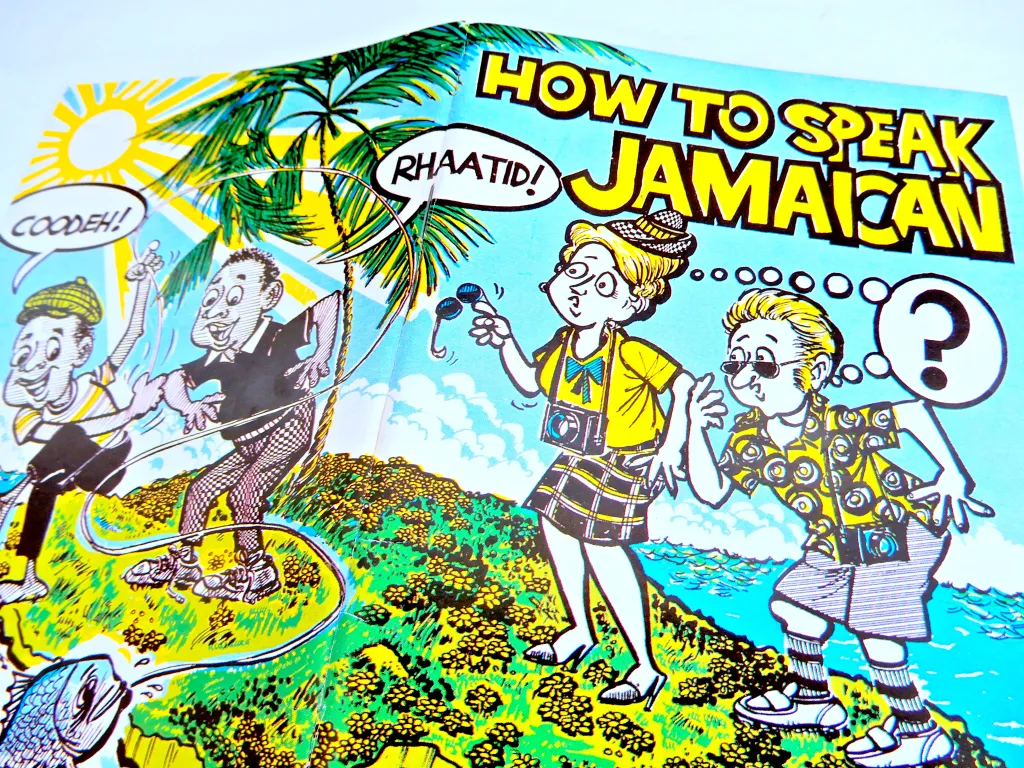
However, do not rely on music lyrics alone as a grammar textbook. Artists compress, invent, and manipulate language for rhythm and rhyme. Use music to train your ear and build vocabulary, not to learn sentence structure.
Jamaicans do in fact speak English, so a simple “Hello” or “How are you doing?” is perfectly understood. However, greeting a Jamaican in Jamaican Patois will usually make your conversation a lot smoother.
The willingness to attempt the language, even imperfectly, is typically met with warmth. When you speak even a few phrases, locals immediately notice the effort, and it often sparks smiles, laughter, and friendly conversations.
Quick-Reference Glossary
| Patois | English Equivalent |
| Wah gwaan? | What’s going on? / How are you? |
| Mi deh yah | I’m here / I’m doing well |
| Irie | All is well / I’m good |
| Ya mon | Yes / Of course |
| Nuh | Not / Don’t |
| Cyaan | Can’t |
| Nyam | To eat |
| Bredda | Brother / close friend |
| Di | The (definite article) |
| Likkle more | See you later |
| Walk good | Take care |
| Big up yuhself | Respect yourself / Well done |
| Bless up | Be blessed / Farewell |
| Weh yuh ah seh? | What are you saying? / How are you? |
Conclusion
Knowing how to speak patois opens a door that standard English simply cannot. For travelers exploring Jamaica or anyone seeking to connect with Jamaican culture, understanding the basics of Jamaican Patois opens a door to authentic experiences and deeper cultural connections.
The language is not a shortcut or a novelty: it is the mother tongue of millions, a living archive of African linguistic heritage, and the engine behind some of the most influential music the world has ever produced.
Approach it with that understanding, build your grammar before your vocabulary list, train your ear on real speech, and the rhythm will come.