
The Sleng Teng riddim is the most consequential rhythm in the history of Jamaican popular music.
Widely recognized as the most transformative rhythm in the history of Jamaican music, it was introduced in 1985 through “Under Mi Sleng Teng” by Wayne Smith and produced by King Jammy, marking a definitive shift from live instrumentation to computerized production.
What began as a preset pattern on a cheap consumer keyboard became the detonation point for digital dancehall, a genre that has never looked back.
What Is the Sleng Teng Riddim?
The Sleng Teng is a riddim that was influential in Jamaican music and beyond. In the Jamaican music tradition, a riddim is a reusable instrumental backing track.
It is common for numerous artists to make their own “versions,” or vocal interpretations, of popular riddims, building original songs around the same basic rhythmical pattern.
The Sleng Teng riddim took that practice to an unprecedented scale. Named after the song in which it was first used, it has inspired as many as 450 different songs, with some estimates placing the total even higher.
More than 500 songs have used the Sleng Teng riddim, making it one of the most versioned beats in Jamaican history.
The Origin Story: A Casio Preset That Shook the World
The Sleng Teng riddim was originally a preset rhythm pattern programmed into the Casiotone MT-40, released in 1981. The keyboard, popular for its affordability and portability, featured a preset rock rhythm known as “Rock 2.”
This preset had been designed by a Japanese woman named Hiroko Okuda, nicknamed by some as “the mother of Sleng Teng,” and it was the first project she worked on after joining Casio.
It was Hiroko Okuda’s very first project after joining Casio, the Tokyo-based tech company better known for calculators and G-Shock watches.
The global journey of that rhythm, from a Tokyo product development office to a Kingston dance hall, is one of the more unlikely origin stories in popular music.
The tale of “Under Mi Sleng Teng” began when young musician Noel Davey and his pal Wayne Smith got their hands on a Casio MT-40 keyboard.
They had managed to get hold of it from his friend George “Buddy” Haye, a musician who had been touring the US with The Wailing Souls.
Davey was hoping for a Yamaha DX7 synthesiser, but Haye returned with the much cheaper Casio keyboard, which was not a synthesiser at all.
In mid-1984, Davey and Wayne Smith arranged the first version of the Sleng Teng riddim, which was considerably faster than the final release.
Smith then rehearsed a toast over the riddim, with lyrics inspired by Barrington Levy’s “Under Mi Sensi,” a hit in 1983.
The lyrical theme was a celebration of marijuana over cocaine, delivered in Smith’s distinctive singjay style, a blend of melodic singing and rhythmic toasting.
Davey and Smith brought the riddim and toast to noted producer and dub mixer King Jammy in December of 1984. Jammy slowed the riddim down, matched it to Smith’s singing key, and placed piano and clap tracks over it.
While Jammy recalled knowing immediately that he had helped create something special once he listened to the final mix, he also said he was still completely unprepared for the response to “Sleng Teng”‘s first public performance.
The riddim was entirely digital, with no live instruments used. When it was played at a sound clash between Jammy’s sound system and Black Scorpio on February 23, 1985, it caused a musical earthquake. The crowd went wild, demanding endless pull-ups. In an instant, the future of Jamaican music shifted.
According to Jammy, the opposing sound, Black Scorpio, had to “lock off the sound” because no one wanted to hear Scorpio anymore.
The riddim also featured prominently in Barry G and David Rodigan’s on-air radio soundclash, which was broadcast on the same day by JBC in Jamaica and Capital Radio in London.
By February 1985, it was rising in the UK reggae charts as well as spawning copy-cat versions of the riddim on other labels.
The Producer: King Jammy
Lloyd Woodrowe James, born October 26, 1947, better known as Prince Jammy or King Jammy, is a Jamaican dub mixer, sound system owner, and record producer.
He grew up in Waterhouse, a Kingston district renowned for its vibrant cultural energy and musical innovation.
He began his musical career as a dub master at King Tubby’s recording studio, where his dubs are known for their clear sound and use of effects.
After leaving Jamaica to work in Canada for a few years in the early 1970s, he returned to Kingston in 1976 and set up his own studio at his in-laws’ home in Waterhouse.
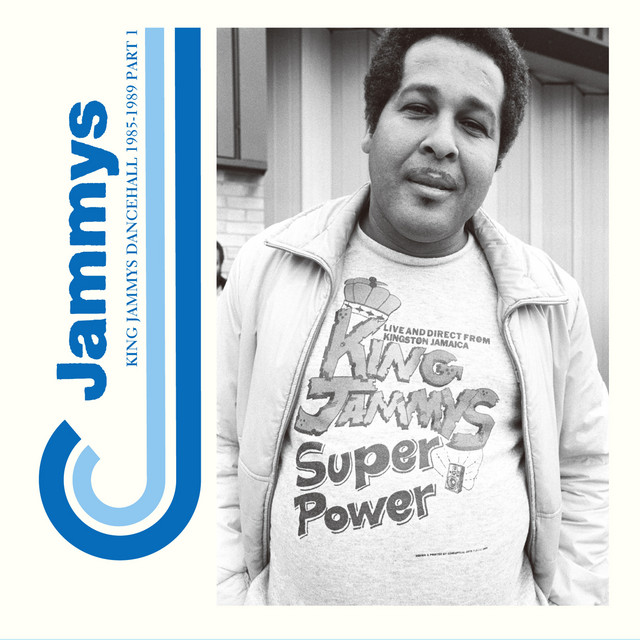
His first major production credit came with Black Uhuru’s debut album “Love Crisis” in 1977, recorded at Jammy’s own studio in Waterhouse.
While he established his credentials during the 1970s and early 1980s, when he was known as Prince Jammy, through seminal production work for Black Uhuru and Sugar Minott as well as dub albums with genre pioneers King Tubby and Scientist, he singlehandedly changed the face of reggae with his all-electronic production of Wayne Smith’s 1985 hit “Under Me Sleng Teng,” ushering in the digital dancehall era.
Many credit this song as reggae’s first digital rhythm, leading to the modern dancehall era and Prince Jammy’s recognition as King Jammy.
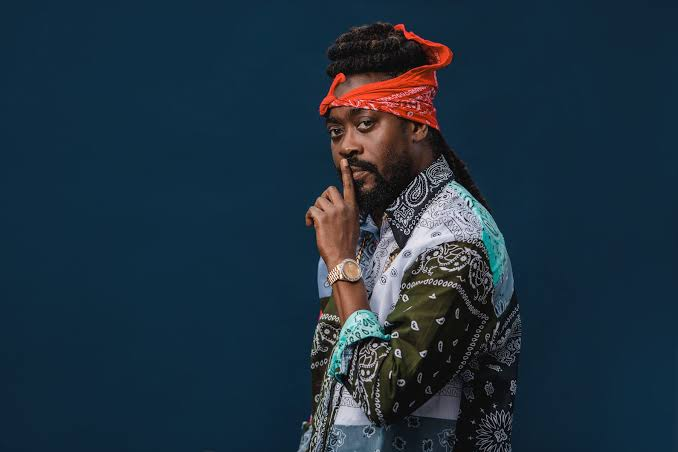
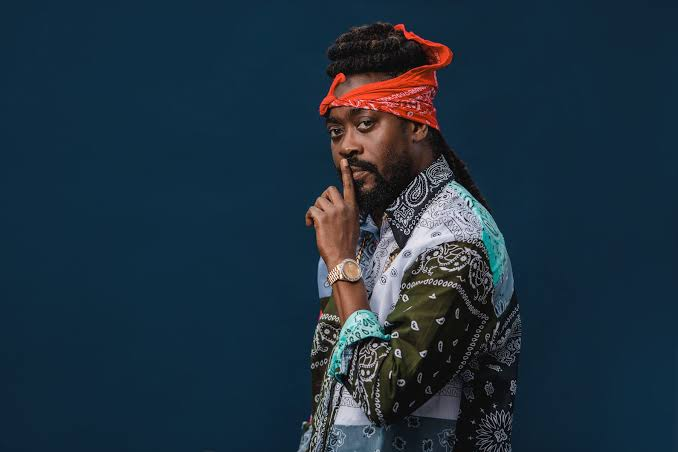
He worked with dancehall stars such as Beenie Man and Bounty Killer during the 1990s and 2000s, while making off-the-wall dub albums, including collaborations with Mad Professor and Dry and Heavy.
Wayne Smith: The Voice of the Riddim
Wayne Smith (December 5, 1965 to February 17, 2014) was a Jamaican reggae and dancehall musician best known for his 1985 hit “Under Mi Sleng Teng,” which is regarded as the track that initiated the digital era of reggae.
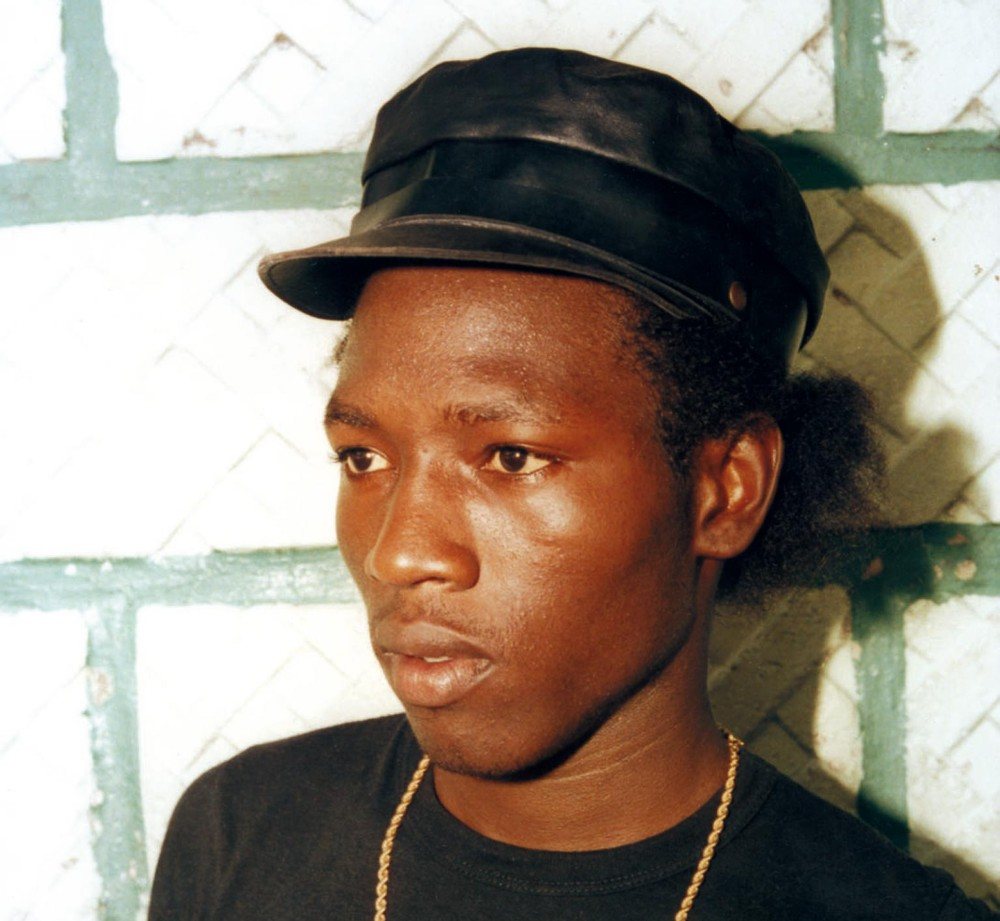
He performed with sound systems and began recording in 1980 at age 14, initially working with producer Prince Jammy, his next-door neighbour, who produced his debut album Youthman Skanking (1982) and the 1985 follow-up Smoker Super.
Smith was admitted to Kingston Public Hospital on February 14, 2014 with severe stomach pains, suffered a heart attack, and died on February 17, 2014, aged 48. He was survived by five children and three grandchildren.
A Note on “First Digital” Claims
Calling the Sleng Teng the absolute first digital dancehall riddim is a claim worth treating carefully.
Other Jamaican artists and producers were already experimenting with electronic and computerized rhythms, and Anthony Red Rose has long argued that his “Tempo,” recorded at King Tubby’s, preceded Sleng Teng.
What Sleng Teng unquestionably became was the public detonation point. Its sound clash debut in February 1985 was so galvanizing that it reoriented the entire industry almost overnight, regardless of what had come before in the studio.
Every Major Song on the Sleng Teng Riddim
The original wave of recordings was produced by King Jammy at his Waterhouse studio. Jammy recorded a number of other artists in addition to Wayne Smith on this “Sleng Teng” backing track, including Tenor Saw with “Pumpkin Belly” and Johnny Osbourne.
The VP Records-released compilation Sleng Teng Extravaganza documents the original run of Jammy’s productions on the riddim.
Some of Jammy’s productions based on the rhythm were also released on the albums Sleng Teng Extravaganza and Sleng Teng Extravaganza 95.
Below is a reference listing of the most documented recordings on the Sleng Teng riddim, drawn from compiled tracklists and official releases:
The flagship cuts from the Jammy’s camp include: Wayne Smith “Under Mi Sleng Teng,” Johnny Osbourne “Buddy Bye,” John Wayne “Call the Police,” Nicodemus “Eagle Feathers,” Cocoa Tea “Hey Bobby,” Echo Minott “Hand Pon the Key,” Sugar Minott “Jam in the Street,” Tenor Saw “Pumpkin Belly,” Tappa Zukie “Big Things,” Tonto Irie “Every Posse Come In,” Woodie Noble “Ram Jam Session,” Eccleton Jarrett “Dancehall Music,” Pad Anthony “Cry for Me,” Papa Faith “Mainiac,” and Singie Singie “Tell Them What You Know.
Johnny Osbourne is probably best known for “Buddy Bye,” based on King Jammy’s Sleng Teng riddim.
Tenor Saw’s “Pumpkin Belly,” released shortly after Smith’s version, is a prime example of how the riddim could be adapted to suit different lyrical themes and vocal styles. His smooth delivery and catchy hook helped cement the riddim’s popularity.
The riddim continued to attract vocalists across successive decades. Documented cuts on later compiled versions of the riddim include contributions from Beenie Man, Ibo Cooper, Bounty Killer, Burro Banton, Frankie Jones, Gregory Isaacs, Al Campbell, Delroy Wilson, Ninja Man, Mad Cobra, Pinchers, Terry Ganzie, and Super Cat, among many others.
Successive generations of dancehall artists, including Bounty Killer and Beenie Man, have continued to record new material on the instrumental.
Several new cuts on the original Sleng Teng were also released by Jammy’s in 2005 in celebration of the riddim’s 20th anniversary.
In 2026, the riddim remains active in contemporary dancehall. Sean Paul released the official music video for “Stand On Business,” a track built on the Sleng Teng Riddim, one of the most historically loaded beats in all of dancehall, which immediately puts the release in a specific conversation about where the genre has been and where it keeps returning.
Why the Sleng Teng Riddim Changed Everything
The consequences of the riddim’s commercial explosion extended far beyond a chart run.
The ensuing transition from live instrumentation to digital production sent shockwaves through the Jamaican music business, putting studio musicians out of work and contributing to the downfall of top Kingston studios such as Channel One, according to David Katz’s 2003 reggae history Solid Foundation.
Sleng Teng opened the door for producers and musicians with limited access to traditional studios. All that was needed was a drum machine or keyboard, making it possible to produce dancehall riddims from small studios or even bedrooms.
The rhythm influenced early UK jungle and ragga scenes, became a staple in hip hop sampling, and found its way into pop and electronic music globally.
Its success is widely credited with single-handedly transitioning reggae from analog to computerized production.
This transition to digital music production using synthesizers, drum machines, and samplers prefigured the computerization of hip-hop music, which, like reggae, had previously been recorded with a band.
The riddim resonated beyond Jamaica, especially in New York City. “There was a crossover happening,” linking the early digital dancehall sound to the parallel evolution of hip-hop in the United States.
More than forty years after its release, the Sleng Teng riddim stands as the clearest dividing line in dancehall history: analog before, digital after.
Every producer who has ever loaded a digital audio workstation, triggered a drum machine, or voiced a riddim without a live band owes something to the cheap Casio keyboard that Wayne Smith and Noel Davey found their way to in 1984, and to the Waterhouse studio where King Jammy heard the future and turned up the volume.