

Few artists have carried a surname as heavy as Marley and still built a sound that is entirely their own.
Damian “Jr. Gong” Marley, born 21 July 1978, is the youngest son of Bob Marley and the only child of Bob and Cindy Breakspeare, the Jamaican jazz singer crowned Miss World 1976.
His nickname nods to his father’s “Tuff Gong.” His music, though, belongs to a generation raised on sound system clashes, Queens boom bap and roots reggae all at once.
Choosing the best Damian Marley songs means tracing how that blend made him one of the most decorated voices Jamaica has produced.
He has four Grammy Awards, a catalogue that runs from his 1996 Tuff Gong debut to Afrobeats and dubstep crossovers, and a hit that still stops a dance cold two decades on. Here are twelve songs that define the Junior Gong.
1. Damian “Jr. Gong” Marley, “Welcome to Jamrock” (2005)
Nothing else could take the top spot. Released on March 14, 2005, as the lead single from the album of the same name, “Welcome to Jamrock” rides the “World Jam” rhythm, built by Sly and Robbie and lifted along with its hook from Ini Kamoze’s 1984 track “World-A-Reggae.”
Produced by Stephen Marley, it delivered what AllMusic’s David Jeffries summed up as “an air horn, an Ini Kamoze sample, and a gritty tale of life in Jamaica.” Some at home bristled at its portrait of the island.
The world listened anyway. It reached No. 13 in the UK and No. 55 on the Billboard Hot 100, and it won Best Urban/Alternative Performance at the 2006 Grammys.
That made Damian the only reggae artist to take that category, on a night when he won two trophies. Rolling Stone later ranked it among the top 100 songs of the decade.
2. Damian Marley feat. Nas, “Road to Zion” (2005)
Built around a haunting sample of Ella Fitzgerald’s “Russian Lullaby,” “Road to Zion” is the moment Kingston and Queensbridge locked eyes and recognised each other.
Stephen Marley’s production keeps things sparse and mournful, leaving room for Damian’s spiritual reasoning and a Nas verse delivered with the weight of scripture. It is not a riddim cut or a dance record. It is a meditation.
The video, shot in Kew Gardens, Queens, drew cameos from Chali 2na, George Clinton and Game, a measure of how seriously the hip hop world took the pairing.
The song went Silver with the BPI in the UK. Its biggest legacy was what came after: the chemistry here inspired the two men to plan an EP, which grew into the 2010 album Distant Relatives.
3. Skrillex and Damian “Jr. Gong” Marley, “Make It Bun Dem” (2012)
This one started life as a nameless Skrillex instrumental that existed only in live sets, where fans christened it “Rudeboy Bass.” Skrillex first laced it with “Welcome to Jamrock” vocals as a remix.
Damian had a better idea and offered to cut original lyrics. The result premiered at Surrender Night Club in Las Vegas on January 21, 2012, and arrived officially on May 1.
Released through Big Beat, Atlantic and OWSLA, it is reggaestep at full throttle, a track where, as one retailer put it, “neither overpowers the other.” Damian’s toasting slices through the wobble like a selector on a sound system speaker.
On YouTube Music it has passed 900 million plays, his biggest streaming credit by a distance, and it introduced a whole festival generation to the Junior Gong.
4. Nas and Damian Marley, “As We Enter” (2010)
Here is where Distant Relatives announced itself. Released February 23, 2010, as the album’s lead single, “As We Enter” has no full verses at all.
Nas and Damian trade lines back and forth in a breathless call-and-response that feels like two MCs passing a mic at a block party.
Damian produced it himself, building the track on a sample of Ethiopian jazz master Mulatu Astatke’s “Yegelle Tezeta,” and keeping it under three minutes.
DJBooth called it the album’s most accessible track. It reached No. 39 in the UK and No. 16 on the Bubbling Under Hot 100.
Distant Relatives went on to debut at No. 5 on the Billboard 200 with 57,000 first-week copies, proof that an album built on African heritage could compete at the top.
5. Damian Marley feat. Stephen Marley, “Medication” (2017)
Brothers Damian and Stephen “Ragga” Marley reunited for this unapologetic ode to the herb, which Reggae Vibes called “anthemic.”
Billboard singled it out alongside “Nail Pon Cross” as the most notable pre-release cut from Stony Hill, the album that arrived July 21, 2017, through Ghetto Youths International and Republic. The groove rolls slow and smoky, with Stephen’s melodies drifting over Damian’s grounded delivery.
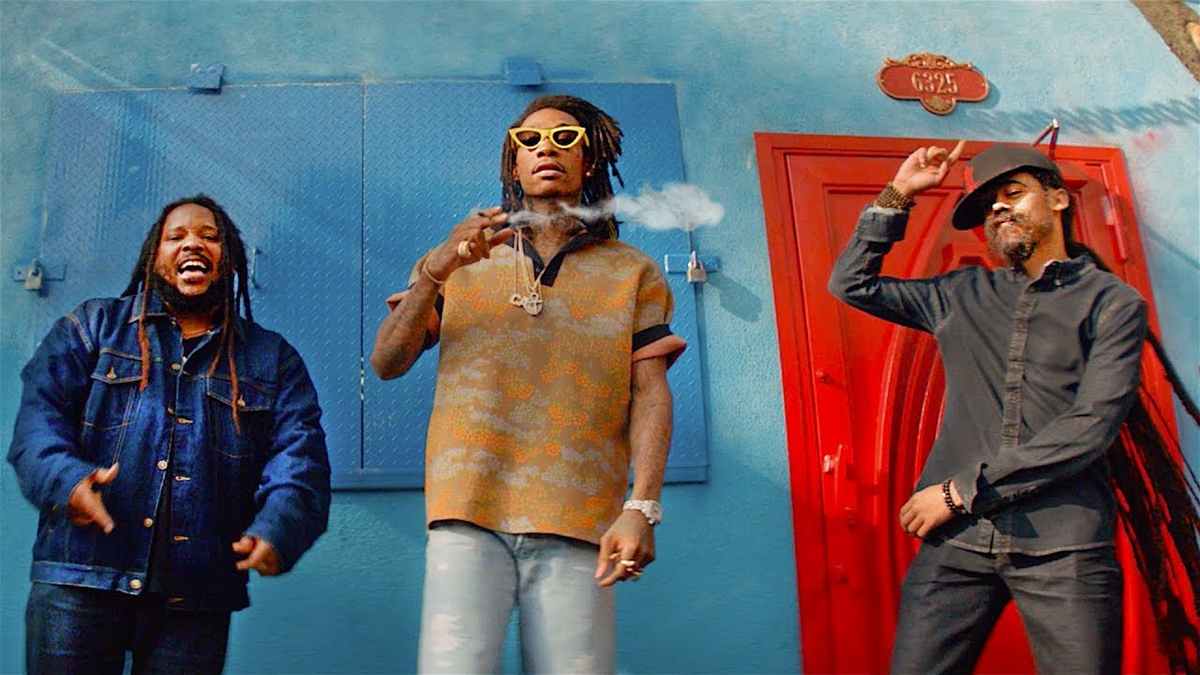
The message lined up with business: in 2017 Damian had his own “Stony Hill” cannabis strain and had turned a former California prison into a medical marijuana farm.
Stony Hill debuted at No. 1 on Billboard’s Reggae Albums chart and won Best Reggae Album at the 60th Grammys in January 2018. “Medication” has since passed 317 million plays on YouTube Music.
6. Damian Marley, “The Master Has Come Back” (2005)
Released December 12, 2005, as the second international single from Welcome to Jamrock, “The Master Has Come Back” leans toward the roots side of Damian’s sound. It is warmer and more devotional than the title track’s street grit.
Stephen Marley produced, with Corey Chase adding scratches that tie the record to the hip hop world the album straddles.
The writing credits include Damian, Stephen and Neville Livingston, the birth name of Bunny Wailer, which connects the song to the original Wailers family tree.
It peaked at No. 74 in the UK, a modest chart showing for a song that has quietly endured as a fan favourite.
For listeners who came for “Jamrock,” this was the track that revealed the spiritual depth beneath the swagger.
7. Damian “Jr. Gong” Marley feat. Bobby Brown, “Beautiful” (2006)
Few saw this pairing coming. On “Beautiful,” released as a single on January 24, 2006, Damian links with New Jack Swing star Bobby Brown for a smooth, romantic cut produced by Stephen Marley and Paul Yebuah.
It showed off the remarkable range of features on Welcome to Jamrock, an album that moved from Nas and Black Thought to Brown without blinking.
Damian keeps his patois front and centre while Brown brings R&B gloss to the hook, and the contrast works far better than it should on paper. The single climbed to No. 39 in the UK.
Two decades on it remains the sweetest moment on a famously hard album, and it is a reminder that the Junior Gong could court the ladies as easily as he could chant down Babylon.
8. Nas and Damian Marley, “Patience” (2010)
Slow, cerebral and unhurried, “Patience” may be the purest expression of what Distant Relatives set out to do.
Produced by Damian and Stephen Marley, the album wrestles with colonialism, poverty, Pan-Africanism and the universality of the human condition. This track asks big questions about history, origin and how Africa is portrayed to the world.
Nas and Damian sound less like two stars on a collaboration and more like two elders reasoning late into the night. It is not a dancefloor record, and it never tried to be.
Instead it has grown in stature with each passing year, sitting near the top of many fan rankings and among Damian’s most played songs on streaming services. It is a song that rewards patience, fittingly.
9. Nas and Damian Marley, “Strong Will Continue” (2010)
The second single from Distant Relatives landed on April 13, 2010, and DJBooth described it as “epically-oriented,” a fair word for a track that feels built for stadiums.
Damian holds down the resilient, rallying hook, while Nas steers his verse somewhere more personal, rhyming about unfaithful wives. It is that tension between the communal and the confessional that makes the song stick.
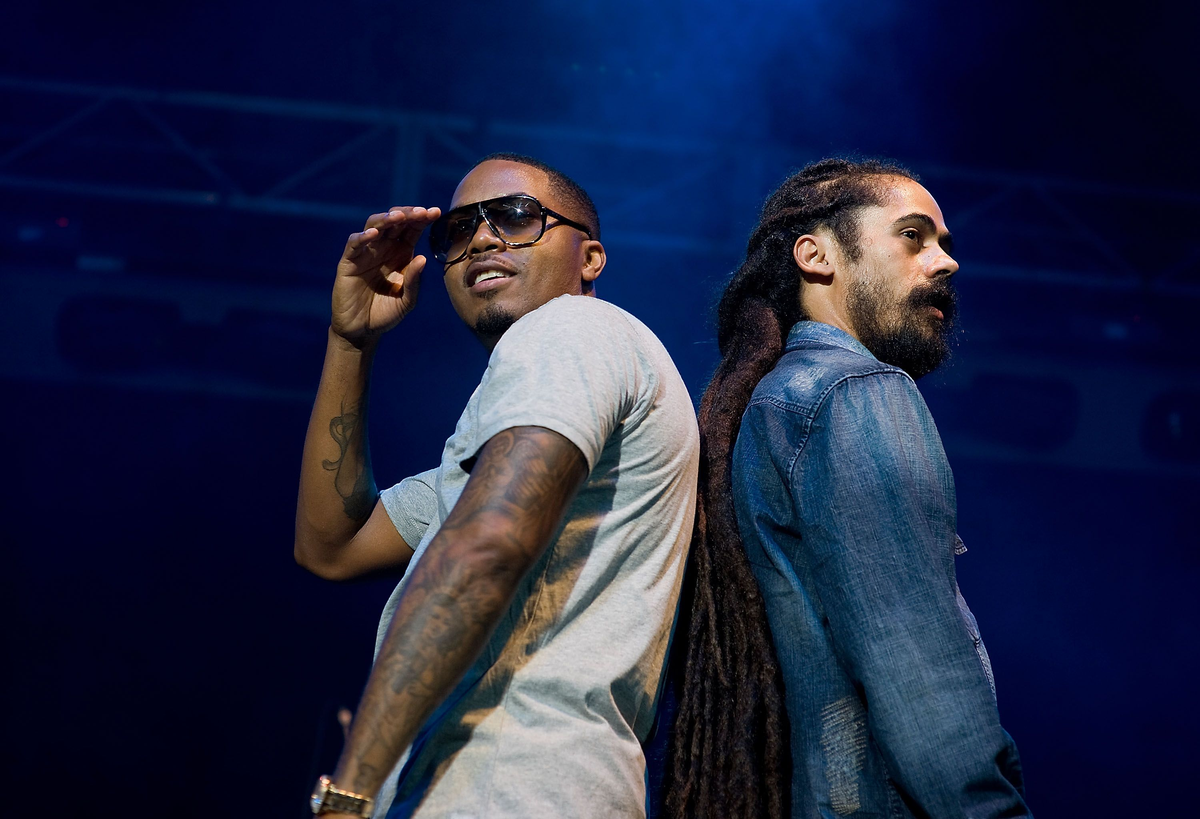
Produced by the Marley brothers, it carries the album’s larger mission too: proceeds from Distant Relatives were earmarked for building schools in the Congo.
Of all the album’s singles, this is the one that best captures its defiant spirit, a reminder that survival itself can be a kind of victory.
10. Damian Marley feat. Bounty Killer and Eek-A-Mouse, “Khaki Suit” (2005)
For the hardcore dancehall heads, “Khaki Suit” might be the realest thing on Welcome to Jamrock. Damian calls in Bounty Killer, widely regarded as one of the greatest and most influential lyricists dancehall has ever known, and the singular Eek-A-Mouse, whose sing-jay style is instantly recognisable.
Credits run to Rodney Price, Bounty’s given name, and Ripton Hylton, Eek-A-Mouse’s, alongside Henry Lawes and Richard Smith. Three generations of microphone men on one track give it the feel of a classic sound system session, each voice taking the baton with a different energy.
It stood among the album’s notable singles and remains one of the hits fans name first, proof that Damian never left the dancehall even as he conquered the charts abroad.
11. Wizkid feat. Damian Marley, “Blessed” (2020)
When Wizkid released Made in Lagos in 2020, one of its warmest moments came from Kingston. “Blessed” marked the first time the two teamed up.
Over a P2J production for RCA and Starboy Entertainment, Damian’s gravelly reasoning sits beautifully against Wizkid’s airy melodies, and the bridge between Afrobeats and reggae sounds less like a crossover and more like a homecoming.
“We are definitely big fans of anything African,” Damian told Rolling Stone, and you can hear that respect in every bar. Made in Lagos reached No. 1 on Billboard’s World Albums chart, and “Blessed” became one of its most beloved deep cuts.
It also showed that a decade after Distant Relatives, Damian’s dialogue with the continent was still very much alive.
12. Damian Marley feat. Grand Puba, “Me Name Jr. Gong” (1998)
Every story needs an origin, and this is Damian’s. His debut album Mr. Marley arrived in 1996 on Tuff Gong, his father’s old label, with sessions co-produced by brother Stephen. It already showed the dancehall-meets-hip-hop deejay style that would become his signature.
“Me Name Jr. Gong,” issued as a single in February 1998, is the mission statement. A young man stepped out from a towering shadow and told the world exactly who he was.
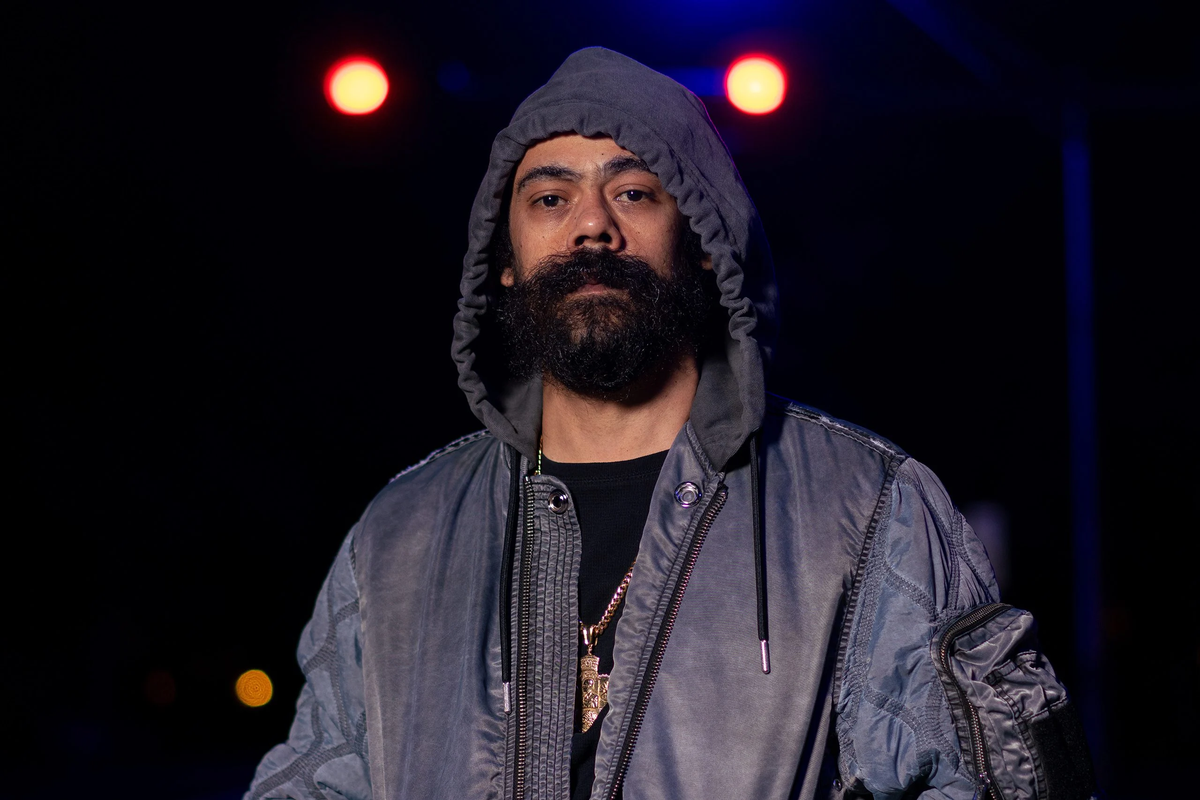
Bringing in Grand Puba of Brand Nubian hinted at the New York connections that would later produce “Road to Zion” and a full album with Nas. It still sits among his most played songs, the first chapter of a remarkable run.
Why the Junior Gong Still Matters
Look across these twelve songs and a pattern emerges. Damian Marley has spent three decades proving that reggae’s roots and dancehall’s edge can talk fluently to hip hop, dubstep and Afrobeats without losing their accent. “Halfway Tree,” the title of his Grammy-winning 2001 album, described a child of uptown and downtown.
That in-between position became his superpower. He can share a booth with Bounty Killer, Nas, Skrillex or Wizkid and sound at home every time.
He once said of Welcome to Jamrock, “This album will forever be my stamp.” It is, but the stamp keeps spreading.
In 2026 he is still turning up on records by a new generation of Jamaican artists, still carrying the family name forward, and still sounding like nobody but himself.