
Gerald “Bogle” Levy is the single most important figure in the history of dancehall dance.
As the original Bogle dancer, he invented more moves than any other individual in the genre, gave an entire culture its physical vocabulary, and proved that a choreographer from Kingston’s inner city could change the way the world moves.
More than two decades after his death, his name belongs in the same breath as the musicians who built dancehall into a global force.
Who Was the Bogle Dancer? A Brief Overview
Gerald Levy, born 22 August 1964 and killed 20 January 2005, was better known as Bogle, and also as Bogle Dancer, Mr Bogle, Father Bogle, and Mr Wacky. He was a Jamaican dancehall dancer and choreographer.
Beenie Man called Bogle “the greatest dancer of all time,” and he is recognised as “part of the foundation and as an icon inside of dancehall culture.”
Bogle created more dancehall moves than any other figure; he is best known for creating the Bogle dance, which is named after him.
His stage name was itself a statement of identity. The name Bogle is generally understood to come from Paul Bogle, the deacon who led the Morant Bay rebellion of 1865 and who stands today among Jamaica’s national heroes.
To carry the name of a national hero and have nobody in Jamaica find it strange was, in itself, a measure of how seriously the culture took him.
From Trenchtown to the Dance Floor: Early Life
Gerald “Bogle” Levy was born on August 22, 1964, in Trench Town, Kingston, Jamaica, one of the country’s most legendary cultural hubs.
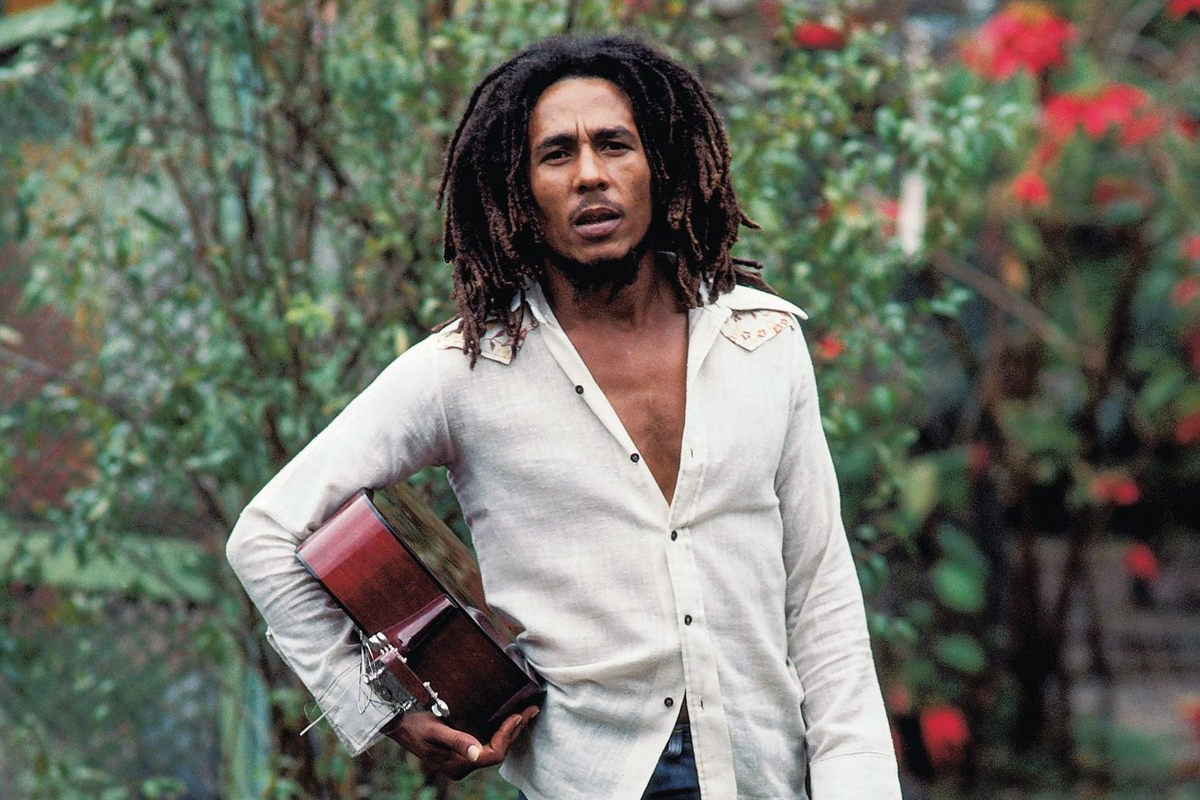
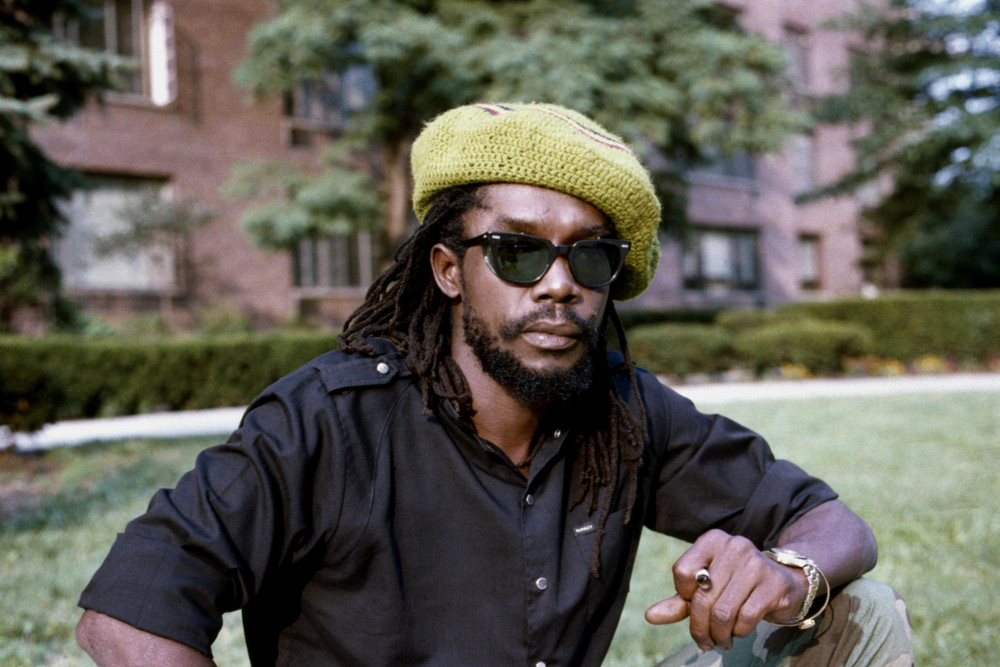
Trench Town, famous for producing reggae legends like Bob Marley and Peter Tosh, provided a rich environment for creativity and expression.
Bogle grew up immersed in this culture of rhythm, movement, and rebellion, which laid the foundation for his future as a dancer.
He was educated at Charlie Smith All Age and spent a brief period at St George’s College. The classroom, however, was never where Levy learned his most important lessons.
As a child in the 1970s he appeared on Louise Bennett’s television show Ring Ding, and in the 1980s he danced on the Saturday evening television programme Where It’s At, both on the Jamaican Broadcasting Corporation.
Even as a teenager, Bogle was performing for audiences, absorbing stagecraft and developing the charisma that would later make him the undisputed king of the dancehall floor.
Hailing from the community of Lincoln Crescent in Arnett Gardens, he rose to prominence through the Black Roses Crew, headed by William August “Willie Haggart” Moore.
The Black Roses Crew: Dancehall’s Most Influential Dance Squad
No account of Bogle as a dancer is complete without understanding the collective he helped build. Bogle was a founding member of Black Roses Crew of Lincoln Crescent (Roses Corner) in Kingston 13.
Its members included community leader William “Willie Haggart” Moore, David “Ice” Smith, Michael Stewart, and Lonsdale “Boysie” Guy.
The Black Roses Crew was a legendary group from Kingston known for their influence on dancehall fashion, style, and street credibility.
The crew, led by Bogle, was a staple at all major dancehall events and street dances. The crew’s Gothic style and hard-partying lifestyle made them one of the period’s marquee attractions.
Crew member Lonsdale “Boysie” Guy, speaking to the Jamaica Observer, recalled the rigorous standards Bogle held his dancers to.
Bogle gave him his first homework on Roses Corner: to learn the LOY dance, which Bogle described as the hardest he had ever created. Boysie spent almost six months on that dance. The lesson went beyond footwork.
When asked why he kept sending Boysie home, Bogle replied: “I want you to catch the flow and the groove.” That philosophy, the groove above the step, defined the Bogle dancer’s approach to movement.
The Moves: A Catalogue That Changed Dancehall Forever
Gerald Levy was the mastermind behind dance moves that he invented while enjoying himself at Jamaican dancehalls.
‘Many friends and artists attest that Levy could effortlessly create interesting and memorable dance moves.
What set Bogle apart was his consistency and creativity. He was able to produce new moves almost every week, and dancers across the island would wait eagerly to learn “what Bogle drop now.”
He essentially turned Jamaican dancehall into a dynamic dance laboratory, where the latest moves would spread like wildfire through neighborhoods and nightclubs.
Levy invented moves such as the Willie Bounce (named after his Black Roses Crew member Willie Haggart), Wacky Dip, Urkle Dance, Sesame Street, Bogle Dance, Pelper, LOY, Jerry Springer, Zip It Up, Hotti Hotti Bogle, World Dance, Pop Yuh Collar, Row di Boat, Out and Bad, Sweeper, and Stuckie.
Ask most people outside Jamaica what the Bogle is and you get a description of a movement: weight low, knees soft, the torso rolling forward and back while the arms wheel in front of the chest.
Bogle rose to local fame in the early 1990s when he created the self-titled dance immortalised by Buju Banton’s 1992 hit “Bogle.”
In the same year, Jamaica got its first look at the man himself when, during Banton’s Reggae Sunsplash set, he brought Bogle out to help him perform the song.
That Sunsplash moment transformed a street dance into a national phenomenon overnight.
The Willie Bounce is a dance that has you bouncing from left to right in a controlled swaying motion. Both feet and hands should also be moving, left, right, and then dip, all while swaying.
The Willie Bounce was named after Bogle’s Black Roses Crew member Willie Haggart. Created over 20 years ago, it remains a signature dance reference to the culture on the international level.
The Wacky Dip was among Bogle’s most personal creations, tied directly to his alter ego Mr Wacky. A tribute to Bogle, whose nickname was “Mr Wacky,” the Wacky Dip was a playful, expressive dance that encouraged freedom and flow. It would later be the move that linked him most visibly to global pop culture.
How Dancehall Artists Spread Bogle’s Moves to the World
The relationship between the Bogle dancer and Jamaica’s recording artists was not one of support act and headliner.
It was a genuine creative partnership. So many dancehall steps share a name with a song because the song is the distribution and the dancer is the origin.
Bogle’s own step went out into the world on Buju Banton’s “Bogle,” one of the hits that made 1992 Banton’s year in Jamaica. A decade later, Elephant Man’s “Log On” (2001) did the same job for the Log On.
After Bogle’s death, Elephant Man’s “Willie Bounce” carried a step Bogle had made in his final years, with a line in the lyric telling listeners outright that the man was gone but his dancing was not.
Bogle’s dances were not only innovative but also had the power to inspire musicians. Artists like Beenie Man, Elephant Man, and Mr Vegas often referenced Bogle and his moves in their lyrics. Dancehall music and dance became inextricably linked, with Bogle at the epicenter.
Buju Banton’s 1992 track “Bogle” celebrated the dance named after him, while posthumous releases like Voicemail’s “Wacky Dip” (2005), featuring Ding Dong, explicitly honored Bogle as a foundational figure in the genre.
International Fame: Bogle on the World Stage
Gerald “Bogle” Levy was the leading dancehall choreographer for more than a decade. That reputation did not stay contained to Kingston.
Dancehall’s global expansion in the late 1990s and early 2000s, especially in places like Japan, Europe, and North America, owes much to Bogle’s influence.
International dancers and choreographers began traveling to Jamaica to learn from the source, with Bogle being the undisputed master.
Bogle set the pace for younger dancers out of the ghetto, including John Hype, Ice, and Shelly Belly. That influence was not restricted to Jamaica.
Bogle was in demand for shows in North America, Europe, and Japan. Slick choreography and ghetto-fabulous fashion made him a bona fide star during the 1990s when the biggest artists in dancehall wanted him in their music videos. Some, like Beenie Man (World Dance) and Buju Banton (Bogle), immortalised him in song.
Bogle maintained a high profile in the dancehall, and by 2000 embarked on a career as a performer in his own right.
Murder and Its Aftermath
Bogle, also known as Mr Wacky, was shot and killed at a St Andrew service station on January 20, 2005. He had just left popular dance Weddy Wednesdays at Stone Love headquarters in St Andrew after 2:00 am.
As he sat in a Ford F-150 with four other people, two men on motorcycles rode by and shot the car multiple times, sending all occupants to the hospital.
The passengers were rushed to Kingston Public Hospital, where the 40-year-old Levy was pronounced dead.
The home of John Hype, Levy’s creative rival over the previous year, was burned to the ground just hours later.
In the wake of Bogle’s murder, Beenie Man offered a $1 million reward for the capture of the killers. The case was never officially solved. The case remains, in Bogle’s own popular slang, “an unsolved mystery.”
His death sent shockwaves through the dancehall community and sparked mourning throughout Jamaica and the diaspora.
Elephant Man released the hit single “Willie Bounce” in his honor, and artists like Beenie Man and Bounty Killer spoke out about the magnitude of the loss.
A Legacy That Only Grows
In 2020, The Economist dubbed Bogle the Godfather of Dancehall. That title reflects not just respect but an accurate accounting of influence.
In 2009, Rihanna released the music video for her hit song “Rude Boy,” where she is seen doing dance moves popularised by Bogle.
In 2018, during her acclaimed Coachella set, Beyonce did a version of the Wacky Dip while dancing to a mash-up of “Baby Boy” and Vybz Kartel’s “Fever.”
In 2015, Triple L Records released the 13-track album Mr Wacky RIP Riddim. A few months after The Economist piece, Boysie released the book Inside of Black Roses, which celebrates the legacy of the crew and Bogle.
One of the biggest songs of 2023, “Tyrant” by Masicka, paid homage to Bogle’s legacy in the dancehall space. The music video featured the dancer Colo Colo doing the Wacky Dip, and Masicka incorporated the phrase throughout the song.
To this day, Bogle’s name lives on in every dancehall step performed around the world. His moves are taught in dance studios globally, and his image is celebrated in murals across Kingston.
Events and competitions continue to honor his contributions, and documentaries and books about dancehall consistently reference his trailblazing role.
Why the Bogle Dancer Still Matters in 2026
There is a temptation, in dancehall’s fast-moving culture, to treat older figures as museum pieces. The Bogle dancer resists that framing entirely.
The moves he created in the yards and session halls of Kingston in the early 1990s are still the reference points against which every new dancehall choreographer is measured. Gerald “Bogle” Levy gave dancehall more of its vocabulary than any dancer before or since.
His moves were not just steps; they were expressions of identity, community, and the vibrant energy of Jamaican street culture.
That is why a pop star performing one of those moves on a Coachella stage in 2018, or a Jamaican recording artist name-checking the Wacky Dip in 2023, does not feel like nostalgia. It feels like a living tradition acknowledging its source.
Gerald Levy was 40 years old when he died. The question of what more he would have created is impossible to answer.
What is not in dispute is the extraordinary body of work he left behind, and the irreversible mark the Bogle dancer made on the culture of movement worldwide.