


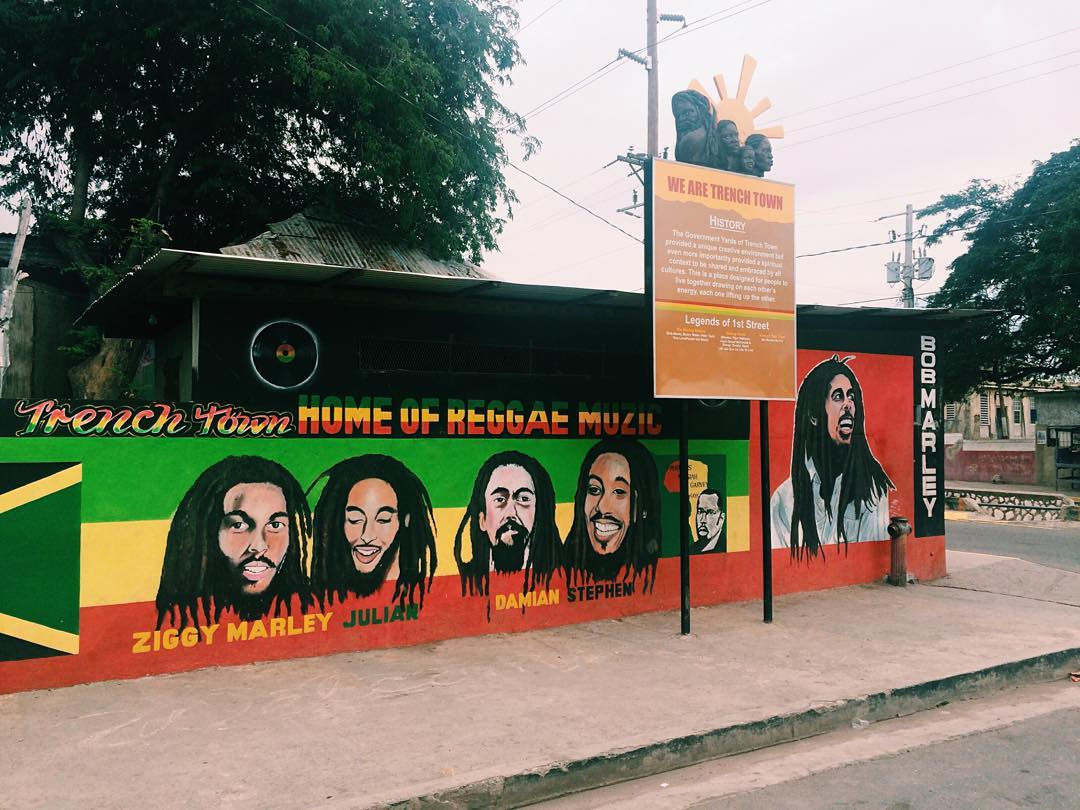
Walk down First Street on a hot Kingston afternoon and the place still hums: a speaker box testing somewhere, a vendor calling out, Bob Marley’s face painted across a wall.
Trench Town history is the story of how a patch of former cattle land in western Kingston became the address that changed popular music.
It gave the world the Wailers, Alton Ellis, the Heptones and a run of talent the Jamaica Observer has compared to Motown and Stax.
It is also a story about government yards and standpipes, rural migrants chasing a living, political gunfire and a community that refused to be written off. To understand reggae, you first have to understand this corner of Kingston 12.
From Trench Pen to Trench Town
Before the music, there were cows. The land was once Trench Pen, a livestock estate held by the Trench family from the late 18th century.
Plenty of people assume the name comes from the open sewer that runs through the community, but academic research on the area calls that a common misconception.
The name belongs to the family, who kept the pen in private hands until 1910. That year the last surviving member died, and an administrator, a Mr. Nethersole, took charge.
By the 1930s the land had become a growing squatter settlement. Country people were pouring into Kingston, and Trench Pen made sense for them.
It had plenty of unoccupied ground, and it sat close to the downtown market district, where a newcomer might find work.
Today the wider area takes in Wilton Gardens, better known as Rema, along with Federal Gardens, Arnett Gardens (the Jungle), Havana and Buckers.
The Government Yards
Colonial authorities treated the settlement as a problem to be solved. Beginning in the 1940s, they launched what one scholarly study calls one of Jamaica’s most ambitious social engineering exercises.
Through the Central Housing Authority, the government set out to turn about 200 acres of Trench Pen into a model township of owner-occupied and rental homes. The rest of the old pen became Rose Town.
The government yards built in the 1950s and 60s are the architecture of reggae memory. They were one- or two-storey concrete buildings arranged around a shared courtyard, with communal cooking and bathing facilities and a single standpipe for water.
Higher tiers of government housing, with more space and higher rents, went up as well. The courtyard was where life happened. Families cooked together, argued together and sang together. Anyone who has ever teared up to “No Woman, No Cry” already knows these yards by heart.
A Neighbourhood of Voices
Trench Town was making records before reggae had a name. Bunny and Scully, who first recorded as Simms and Robinson, were the area’s first recording artists.
Mainstream success arrived in 1958 with Higgs and Wilson’s “Oh Manny Oh”, and Alton and Eddie’s “Muriel” followed a year later.
Then came the 1960s, and the floodgates opened. Alton Ellis, Delroy Wilson, the Heptones, the Wailing Souls and the Abyssinians all came up out of these lanes. Coxsone Dodd’s Studio One became their proving ground.
Alton Ellis’s “Dancecrasher”, Delroy Wilson’s “Dancing Mood” and the Heptones’ “Fattie Fattie” carried the sound of tenement harmonies and street-corner rehearsals onto the island’s sound systems.
For a neighbourhood with communal bathrooms and one tap per yard, the output was staggering.
Joe Higgs and the Making of the Wailers
If Trench Town had a headmaster, it was Joe Higgs. Raised in a 3rd Street tenement yard and later hailed as the “Father of Reggae”, Higgs ran informal vocal lessons for the youths around him. It was at one of those sessions that Bob Marley and Bunny Livingston met Peter Tosh.
Higgs never undersold his role: “I am the one who taught the Wailers the craft, who taught them certain voice technique,” he said.
Marley had come to Kingston at 12 with his mother, Cedella, and the family ended up in Trench Town. Yard lore holds that he learned guitar from Vincent “Tata” Ford.
Where exactly the group rehearsed depends on who is telling the story, and that tension is part of the neighbourhood’s charm.
Garth Dennis of the Wailing Souls and Black Uhuru is firm on his version: “The Wailers was formed in my yard at 19 Third Street in Trench town where Joe Higgs also lived.”
Another first-person account remembers practising “under this big mango tree on Second Street in Trench Town.” Both sound like home.
In 1963 Higgs brought the group to Studio One. “Simmer Down”, cut there with Skatalites players, went to the top of the Jamaican charts in 1964.
When Marley became a superstar in the 1970s, the Observer notes, the neighbourhood “went international.” Trench Town was now a name on album sleeves around the world.
Gunfire, Hardship and Renewal
Fame abroad did not mean peace at home. As Jamaican politics turned violent in the early 1970s, Trench Town became unstable and dangerous. The communities within it were pulled into the era’s partisan battles.
From the late 1970s, structural adjustment programmes deepened the hardship, squeezing a place that had little cushion to begin with.
The community answered with organisation. Groups such as the Agency for Inner-city Renewal (AIR), the Trench Town Development Association and the Trenchtown Reading Centre took on the work of rebuilding.
The Reading Centre opened on First Street in 1993 with a simple, pointed mission: arm residents with information rather than weapons.
The Culture Yard Today
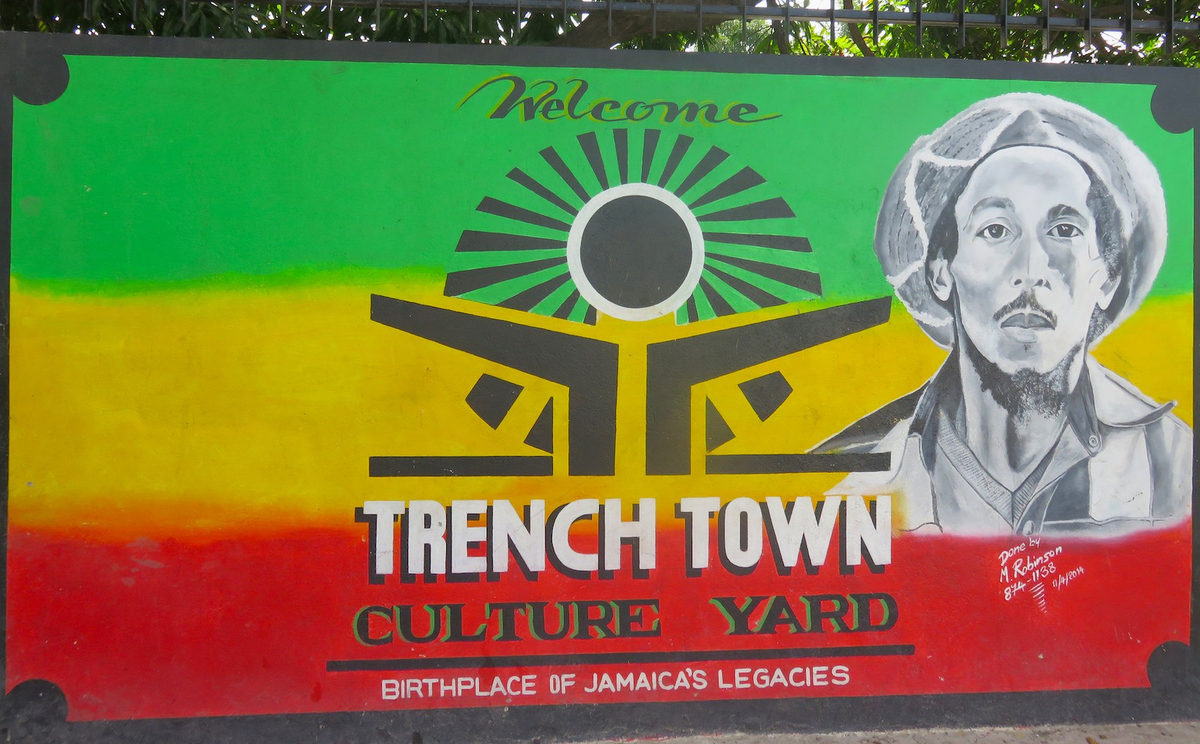
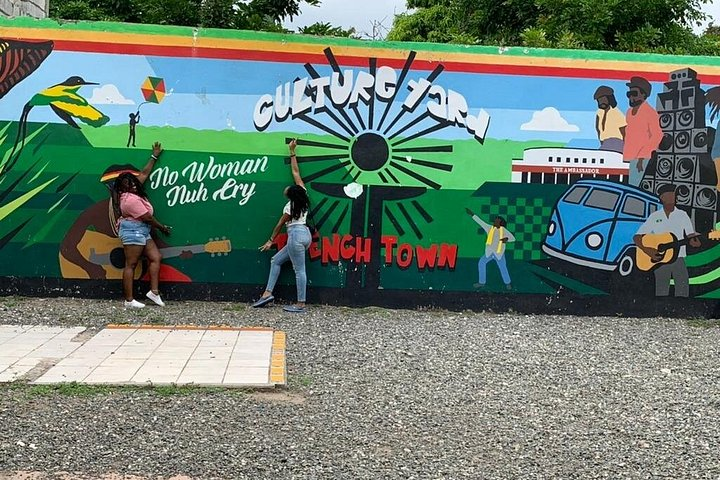
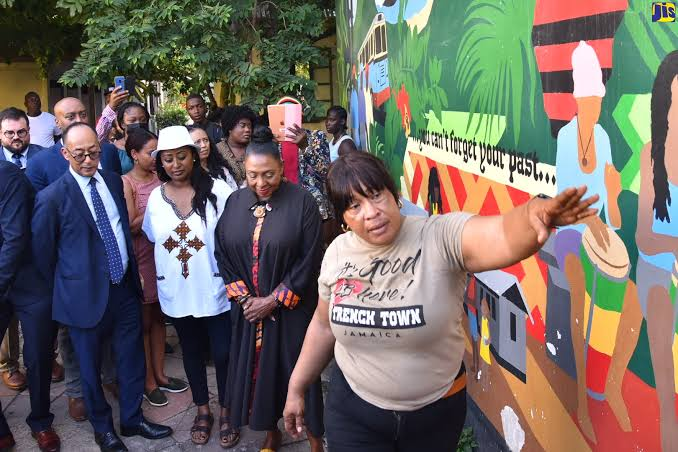
The neighbourhood’s living monument sits at 6 and 8 Lower First Street. The Trench Town Culture Yard was declared a national heritage site in 2007, and residents run it themselves through the Trench Town Development Association. That detail matters, because the history is told by the people who inherited it.
Inside, visitors find Marley’s bedroom, his first guitar and the shell of his VW camper van. Tours cost US$20 for the yard, $28 for the yard plus Marley’s mother’s house, and $40 for a walk through the wider neighbourhood.
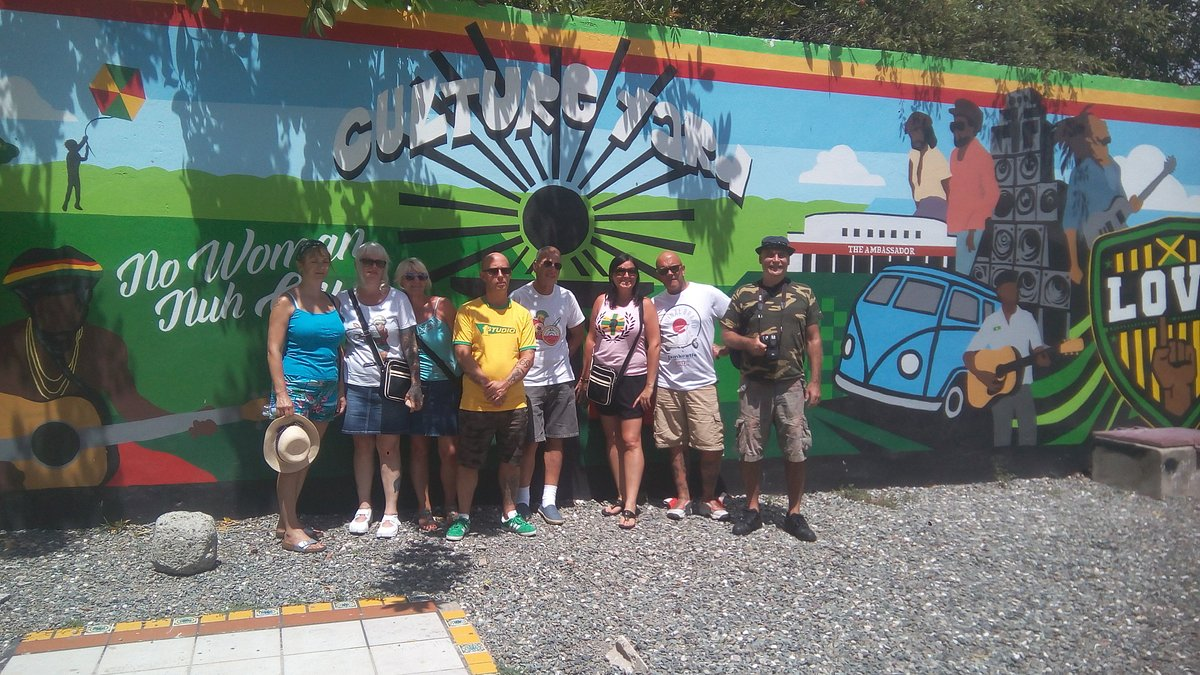
A local guide is strongly recommended. They will point out where the stories happened, and they will make sure the money stays in the community.
Why Trench Town Still Matters
Every reggae and dancehall artist who has turned yard life into song owes something to these streets.
Trench Town proved that a crowded courtyard with one standpipe could produce harmonies to rival any studio on earth.
It proved that a mentor like Joe Higgs, teaching for free, could shape the sound of a nation. And through the bad years, the community kept insisting that its story was worth more than its headlines.
The locals put it best, in a motto you will hear repeated at the Culture Yard: “Bob Marley did not make Trench Town, Trench Town made Bob Marley.”
More than half a century after “Simmer Down”, that still rings true. The music changed the world, but the yard came first.