
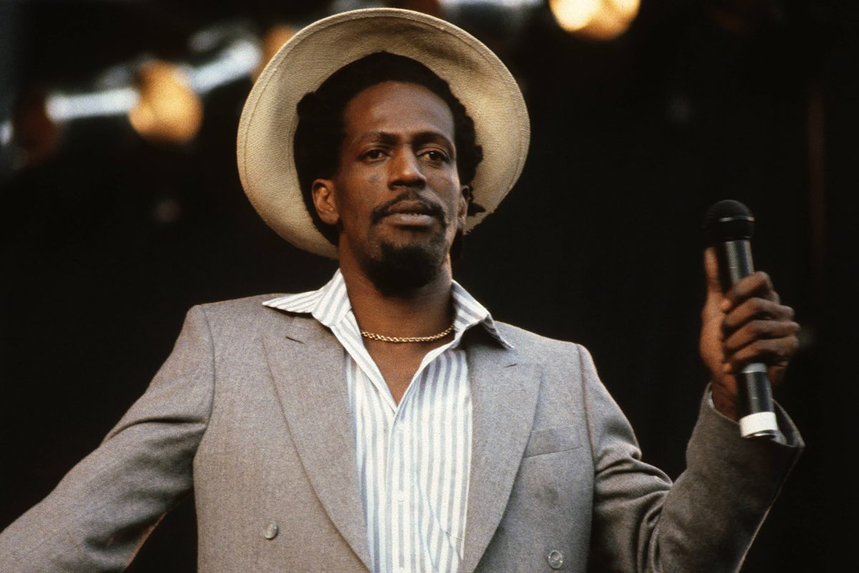

Nobody in reggae sang about love, longing and trouble with quite the same hush as Gregory Isaacs. The Cool Ruler barely raised his voice. He didn’t need to.
Milo Miles of The New York Times called him “the most exquisite vocalist in reggae,” and anyone who has heard a dancehall go quiet when the opening bars of a Gregory tune drop will understand why.
The best Gregory Isaacs songs move between bedroom pleading and sufferer’s protest, often within a single verse.
By the late 1970s he stood with Dennis Brown and Bob Marley as one of the three biggest performers in reggae. Over his career he put out an estimated 500 or more releases, so picking twelve means leaving out plenty of gems.
What follows runs from his African Museum beginnings through the Island years to the digital comeback that shook Kingston in 1988.
1. Gregory Isaacs, “Night Nurse” (1982)
There are reggae classics, and then there is “Night Nurse.” The title track of his first album for Island, it was produced by Isaacs with Errol “Flabba” Holt and cut at Tuff Gong with the Roots Radics.
Wally Badarou’s synth glows softly over the riddim while Gregory croons for the only cure he wants. The song never charted as a UK or US single. It didn’t matter. It ruled clubs and radio, the album climbed to No. 32 in the UK, and the song itself went Silver with the BPI.
In 1997 Sly & Robbie and Simply Red took a cover to No. 13 in Britain. British TV ads for the cold remedy of the same name kept it on the air for years, and by 2023 the original had passed 100 million streams.
2. Gregory Isaacs, “Cool Down the Pace” (1982)
The joke is in the title. uDiscover pointed out that the tempo is “hardly more temperate” than anything else on Night Nurse, and that unhurried glide is exactly the point.
Style Scott’s drums sit deep in the pocket, Flabba Holt’s bass rolls like a slow tide, and Dwight Pinkney’s lead guitar flickers around Gregory’s request for patience.
The track runs on its own Cool Down The Pace riddim, and AllMusic counts it among the album’s classic lovers rock moments. He brought it to John Peel’s BBC session in 1982.
Mattafix’s 2006 cover then carried it across Europe, reaching No. 25 in Italy and No. 17 in Slovakia, with a new generation discovering where the melody came from.
3. Gregory Isaacs, “Slave Master” (1977)
This is Gregory at his most righteous. Taken from the Mr. Isaacs album, “Slave Master” swaps the lovers’ rock sweetness for plantation imagery and a bassline heavy with dub weight.
Reggae Vibes called it “probably one of Gregory’s best songs ever,” and it remains one of the most popular cuts in his catalogue.
The song reached a wider audience through Rockers, the 1978 film in which Isaacs appears as himself. His live performance of the tune is one of the highlights of the movie, a lean and deadly serious man delivering a sufferer’s warning with total calm.
Alongside “Smile” and “Set the Captives Free,” it stands as the heart of that album, and it is the strongest reminder that the Cool Ruler was a roots singer too.
4. Gregory Isaacs, “My Only Lover” (1972)
Start the story here. “My Only Lover” was the first hit for African Museum, the label and shop he founded with Errol Dunkley, and it marks the moment Gregory began to take control of his own music.
The record has been credited as the first lovers rock record ever made, a claim fans still argue over, but there is no argument about its tenderness.
It is simple, devoted and intimate, the template for everything that followed. VP counts it among the songs that “helped define” the genre.
The tune has never stopped circulating. Dennis Brown and Etana both covered it, and Mr. Easy sampled it on “Drive Me Crazy,” which shows how naturally it carried over into the dancehall era.
5. Gregory Isaacs, “Rumours” (1988)
Few comebacks hit as hard as this one. Producer Augustus “Gussie” Clarke was steering his Music Works operation into the digital age, and “Rumours” became the biggest song on the island in the summer of 1988.
Written by Carlton Hines, the song finds Gregory gliding over crisp programmed drums, sounding entirely at home in the new sound.
The 12-inch hit mix stretches past six minutes, which is perfect for a sound system. The riddim also carried J.C. Lodge’s “Telephone Love,” the biggest reggae hit of 1988 in the US.
“Rumours” anchored the Red Rose for Gregory album and set off a run of follow-ups, including “Mind Yu Dis,” “Rough Neck” and “Report to Me.” The Gleaner still calls it a “mega hit.”
6. Gregory Isaacs, “Soon Forward” (1979)
When Sly Dunbar and Robbie Shakespeare launched their Taxi label, it was Gregory who gave them their first hit. Reuters later described “Soon Forward” as an “instant hit.”
The Riddim Twins’ playing is tight and muscular here, and the steady, punchy groove pushes Gregory to sing with quiet determination about getting ahead.
The single gave its name to an album that, together with Cool Ruler, failed to sell as well as expected at the time. Both are now regarded as among the finest records he ever made.
The song is a reminder of how closely the Taxi sound was tied to Gregory in those early days, and the partnership would keep producing music for years.
7. Gregory Isaacs, “Love Is Overdue” (1974)
This was his first Jamaican No. 1, and the people embraced it in a way chart numbers can’t capture. Apple Music’s bio notes that it “became a staple at local weddings and christenings.”
Produced by Alvin Ranglin for GG’s and issued in the UK on Attack, the song is all gentle yearning, the sound of a young singer finding the warmth that would become his signature.
Gregory wrote it himself, and he never let it go. It stayed in his live sets for decades, from the Roxy Theatre in 1982 to Sunsplash in 1985. A later Heartbeat compilation paired a discomix with U-Roy, giving the tune a deejay workout.
8. Gregory Isaacs, “Mr. Cop” (1977)
Here is Gregory meeting Lee “Scratch” Perry at the Black Ark, the only time the two worked together as singer and producer. You can hear it immediately.
The mix is hazy and full of phasing, that unmistakable Ark murk swirling around a protest song that speaks directly to police.
Gregory asks overzealous officers to stop harassing the weed-smoking dreads, and he does it with his usual velvet manner, which makes the message land even harder.
Released on African Museum, the record captures two of Jamaica’s most singular talents in the same room.
Perry’s original mix, with its dub, remains highly sought after by collectors who love the darker side of the decade.
9. Gregory Isaacs, “Front Door” (1981)
Self-written, self-arranged and self-produced, “Front Door” was released in the UK on Pre with “Substitute” on the B-side. According to AllMusic, it “immediately became a Jamaican smash.”
The Roots Radics provide what AllMusic’s Jo-Ann Greene called a “sympathetic backing,” a loose and confident groove that leaves Gregory plenty of room to tease and plead.
It fits the run of Pre singles that set up his Island breakthrough, and he played it for John Peel in 1981 and in live shows for years after.
The covers tell the rest of the story: Dennis Brown, Tarrus Riley, Dean Fraser and Musical Youth have all walked through this door.
10. Gregory Isaacs, “Border” (1979)
Reuniting with Alvin Ranglin in the late 1970s produced some of Gregory’s sharpest singles, and “Border” stands out among them. It is a roots tune with a traveller’s restlessness, carried by his calm, worn tone.
The GG’s 12-inch, with U-Brown chatting on the version side, was spinning on John Peel’s radio show by August 1979, which gave it a following in Britain alongside its Jamaican audience.
The disco-style pairing of singer and deejay was ideal for the sound systems of the time. Gregory never retired it.
“Border” turns up on the Roxy Theatre 1982 live set and was still in his shows into the 1990s, which is the clearest sign of how much the crowds wanted it.
11. Gregory Isaacs, “Material Man” (1982)
Tucked inside Night Nurse, an album mostly concerned with what AllMusic called “concerns with the flesh,” “Material Man” changes the subject.
Discover singled it out as one of the album’s rare cultural tracks, a song about the exploitation of Rastas, sung with Gregory’s restrained disappointment rather than fury.
It runs on its own Material Man riddim, produced by Isaacs and Flabba Holt, and the Roots Radics give it a steady, rolling seriousness that sets it apart from the love songs around it.
Today it is still one of his most played tracks on Apple Music, proof that listeners who came for the romance stayed for the message.
12. Gregory Isaacs, “Hot Stepper” (1982)
The title promises fire, but Gregory delivers a slow burn. “Even ‘Hot Stepper’ doesn’t boil,” uDiscover observed, and that restraint is exactly what makes it work.
Over four and a half minutes, the Roots Radics lock into a patient groove while Wally Badarou’s synth adds a glossy, early-80s shimmer.
Gregory sings like a man who knows the dance will come to him. It is one of the deeper cuts on Night Nurse, produced by Isaacs and Flabba Holt, and it shows how complete that album is from start to finish. Fans who have worn out the title track always seem to return to this one.
Why the Cool Ruler Still Reigns
Gregory Isaacs died in London on 25 October 2010, but his music has refused to fade. In 2016 Jamaica awarded him the Order of Distinction, Officer Class, and he collected five Grammy nominations over his career.
In 2023 VP released Rebirth of the Cool Ruler, on which King Jammy paired his late-80s and 90s vocals with Shaggy, Sean Paul, Bounty Killer, Jesse Royal and others.
In 2025, the year he would have turned 75, “The Cool Ruler: The Musical” took the stage at the Hackney Empire. A deluxe edition of More Gregory arrived just weeks ago.
The reason is simple. Whether he was pleading at a lover’s front door or warning the slave master, Gregory made every word sound private and true. Six decades on, that voice still cuts through.