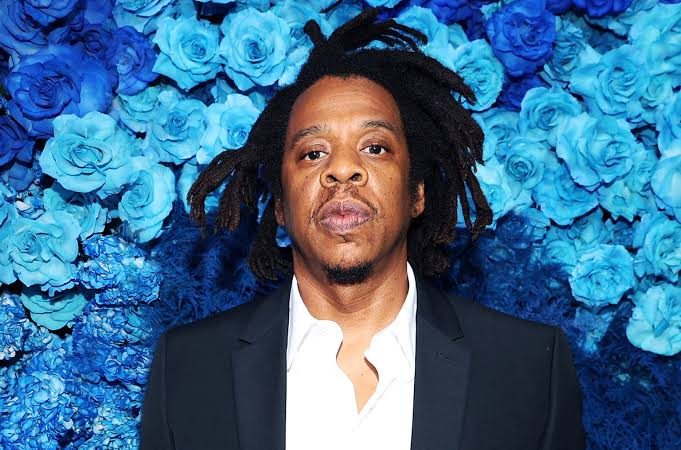

Jay-Z’s partnership with the NFL has never been far from controversy, and the debate around what it meant for Black culture and the Colin Kaepernick movement is far from settled.
A group of commentators recently laid out a pointed case: the league brought Jay-Z in not as a creative partner, but as a Black figurehead designed to end a boycott and restore ratings.
The argument centers on timing and optics. When Kaepernick began kneeling during the national anthem to protest police brutality, the NFL found itself in a public relations crisis.
A significant portion of Black viewers and allies stepped back from the league. The commentators argued that the NFL needed a credible Black voice to signal that it was safe to return, and Jay-Z was that voice.
“That is why Jay-Z is in the picture,” one speaker said. That’s why they had to call a black face to the front to say, ‘Roll up your [ __ ] and tell them it’s okay to watch the NFL.'”
The criticism does not stop at the NFL’s motives. Jay-Z’s own words drew scrutiny. His suggestion that the movement had progressed beyond kneeling was seen as a dismissal of Kaepernick’s sacrifice rather than an evolution of the cause.
“It belittles the situation,” one commentator said. “Those specific words are saying, ‘Hey, let’s get this guy out of here and let’s move on and get these NFL numbers back up.'”
One voice in the conversation acknowledged the complexity, noting that Kaepernick himself had reportedly asked only to be left out of the Jay-Z partnership. “If somebody says, ‘Yo, do your thing, but keep me out of it,’ I respect that,” he said.
The concern, however, was that Jay-Z’s public framing went further than simply moving forward. It appeared to minimize what Kaepernick had stood for.
The broader cultural stakes were also raised. The NFL’s roster is composed predominantly of Black and brown players, which made the optics of the deal all the more loaded.
The commentators argued that the moment called for solidarity, not a pivot toward entertainment partnerships.
Black people did stand up with Cap,” one speaker said. “We stood up and then the minute Jay-Z comes into the picture and says, ‘Hey, I got music for you motherfuckers,’ now it stops.”
There was some pushback on whether the partnership actually moved the needle. One participant questioned whether the numbers truly reflected a Jay-Z effect, pointing to the Raiders as a counterexample. But others held firm that the data supported the theory.
The NFL had a cloud hanging over it, they argued, and a co-sign from one of hip-hop’s most powerful figures helped lift it.
What the conversation ultimately surfaces is a tension that runs through Black celebrity and corporate America.
When a prominent Black figure enters a deal with an institution accused of racial injustice, the question is always whether they are changing the institution from within or providing it cover. In Jay-Z’s case, many in the culture remain unconvinced the answer favors him.