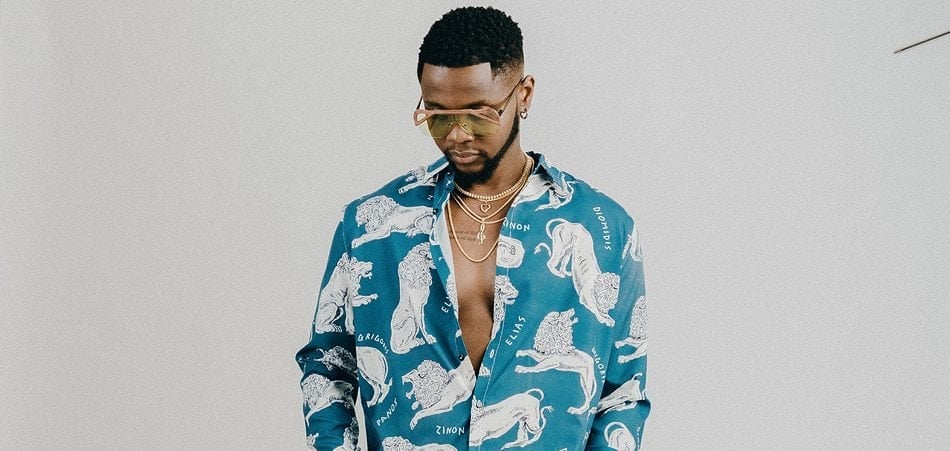
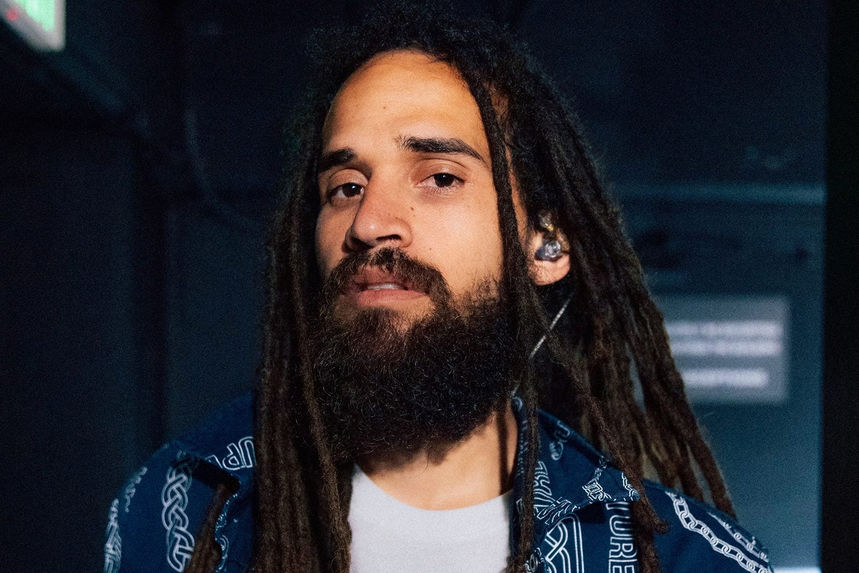

Keznamdi is a Grammy-nominated reggae artist who has never signed to a major label, never taken a big distribution deal, and built his entire career on what he calls a guerrilla approach to promotion and marketing.
That foundation, rooted in a childhood split between the hills of Kingston, the plains of Tanzania, and the highlands of Ethiopia, is the lens through which he sees everything, including a Grammy story he says he is not yet ready to tell.
Born and raised in Skyline Levels, Kingston, a community in the hills that he describes as a place where all the worlds collide, Keznamdi grew up surrounded by Rastafari culture and live reggae music.
The Dub Club, a venue that played strictly roots and dub music every Sunday, was close enough that, as he recalled, “my bed used to shake” when the sound system came on.
Artists like Kabaka Pyramid, Jesse Royal, Chronics, Kelissa and Micah Shemaiah were part of the same scene, and he credits that environment as a genuine training ground.
At around thirteen or fourteen, his mother, who worked for a nonprofit organization, relocated the family to Africa.
They lived in Tanzania for three years, then moved to Ethiopia, where Keznamdi finished high school. He was in his formative years, he said, and the experience of actually living on the continent rather than simply hearing about it shaped him in ways that travel as an adult cannot replicate.
“The little world where you exist is so small in the global space,” he said. “The perspective that you carry in is not the only perspective.”
Ethiopia brought its own complexity. Growing up in Rastafari, he had heard nothing but reverence for Emperor Haile Selassie. Living in Ethiopia exposed him to sharply different views. His high school thesis paper was written on exactly that subject, examining the contrasting opinions of the emperor’s legacy.
He spoke at length about the historical context, the Derg regime’s propaganda, the displacement of Eritrean people, and the political calculations Selassie made when he appeared before the League of Nations. “Today for me and tomorrow for Uno,” he said, quoting the emperor’s message to that body.
He was careful to hold multiple truths at once, expressing love for Eritrean people while acknowledging the generational hurt that history produced.
Music was always present. His parents, musicians themselves, were touring across Africa while he served as their opening act. His first recording came at age six, on a children’s album his mother was making.
The guitar his father placed in his hands at sixteen taught him melody and, eventually, how to sing. His first real body of work, he said, was his 2020 album Bloodline, which was building serious momentum until the pandemic shut everything down.
The album that followed, Blood on Fire, changed his trajectory and led to a Grammy nomination. He was nominated alongside artists including Vybz Kartel and acts signed to established companies like Easy Star and Ineffable.
“Just getting the nomination was good enough,” he said. “Me win the Grammy with the nomination.” He described his mother hugging him and crying when the announcement came on television, and called the moment meaningful precisely because it was earned without compromise. “We did it on our own terms. We never sell out, we never bow to no system,” he said. “We took the long way around.”
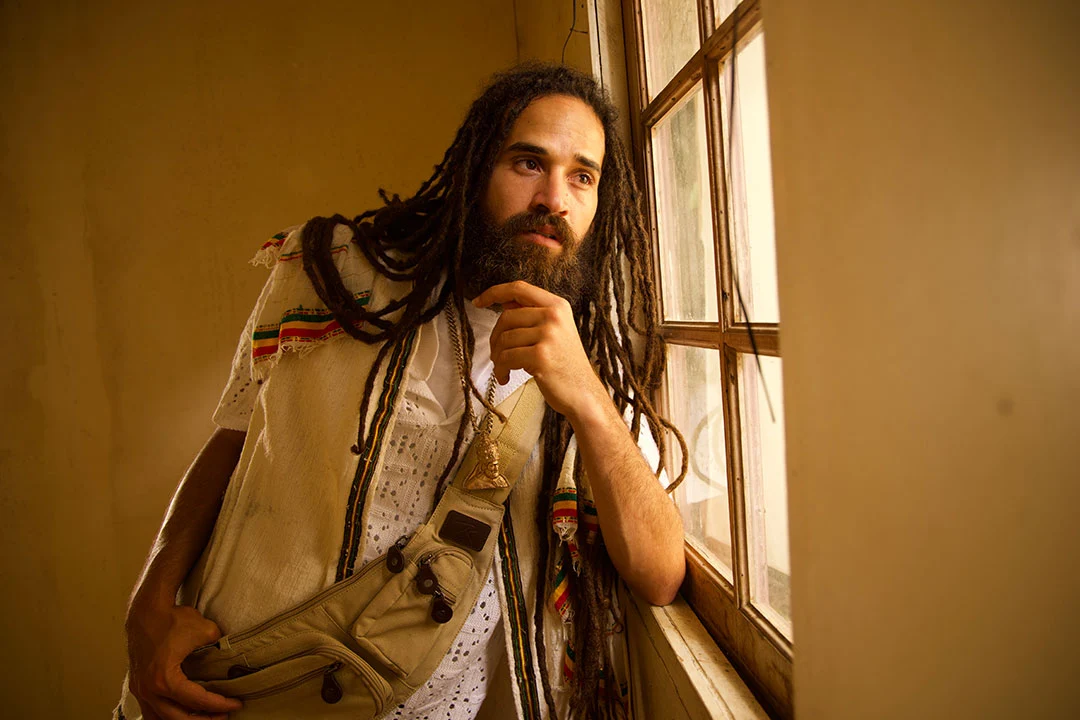
On the Grammy story itself, he was deliberate. There is more to how that nomination came about, he said, but he is not ready to share it. “I have to wait, bro, just to protect myself,” he said. “But there’s a bigger story to that.” He promised to return and tell it in full.
On staying independent, he acknowledged that label offers came early and that, in hindsight, he probably should have taken at least one of them.
But the stubbornness of being eighteen or nineteen years old, combined with an unwillingness to give up his masters, kept him on his own path. The mistakes and the trial and error, he said, were ultimately the right education for the kind of artist he became.