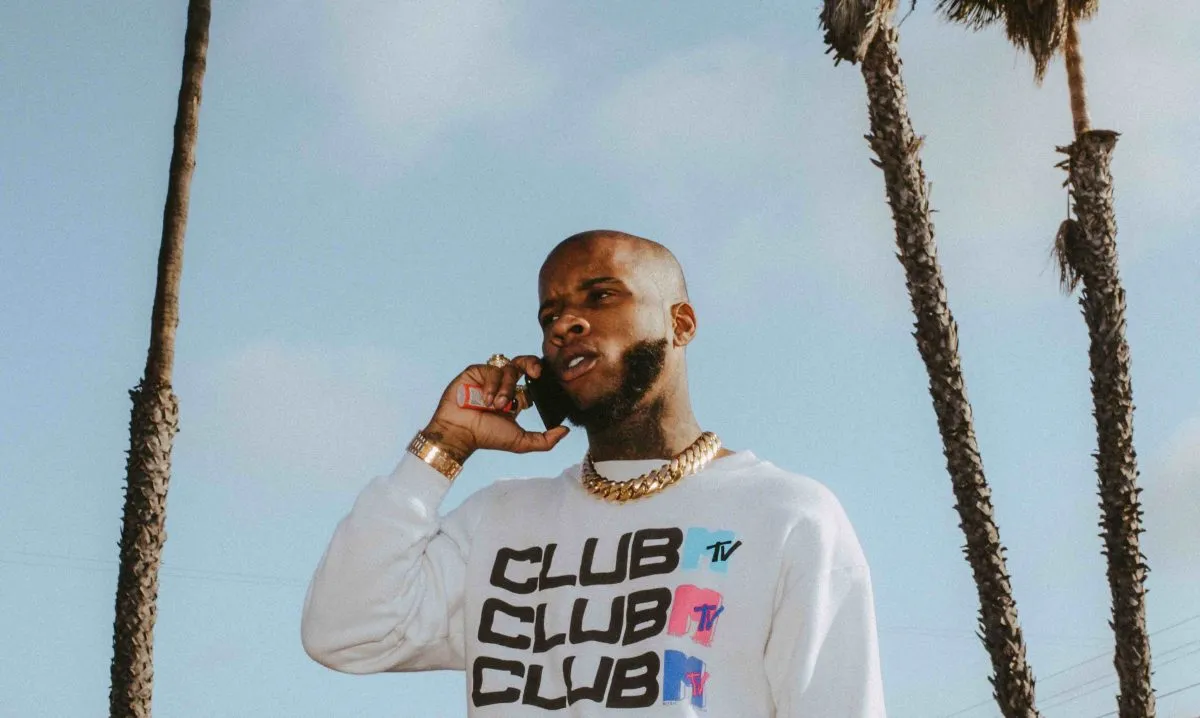


There are singers who hit you square in the chest, and then there is Beres Hammond, who seems to slip a hand around your waist before you notice the band has started.
Ranking the best Beres Hammond songs means walking through five decades of Jamaican music: from mid seventies soul reggae, through the digital dancehall explosion, and into the warm live band sound of his Harmony House years. Through all of it, that gravel and honey rasp has barely changed.
Born Hugh Beresford Hammond in Annotto Bay, St Mary, in 1955, he has collected an Order of Jamaica and two Grammy nominations along the way.
His real trophies, though, are the dances where whole crowds sing his lyrics back at him. These are the twelve songs that define him.
1. Beres Hammond, “Tempted to Touch” (1990)
If one record explains why Beres Hammond belongs to the dancehall as much as to the lovers’ corner, it is this one. In 1990 he signed with Donovan Germain’s Penthouse label and came home to Jamaica for good to cut it.
The result was a smash that married his aching, grainy delivery to a rhythm built for the sound system. It is a song about restraint barely holding, and the tension in his voice does all the work.
Wikipedia calls it perhaps his best known song in the US and UK, and it opened the door for the run of hits that filled A Love Affair in 1992.
Decades on, a selector can still drop it and watch couples drift together, just as they did when it was a fresh pre-release.
2. Beres Hammond, “They Gonna Talk” (2001)
By the turn of the millennium Beres was running his own show at Harmony House, and “They Gonna Talk” is the sound of a veteran doing exactly what he pleases.
He recorded it in his home studio, with a rub-a-dub groove laid down by Flabba Holt and Style Scott of the Roots Radics.
They gave him a live, breathing rhythm section that put feel ahead of technology. Over it, Beres brushes off the neighbourhood gossip with a lover’s calm certainty.
The song anchored Music Is Life, the VP Records album that earned him a Best Reggae Album nomination at the 44th Grammy Awards in 2002, where Damian Marley’s Halfway Tree took the prize. The riddim now carries the song’s name, and the tune remains a staple wherever lovers rock is played.
3. Beres Hammond, “Putting Up Resistance” (1996)
Anyone who only knows Beres the balladeer is in for a jolt here. Working with David “Tappa Zukie” Sinclair, he made an album significantly harder than his usual romantic fare.
Its title track became a “strugglers’ anthem,” a rallying cry for anyone grinding against a system that will not give an inch.
The rhythm rolls with roots weight, and Beres sounds defiant rather than tender, proof that the throat that begs a lover to stay can also stare down Babylon.
The same riddim carried “Resistance,” a Tappa cut pairing Beres with the toasting pioneer U-Roy. The album also gave us “Strange,” but this is the song that endures, still sounding like a promise to keep standing.
4. Beres Hammond, “What One Dance Can Do” (1985)
Spare, digital and irresistible, “What One Dance Can Do” is where Beres caught the wave that was reshaping Jamaican music in the mid eighties. Producer Willie Lindo built it on a lean electronic beat that leaves acres of room for the voice.
Beres fills that space with the story of how one turn on the floor can change everything. It was one of two Jamaican number ones from Make a Song, and it began to break him into the international market.
The song understands the dancehall as a place of romance as much as rivalry. It still opens greatest hits mixes for a reason: from the first bar, everyone knows where the night is heading.
5. Beres Hammond, “Come Back Home” (1993)
Some heartbreak songs wallow, but “Come Back Home” pleads. Richard “Bello” Bell produced it for his Star Trail label, which he launched around 1989 and built partly by working with artists like Beres. It is a lovers’ lament that lets the singer’s rasp carry all the regret a man can admit to.

The arrangement stays politely out of his way, and once the chorus lands, its pull is impossible to resist. It sat on the 1993 Sweetness album, part of a remarkably productive early nineties stretch, and it has never left his live sets.
At a 2011 concert he ran it straight alongside “Tempted to Touch” and “Sweetness,” a sequence that played like a summary of his finest years.
6. Beres Hammond, “Double Trouble” (1993)
Steely and Clevie were architects of digital reggae, with Clevie pioneering the drum machine in the music. On “Double Trouble,” their crisp programming meets Beres at his most playful.
The song bounces where so much of his catalogue sways, and it shows how easily he slid into the machine age without losing a shred of warmth. Like “Come Back Home,” it belongs to his Sweetness era, but its real home is the stage.
At a 2011 show he broke out his famous skank during it, then held the mic toward the crowd and let them carry the lyrics. That moment says plenty about how deeply this one has sunk into the memories of his fans.
7. Buju Banton & Beres Hammond, “Who Say” (1992)
Picture the 1992 Penthouse yard: a young Buju Banton, all thunder and bass, and Beres, the elder statesman of sweetness, trading lines on the same rhythm.
Who Say” rode the Falling in Love riddim, and the chemistry was instant. Buju’s growl and Beres’ soulful croon should not fit together as neatly as they do, yet the contrast is the whole thrill.
It became the most notable club hit on Buju’s Mr. Mention album, and the Penthouse seven inch remains a prized piece of that golden run.
The tune proved its staying power again in 2025, when Penthouse revisited the rhythm for a Flashback Series compilation that included a remix featuring Cuban Stepper.
8. Beres Hammond, “Rock Away” (2000)
Few riddims carry history like this one. “Rock Away” builds on the bones of “Mr. Fix It,” the Winston Francis tune from Studio One, and Beres gives that foundation a new, honeyed glow under his own production. First issued as a Harmony House seven inch, it became one of the pillars of Music Is Life alongside “They Gonna Talk.”
The groove is pure contentment, the kind of slow sway that makes a crowded lawn feel like a living room. Its place in his story was underlined in November 2023, when he received an honorary Doctor of Letters from the University of the West Indies, Mona, and sang “Rock Away” to the graduating class. Few graduation songs have ever sounded so good.
9. Beres Hammond, “Groovy Little Thing” (1985)
The same 1985 burst that produced “What One Dance Can Do” also gave us “Groovy Little Thing,” and it is every bit as essential.
This was the first release on his own Harmony House label, a quiet declaration of independence that would shape the rest of his career.
Like its companion, it took its cues from the dancehall sound spreading across Jamaica, and it climbed to the top of the local charts.

The feel is light on its feet, flirtatious and unmistakably eighties, yet Beres’ vocal gives it a timelessness the drum programming alone never could.
VP Records included it on the Can’t Stop a Man collection, and it remains a cornerstone of any serious Beres playlist.
10. Beres Hammond, “Can You Play Some More (Pull It Up)” (1998)
Every selector has heard some version of this request, which is exactly why the song connects. Released on Harmony House in 1998 over the Things and Time riddim, “Can You Play Some More” is a love letter to the music itself. It speaks in the voice of a dancer who simply does not want the session to end.
The credits point to Donovan Germain, reuniting the pairing that had served Beres so well at Penthouse.
A version featuring Buju Banton later turned up on VP’s Buju and Friends set, a reminder of how naturally the two voices blend. Its “pull it up” plea makes it an obvious choice to open a mix, and DJs still give it exactly that treatment.
11. Beres Hammond, “Is This a Sign” (1992)
After “Tempted to Touch” made him a dancehall heavyweight, Beres and Donovan Germain needed a worthy follow up, and “Is This a Sign” delivered.
It opened the original A Love Affair LP in 1992, setting the tone for an album stacked with lovers rock gems. It later surfaced as a Penthouse seven inch, sometimes titled “Is It a Sign.”
The song circles that delicious uncertainty early in a romance, when every glance might mean something, and Beres sings it with a hope that sounds genuinely nervous.
Alongside “Respect to You Baby,” it proves his Penthouse moment was no one hit fluke. It was the full flowering of a mature singer who had found the perfect studio partner.
12. Beres Hammond, “One Step Ahead” (1976)
Go back to the beginning. Long before Penthouse or Harmony House, a young Beres teamed with Willie Lindo for “One Step Ahead,” the song VP Records describes as his first hit.
It came from his debut solo album, Soul Reggae, and that title says everything about the blend he was chasing: a smooth soul sensibility wedded to Jamaican rhythm.
The song became a number one hit at home, announcing a voice that already sounded older and wiser than its owner. Hearing it now, you can trace a straight line to everything that followed.
The Lindo connection would pay off again nearly a decade later, when the pair delivered “What One Dance Can Do.”
Why Beres Hammond Still Matters
What ties these twelve songs together is not one sound but one sensibility. Whether the rhythm came from a drum machine, a Studio One foundation or the Roots Radics playing live in his home studio, Beres always sang to people rather than at them.
That is why the catalogue keeps growing in stature. Never Ending topped Billboard’s Reggae Albums chart in 2018, and One Love, One Life brought him another Grammy nomination.
Younger stars still line up to work with him, too. When Sean Paul joined him on “Rebel Time” in 2023, he said simply, “I look up to Beres as an icon in Jamaican music.”
Beres himself has no doubt that lovers rock will survive. “Only we can kill dis,” he once said. With songs like these in circulation, nobody is killing anything.