

Queen Ifrica has weighed in on Vybz Kartel’s recent run of “shaky” online content, saying the King of Dancehall should be mindful of the influence he carries and how his public image might reflect on Jamaica.
Her comments came after days of heated debate across Dancehall social media over two videos that Kartel shared of himself dancing in revealing outfits, including a red robe, underwear, and a pink shower cap. Some critics described the videos as “shaky,” a coded Jamaican insult often aimed at men perceived as not traditionally masculine, and questioned whether they fit the image long attached to the Real Badman artist.
Kartel responded to the backlash on Sunday, appearing in an Instagram video seated in his infamous red robe. “POV: When they angry you’re not a bad man fi go prison. Instead you’re a multi-millionaire inna real, real life,” he wrote in the caption.
“I am not a badman,” he continued. “I am a happily engaged international award-winning entertainer. Adidja Azim Palmer, more popularly known as Vybz Kartel. God me say. Family me say. Music me say.”
Many fans have defended the 50-year-old artist as simply enjoying his freedom, leaning into internet entertainment and using the chatter to keep attention on his recent releases, such as Don’t Mess Up and Victory.
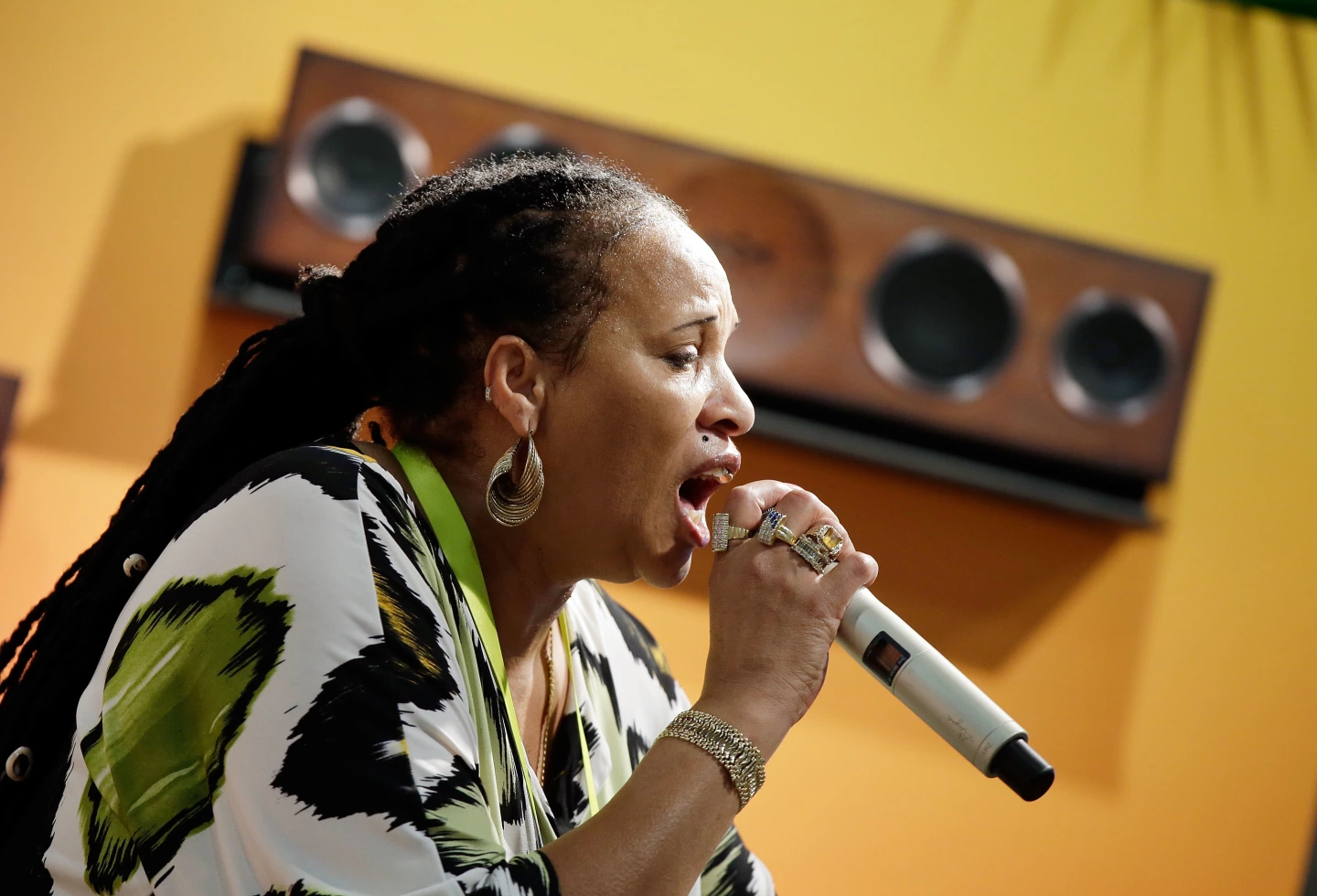
Queen Ifrica, speaking during a TikTok Live over the weekend, said she had no issue with Kartel dancing half-dressed in his own home. Her concern, she said, was about the weight his public image carries once those moments are posted online and how far Jamaican artists have been bending for attention and money.
Ifrica said Jamaica’s global image should not be treated as a joke. “Everybody ah look pon we down here. It don’t look good. It nuh look good….we ah sell wiself short,” she said.
“I know what [Jamaica] means to the world, and I know what we as a people mean to the world,” she said. “And I know the difference among us as a people, and why everybody wants to see us defeated.”
Ifrica said that Kartel’s supporters could defend him while still being honest about the image he is now presenting. “Addi is not the Daddy we know from them time right now,” she said. “Whatever version of him this is, he needs better guidance in his personal life right now.”
She suggested that Kartel’s 13 years in prison may have affected him.
“You see a person locked up in prison for 13 years alone, that is psychological damage to the brain already,” she said. “No matter even if him nuh want accept that gwaan, that gwaan. Then you come around and you have all the different systems advising you as to what is popular and what you need to do.”
She added that while a man is free to do as he wants, that freedom should not cancel responsibility. “You can’t be so irresponsible with so many people who look to you for their day-to-day motivation. The inner-city youths, them don’t know where to turn,” she said.
She argued that social media, especially TikTok, has become a major influence on inner-city communities.
“Everything [on the internet] just normalizes what they feared the most,” she said. “TikTok is the new thing now teaching inner-city people. All of this, a inner-city people hearing it. Ah the youth them pon the corner weh influence by these great giants we have, ah them a listen.”
The singer stressed that she was not singling out Kartel alone.
She claimed that both Dancehall and Reggae have suffered from weak cultural leadership and from “gatekeepers” chasing money over values.
“Why the whole of wi thing look so. Reggae flat, Dancehall flat …because [of] the gatekeepers them,” she said. “Over Reggae side worse. Reggae weh supposed to set the greatest example, ah reggae first sell out. Reggae was the little last hope and ah Reggae lead the sell out.”
When challenged to name Reggae artists as directly as she named Kartel, Ifrica called out her ex-husband Tony Rebel, Capleton, Sizzla, Buju Banton, Protoje, Chronixx, and Koffee.
“Who stand up for the morals? Who stand up for the culture?” she asked. “Them nah deal with no culture, them nah deal with no preserve weh we believe in. Them a deal with money.”
“Mi nah pick on one individual,” she continued. “The whole a we culpable and… cause the country to go down. If you’re silent, you’re part of it. If you defend the foolishness weh a gwaan, you’re part of it.”