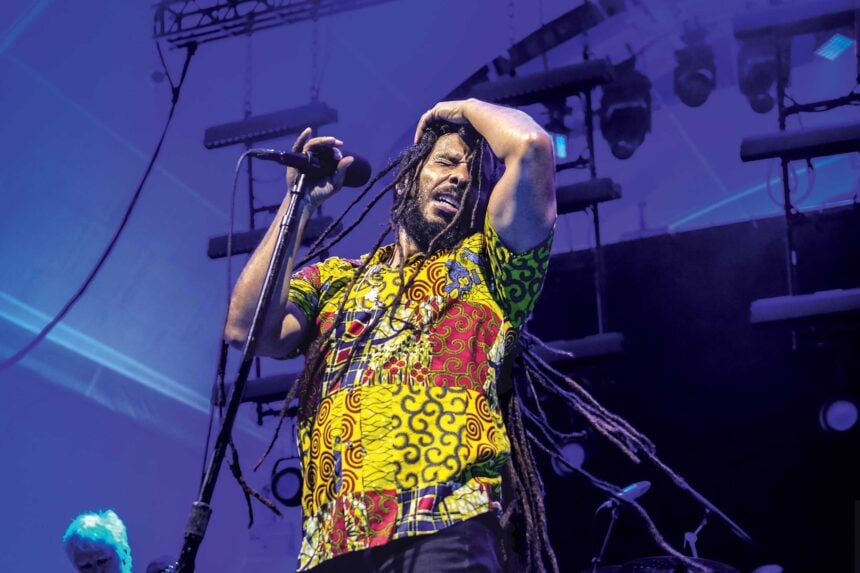

Ziggy Marley didn’t just congratulate the continent and move on. After nine African nations made history by advancing to the Round of 32 at the FIFA World Cup, he used the moment to push for something bigger, calling on FIFA to bring the next tournament back to Africa.
The reggae artist shared the message on Instagram, spotlighting each of the nine countries that made the cut and describing the collective achievement as “a significant achievement for African football.” For someone who has spent decades carrying forward his father Bob Marley’s Pan-African spirit, the post felt like more than a casual shoutout.
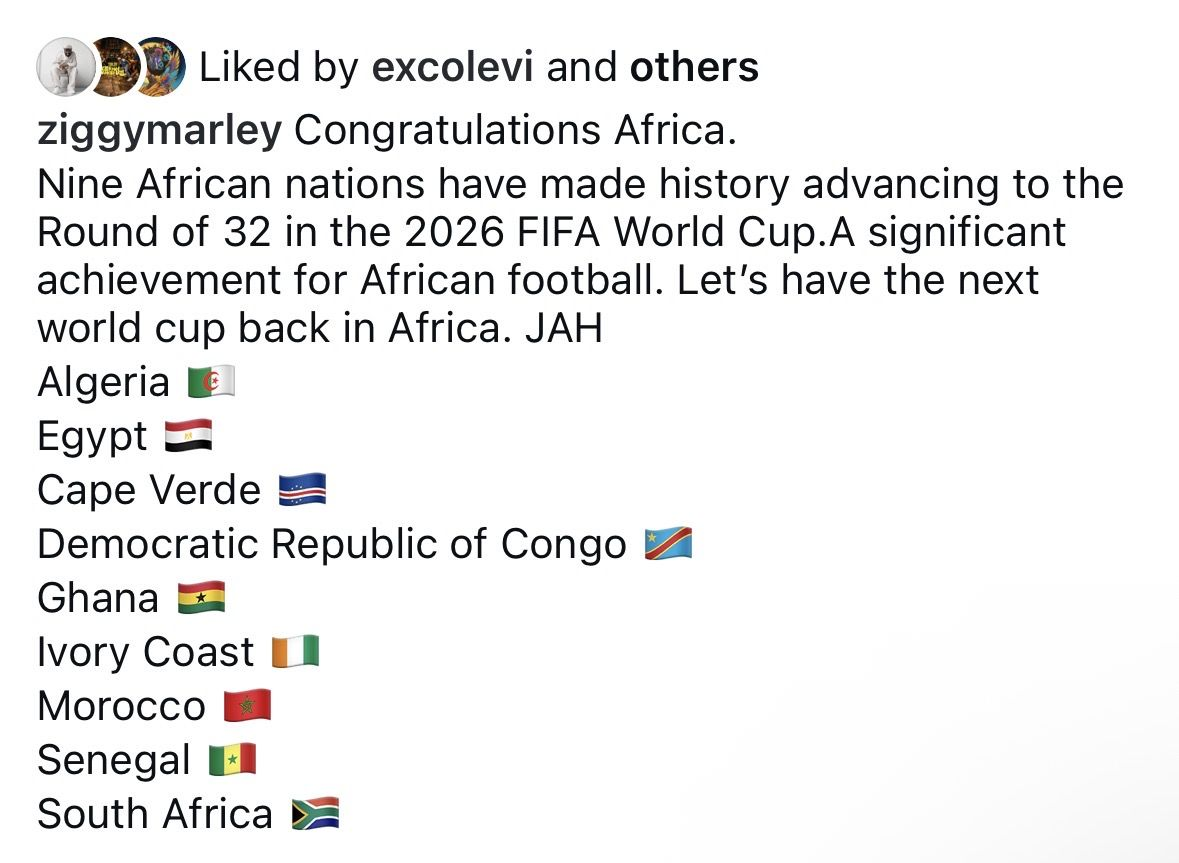
The nine nations still alive in the tournament are Algeria, Morocco, Egypt, Cape Verde, Democratic Republic of Congo, Ghana, Ivory Coast, Senegal, and South Africa was not among them by the time Ziggy posted. South Africa had been eliminated by Canada on Sunday, a result that stung given the country’s deep emotional connection to the World Cup after hosting it back in 2010.
That loss adds a layer of complexity to the celebration. For South African fans, watching the rest of the continent advance while their own team heads home early is a bittersweet reality, and it makes Ziggy’s broader call for an African World Cup feel both timely and a little raw depending on where you’re standing.
From a football perspective, nine nations reaching the Round of 32 is a number that would have been hard to imagine just a few tournaments ago. African football has been building toward this kind of collective showing for years, with leagues developing, player pipelines improving, and squads getting younger and more technically refined across the board.
Ziggy’s post taps into a conversation that’s been growing louder in football circles for a while now. There’s a real argument that the continent, with its massive population, passionate fan base, and improving infrastructure, deserves another shot at hosting the world’s biggest sporting event. Critics of that push, though, point to logistical and financial challenges that have historically complicated large-scale tournament hosting across parts of the continent.
Still, the optics of nine African nations advancing at the same time give that argument fresh momentum. When you see Egypt, Morocco, Senegal, and Ghana all in the mix alongside smaller footballing nations like Cape Verde and the Democratic Republic of Congo, it’s hard to dismiss the depth of talent the continent is producing right now.
Ziggy Marley has always used his platform to connect reggae’s roots to broader global conversations about identity, pride, and self-determination. Posting about African football in this moment is consistent with that, and his father’s legacy looms large over any message that touches on African unity and resilience.
Whether FIFA is actually listening to calls like Ziggy’s is another question entirely. The bidding process for future World Cups is already in motion, and the politics involved rarely move in a straight line toward the most culturally resonant outcome.
For now, eight African nations are still in it, and the tournament has several rounds left to run.