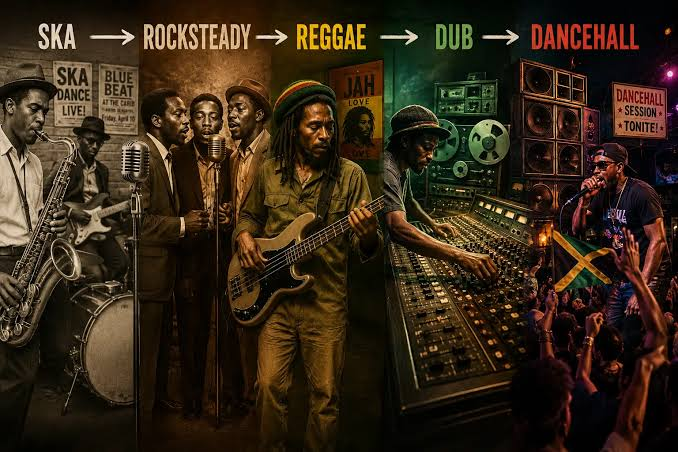

Before reggae conquered the world and before dancehall rewired it, there was ska: brassy, jittery, impossible to stand still to.
The history of ska begins in late 1950s Kingston, where sound system operators needed fresh records and local musicians answered with something nobody had heard before.
It was Jamaica’s first homegrown urban pop music, and everything that followed carries its DNA.
Ska took the walking bass of American rhythm and blues, the lilt of mento and calypso, and a horn section that could blow the roof off a dancehall, then flipped the accent onto the offbeat.
The result soundtracked independence, launched Jamaican music into the international charts, and has been reborn at least twice since. Here is how it happened.
Sound Systems and the R&B Drought
After the Second World War, American jazz and R&B poured into Jamaica through imported records and US radio broadcasts that carried across the Caribbean Sea.
New Orleans R&B hit hardest, and Fats Domino’s rolling, offbeat-leaning rhythm became a quiet blueprint for what was to come.
The people who spread that music were the sound system men, operators of towering mobile discos who fought for crowds with exclusive records. Prince Buster, Clement “Coxsone” Dodd and Duke Reid built their reputations this way.
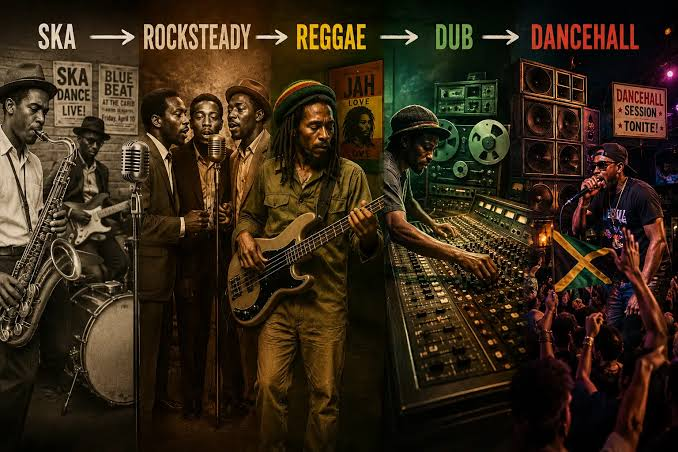
But as the supply of American jump blues and classic R&B dried up in the late 1950s, the selectors faced a problem: the music they needed simply was not being made anymore.
So they started making it themselves, recording Jamaican musicians who first copied the American sound and then began bending it into something local.
Early recordings were cut on soft wax acetates for sound system play, the ancestors of the dub plate.
Clue J & His Blues Blasters, led by bassist Cluett Johnson, were among the first bands to play ska, though their earliest releases were still calypso or R&B, pushed on Dodd’s Downbeat sound system and released on his Worldisc label.
Who Invented Ska?
Jamaican popular music history lives largely in memory and storytelling, so the question of who invented ska has several answers, all argued with conviction.
Guitarist Ernie Ranglin claims he invented the ska chop, the clipped offbeat guitar stroke at the heart of the sound, and Britannica regards that claim as plausible. Another theory places the birth at the first session for Prince Buster’s Wild Bells label.
According to reggae historian Steve Barrow, Buster leaned over to guitarist Jah Jerry and told him to “change gear, man, change gear”, and the guitar began punching the second and fourth beats.
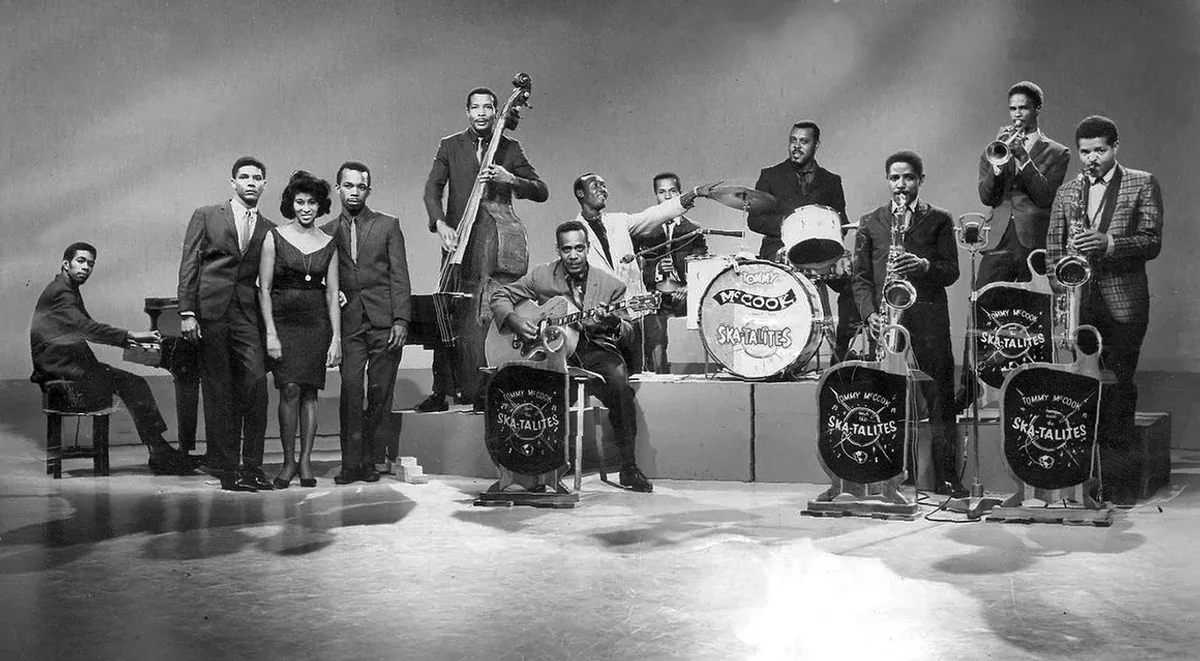
Duke Reid had financed that session and was owed half the songs. He walked away with exactly one, a tune by trombonist Rico Rodriguez.
Then there is Coxsone Dodd, credited with spreading ska and making it popular, a man who understood that a soon-to-be independent nation was hungry for a cultural identity of its own.
The Buster and Dodd camps became the great rivalry of the era. Buster had once worked for Dodd, and the bad blood spilled onto wax: Delroy Wilson’s “Joe Lies”, written by Lee “Scratch” Perry and recorded for Dodd, was a shot aimed squarely at Buster.
Where the Name Came From
Even the word is contested. One story holds that at a 1959 Dodd session, Cluett Johnson told Ranglin to “play like ska, ska, ska.”
Ranglin will have none of it. “Clue couldn’t tell me what to play!” he countered. Others trace the word to Johnson’s favourite greeting, “skavoovie.”
Keyboard great Jackie Mittoo insisted musicians called the rhythm “Staya Staya” and that bandleader Byron Lee brought in the term “ska.”
Derrick Morgan offered perhaps the simplest explanation: “Guitar and piano making a ska sound, like ‘ska, ska’.
Studio One, the Skatalites and Independence
The first ska recordings came out of Studio One and WIRL Records in Kingston, with producers including Dodd, Reid, Prince Buster and Edward Seaga, who would later become Jamaica’s prime minister.
Dodd’s operation was a finishing school for the island’s talent, with Lee Perry, U-Roy and Prince Buster all passing through his sound system staff.
At the centre of it all stood the Skatalites, the session band whose initial run between 1963 and 1965 produced many of the genre’s best-known recordings, including “Guns of Navarone.”
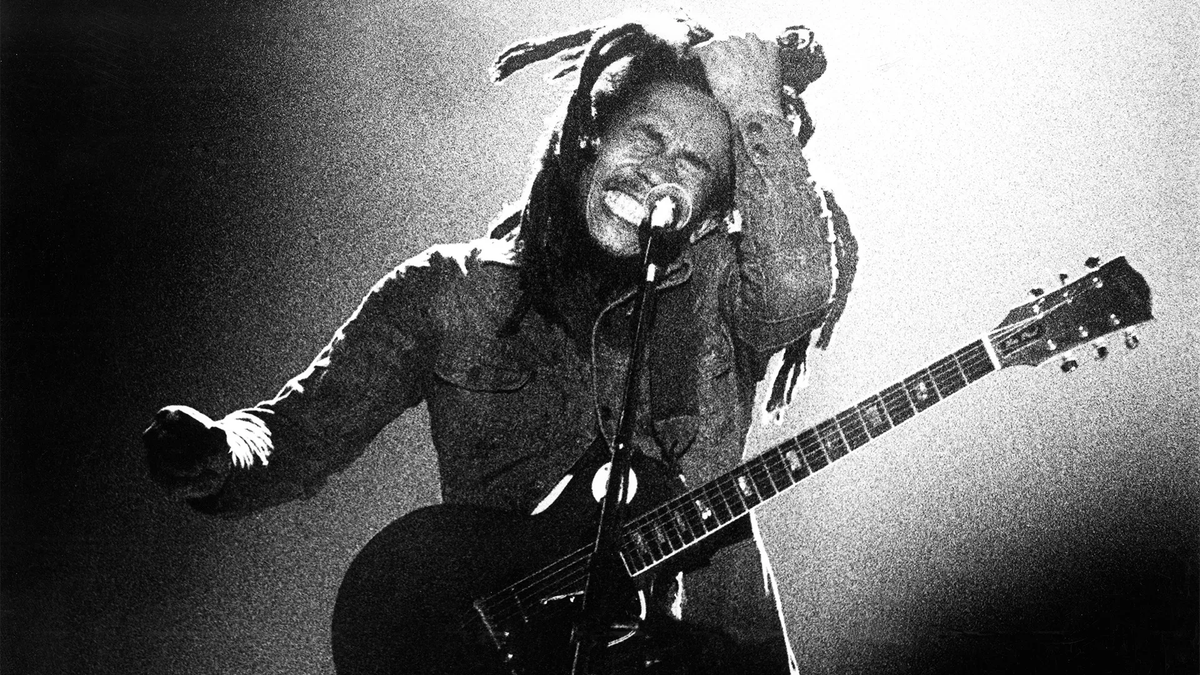
In spring 1964 they cut their first LP, Ska Authentic, at Studio One. They also loved to raid foreign pop, turning Beatles tunes, movie themes and surf instrumentals into horn-driven ska.
Backed by the Skatalites, the Maytals’ close-harmony gospel singing made them stars at Studio One, so much so that they overshadowed Dodd’s other vocal group, a young outfit called the Wailers.
Jamaica’s independence from Britain in 1962 put the country and its music in a celebratory mood. Derrick Morgan’s “Forward March” and the Skatalites’ “Freedom Sound” captured that euphoria.
The same era produced the rude boys, whose sharp style and attitude spoke to working-class struggle through fashion and dance, a thread that would later run all the way to Britain’s skinheads.
1964: Ska Goes Global
The breakthrough came from a teenager. Millie Small’s “My Boy Lollipop”, released in March 1964 and credited simply to “Millie”, was a cover of a song first recorded in New York in 1956 by Barbie Gaye, who was paid just $200 for her writing contributions and recording.
Chris Blackwell brought Small to London to sing it and recruited Ranglin to produce. The record climbed to No. 2 in both the UK and on the Billboard Hot 100, sold over seven million copies worldwide, and pushed Blackwell’s Island Records into the mainstream.
That same year, ska was showcased at the New York World’s Fair, with Byron Lee & the Dragonaires holding down the band and Prince Buster among the featured stars.
Organisers even named 12 August Millie Small Day. Through the early 1960s, ska ruled Jamaica and found devoted fans among British mods.
Slowing Down: The Birth of Rocksteady
Around 1966, the tempo dropped. Rocksteady emerged, and the slower pace let bass players stretch into fatter, darker, looser tones.
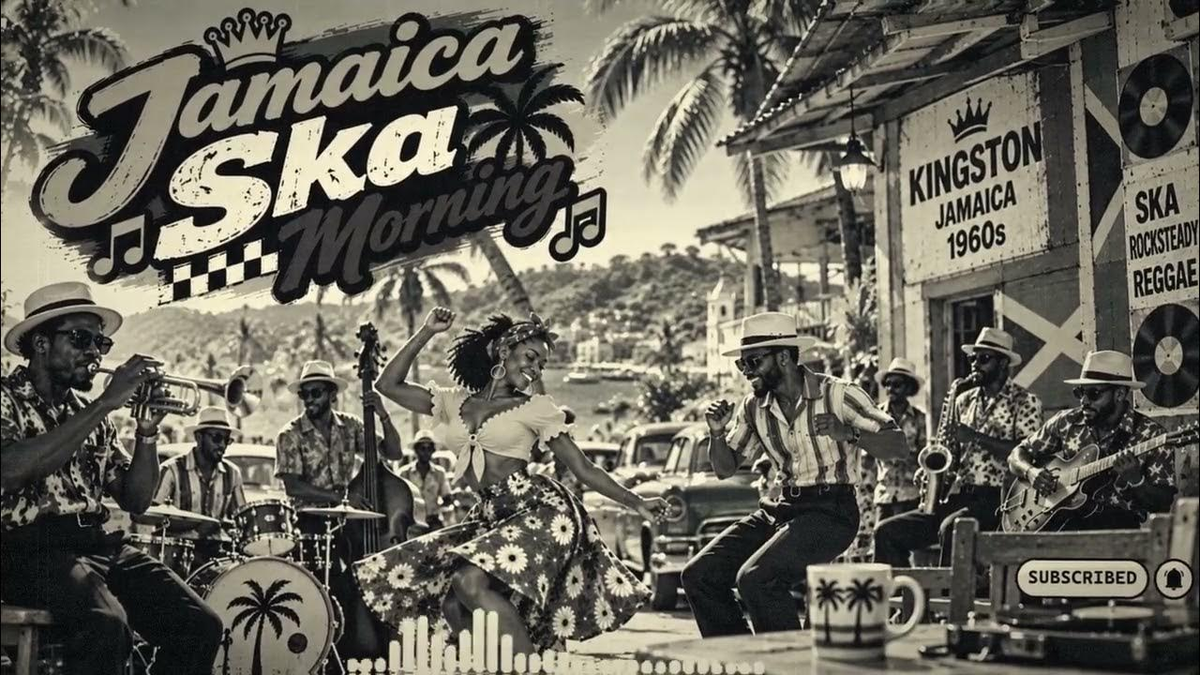
One Studio One story pins the change on 15-year-old drummer Joe Isaacs, who replaced Lloyd Knibbs and could not keep up with ska’s breakneck pace, prompting Jackie Mittoo to ease things down.
Whether that tale is gospel or legend, the effect was the same. By the end of the decade, ska had faded in Jamaica, giving way to rocksteady and, soon after, reggae.
The Second and Third Waves
Ska refused to stay buried. Historians typically count three waves. The second arrived in late 1970s Britain with 2 Tone, named for the label Jerry Dammers of the Specials founded.
The Specials, the Selecter and Madness fused Jamaican ska with punk’s speed and bite, rallying under a black-and-white checkerboard that doubled as a statement of racial unity.
The third wave rose in North America. The Uptones in Berkeley and the Toasters in New York, both formed in 1981, were among the first, and Toasters frontman Robert “Bucket” Hingley launched Moon Ska Records in 1983.
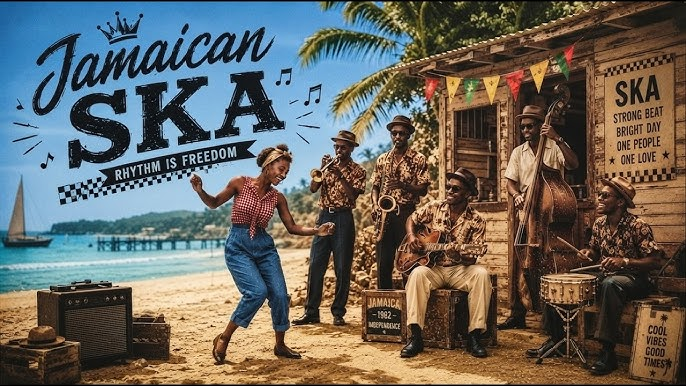
Fishbone, the Mighty Mighty Bosstones and Operation Ivy pioneered ska punk, and the Ska Parade radio show’s Albino Brown and Tazy Phyllipz popularised the term “third-wave ska.”
Between 1995 and 1998 the movement peaked, with Sublime, No Doubt, Reel Big Fish and the Bosstones landing sales, radio play and MTV rotation. The Skatalites themselves reformed in 1983 and have played on ever since.
Why Ska Still Matters
Every Jamaican sound that followed stands on ska’s shoulders. The offbeat chop became the reggae skank.
The sound system rivalry between Dodd, Reid and Buster set the competitive template that still drives clashes and dubplate culture today.
The idea that a small island could build its own pop music, then export it to London, New York and beyond, started here.
Ska was the sound of a young nation finding its voice, and it never stopped travelling. From Kingston’s Brentford Road to 2 Tone’s checkerboard and California’s skate parks, those stabbing horns and offbeat guitars keep finding new generations. Not bad for a rhythm born because the records ran out.