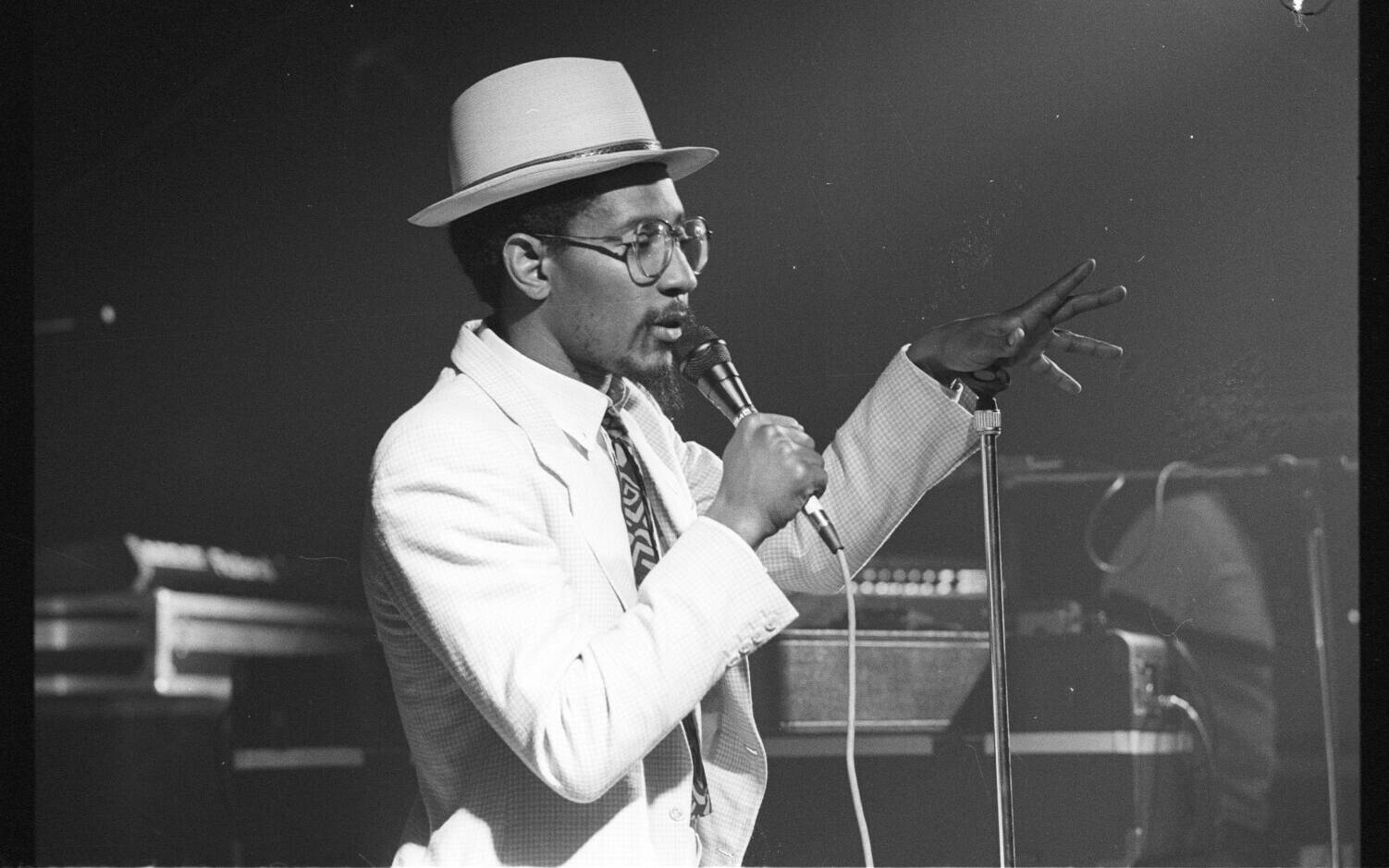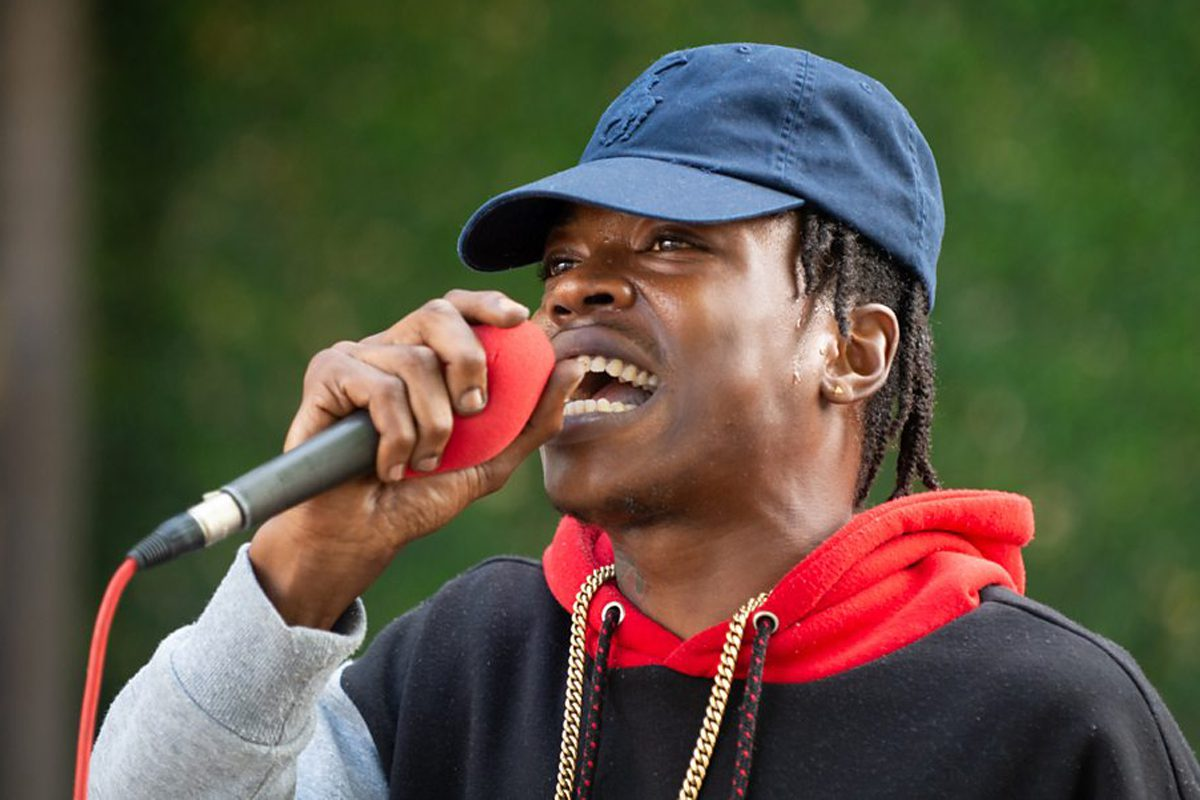


Before dancehall had a name, and before rocksteady and reggae slowed the pulse, Kingston danced to ska.
It was the sound of a young nation finding its voice: horns blazing over a skipping offbeat, a walking bass with jazz in its bones, and singers who suddenly wrote about Jamaican streets instead of American ones.
Chris Blackwell described the birth simply. Jamaicans took the beat of Rosco Gordon’s “No More Doggin'”, “cheered up” the rhythm, added their own lyrics and called it ska.
The best ska songs from that first wave, roughly 1962 to 1965, still carry that charge. They soundtracked independence, launched Bob Marley and Toots Hibbert, and carried Jamaican music onto foreign charts for the first time. Here are twelve records that defined the era, ranked strongest first.
Only the Skatalites could take a Hollywood war theme and make it sound like a Kingston dance on a Saturday night.
Their reworking of Dimitri Tiomkin and Paul Webster’s theme from the 1961 film, produced by Clement “Coxsone” Dodd, rides on Lloyd Knibb’s rim shots and Lloyd Brevett’s thumping bass while the horns blow what AllMusic called a “jubilant harmonic horn chorus.”
It travelled further than almost any Jamaican instrumental of its day, reaching No. 3 in France and No. 9 in Belgium.
Collectors still prize the Jamaican Muzik City pressing, which keeps Don Drummond’s trombone solo that the shorter UK Island 45 cut out.
The Specials kept it in their live sets for years, and Soul Jazz reissued the single with its “Marcus Garvey” B-side in 2023.
2. The Wailers, “Simmer Down” (1964)
Bob Marley’s story starts here. Cut for Coxsone Dodd with the Skatalites as the backing band, “Simmer Down” was the Wailers’ warning to Kingston’s rude boys to cool the violence. In February 1964 it became Jamaica’s No. 1 record and Marley’s first hit.
The horns lead the charge, the bass pumps with a jazz swing and a sax solo flutters through the middle, while the young singers deliver the message with urgent, almost preacherly conviction.
It was more than a hit. It marked the turn from Jamaican artists imitating foreign records to Jamaican artists describing their own lives. Peter Tosh later said he hated it.
The song outlived his opinion, though, and was covered by The Specials, Monty Alexander and the Mighty Mighty Bosstones.
3. Millie Small, “My Boy Lollipop” (1964)
No record did more to put ska on the world map. Chris Blackwell produced Millie Small’s version of Barbie Gaye’s 1956 R&B tune.
Ernest Ranglin, generally regarded as the originator of ska guitar, rearranged it around a bright, bouncing shuffle and replaced the original sax solo with harmonica.
Rumour long held that Rod Stewart played that harmonica part, but Pete Hogman has claimed it as his own.
The single reached No. 2 in the UK and on the Billboard Hot 100, topped the chart in Australia and sold more than seven million copies, which helped launch Island Records.
Blackwell said it “opened the door for Jamaican music to the world.” Millie died on 5 May 2020, and every Jamaican crossover since has walked through that door.
4. Derrick Morgan, “Forward March” (1962)
When Derrick Morgan heard that Alexander Bustamante and Norman Manley had won independence, he had one thought: “I should write a song,” as he later told the AP.
He cut it in a single take at Federal Studios for Leslie Kong’s Beverley’s label, and it came out on Independence Day, 6 August 1962. It was an instant hit, often called the first Jamaican independence song.
The lyric names both leaders, a call for unity across party lines, and the groove catches the R&B shuffle tightening into ska. Island took it to Britain as WI-011, backed with “Please Don’t Talk About Me.”
In August 2026, Lauderhill, Florida, handed Morgan the Key to the City, more than six decades after he gave a new nation its marching music.
5. Prince Buster, “Al Capone” (1964)
Tyres squeal, a car crashes, gunshots ring out, and then Prince Buster steps to the mic. “Al Capone” is mostly an instrumental.
A crack studio crew drives it: Baba Brooks, Ernest Ranglin, Jah Jerry Haynes, Gladstone Anderson and Drumbago, with Buster dropping a few lines like a selector working a sound system crowd.
Released on Blue Beat, it took its time crossing over and finally reached No. 18 in the UK in February 1967. Its afterlife is enormous.
The Specials reworked it as “Gangsters,” sampling those same car effects, and Boney M remade it as “Baby, Do You Wanna Bump” without crediting Buster. Few Jamaican records have been borrowed so often or so profitably by other people.
6. Prince Buster, “One Step Beyond” (1964)
Some B-sides grow bigger than the hits they backed. Buster wrote “One Step Beyond” as the flip of “Al Capone” and produced it himself, as he did so much of his work, without a formal credit.
It went out on Blue Beat, the UK label that became shorthand for ska across Britain in the sixties, and it stands among his most important early releases.
Fifteen years later it found a second life. Madness, a band that had already named itself after another Buster tune, released their own version as a Stiff single on 26 October 1979.
For a generation of British teenagers in loafers and pork pie hats, that cover was their first contact with Jamaican ska, and it sent many of them back to the original.
7. Don Drummond & the Skatalites, “Man in the Street” (1964)
Don Drummond was ska’s great melancholic, a trombonist whose compositions carried a depth and gravity unlike anyone else’s in Kingston.
“Man in the Street,” his own tune, was cut for Coxsone Dodd and issued on Studio One. The Skatalites lock into a tight, swinging groove that leaves room for his horn to speak, and the result sounds equally at home in a dancehall and a jazz club.
Island brought it to British buyers in 1965 as WI-208. The tune also crossed into hip hop. Boogie Down Productions sampled it on “Edutainment” in 1990, and Maestro Fresh Wes used it the following year.
That is fitting for a composer whose melodies always seemed bigger than the three minutes a 45 allowed.
8. Don Drummond & the Skatalites, “Eastern Standard Time” (1964)
If “Guns of Navarone” is ska at full celebration, “Eastern Standard Time” is ska after midnight.
The tune is a moodier, jazz-leaning piece that shows Drummond’s gifts as a composer, and the songwriting credits read like the Skatalites’ roll call: Drummond, Mittoo, Haynes, Moore, Sterling, Brevett, Knibb, Alphonso and McCook.
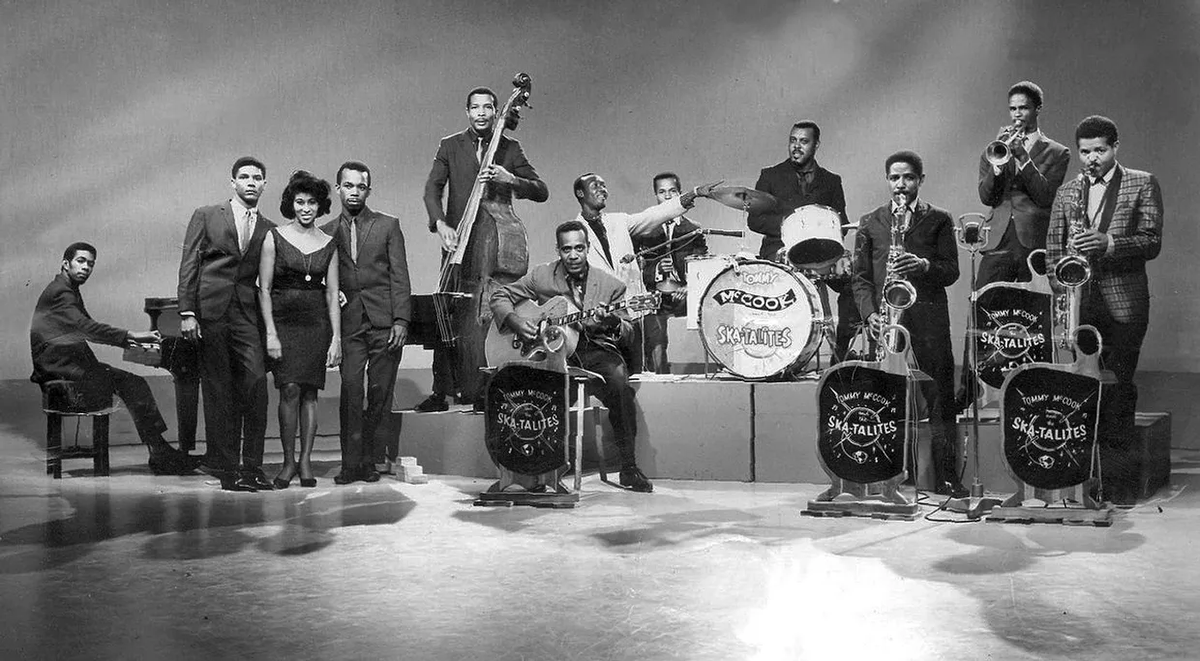
Its influence reached across the sea, and a US ska-jazz band took its name from the tune. The record is also shadowed by tragedy.
On 1 January 1965, Drummond was arrested for the killing of Anita “Marguerita” Mahfood and was later convicted. The Skatalites split that same year. What survives on records like this is a short, extraordinary body of music.
9. The Maytals, “Six and Seven Books of Moses” (1963)
Toots Hibbert brought the church into ska, and on this Coxsone Dodd production for Studio One he brought something stranger too.
The lyric deals with obeah and the occult “Sixth and Seventh Books of Moses,” texts that Pentecostal churches and Pocomania followers in Jamaica treated as important.
It is a heady subject for a dance record, but Toots sells it with what NPR called a “galvanizing gospel delivery,” and the Maytals’ harmonies surge behind him. The song travelled across the Caribbean, and a Barbadian spouge act recorded its own cover.
When Toots died in September 2020, this was one of the early sides that tributes returned to as proof that his voice was fully formed from the very beginning.
10. The Maytals, “Hallelujah” (1963)
This is where the Maytals began, and they began at the top. Recorded for Coxsone Dodd at Studio One, and sometimes issued under the name the Vikings, “Hallelujah” was the group’s first single and went straight to No. 1.
The formula was simple and new: a religious hymn set to the ska beat, with gospel-style vocals pushing hard over the offbeat.
It sounds like a revival tent that has been moved into a dancehall, and that crossover between sacred and secular became the foundation of everything Toots did afterward.
The group proved it was no fluke when the follow-up, “Fever,” topped the chart too. Few groups in Jamaican music have opened their careers with two straight chart-toppers.
11. Prince Buster, “Madness” (1963)
“Madness” sits on Prince Buster’s debut album, I Feel the Spirit, released in 1963 as the first ska album issued outside Jamaica.
That alone makes it a landmark. Buster brought serious players: backing came from the Drumbago All Stars and the Rico Rodriguez Blues Band, and the playing has a rough, loose energy that suits his showman’s swagger.
Issued in Britain on Blue Beat, the record helped build the bridge between Kingston and the West Indian communities in London and Birmingham.
Its most famous legacy came sixteen years later, when a group of young Londoners took the song title as their band name. Every time Madness hit the charts, they were advertising a Prince Buster song.
12. The Wailers, “Rude Boy” (1965)
If “Simmer Down” lectured the rude boys, “Rude Boy” spoke their language. Recorded for Clement Dodd at Studio One, it became a popular song across Jamaica and, together with “Simmer Down,” made the Wailers spokesmen for a restless generation of Kingston youth.
It appears on The Wailing Wailers, the group’s 1965 debut album, where the backing comes from the Soul Brothers, the band Dodd assembled after the Skatalites broke up.
That shift gives the record a slightly different feel from the earlier Wailers sides, with ska starting to edge toward the cooler tempos about to arrive. It is the sound of the first wave reaching its end and a new figure stepping into its place.
Why Jamaica’s First Wave Still Matters
The first wave was brief. The Skatalites played their first public show at the Hi-Hat Club in Kingston in May 1964 and were gone the following year.
Studio One, the “Motown of Jamaica” on Brentford Road, had only opened in 1963. Yet in that short span, Jamaican musicians invented a sound, sang a nation into independence and reached charts from London to Sydney.
The thread runs straight to today’s dancehall. Toots took ska’s gospel fire into 1966’s “Bam Bam,” whose chorus Sister Nancy turned into a 1982 dancehall anthem.
Ernest Ranglin turned 94 this June, Derrick Morgan is still collecting honours, and the horns of the Skatalites still sound like the morning of something new.