
2005 was the year dancehall seemed to be everywhere at once. Sean Paul was cooking up the biggest single of his career, a Marley son was carrying Kingston’s harsh truths to the Grammys, and a teenager from Barbados was riding a riddim-style clap onto American radio.
Back home, a new generation was elbowing its way onto the dubplate, many of them under the wing of Bounty Killer’s Alliance.
Any list of the best dancehall songs of 2005 has to hold both worlds: the global crossover and the yard-level street anthems.
What follows is our ranking of the twelve tunes that defined that year. Some were voiced in 2004 and only broke wide in 2005, and a couple only reached their chart peaks in 2006.
All of them belong to that season, when the music’s reach and its raw local energy were running at full power together.
1. Sean Paul, “Temperature” (2005)
Few dancehall records have had a longer second life. Rohan “Snowcone” Fuller built the Applause riddim, a bright, handclap-driven bed that also carried Sizzla’s “Run Out Pon Dem” and Crazy Chris’s “Crazy Frog,” and Sean Paul turned it into a global event.
Released on 5 December 2005 from The Trinity through Atlantic and VP, the song came out of a cold Jamaican January.
Sean Paul has explained that he meant cold weather and also the coldness in how people were treating each other. In 2006 it climbed to No. 1 on the Billboard Hot 100, his third American chart-topper.
It sold 1,533,362 US digital copies that year and went triple platinum with the RIAA. The Little X video has passed 500 million YouTube views, and the song keeps turning up on screen, from Norbit to The Boondocks and Girls.
2. Damian “Jr. Gong” Marley, “Welcome to Jamrock” (2005)
If “Temperature” was the party, “Welcome to Jamrock” was the news report. Stephen Marley produced it, building the track around the riddim and hook of Ini Kamoze’s 1984 “World-A-Reggae,” whose original rhythm came from Sly and Robbie.
Released on 14 March 2005 through Tuff Gong, Universal and Ghetto Youths, it painted a picture of poverty, politics and crime that tourist brochures never showed. Some at home felt it gave the island a bad name, while plenty of others praised its honesty.
The world listened either way. It reached No. 13 in the UK and No. 55 on the Hot 100, went platinum with the BPI, and won the Grammy for Best Urban/Alternative Performance.
The album took Best Reggae Album, and Pitchfork later placed the single at No. 270 among the top songs of the 2000s.
3. Rihanna, “Pon de Replay” (2005)
This was a pop record built by American writers and producers Vada Nobles, Carl Sturken and Evan Rogers, but its heartbeat was pure Caribbean dancefloor.
Critics heard the pulse of the “Diwali clap” riddim in its stomp, and the Bajan teenager’s accent did the rest. Def Jam released her debut single on 24 May 2005.
It entered the Hot 100 at No. 97 and climbed all the way to No. 2, held off the top only by Mariah Carey’s “We Belong Together.”
It topped the US Dance Club Songs chart and went to No. 1 in New Zealand, and it has since gone triple platinum in the US and double platinum in the UK.
Billboard later framed it as the opening move in a run that brought her 13 Hot 100 No. 1s by 2013. Dancehall’s sound had never had a bigger ambassador.
4. Sean Paul, “We Be Burnin'” (2005)
The lead single from The Trinity went to radio on 22 August 2005, a month before the album dropped on 27 September. It reminded everyone that Sean Paul could make a smoker’s anthem sound like a summer jam.
The clever part was the radio edit. Swapping “trees” for “gees” turned a herb tune into a salute to the ladies, and the clean version sailed up to No. 6 on the Billboard Hot 100, finishing the year at No. 88 on the year-end chart.
A decade later Tinashe interpolated the original line, which shows how deep the hook had lodged in a generation’s memory.
The single went platinum with the RIAA and gold in the UK, and it set the table perfectly for the “Temperature” storm that followed.
5. Mavado, “Real McKoy” (2005)
Every era has a record that announces a new voice, and in 2005 that record was “Real McKoy.”
Built by Daseca Productions, the team of Craig “Serani” Marsh and the Harrisingh brothers, on their Anger Management riddim, it introduced a singer who sounded like nobody else on the scene.
He brought a mournful, melodic delivery to hard street subject matter. The tune circulated on 7″ from late 2004, but 2005 was when it truly broke and Mavado became a name.
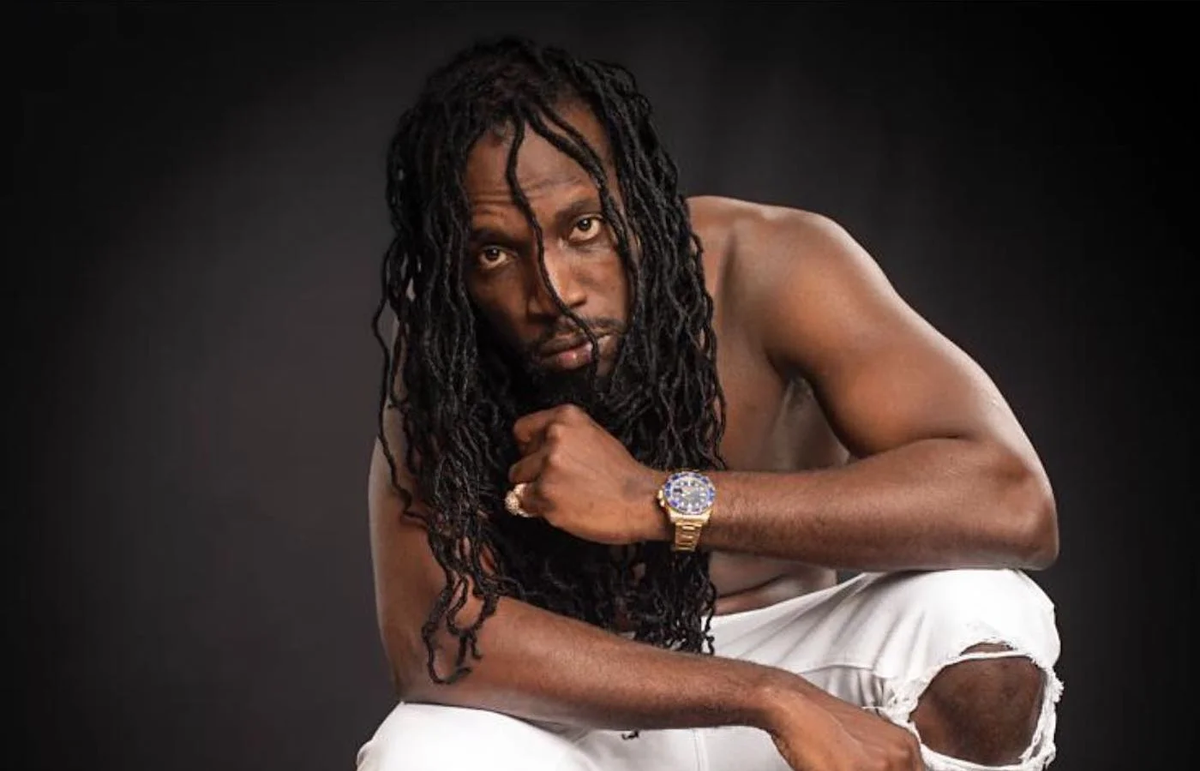
He came up through Bounty Killer’s Alliance camp, and “Real McKoy” was the launchpad for everything that followed: the Gully Side persona, the rivalry era, the run of hits.
Listen back now and you can hear the blueprint for a whole strain of dancehall that still dominates street playlists.
6. Vybz Kartel, “Realest Thing (Stamma)” (2005)
When VP assembled its Dancehall Anthems 2005 double set, it chose this tune to open the whole thing. That alone says plenty about where Vybz Kartel stood that year.
Produced by Preston Onfroy for In Time Music, “Realest Thing” rode the Jump Off riddim, a bouncing, crowded juggling that also carried Elephant Man’s “U Lying” and Bounty Killer’s “Rise It Up.”
Kartel’s cut was strictly for big people: cheeky, explicit and delivered with the quick-witted confidence that was fast becoming his trademark.
It also landed on his Greensleeves album J.M.T. (Jamaican Mean Time), released the same year. This was Kartel at the moment his wordplay and work rate began to separate him from the pack.
7. Voicemail ft. Ding Dong, “Wacky Dip” (2005)
Dancehall has always moved to the dancers, and “Wacky Dip” was a dance record through and through.
Donovan “Vendetta” Bennett produced it for Don Corleon on the Jonkanoo riddim, which takes its playful name and feel from the Christmas masquerade tradition.
Voicemail, the trio whose calling card was the shout “You’ve got mail,” linked with Ding Dong, a dancer and creator of moves long before he was a hitmaker on the mic.
One version on the riddim carried the title “Tribute To Bogle,” a nod to the dance innovator whose influence shaped the whole scene.
Along with “Jamaican Jiggas,” the song was all over Jamaican radio, and it earned its place on Dancehall Anthems 2005. At any session that year, the floor knew exactly what to do.
8. Busy Signal, “Step Out” (2005)
Before the albums, the awards and the genre-hopping covers, there was “Step Out.” Busy Signal’s debut single moved through Jamaica’s mix CD circuit with the kind of speed that only happens when the street decides on its own, and one biography rightly called him “the strongest young artist to emerge from 2005.”
Another Alliance protégé, Busy had a rapid, rubbery flow and a sense of humour that made him instantly recognisable.
Other 2005 cuts such as “Not Going Down” and “Born and Grow” kept the momentum going, with the latter making VP’s anthems set.
“Step Out” became the title track of his debut album, released by Greensleeves on 27 June 2006, but the buzz that sold it was built entirely in 2005.
9. Vybz Kartel, “Hello Moto (U Nuh Have a Phone)” (2005)
The mid-2000s cellphone boom reshaped Jamaican life, and dancehall did what it always does: it turned the moment into a riddim.
The Hello Moto riddim, released on the h2o label, borrowed its name from the ringtone era’s most famous greeting.
Kartel’s cut, with its taunting parenthetical “U Nuh Have a Phone,” turned status and connection into a punchline, the kind of everyday observation that he could spin into a session favourite.
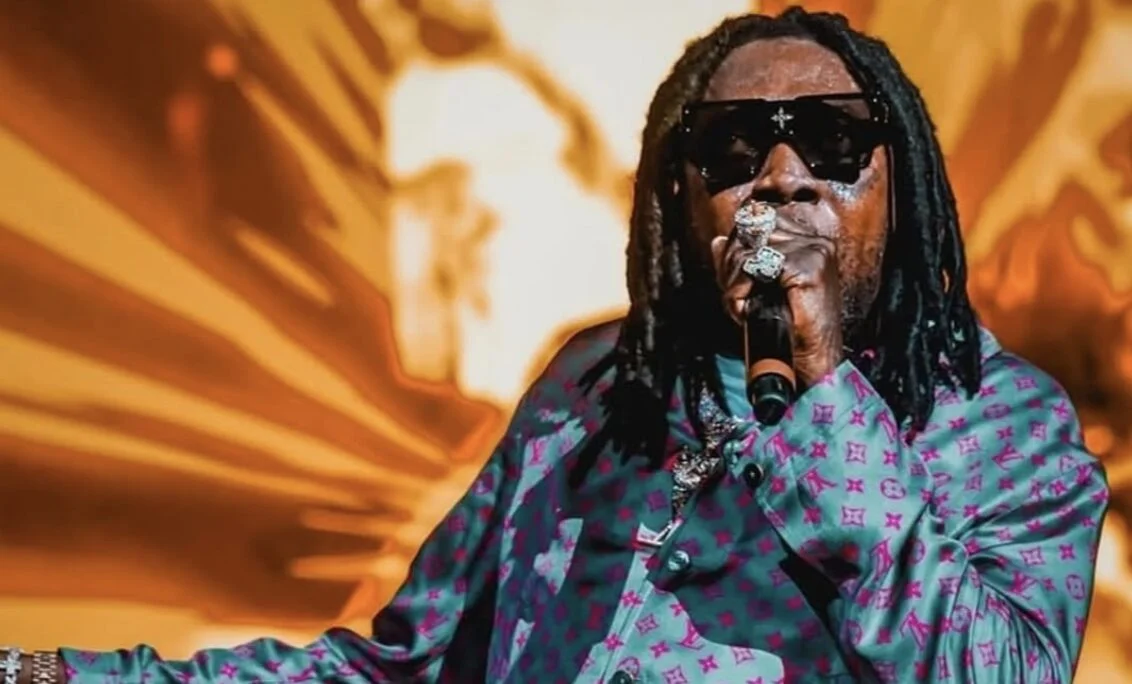
Mavado voiced the same riddim with “Give Me A Call,” so two of the year’s rising Alliance stars shared the track.
Kartel’s version made the Dancehall Anthems 2005 tracklist, a snapshot of a year when he seemed to be on every hot riddim going.
10. Beenie Man, “Judas” (2005)
The Doctor never sat out a big year, and in 2005 he stepped onto one of the hardest riddims of the period.
Christopher Birch produced the Military riddim for his Echo label, a stern, marching track that had already been tearing up dances since 2004 with Bounty Killer’s “Warlord Walk,” Vybz Kartel’s “4 Star” and Elephant Man’s “Bad Mind Anthem.”
Beenie Man’s “Judas” kept that riddim’s life going into the new year, and its title invoked betrayal and the oldest story of a false friend.
Coming from the self-styled King of the Dancehall, a Military cut was a statement that the veteran could still go toe to toe with the new generation on their favourite battleground.
11. Bounty Killer, “Free Up the Atmosphere” (2005)
The Warlord was more than an artist in 2005. He was a kingmaker. Having founded The Alliance in 2003, Bounty Killer had a camp whose early members included Busy Signal, Mavado and Vybz Kartel, three names on this very list.
“Free Up the Atmosphere” found him on the Kopa riddim from Black Chiney, the same track behind Elephant Man’s “Ele Medley” and his “Shake That Booty” remix with David Banner.
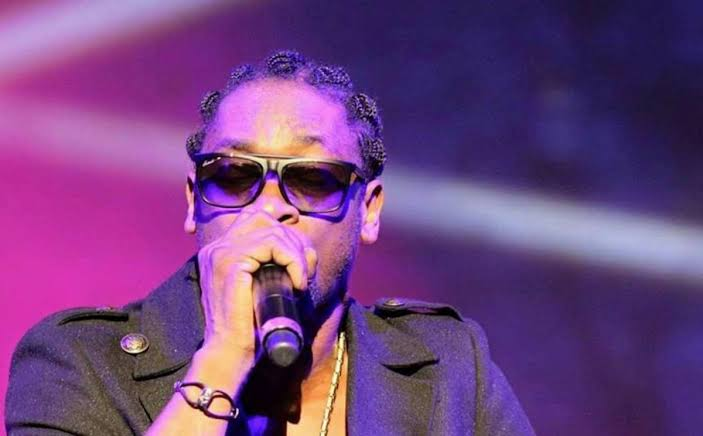
That spread shows how far the riddim travelled, from Kingston clashes to Southern rap crossovers. Bounty’s cut brought the gravel-voiced authority that made him the general of the era, and it captured a year when his influence was everywhere, on the mic and behind the scenes.
12. Sean Paul, “Ever Blazin'” (2005)
Sean Paul gets a third spot because 2005 was so plainly his year. “Ever Blazin'” rode the Lenky’s Masterpiece riddim, linking him back to the producer whose sound had already fuelled so much crossover dancehall.
It was a relatively older recording next to the rest of The Trinity, and it carries an easy, breezy energy that feels like a bridge between his breakthrough era and his peak.
Europe embraced it most warmly, with France sending it to No. 8. In the UK it became his first solo single to miss the top 10 since the original release of “Gimme the Light.” It is less celebrated than its siblings, but it rounds out the portrait of an artist operating at full stretch.
Why 2005 Still Matters
Looking back from 2026, 2005 reads like a hinge in dancehall history. On one side you had Sean Paul, Damian Marley and Rihanna carrying Caribbean rhythm to the top of global charts and Grammy stages.
On the other, you had Mavado, Busy Signal and Vybz Kartel coming up through the Alliance, building the street catalogues and personas that would dominate the next decade.
Riddims like Applause, Jump Off, Jonkanoo and Kopa connected those worlds, with yard anthems and international hits sometimes sharing the very same track. That is the real story of the year.
Dancehall was speaking to the whole world without losing its Kingston accent, and the songs on this list are still the proof every time a selector drops one and the room lights up.