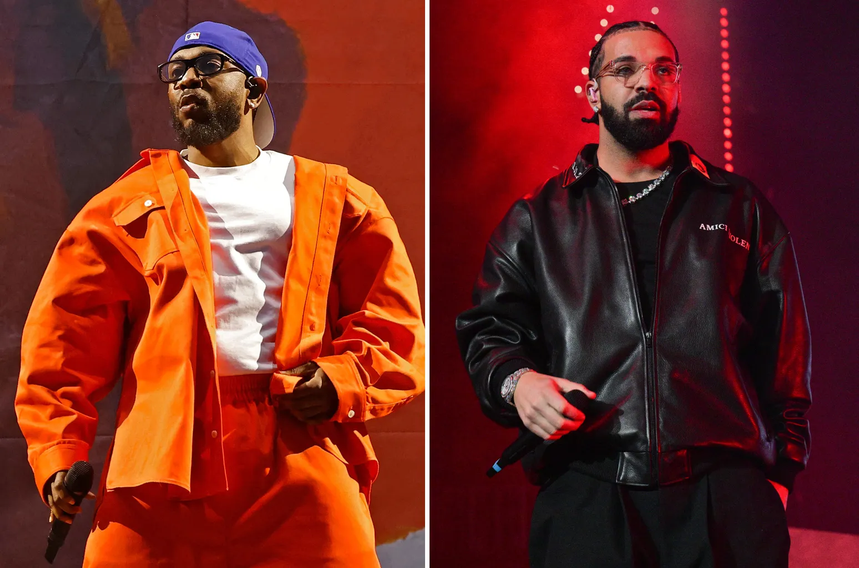

The most quietly consequential detail in Drake’s ongoing legal saga is not the beef itself, it’s the argument his lawyers are making about rap music as a whole.
His team is telling the appellate court that dismissing the case effectively signals that lyrics can never be defamatory, no matter how specific or damaging the claims. That’s a much bigger conversation than one diss track.
To catch up quickly: Drake sued Universal Music Group back in January 2025, accusing the label of knowingly pushing Kendrick Lamar’s “Not Like Us” despite what he called false and defamatory content baked into the record. Kendrick himself was not named as a defendant, which already made this a strange legal construction from the jump.
U.S. District Judge Jeannette Vargas dismissed the case in October 2025, ruling that the song’s statements were nonactionable opinion in the context of a rap battle.
Her reasoning was that a reasonable listener would not take the accusations flying between two feuding rappers as verified, factual claims. Drake’s team appealed almost immediately.
Now the U.S. Court of Appeals for the Second Circuit has set oral arguments for December 4, where attorneys from both sides will face a panel of appellate judges.
This is not a retrial, it’s a higher court deciding whether the lower court got the legal reasoning right. The judges could uphold the dismissal, revive the lawsuit entirely, or send pieces of it back down for another look.
UMG’s position has stayed consistent throughout. The label argues that the lower court got it right and that Drake’s lawsuit poses a genuine threat to artistic expression, framing Kendrick’s lyrics as rhetorical hyperbole that fits squarely within the tradition of battle rap. From UMG’s corner, this is about protecting the creative space that makes the genre work.
Drake’s lawyers see it differently, and their framing is what makes this case worth watching beyond the celebrity drama.
They’re arguing that the dismissal creates a loophole where anything packaged as a rap battle becomes legally untouchable, regardless of real-world consequences to someone’s reputation or personal safety. That’s a line of argument that could matter for artists well outside this particular feud.
If the appellate court sides with Drake and allows the case to move forward, it would head into discovery and eventually trial, which would mean both sides presenting evidence, documents, and potentially testimony about how “Not Like Us” was created, cleared, and promoted. That process alone would be a spectacle.
No decision is expected right after the December 4 hearing. The court will take time to deliberate, which means this story has plenty of runway left before anything is resolved.