Put a Shabba Ranks record next to a Bad Bunny single and the family resemblance is obvious. The drums lean the same way, the bass sits in the same pocket, and both were built for bodies packed onto a hot floor.
So when people ask about reggaeton vs dancehall, the honest answer is that they are closely related but they are not the same music.
Dancehall is Jamaican, voiced in patois by deejays and singjays over riddims. Reggaeton is a Spanish-language genre that grew out of those riddims and became something of its own.
The bloodline runs from Kingston to Panama City to San Juan, through a single drum pattern named after a Shabba tune, and, this year, through a federal courtroom in Los Angeles. Here is where the two genres meet, and where they go their separate ways.
Where Dancehall Comes From
Dancehall started in late 1970s Kingston as a sparser, harder-edged take on reggae, stripping back the roots sound that ruled that decade.
The name settled in during the 1980s, taken from the dance halls where sound systems strung up their speaker boxes and selectors and deejays held court.
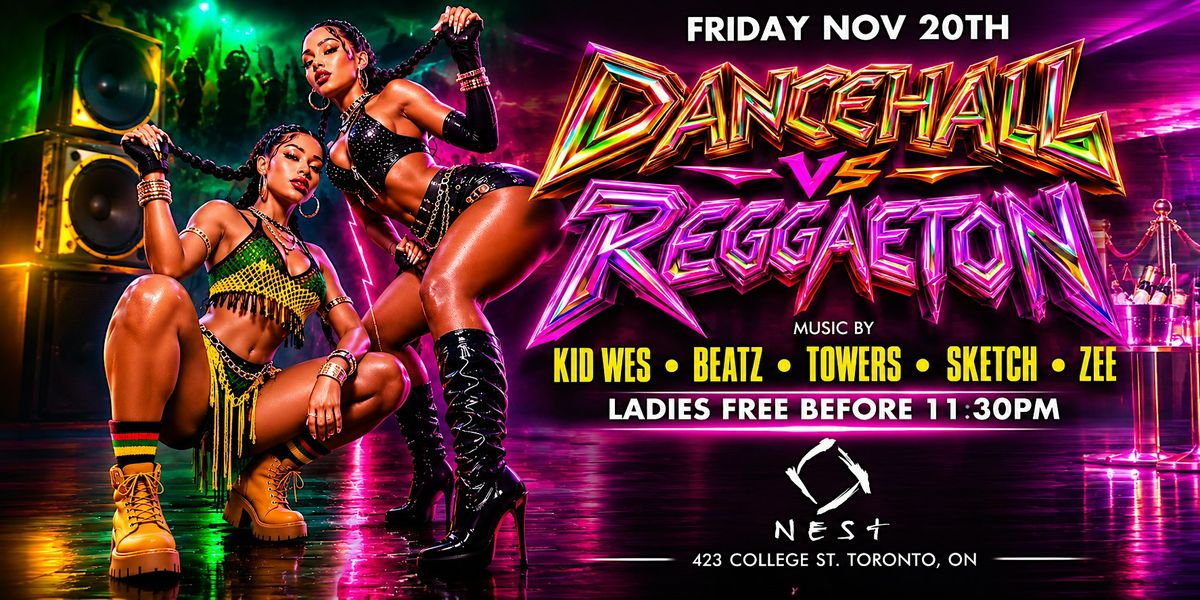
The real shift came in 1985 with “Under Mi Sleng Teng,” the tune that kicked off the digital dancehall era. Drum machines and keyboards replaced live bands, and the riddim system took over.
A producer builds an instrumental, and deejay after deejay voices it. That digital, riddim-driven sound is the root that reggaeton would later grow from.
From Kingston to Panama to Puerto Rico
Reggaeton’s story begins in Panama City, among communities descended from Afro-Caribbean workers who had come to build the canal.
In the late 1980s, Panamanian artists began translating Jamaican songs into Spanish and singing them over the original melodies. The sound was called reggae en Español.
By the early 1990s it had reached Puerto Rico and Miami. Puerto Ricans preferred a punchier name, “el reggaetón,” and it stuck.
The early music moved like an underground rap scene, passed around on tapes and played at unofficial venues well away from mainstream radio.
Over time the Puerto Rican sound became more melodic, polished and romantic, and that version is the template most reggaeton follows today.
The Dem Bow Connection
This is where the family tree gets specific. In 1989, Steely & Clevie released an instrumental called “Fish Market,” the first known appearance of what became the dembow riddim. Gregory Peck voiced it first on “Poco Man Jam.”
Then Shabba Ranks cut “Dem Bow” in 1990 for his album Just Reality, produced by Bobby “Digital” Dixon, and the song gave the beat its name.
Other early-1990s Jamaican riddims, such as Bam Bam and Fever Pitch, already carried a similar “boom-ch-boom-chick” feel. Dem Bow was the one that travelled.
Panama picked it up first, with Nando Boom and El General covering “Dem Bow.” Nando Boom’s 1992 track “Pensión” ran on the Pounder riddim, which added timbales and nudged the sound toward Latin percussion. Puerto Rico and New York followed later in the decade.
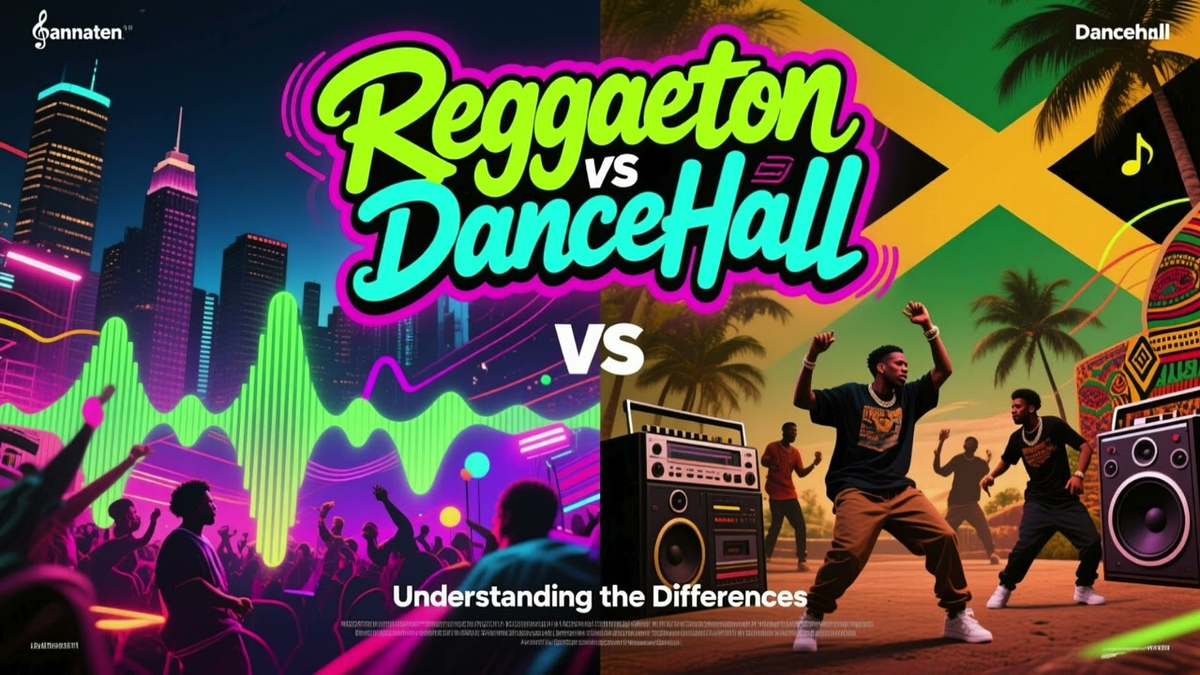
The beat ruled Puerto Rican freestyle sessions so completely that early reggaeton there was simply called “Dembow.”
Reggaeton’s own pioneers have never been shy about the debt. “The origins of the dembow rhythm are Jamaican, and the one who made it famous was Shabba Ranks with his song ‘Dem Bow,'” DJ Nelson has said. Daddy Yankee put it more simply: “this drum’s rhythm is what inspired us.”
When Wisin & Yandel remade “Dem Bow” in 2003, they kept the riddim but turned Shabba’s lyrics into a song about sensuality, a neat summary of how reggaeton borrowed the drums and rewrote the message.
How They Actually Sound Different
The beat is the clearest tell. Reggaeton is built on the dembow loop, that steady, mostly electronic “boom-ch-boom-chick,” and it rarely strays far from it. Dancehall works differently.
The riddim changes from tune to tune and season to season, and the excitement comes from hearing how different deejays ride the same instrumental.
Reggaeton grew from dancehall and hip hop, but it is not simply a Latin version of either. It has its own beat.

Tempo separates the cousins from the wider family. Dominican dembow takes the same rhythm and speeds it up, while standard reggaeton keeps it slower and rolling.
Today’s mainstream reggaeton goes further, chopping and halving the pattern and pulling in trap, R&B and dance-pop.
Then there is the voice. Dancehall belongs to deejays and singjays chatting in Jamaican patois. Reggaeton is sung and rapped in Spanish, and its lyrical approach owes more to hip hop than to dancehall.
A 2019 Gleaner piece made the case that reggaeton draws more from dancehall than from reggae. The drums say the same thing.
Crossovers and Collaborations
The two scenes have traded for years. In 2005, Mr. Vegas jumped on a “Gasolina” remix with Don Omar and Sasha recorded with Ivy Queen.
Stevie Face saw an opening: “It’s not very different from dancehall and I think Jamaican artistes should seize this opportunity.” Dancehall pop, which emerged in the early 2000s, blended dancehall with soca, calypso and reggaeton.
Commercially, reggaeton has flown higher. By 2019 “Despacito,” the reggaeton-pop smash by Luis Fonsi and Daddy Yankee, had passed 6.32 billion YouTube views, and in 2026 Shakira and Burna Boy’s World Cup single “Dai Dai” carried reggaeton into a blend with Afrobeats and dance-pop. Not everyone wants the story told as a two-way street, though. “
Nuff times a Jamaican artiste do a collab with a reggaeton artiste, but dem forget that we have reggae and dancehall in Latin America too,” Mexican reggae artist Jah Fabio told the Gleaner.
The Dembow Lawsuit
The question of who owns the beat went to court. In 2021, Clevie Browne and the heirs of Steely Johnson sued, arguing that “Fish Market” sits underneath the dembow in roughly 1,800 to nearly 2,000 songs by more than 150 artists.
The defendants included Pitbull, Drake, Daddy Yankee, Luis Fonsi and Justin Bieber, along with units of all three major labels.
On 2 July 2026, Judge André Birotte Jr. said only a jury could decide whether the rhythm was original. On 1 September he reversed himself, finding that Steely & Clevie had not tied the claimed arrangement to a single copyrighted work.
Bad Bunny’s team had called it a “Frankenstein” copyright stitched together from “Fish Market,” “Dem Bow” and “Pounder (Dub Mix II).”
The defence also traced the beat to the centuries-old habanera rhythm, and plaintiffs’ lawyer Doniger conceded that the basic habanera pattern cannot be copyrighted.
He argued that the extra percussion Steely & Clevie layered on top is what made the arrangement original.
The judge did not rule that the rhythm cannot be protected, and narrower claims of direct sampling remain pending.
Cousins, Not Twins
Reggaeton and dancehall share blood but live separate lives. Dancehall is a riddim culture, restless and patois-driven, always chasing the next instrumental.
Reggaeton took one Jamaican drum pattern, carried it through Panama into Puerto Rico, wrapped it in Spanish and turned it into a global pop language. The lawsuit made the debt a legal matter, but on the street it was never really in doubt.
Every time a reggaeton track hits that “boom-ch-boom-chick,” a little of Kingston in 1990 comes back with it. Knowing the difference doesn’t mean picking a side. It means hearing both sides of the family more clearly.