

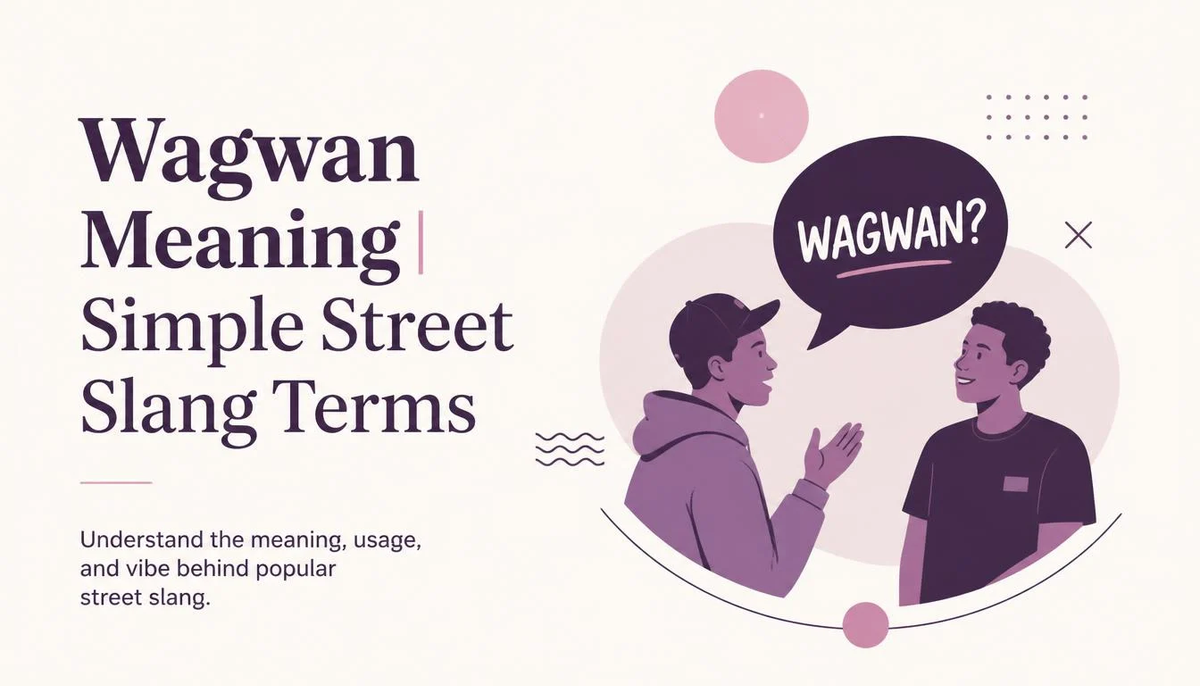
Walk into a yard party in Kingston, a corner shop in Brixton or a dance in Toronto and you will hear it within minutes: “Wagwan!” It flies across the room before the handshake lands.
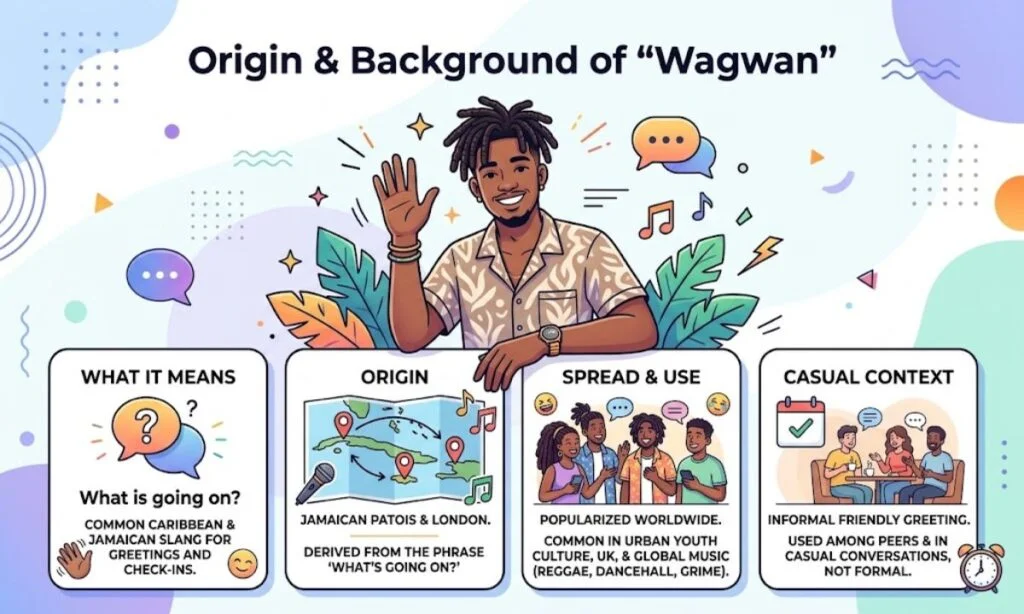
If you have been wondering about the wagwan meaning, here it is in plain terms. It is a greeting that means “what’s going on?”, the Jamaican cousin of “what’s up?” or “how are you?”
That simple definition only scratches the surface. Wagwan carries the warmth of a whole culture in two syllables. It travelled from Jamaican streets to London estates and into reggae, dancehall, grime and hip-hop.
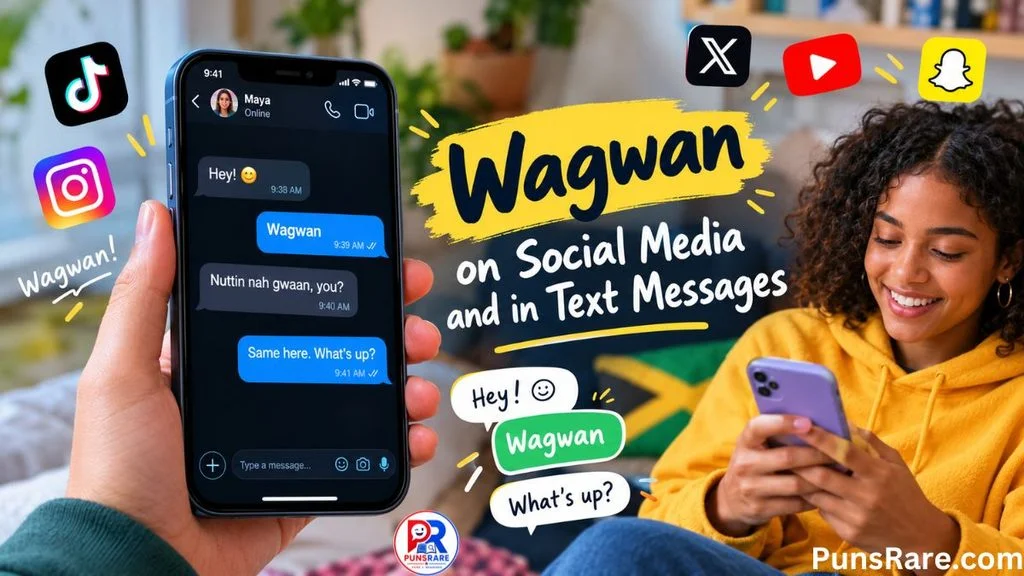
It shows up in text messages from people who have never set foot on the island. Here is where it comes from, how to say it, and how to answer when somebody throws it your way.
What Does Wagwan Mean?
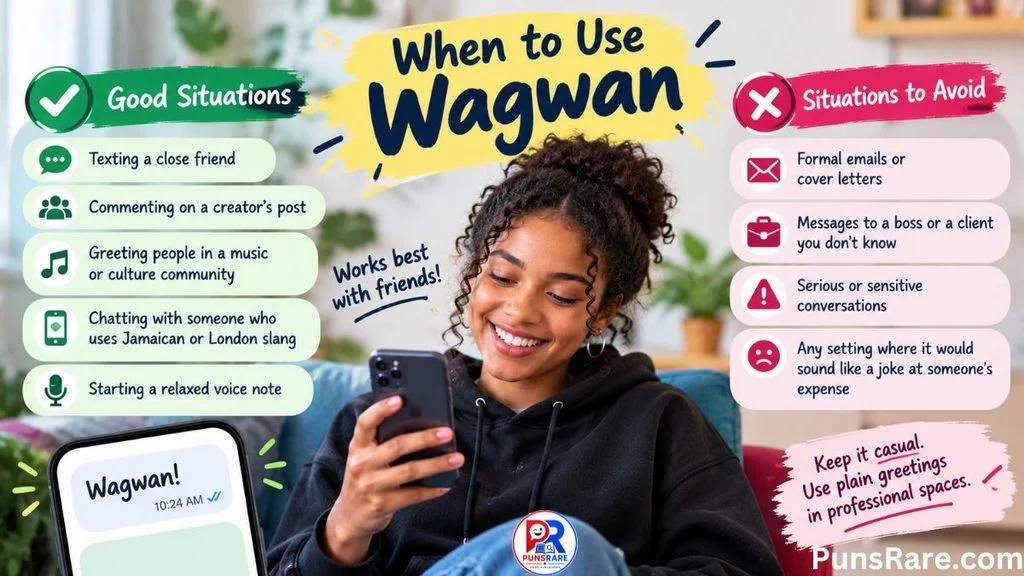
At its core, wagwan is a casual greeting used among friends, family and acquaintances. Wiktionary classes it as an interjection and tags it as Jamaican, Multicultural London English, Multicultural Toronto English and slang.
However it is labelled, it works the same way everywhere. You use it the way an American might say “what’s happening” or a Londoner might say “you alright?”
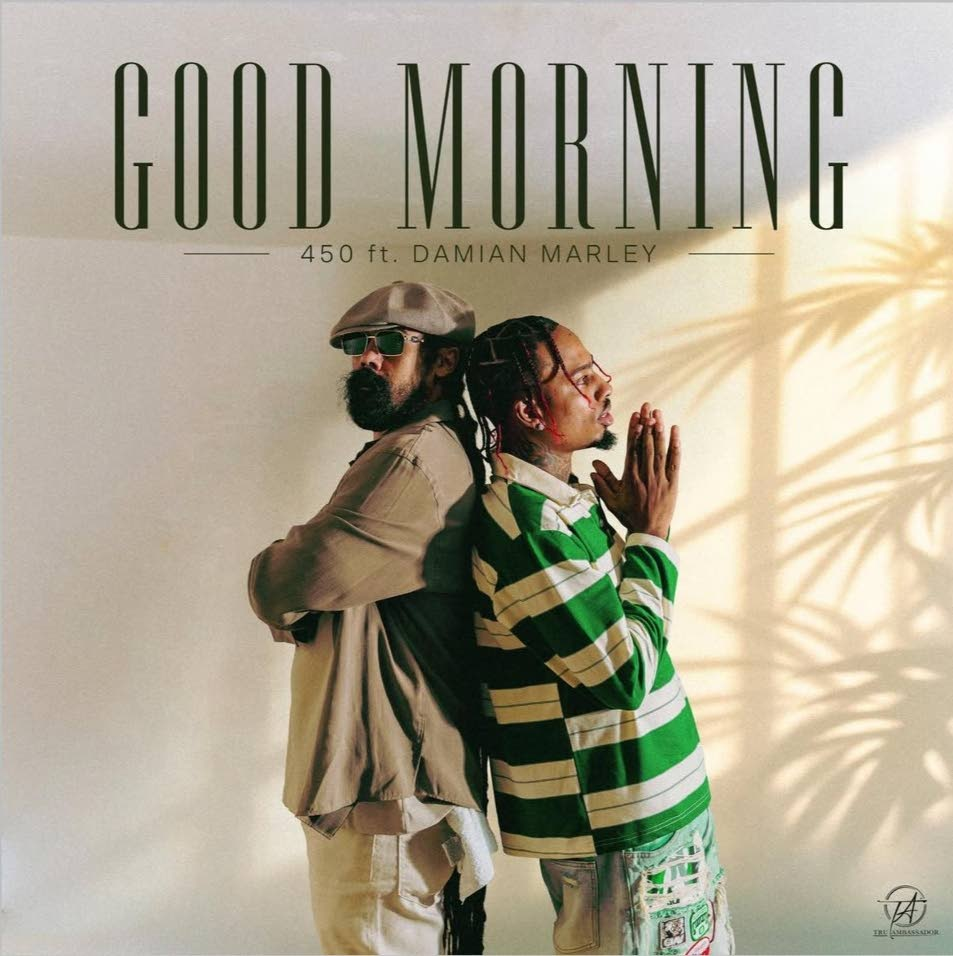
Picture someone spotting the Unruly boss across a session and calling out, “Wah gwaan Popcaan?” That translates to “What’s going on, Popcaan?” It is a hail, a nod and an open door all at once.
Where the Word Comes From
Break it down and the logic is clear. “Wah” means what, and “gwaan” means go on. Put them together and you get the Jamaican Creole “wah gwan”, a reshaped form of the English question “what’s going on?”
In Jamaica the fuller version is often “wat a gwaan” or “what a gwaan”, where “a” marks the ongoing action and “gwaan” stands in for “going on.” Speak it fast, as people do, and the words run together.
In the diaspora, especially in London, the phrase was clipped even further into “wah gwan” and finally the tight little package “wagwan.” That compact spelling is the one you see most in British slang and in texting.
How to Spell and Say It
Patois was a spoken language long before anyone tried to write it down, so spellings wander. You will see wah gwaan, wa gwaan, wha gwaan, whagwan, wah gwan and the clipped “waa gwaan.”
Jamaicans also stretch it out into longer forms such as “wah deh gwaan”, “wah a gwaan” and “what a gwaan.” “Wah gwaan” is the common Jamaican spelling. “Wagwan” belongs mostly to the UK and the group chat.
As for pronunciation, aim for something close to “wah-GWAAN,” leaning on that long, open second half. Let the “aa” breathe. Rush it or flatten the vowel and it starts to sound like a textbook rather than a greeting.
How to Use Wagwan
The most common use is as a straight hello. “Wagwan, mi bredda?” is the equivalent of “What’s up, my brother?” You say it on arrival and you do not need to wait for a long answer.
It can also work as a real question inside a sentence. “Wagwan wid di party tonight?” asks what the plan is for tonight’s party.
“So wagwan with you two?” is a nosy friend asking what is really happening between a couple. In those cases you are genuinely asking for information, not just saying hi.
The word also has roots in Rastafari speech. Iyaric, the Rasta way of reshaping English, avoids “hello,” so Rastas reach for expressions like “wa gwaan” instead. That spiritual and cultural weight is part of why the greeting feels so natural across reggae circles.
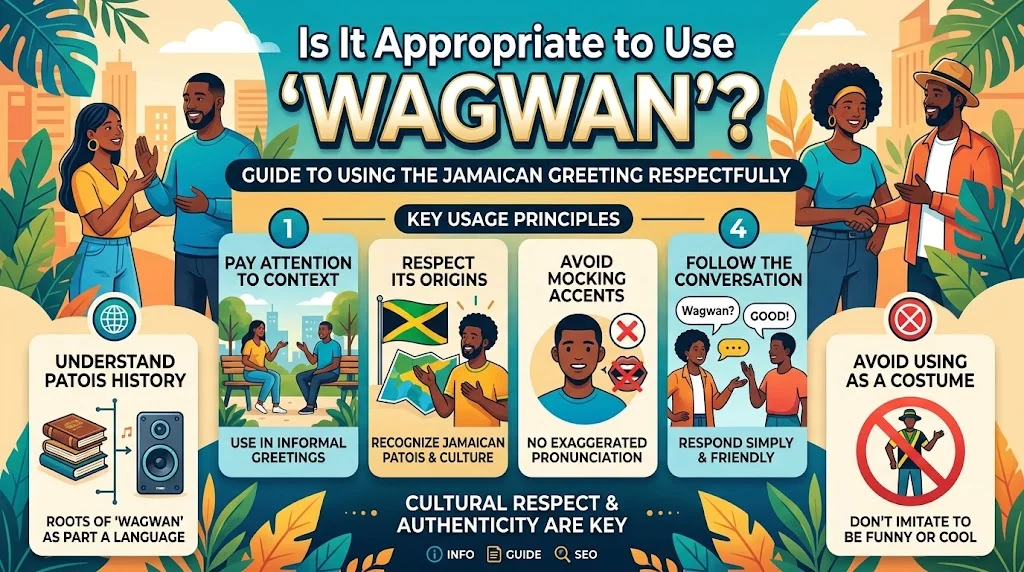
A note on tone: wagwan is friendly, full stop. The only time it turns sour is when someone puts on a fake Jamaican accent to throw it at a Jamaican person. That reads as mockery, not affection. Use it in your own voice and it lands just fine.
How to Reply
Nobody expects a full life update when they hear wagwan. One Jamaica travel guide describes it as a “vibe check,” a quick read on how you are doing rather than an invitation to unload your week.
The classic answer is “nagwan” or “nuttin nah gwaan,” meaning “nothing is going on.” Another very common reply is “Mi deh yah,” which means “I’m here,” or more loosely, “I’m hanging in.”
If things are good, try “everyting criss” or “everyting irie,” both of which say all is well. Between friends you can simply fire “wagwan” straight back, and the exchange is complete.
From Kingston to London and Beyond
Wagwan became a fixture in London through Jamaican immigrants and their children in the 1980s and 1990s. It is closely tied to the street culture of the Jamaican diaspora there.
Sound systems, blues dances and pirate radio all played a part in giving Patois a home in British life, and later grime carried the word across the whole of the UK.
London is not the only stop. Jamaican Patois has shaped Multicultural London English in a big way, and its words are heard in New York, Miami and Toronto too.
Wagwan now turns up throughout the Jamaican diaspora, in hip-hop culture and among reggae fans worldwide.
Reggae and dancehall, carried by records, sound clashes and later the internet, did the heavy lifting. Plenty of people now say wagwan without knowing it started on a Jamaican tongue.
Patois, Not Broken English
It is worth being clear about what wagwan is part of. Jamaican Patois is classed as a Creole language with its own grammar and logic.
It is not “broken English.” It counts around 3.2 million native speakers, and its influence stretches well beyond those numbers.
Recognition is slowly catching up. In September 2025 the Oxford English Dictionary added a dozen Caribbean words, including “broughtupsy,” “bulla” and “Jamaican Creole” itself.
Wagwan was not among them, but the move showed the world taking the language more seriously.
Why Wagwan Still Matters
Wagwan is proof that the smallest words often travel the farthest. It began as a Jamaican way of asking “what’s going on?” It was reshaped by the diaspora in London and carried around the planet on the back of reggae, dancehall and grime. Today it greets people in Kingston, Brixton, the Bronx and Scarborough alike.
Using it well is simple. Say it warmly, in your own voice, and do not expect a speech in return. A “mi deh yah” or an “everyting irie” is all you need.
Behind those two syllables sits a whole culture that refused to shrink its language to fit anyone else. Every time you hear “wagwan” across a room, you are hearing Jamaica talk to the world on its own terms.