

Every family reunion has a playlist, but only one family’s playlist has won a cabinet full of Grammys. The best Marley family songs stretch across four decades and three generations.
They run from Rita’s mischievous disco smash in 1981 to a grandson’s TikTok-born anthem that took over the world in 2024.
What ties them together is a bloodline and a belief that reggae can travel anywhere without losing its root.
This list leaves Bob’s own catalogue aside and focuses on everyone who came after him: his wife, his sons and his grandsons.
Some of these records rule sound systems, some rule pop radio, and a few manage both. Here are the twelve that matter most, strongest first.
1. Damian “Jr. Gong” Marley, “Welcome to Jamrock” (2005)
That air horn still cuts through any dance. Damian’s portrait of Jamaica rides the “World Jam” rhythm and hook lifted from Ini Kamoze’s 1984 “World-A-Reggae”, a Sly and Robbie foundation that hits like a freight train.
Produced by Stephen Marley and released on 14 March 2005, the song turned Kingston’s gritty realities into a global talking point, peaking at No. 13 in the UK and No. 55 on the Hot 100.
It won the Grammy for Best Urban/Alternative Performance, its parent album took Best Reggae Album, and the single went Platinum in Britain.
AllMusic remembers it dominating urban radio and mixtapes, and Pitchfork later placed it among the top songs of the 2000s. Two decades on, the opening bars still stop a crowd cold.
2. YG Marley, “Praise Jah in the Moonlight” (2023)
Bob’s grandson started singing this on his mother Lauryn Hill’s tour dates. Fans filmed it, TikTok did the rest, and demand forced an official release on 27 December 2023.
Built on a sample of Bob Marley & the Wailers’ 1978 “Crisis”, co-written with Hill and produced by YG, Hill and Johnny G, it is a hushed, candlelit hymn that somehow became a stadium singalong.
It debuted at No. 74 on the Hot 100, the highest reggae debut since Jay-Z’s “Bam” featuring Damian, then climbed to No. 34.
It hit No. 5 in the UK, No. 1 in New Zealand and No. 11 on the Global 200, going Platinum in Canada and Gold in the UK. Jesse Royal called it “arguably” the biggest reggae song of the last decade, and few argued.
3. Ziggy Marley & the Melody Makers, “Tomorrow People” (1988)
Ziggy and his siblings made their bold crossover statement in a New York studio with Talking Heads’ rhythm section, Chris Frantz and Tina Weymouth, at the controls.
Recorded at Sigma Sound for Conscious Party, “Tomorrow People” is bright, earnest and impossibly catchy, a call to a new generation wrapped in polished late eighties production.
It reached No. 39 on the Hot 100, still Ziggy’s lone Top 40 hit, and No. 16 on the Mainstream Rock chart. The album won Best Reggae Album at the 1989 Grammys, the first of three for the group.
In September 2026 Conscious Party returned to vinyl for the first time since 1988, with Ziggy calling it “a very monumental album in our life at the time.” The song has passed 30 million Spotify streams.
4. Ziggy Marley & the Melody Makers, “Tumblin’ Down” (1988)
If “Tomorrow People” opened the door, “Tumblin’ Down” kicked it off the hinges. Written by Ziggy with Wailers keyboardist Tyrone Downie and again produced by Frantz and Weymouth, this is the Melody Makers at their most kinetic, a protest song that moves like a party record.
Black radio embraced it completely. The single topped the Hot Black Singles chart for two weeks, holding No. 1 on 24 and 31 December 1988, while also reaching No. 5 on Modern Rock and No. 1 on Hot Dance Music/Maxi-Singles Sales.
Its reach across formats showed how far the Marley sound could stretch. The 2026 deluxe reissue adds fresh post-production from Bomb Squad members Hank Shocklee, Eric “Vietnam” Sadler and Keith Boxley, a fitting nod to its hip-hop crossover spirit.
5. Skip Marley & H.E.R., “Slow Down” (2020)
Silky, unhurried and drenched in late night warmth, “Slow Down” showed Skip could own a lane his grandfather never touched.
Produced by Rykeyz and released as the lead single from the Grammy-nominated EP Higher Place, the duet pairs Skip’s easy reggae phrasing with H.E.R.’s velvet R&B voice.
In May 2020 it made Skip the first Jamaican to top Billboard’s Adult R&B Songs chart. Billboard’s staff ranked it the best R&B song of the year, and it earned a nomination for Best R&B Song at the 63rd Grammys.
“It signifies that the music is resonating with new audiences,” Skip told the Jamaica Observer. The record proved the family’s music could thrive in modern R&B without losing its Jamaican soul.
6. Damian Marley feat. Nas, “Road to Zion” (2005)
Some collaborations are one-night stands. This one became a marriage. “Road to Zion” was the first time Damian and Nas worked together, and the chemistry on this brooding, spiritual Welcome to Jamrock cut was so obvious that it grew into a full album partnership.
Released as a single in 2005, it sets Jr. Gong’s righteous chant against one of hip-hop’s most respected lyricists, two traditions meeting as equals rather than borrowing from each other.
That meeting led to Distant Relatives in 2010, the joint project whose proceeds went toward building schools in the Congo.
The album debuted at No. 5 on the Billboard 200 with 57,000 first-week sales. Every Damian and Nas moment since traces back to this song.
7. Katy Perry feat. Skip Marley, “Chained to the Rhythm” (2017)
The origin story is pure luck. Skip says Katy Perry walked into the studio while Max Martin was playing his song “Lions” and announced, “I need him on my next single.”
The result, produced by Martin and Ali Payami and released on Capitol on 10 February 2017, is a glossy pop meditation on complacency, with Skip arriving in the bridge to deliver a dose of conscious reggae in the middle of a Max Martin production.
Skip earned a songwriting credit, the single went double-platinum, and he performed it alongside Perry at the Grammys, the Brit Awards and the iHeartRadio Music Awards that year. For millions of pop fans, this was their introduction to a new generation of Marley.
8. Rita Marley, “One Draw” (1981)
Before the sons took over, the matriarch scored a hit nobody saw coming. Rita, already a reggae fixture as one of the I Threes alongside Marcia Griffiths and Judy Mowatt, recorded Who Feels It Knows It as Bob was losing his battle with cancer.
Out of that dark season came “One Draw”, a cheeky, lighthearted ode to the herb that swings with genuine joy.
The BBC banned it, which only added to its outlaw charm. It became the first reggae single to top Billboard’s disco singles chart, an achievement that looks even bolder in hindsight.
Spin it today and you hear resilience disguised as a good time, a widow insisting on laughter when the world expected grief.
9. Ky-Mani Marley, “Dear Dad” (1999)
The most personal song on this list started as a child’s letter. Ky-Mani was five when Bob died, and the lyrics of “Dear Dad” come from words he wrote to his father in the years after.
Produced by Clifton Dillon for The Journey, released on Gee Street/V2, the track loops the riddim behind Bob’s 1976 “Crazy Baldhead”, so the son speaks directly over the father’s music. The effect is haunting and tender at the same time. It topped the British reggae charts.
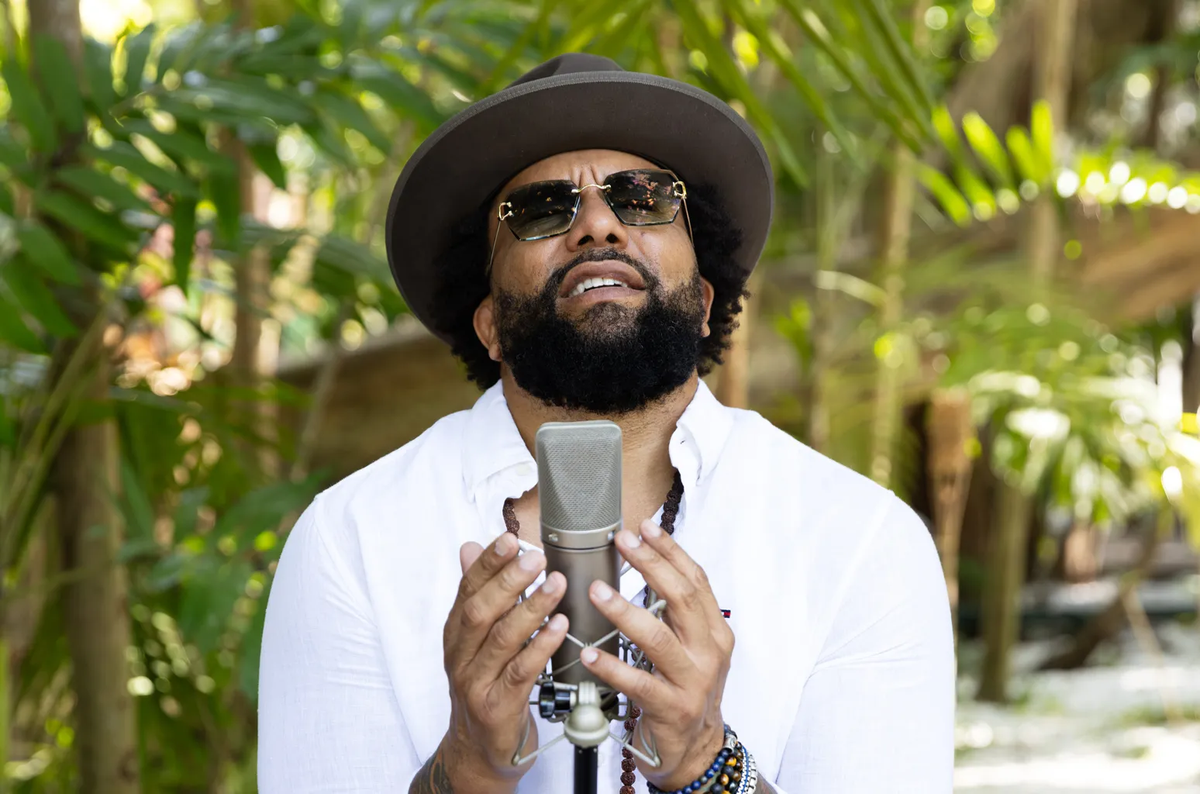
On the Marley Brothers Legacy Tour, Ky-Mani sang an excerpt as “Crazy Baldheads” wound down, a moment that turned a concert into something close to a family prayer. Few tribute songs have carried this much weight.
10. Damian Marley, “The Master Has Come Back” (2005)
Welcome to Jamrock gets remembered for its street anthems, but this deep cut shows the album’s spiritual core.
Produced by Stephen Marley, with scratches from Corey Chase, and released as a single on 12 December 2005, “The Master Has Come Back” leans into roots tradition, with faith and perseverance carrying the song. It is a slower, more reflective Jr. Gong, preaching patience rather than sounding alarms.
Its presence explains why Welcome to Jamrock connected so widely: the album sold 86,000 copies in its first week and went gold in the US, rewarding listeners who stayed beyond the hits. For fans who prefer their Damian meditative, this remains a cherished selection.
11. Stephen Marley feat. Damian Marley & Buju Banton, “Jah Army” (2011)
Three heavyweight voices on one rhythm is the kind of combination sound system selectors dream about.
Stephen produced “Jah Army” for Revelation Pt. 1: The Root of Life, released 24 May 2011 on Ghetto Youths United, Tuff Gong and Universal Republic, and he brought in his brother Damian and Buju Banton for a militant, nearly five minute roots march. The songwriting credits list Stephen, Damian, Mark Myrie and Michael Rose.
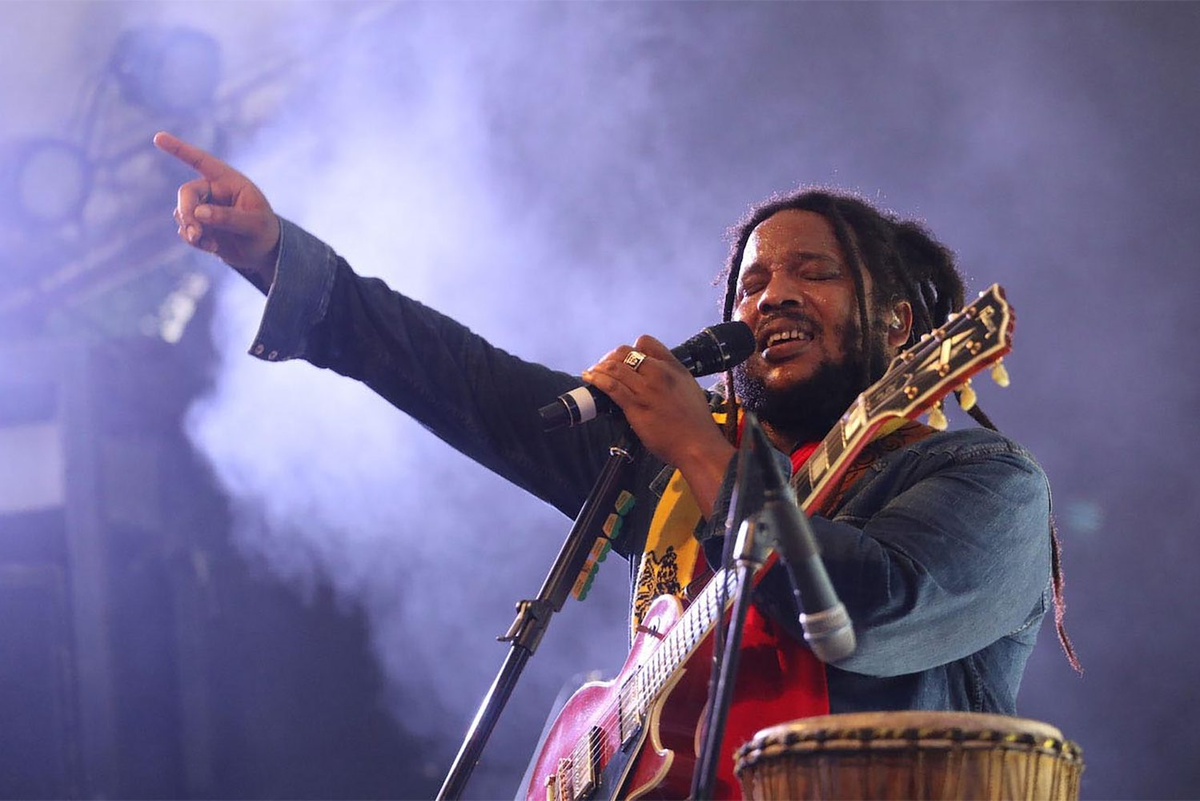
Each artist brings his own fire, Buju’s gravel set against the brothers’ contrasting deliveries, and the result feels like a declaration of purpose. The album won Best Reggae Album at the 54th Grammys in 2012, and this track is its loudest statement.
12. Julian Marley, “Boom Draw” (2009)
Julian has always been the quiet Marley brother, but “Boom Draw” is the record that gets the crowd shouting.
It comes from Awake, released 28 April 2009 on Universal/Tuff Gong and produced by Julian with Stephen Marley, Paul Fakhourie and Luke Andrews.
The song is an unapologetic herb anthem with a heavy, rolling groove. Awake was named album of the year at the International Reggae and World Music Awards and earned a Grammy nomination for Best Reggae Album.
On the Marley Brothers Legacy Tour, Rootfire singled it out as Julian’s “banger,” part of a run of three straight ganja songs in the set. It is a fitting echo of his stepmother’s “One Draw” nearly three decades earlier.
Why the Marley Bloodline Still Matters
Line these twelve songs up and you hear something rare in popular music: a family that keeps expanding rather than repeating itself. Rita took reggae to the disco charts. Ziggy and the Melody Makers carried it onto Black radio and rock playlists.
Damian fused it with hip-hop until the line between them blurred. Skip slipped it into pop and R&B, and YG brought it back to its spiritual core for a generation raised on short videos.
None of them simply copied Bob. Each found a new room for the message and then furnished it in their own style.
In 2026, with Conscious Party back on vinyl and “Praise Jah in the Moonlight” still echoing through festivals, the Marley story clearly is not finished. It keeps getting rewritten, one generation at a time.