

Every great Jamaican record has two stars: the voice you hear first and the person behind the board who decided how it would hit the speaker box.
The best Jamaican producers did more than capture songs. They invented genres, built studios from scratch, turned a single rhythm track into a hundred hits and taught the world that the mixing desk is an instrument.
This ranking runs from the Brentford Road pioneers of the ska and rocksteady years, through the dub scientists of Waterhouse, to the digital revolutionaries and riddim architects who carried dancehall onto the Billboard charts. Some built empires. Some burned brightly and vanished.
All of them changed how the island sounds, and every one of them still echoes through a sound system somewhere tonight.
1. Coxsone Dodd, “Simmer Down” (1964)
Before there was a template, Clement “Coxsone” Dodd drew it. In 1963 he opened Studio One on Brentford Road, the first black-owned recording studio in Jamaica.
A year later The Wailers’ “Simmer Down,” a ska plea for calm aimed at the rude boys of Kingston, came out on his label.
Dodd was the first producer to keep a house band on a weekly salary rather than paying per record. In the mid-60s he began putting vocals on a separate channel so a rhythm could be reused, the seed of dub, DJ music and the riddim economy itself.
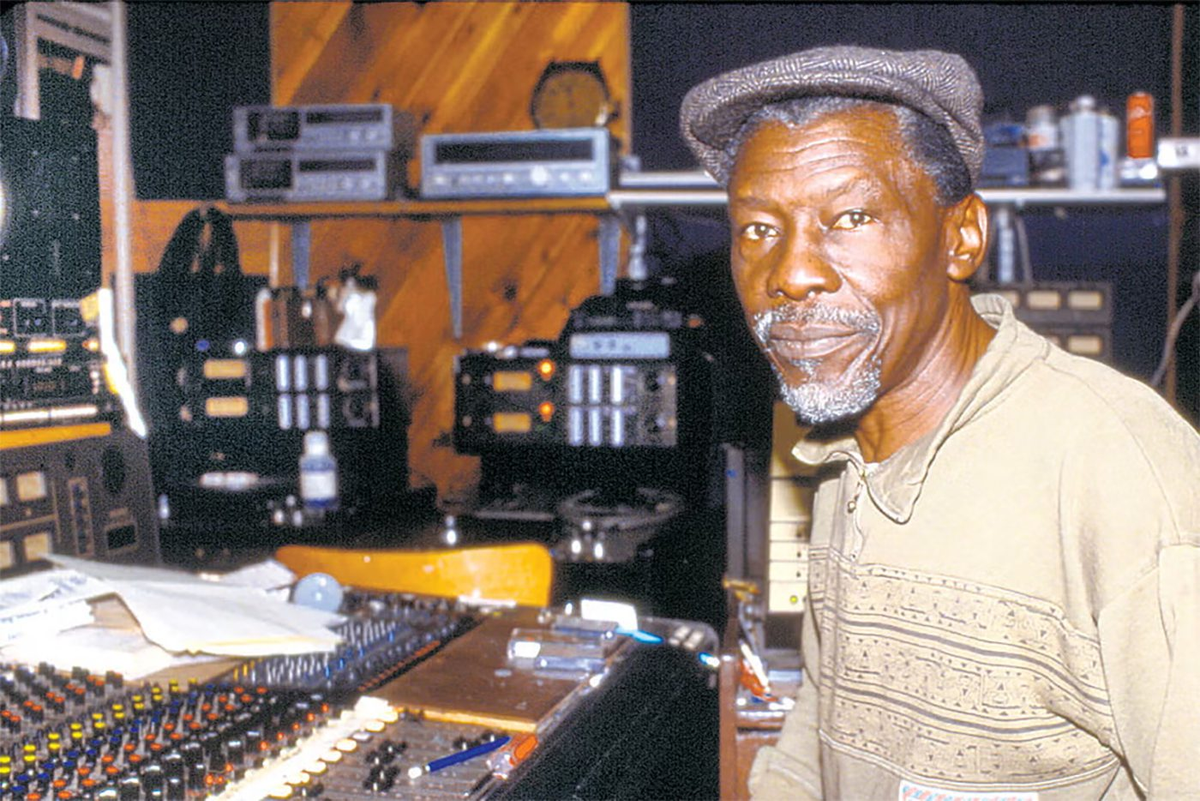
The roll call is staggering: Dennis Brown, Burning Spear, Alton Ellis, the Skatalites, Toots and the Maytals, Marcia Griffiths, Sugar Minott.
Sound Dimension’s “Real Rock,” released in 1968, remains one of the most recycled rhythms in Jamaican music. In 2004 Brentford Road was renamed Studio One Boulevard.
2. Lee “Scratch” Perry, “Police and Thieves” (1976)
Junior Murvin’s falsetto floating over a haze of phased drums: that is the Black Ark sound, and nobody else could have made it.
Perry built the studio in 1973 behind his family’s home in Washington Gardens, Kingston. Working with a TEAC four-track and a Soundcraft desk, he coaxed out records that sound bigger than the gear should allow, among them Max Romeo’s “War in a Babylon,” the Congos’ “Heart of the Congos,” and “Jah Live” and “Punky Reggae Party” with Bob Marley.
The famous “mooing” on the Congos record was Watty Burnett’s baritone pushed through a cardboard tube lined with tin foil.
An Island Records deal in 1976 carried his work worldwide. By the end of 1978, after conflict with a religious sect based at his studio, he had virtually stopped recording there. Perry died on 29 August 2021.
3. King Tubby, “King Tubby Meets Rockers Uptown” (1977)
Osbourne Ruddock did not play an instrument on most of his greatest records. He played the mixing desk itself.
After engineering at Duke Reid’s Treasure Isle in the late 60s, he opened his own studio in Waterhouse in 1971, starting with a four-track mixer bought from Byron Lee’s Dynamic.
There he stripped rhythms to their bones, pulled instruments in and out, and drenched what was left in delay, echo, reverb and phase.
His sessions with Augustus Pablo, from “Ital Dub” to the title track of “King Tubby Meets Rockers Uptown,” are dub at its most hypnotic.
“Tubby was a genius… a self-taught genius,” King Jammy once said. He was shot dead outside his home in 1989, but his fingerprints are all over trip-hop, grime and post-punk.
4. Sly & Robbie, “Unmetered Taxi” (1982)
Sly Dunbar on drums and Robbie Shakespeare on bass became the most in-demand rhythm section on earth, then turned that gift into a production powerhouse.
Their 1981 Island album “Sly and Robbie Present Taxi” was their first as a credited duo, and the “Unmetered Taxi” instrumental of 1982 later carried a Buju Banton vocal.
Their “Revolution” riddim powered more than 100 songs, and one estimate puts their total output, played or produced, near 200,000 tracks.
They contributed to reggae’s first Grammy in 1985 and won one of their own in 1998. The client list runs from Peter Tosh and Black Uhuru to Bob Dylan, Grace Jones and Sean Paul, and Simply Red’s 1997 “Night Nurse” took them to No. 13 in the UK.
The Jamaica Observer once called them “the best international producers of Jamaican music, hands down.”
5. King Jammy, “Under Mi Sleng Teng” (1985)
Here is the record that split Jamaican music into before and after. In December 1984, Wayne Smith and Noel Davey brought Prince Jammy a rhythm built from a preset on a Casio MT-40 keyboard. Jammy slowed it down, matched it to Smith’s key and added piano and claps.
“Under Mi Sleng Teng” arrived on Jammys and Greensleeves in 1985 and unleashed hundreds of versions, its success widely credited with pushing reggae from analog into computerized production.
Lloyd James had earned that instinct the hard way, apprenticing under King Tubby and working as his in-house engineer in the 1970s, and he released Black Uhuru’s debut album in 1977. The digital dancehall era starts in his yard.
6. Steely & Clevie, “Dem Bow” (1990)
Wycliffe “Steely” Johnson and Cleveland “Clevie” Browne were the engine room of digital dancehall, and one of their riddims ended up conquering another continent.
Their “Fish Market” rhythm carried Shabba Ranks’ 1990 hit “Dem Bow,” the song that gave the beat its name.
That stuttering pattern became the spine of reggaeton, and the duo eventually took the matter to court, with a suit claiming more than 1,800 tracks used it and naming Bad Bunny, J Balvin, Daddy Yankee and Luis Fonsi among the defendants.
The defence argued the pattern descends from the habanera and Jamaican Poco church music. However the legal story ends, the case forced a global conversation about how much of Latin pop rides on a Kingston riddim.
7. Dave Kelly, “Bogle” (1991)
Few producers owned a decade the way Dave Kelly owned the 90s. After learning his craft alongside Donovan Germain at Penthouse from 1988, he launched Madhouse and dropped the “Bogle” riddim in 1991.
Buju Banton’s tribute to the dancer, Capleton’s “Stampede” and Terror Fabulous’ “Mr. Big Man” all rode it. Nadine Sutherland and Terror Fabulous’ “Action” topped reggae charts at home and abroad, and Bounty Killer’s “Look” followed in 1999.
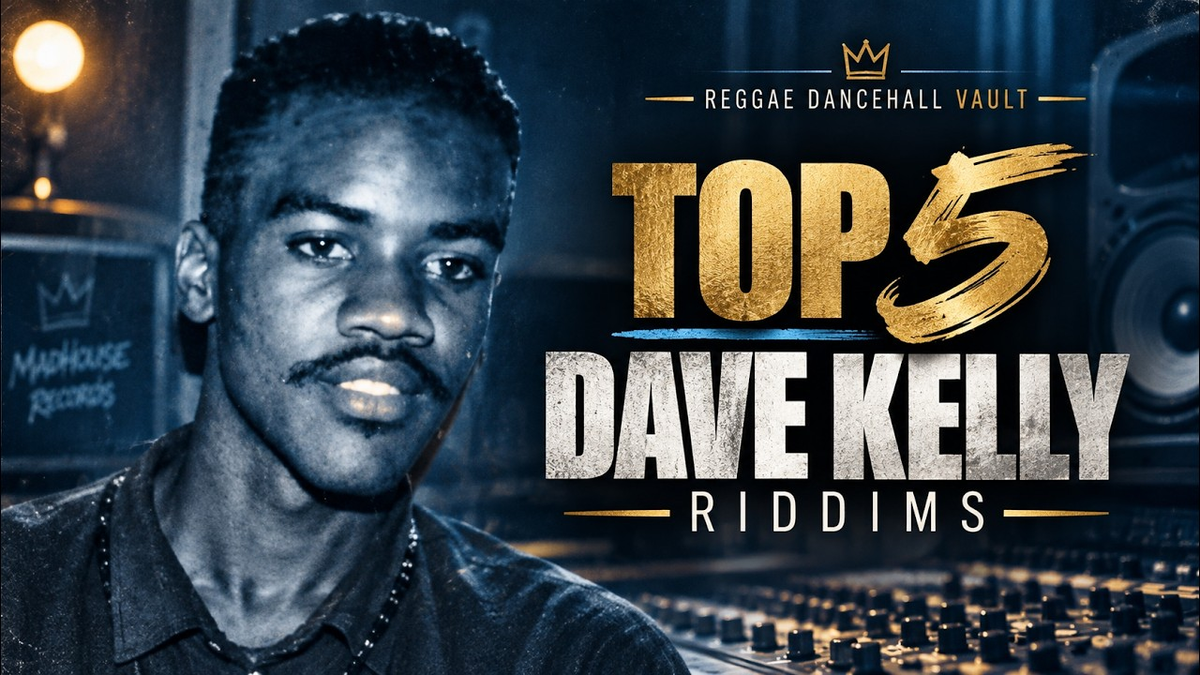
Kelly never slowed: Beenie Man’s “Dude” on the Fiesta riddim in 2003 and Cham’s “Ghetto Story” on Eighty-Five proved his ear survived the millennium.
Joy Ride, Pepperseed, Stink, Bruk Out, Arab Attack: the riddim list reads like a dancehall syllabus. Reggae Sumfest saluted him with a Madhouse tribute on July 23, 2022.
8. Henry “Junjo” Lawes, “Englishman” (1979)
If you want to pinpoint where dancehall began, many point to Junjo Lawes’ late-1979 sessions with the Roots Radics for Barrington Levy.
“Englishman,” cut at Channel One and issued through Jah Life and Greensleeves, set the template: heavy, slow, spacious rhythms built for the dance rather than the radio.
The Radics, formed in 1978 by Flabba Holt, Bingy Bunny and Style Scott, set the tone from 1980 to 1984, and Lawes worked them hard; one member recalled cutting 34 tracks in a single straight session.
With Scientist as his go-to engineer, Junjo also delivered General Echo’s “12 Inches of Pleasure” (1980) and Yellowman’s “Mister Yellowman” (1982) and “Nobody Move” (1983). The early dancehall sound is largely his sound.
9. Steven “Lenky” Marsden, “Diwali Riddim” (2002)
Syncopated handclaps, a Punjabi-tinged bounce, roughly 100 beats per minute. Lenky Marsden’s Diwali is the riddim that took dancehall to the top of American pop.
Released on his 40/40 label and as Greensleeves Rhythm Album No. 27 on 21 May 2002, it sold around 40,000 copies in four months, about four times the series average.
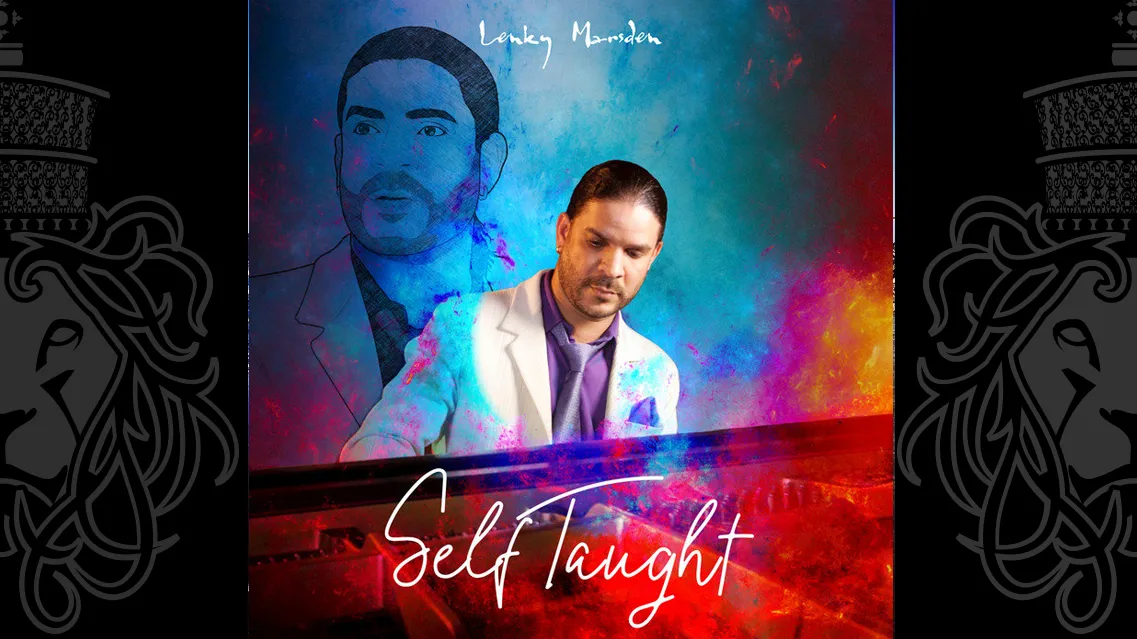
Then it exploded. Sean Paul’s “Get Busy” knocked 50 Cent’s “In Da Club” off the Billboard Hot 100 summit and stayed there three weeks in May 2003, while Lumidee’s “Never Leave You” reached No. 3 and Wayne Wonder’s “No Letting Go” became a crossover smash.
“Sean Paul come when the riddim done and done buss… and him get number one,” Marsden said. Afrobeats acts like Wizkid and Tiwa Savage have since revisited it.
10. Duke Reid, Treasure Isle Rocksteady (1960s)
Arthur “Duke” Reid came to music from an unlikely direction: policeman first, then sound system boss, then producer operating out of his Treasure Isle liquor store.
When ska cooled into rocksteady, Reid seized the moment and took top ranking from his great rival Coxsone Dodd, his Treasure Isle releases defining the sweet, slower sound of the era even as Studio One kept producing the most enduring riddims. His studio also served as a finishing school.
A young Osbourne Ruddock engineered there in the late 60s, making instrumental versions for local MCs, the training ground for the man the world would know as King Tubby. The rivalry between Reid and Dodd pushed both men, and Jamaican music, forward.
11. Joe Gibbs, “Mine Yuh Mouth”
Joe Gibbs was a prolific operator who seemed to have a hand in everything. By 1971 he had released more than a hundred singles, working with Ken Parker, Peter Tosh, the Slickers and the Pioneers.
He gave Errol Dunkley his early hits after Bunny Lee made the introduction, and a young Lee Perry passed through his operation before the two fell out and Scratch went his own way.
Later, Barrington Levy’s “Mine Yuh Mouth” and “Late Night Movie” showed Gibbs could move with the times as roots gave way to the dancehall era. His catalogue is a map of who was coming up in Kingston across two decades
12. Bunny Lee, “The Dubmaster with the Waterhouse Posse” (1983)
Bunny “Striker” Lee was the hustler with an ear, and his timing was immaculate. From 1974 he championed the “flyers” sound, a style built on a prominent clipped hi-hat that dominated roots reggae for years afterward.
Just as crucial was his partnership with King Tubby in the early 1970s, when Lee brought rhythms to Waterhouse and the two experimented with what he called “implements of sound.”
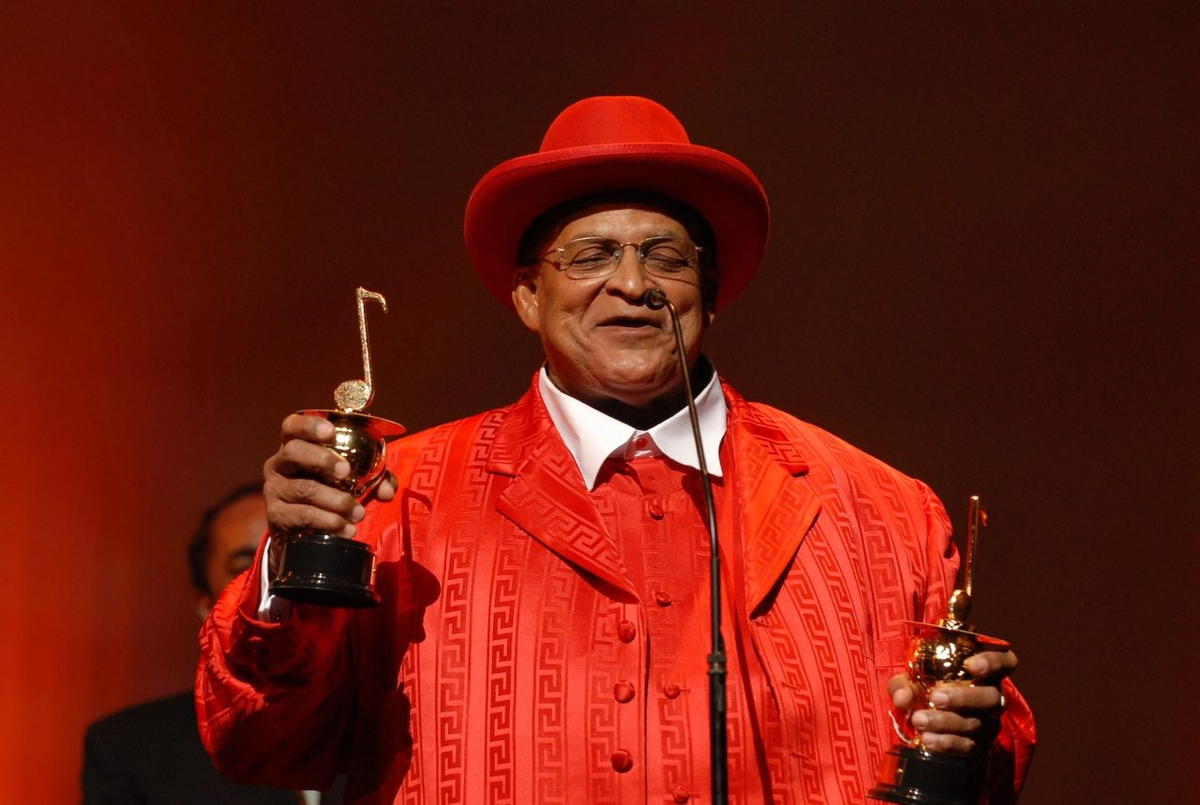
That alliance stretched into the 80s, with “The Dubmaster with the Waterhouse Posse,” released on Vista in 1983 with the Aggrovators behind the controls of the rhythm, capturing their chemistry.
Lee was also a connector, introducing Joe Gibbs to Errol Dunkley, and his studio deals kept the Kingston machine turning.
Why the Producers Still Rule
Run the thread from “Simmer Down” to “Get Busy” and a pattern jumps out. Jamaican music has always belonged to the people who controlled the rhythm.
Dodd’s separate vocal channel made the riddim reusable. Tubby and Perry turned that riddim into an instrument of its own.
Jammy and Steely & Clevie digitized it, Junjo and Kelly built dancehall on top of it, and Lenky proved a single riddim could take over the Hot 100.
Today’s producers in Kingston, London, Lagos and San Juan are still working inside the system these twelve built.
Every one-riddim juggling session, every dub siren, every reggaeton beat traces back to a studio in a Jamaican backyard or a liquor store. The singers get the spotlight, but these are the architects, and the house they built is still standing.