
If you have ever found yourself wondering about the boombastic meaning at the heart of Shaggy’s most iconic single, you are far from alone.
Released in May 1995, “Boombastic” is a reggae-fusion anthem built around a swaggering self-portrait: a smooth, romantic, irresistible lover who goes by the self-awarded title of “Mr. Boombastic.”
In the song, Shaggy brags on his lovemaking prowess, which has earned him the nickname “Mr. Boombastic.”
The track became one of the defining pop crossover moments of the decade, and its layered wordplay, Jamaican patois, and sly humour repay closer attention than casual listeners typically give it.
Who Is Shaggy? The Man Behind Mr. Boombastic
To understand the song, it helps to understand the artist. Born Orville Richard Burrell on October 22, 1968, in Kingston, Jamaica, Shaggy left at age 18 for the Flatbush neighbourhood in Brooklyn, New York, where his mother was already living and working as a medical secretary. He earned the nickname “Shaggy” because of his untamed hair, after the Scooby-Doo character.
In America, the name Shaggy is associated with the Scooby-Doo character (which is where he got his stage name from), but “shag” means something different in Britain, where it is a term for sex, giving “Shaggy” a rather amusing meaning.
When he found out, Shaggy embraced it, writing wild, amusing songs in character as an ego-drenched ladies’ man.
Boombastic” was the first of these tunes; another famous one is “It Wasn’t Me,” where he plays a guy who gets caught cheating and denies it despite overwhelming evidence.
Before he was a pop star, Shaggy was a soldier. Burrell enlisted in the United States Marine Corps on April 12, 1988, and obtained the MOS 0811 (Field Artillery Cannon Crewman).
He served with a Field Artillery Battery in the 10th Marine Regiment during the Persian Gulf War. Discharged on May 4, 1992, the highest rank he achieved was lance corporal, although he was reduced in rank twice. Burrell perfected his signature “toasting” voice while he was in the Marine Corps.
Shaggy lived in America, but his breakthrough was in the UK, where he had a number-one hit with “Oh Carolina” in 1993. It was on the back of that international profile that he recorded the album that would make his name global.
What Does “Boombastic” Mean?
The word at the centre of the song is deliberately invented. “Boombastic” is not a real word, but it is pretty close to “bombastic,” which means highly exaggerated for dramatic effect a good description of this song.
The term “Boombastic” is key here. It is a made-up word, but it perfectly encapsulates a larger-than-life, impressive, and perhaps slightly over-the-top persona.
The sonic echo of the word “bomb” also gives the title a sense of explosive impact and braggadocio. It is simultaneously a boast and a joke about the nature of boasting.
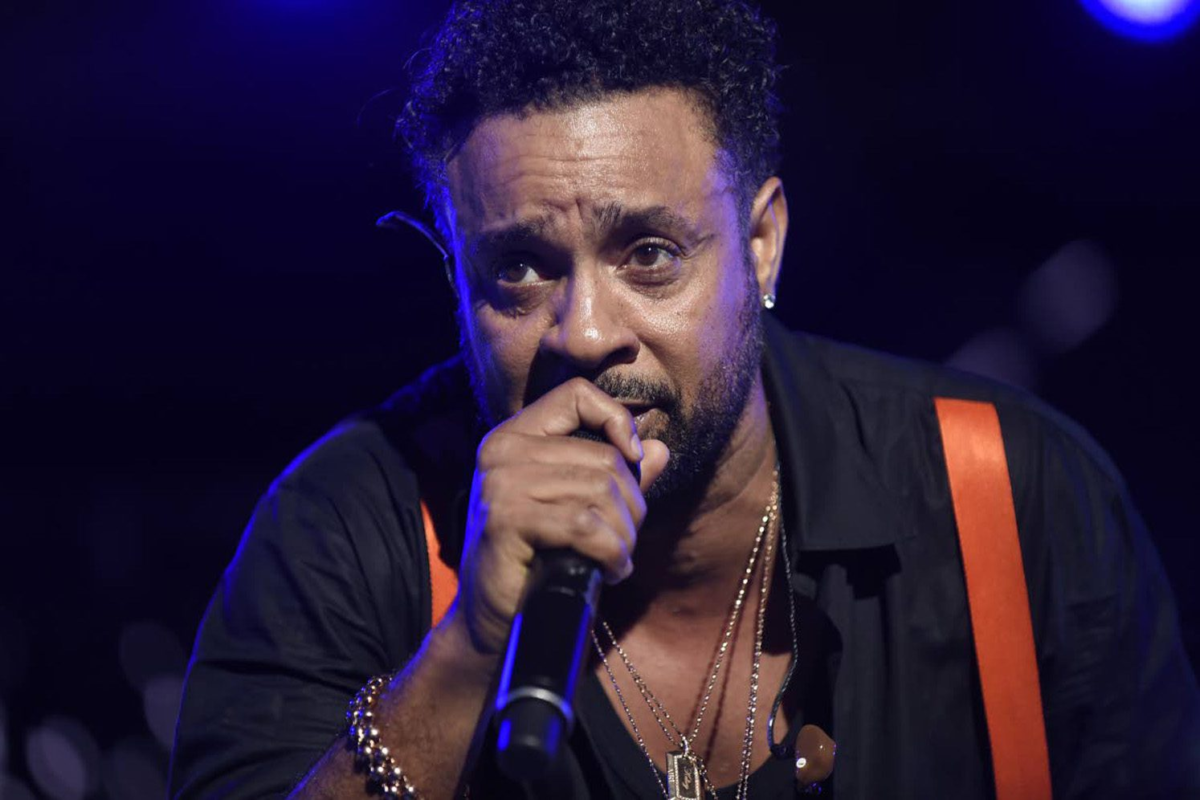
The song’s overt themes of romance and seduction are straightforward, but the covert message touches upon the ways in which language and culture intertwine within music, using Jamaican patois not just as a means of communication but as an instrument.
There is a self-awareness to the lyrics, a tongue-in-cheek acknowledgment that the inflated ego on display is as much a performance as it is a portrayal of genuine confidence.
This clever dichotomy serves not only as entertainment but also as a nuanced reflection on how men often present themselves in the pursuit of love and desire.
Breaking Down the Lyrics
The song’s hook positions Shaggy as the ultimate romantic partner, inviting the listener inside a world of confident seduction.
The core of the song revolves around Shaggy portraying himself as the ultimate ladies’ man, a suave and confident individual who knows how to charm and impress.
He is not afraid to boast a little, but it is done in a playful, almost tongue-in-cheek way that makes it endearing rather than arrogant.
The wordplay connecting “boombastic,” “fantastic,” and “romantic” is central to the lyric’s appeal. The near-rhymes tumble over each other in a pattern that feels both improvised and precisely engineered.
The interrupted word “Ro-ro-mantic” where “romantic” is stuttered and delayed is part of that verbal game, turning the lyric itself into something flirtatious and playful.

The verse’s imagery “smooth just like silk,” “soft and coddle, hug me up like a quilt,” a lover who can captivate the body with “cus cus perfume” paints Shaggy not as a brash aggressor but as something gentler and more sensual.
Khus-khus (also spelled “cus cus”) is a vetiver-based fragrance with deep roots in Jamaican and broader Caribbean culture. Its inclusion grounds the song’s fantasy in something culturally specific rather than generically romantic.
The line “I’m just like a turtle crawling out of my shell” is notable for its self-deprecating humour a moment where the supposedly irresistible Mr. Boombastic admits that the woman in question is the one doing the captivating. It is all good fun, with Shaggy going way over the top to make his case.
The “Mr. Lover Lover” refrain that opens the song functions as a kind of character introduction, an alias that the narrator bestows on himself.
True to the song, “Mr. Boombastic” did indeed become Shaggy’s nickname. He is also known as “Mr. Lover.”
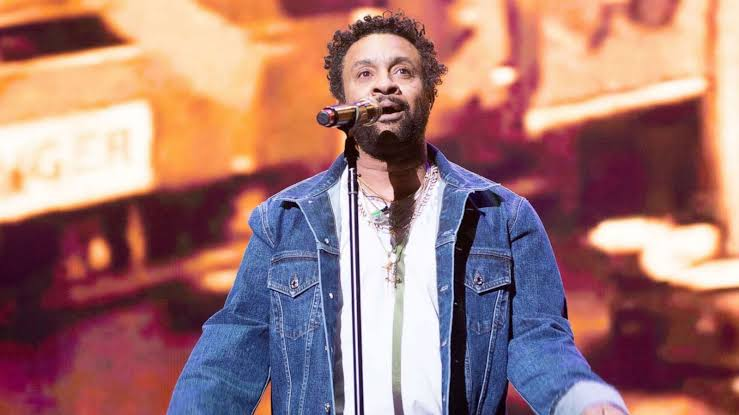
Shaggy delivers the song in a blend of standard English and Jamaican patois that was largely unprecedented on mainstream pop radio at the time. The song uses Jamaican patois not just as a means of communication but as an instrument.
The hidden meaning is found not just in what is said but in how it is said. Phrases like “seh mi fantastic” (meaning “says I’m fantastic”) and “touch mi in mi back” carry erotic charge precisely because patois gives the familiar vocabulary a fresh sensory texture for listeners who are not native speakers of the dialect.
The Production: King Floyd, Marvin Gaye, and a Clanging Piano
The track’s musical foundation is as carefully constructed as its wordplay. The track contains a sample from King Floyd’s song “Baby Let Me Kiss You.”
It sampled King Floyd’s 1971 funk stunner “Baby Let Me Kiss You” and created an irresistible sonic stew highlighted by a metal-edged clanging piano riff and discordant guitar accents.
The song was released in May 1995 by Virgin Records as the second single from Shaggy’s third studio album, Boombastic (1995). The song was both produced and co-written by Shaggy.
The credited songwriters are Orville Burrell (Shaggy), Robert Livingston, and King Floyd, reflecting the sample clearance.
Several remixes of the song were released, including one called the “Sting/Shaggy remix” that is slower and samples Marvin Gaye’s “Let’s Get It On.” “Sting” refers to a producer Shaggy worked with named Shaun Pizzonia, who goes by Sting International.
Ironically, Livingston made the song’s original sample track. Producer Sting International explained he “heard the idea after the artist voiced,” then re-recorded the lead vocal, added the signature piano, the low-end kicks, and made further adjustments.
Sting International’s sonic touches provided the eccentricities that made the song the jewel it is.
Shaggy has recalled that his team “put in [the] Marvin Gaye sample under Boombastic to create a leverage so that we can get on these platforms.”
The strategy reflected a deliberate calculation about what mainstream radio would accept from a dancehall artist in 1995.
Chart Performance and Commercial Breakthrough
The song’s commercial arc was extraordinary. After being used in an ad for Levi’s, it achieved commercial success in many countries, including Ireland, UK, Sweden, New Zealand, and Australia, where it topped the singles charts.
It spent a week at number one on both the US Billboard R&B chart and the UK Singles Chart. It also reached number three on the Billboard Hot 100.
In the UK, the single first charted on September 23, 1995, reaching peak position number one on the Official UK Singles Chart.
Over the course of 37 weeks on the Billboard 200, Boombastic solidified Shaggy’s place in the industry, effectively bridging the gap between niche dancehall and the broader Billboard album audience.
During the same period, the song was pitted against other heavy hitters like Coolio’s “Gangsta’s Paradise” and TLC’s “Waterfalls.”
Despite fierce competition, “Boombastic” stood out with its distinctive reggae sound and Shaggy’s unmistakable voice, aiding its sustained popularity on the charts.
Boombastic has been certified platinum in America, as well as gold in the United Kingdom, Canada, Sweden, and Brazil.
The Levi’s Ad That Changed Everything
The song’s commercial trajectory was turbocharged by a television advertisement. Part of the song’s success is due to its involvement in a Levi’s commercial which became popular all over the world in key music markets.
The claymation commercial featured the song playing as a man used the core of his Levi’s jeans to save a woman from a burning building as they both swing on a makeshift zipline into each other’s arms.
“Boombastic” has been used in several advertisements over the years, including a 2023 commercial for Airbnb, a 2016 spot for JP Morgan Chase Bank, a 2015 Filipino ad for Tide detergent, and most notably as part of a very popular 1995 claymation campaign for Levi’s 501 Jeans.
The song’s sync appeal its ability to make any visual feel immediately warm and seductive has proved to be one of its most durable qualities.
However, Shaggy recalls that “when people first listened to it, they were like, ‘what the hell is this?'” The initial resistance from label representatives and management makes the song’s eventual dominance all the more remarkable.
Awards and Legacy
Thirty years ago, Shaggy walked away winner at the 1996 Grammy Awards in the Best Reggae Album category for his commercially successful album Boombastic.
Boombastic brought Shaggy his first nomination, and win, for Best Reggae Album at the 38th GRAMMY Awards.
Following Shabba Ranks’ consecutive Grammy victories in 1992 and 1993, Shaggy was just the second Jamaican deejay to take home the award.
Boombastic dominated the top spot on Billboard’s Reggae Album Chart, where it held the number one slot for 30 consecutive weeks, making it the longest number one reign in the chart’s history at that time.

Shaggy’s unprecedented success with Boombastic recorded primarily at the legendary HC&F Studios in Freeport, Long Island brought widespread recognition and greater respect to the Brooklyn dancehall community.
In Shaggy’s own words: “‘Boombastic’ broke down the barriers with a full dancehall feel of a record.”
“Boombastic” was also used as the theme for the 2006 film Barnyard and the 2007 film Mr. Bean’s Holiday, ensuring that new generations continued to encounter the song long after its chart run ended.
Why “Boombastic” Still Resonates
More than three decades after its release, the boombastic meaning has not dimmed. The word Shaggy invented to describe himself has lodged itself in the cultural vocabulary as shorthand for a particular kind of cheerfully theatrical, self-aware romance.
Released in 1995, this song was not just a hit; it was a cultural phenomenon that brought a fresh blend of reggae, dancehall, and pop to the global music scene.
Shaggy’s lyrics are a masterclass in storytelling, blending playful boasts with smooth come-ons, all wrapped up in an irresistible beat.
The song also stands as an early and unusually successful example of dancehall crossing over to mainstream pop without sanding away its Jamaican edges.
The patois is still there, the clanging piano riff still clashes against its sample, and the persona is still winking at you from behind its enormous claims.
That combination of cultural specificity and universal theme romantic pursuit dressed up as comic performance is the real boombastic meaning, and it has proven to be timeless.