

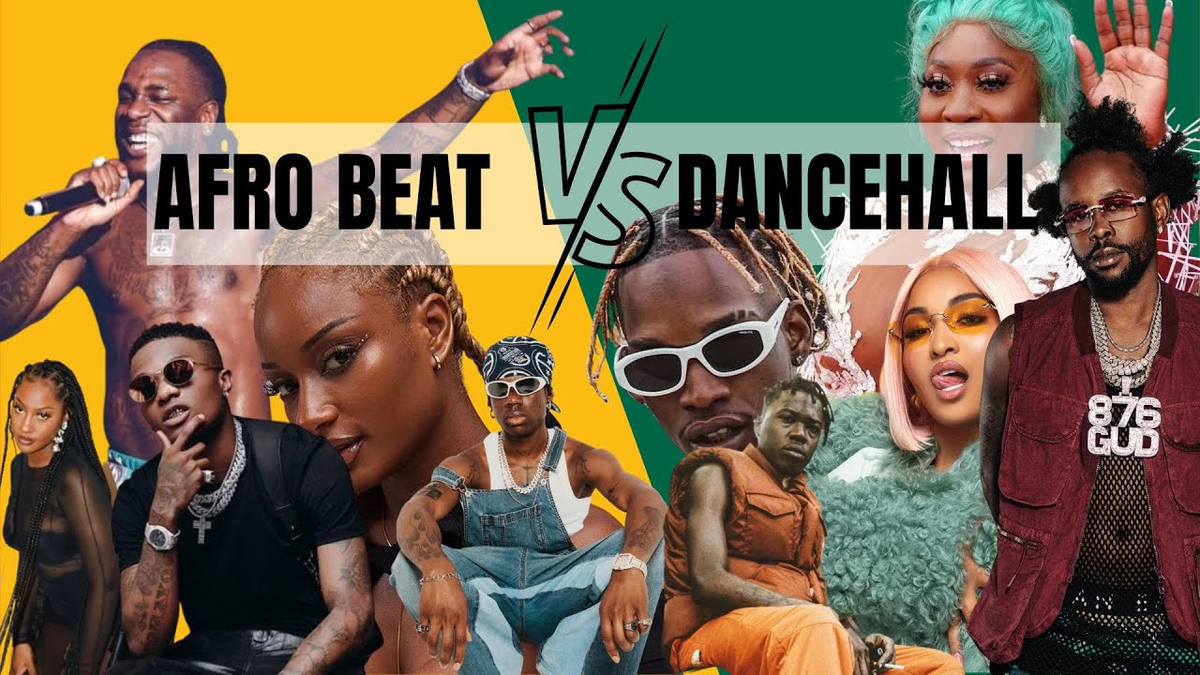
Walk into any club night billed as afrobeats vs dancehall and you will hear the crowd switch gears without missing a step.
One minute the floor is rolling to bright, layered drums and a sweet Pidgin hook. The next, a hard kick and snare drops, the bass fills the room, and a deejay starts chatting. Same energy, different engine.
The short version: dancehall is Jamaica’s popular music, built on riddims and deejay vocals over a spare, heavy rhythm.
Afrobeats is the umbrella name for contemporary West African pop, rooted in Nigeria and Ghana, carried by melodic singing over interlocking percussion. They are cousins, not twins.
Once you know where to listen, telling them apart gets easy, and so does hearing just how much they owe each other.
Two Sounds, Two Homes
Dancehall took over from roots reggae at the end of the 1970s, emerging around 1979 as a sparser, harder successor.
It takes its name from the outdoor dances where Jamaican sound systems strung up their speaker boxes.
In the mid-1980s the electronic keyboard and drum machine revolutionized it, and that digital punch is still in its DNA.
Afrobeats came together in Nigeria and Ghana in the early 2000s, with names like D’banj, 2Baba (formerly 2face Idibia) and P-Square laying the groundwork. It draws on highlife, juju, hip-hop, R&B and, crucially, dancehall.
One spelling note that trips people up: Afrobeats with an s is not Fela Kuti’s afrobeat. Even the label itself is argued over.
DJ 3K has criticised it as a contemporary marketing category, and DJ Abrantee has said he can’t claim to have invented Afrobeats.
Listen to the Drums First
The quickest tell is the rhythm section. Dancehall arrangements are sparse on purpose: a prominent kick and snare, a heavy and simple bassline, few chordal instruments, and plenty of space for the voice. Everything hangs on the riddim, the instrumental backing that carries the bass and low drum groove.
A deejay voices over a riddim that has probably been used on many other songs, which is why a single hot riddim can soundtrack a whole season of dances.
Afrobeats fills the space that dancehall leaves open. It usually sits in 4/4 and commonly features a 3-2 or 2-3 clave rhythm, with layered percussion parts locking into each other.
The result is polyrhythmic but light, a bouncy groove with a forward momentum that has been compared to house music. Where dancehall hits, Afrobeats sways.
There is a shared thread underneath, though. Steely & Clevie built the “Dem Bow” riddim (the “Poco Man Jam” or “Fish Market” riddim), and Shabba Ranks put it on the map in the early 1990s with “Dem Bow.
That pattern rests on the 3+3+2 tresillo rhythm, and similar modern rhythms turn up in Afrobeats “on account of their common ancestry”, as one account of the dembow beat puts it. That is the family resemblance your body picks up before your brain does.
Tempo Is a Clue, Not a Verdict
DJs often reach for BPM to separate the two, and it helps a little. Dancehall commonly lives somewhere around 90 to 110 BPM, usually with a strong half-time feel that makes it seem heavier and slower than the number suggests. Afrobeats tends to sit around 100 to 115 BPM, with many tracks landing near 108.
Notice the overlap. Plenty of dancehall and R&B records sit in the same window as Afrobeats, so tempo alone will never settle the question. Treat it as a rule of thumb, then trust the drums and the voice.
Who’s Singing, and How
Afrobeats is vocal-forward and led by melody. Its stars sing more than they rap, gliding over the percussion in Pidgin, Yoruba, Twi and other languages, often switching mid-verse. The hook is king.
Dancehall’s signature is the deejay: toasting, a rhythmic, rap-style delivery in Jamaican patois riding right on top of the riddim. Singers have always had a place in dancehall too, but the deejay’s chat is the sound most people picture.
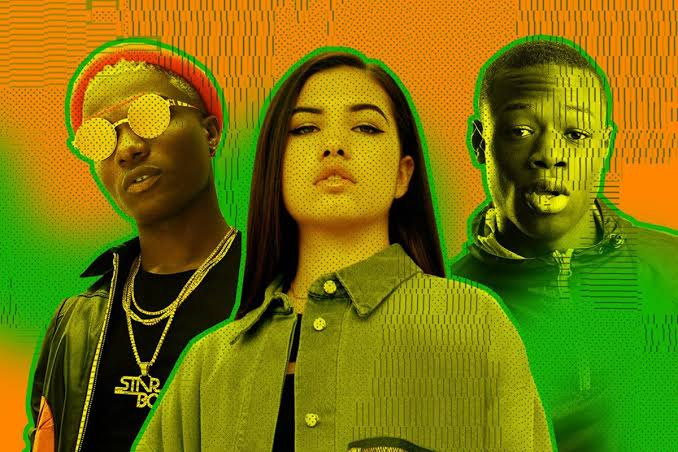
Pulse Nigeria points out how much the two still have in common: both are percussion-driven, and both lean on loose rhyme schemes, catchy melody and street-focused writing. That shared attitude is why the genres sound so natural back to back.
On the dancefloor the difference shows in the body as well. Afrobeats dance leans on footwork, torso movement and full-body shaking, while dancehall moves tend to centre on the hips and pelvis with a grounded posture.
Family Ties: Where the Two Sounds Meet
Afrobeats did not come only from dancehall, and some Afrobeats records show little obvious Jamaican influence.
But reggae was moving crowds in Nigeria and Ghana long before the modern movement, and dancehall then combined with it to shape Afrobeats’ earliest street music.
In the 1990s, Nigerian acts like Daddy Showkey, Plantashun Boiz and Remedies were already blending dancehall, R&B and local rhythms.
Pulse Nigeria names Sean Paul, Busy Signal, Beenie Man, Buju Banton, Shaggy and Chaka Demus among the Jamaicans whose records travelled into that mix, and its analysts rate dancehall as just as commanding an influence on Afrobeats as hip-hop.
The documentary Afrobeats: The Backstory calls dancehall the “cousin” of Afrobeats, tracing the line from Daddy Showkey to Stonebwoy to Shank to Burna Boy. Burna is the clearest modern case.
His 2018 album Outside moves through Afrobeats, dancehall, reggae and road rap, and 2019’s African Giant mixes Afrobeats, Afrobeat, dancehall, pop and hip-hop.
He has linked with Jamaicans directly, with Serani on “Secret” and Popcaan on “Aboboyaa”, a dancehall-Afrobeats fusion.
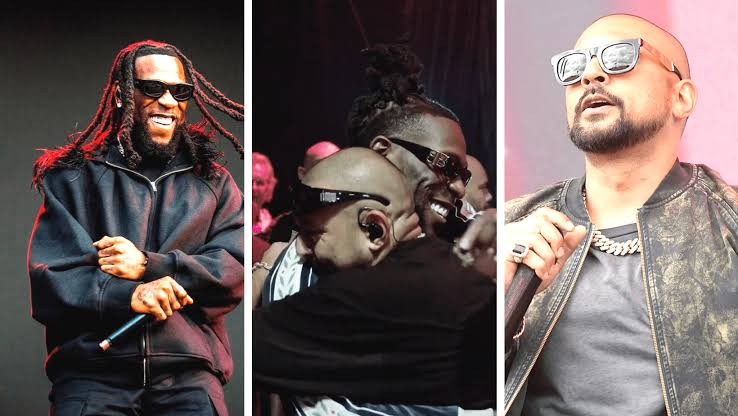
Onstage in Kingston on his Love Damini Tour in 2023, he told the crowd: “You know I love Jamaica. Jamaica is my second home.”
The crossover keeps rolling. Ayra Starr and Rema’s “Who’s Dat Girl” is a dancehall-infused Afrobeats track whose video passed 30 million views by February 2026.
The Hybrids in Between
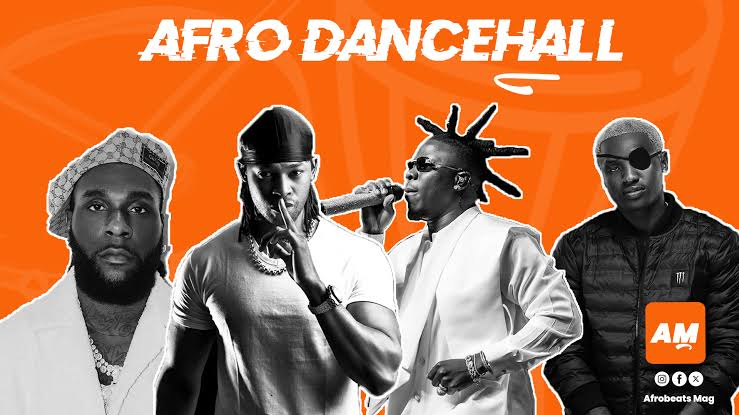
Some records refuse to pick a side, and they have their own names. Afro Dancehall emerged in Ghana and Nigeria in the late 2000s, with Stonebwoy closely tied to the term.
Timaya, Patoranking and Burna Boy infused dancehall with Pidgin English and indigenous melodies, and Ruger carries it into a newer generation.
In London, Afroswing fused dancehall and Afrobeats, taking shape in the mid-2010s, with Sneakbo’s 2010 “Touch Ah Button” as an early example. It is defined more by melody than by any set tempo.
Further south, Zimdancehall adapts Jamaican riddims with rhythmic chanting and lyrics about poverty, politics and everyday life in Zimbabwe.
Burna Boy has his own term for his genreless style: Afrofusion.
Who Gets the Credit?
Because the bloodline is so clear, ownership gets heated. Africa Is a Country noted in 2023 that Afrobeats was becoming the envy of established brands like Jamaican dancehall, while criticising a book on the genre for underplaying dancehall’s role.
In January 2024, Jamaican insiders hit back after an executive claimed Afrobeats had “better” artistes than dancehall-reggae.
Stowe pointed to Nigeria’s population of more than 230 million against Jamaica’s 2.8 million, saying Afrobeats has a deeper well to draw on “after being fertilised by Jamaica”. He also kept it gracious: “We don’t fear Afrobeats, we are happy for their success.
Even inside Afrobeats, the conversation is touchy. When Burna Boy said the genre had “no substance”, BNXN explained the remark was about the West’s understanding of it, adding that “a lot of people took it the wrong way.
Why the Line Still Matters
Knowing the difference is not about building walls. It is about hearing the conversation. The space in a dancehall riddim and the busy shimmer of an Afrobeats groove are two answers to the same question of how to move a crowd, and they have been trading ideas across the Atlantic for decades.
The industry still draws the line: the 2026 Ghana Music Awards kept separate categories for Best Reggae/Dancehall Artiste and Best Afrobeats Song.
Meanwhile, the clubs have turned the distinction into a party, from “Dancehall vs Afrobeats vol. 26” in Barcelona to “Afrobeats vs Dancehall” at The Concord in New York.
So listen for the riddim and the deejay, then the clave and the melody. Then stop analysing and dance to both.