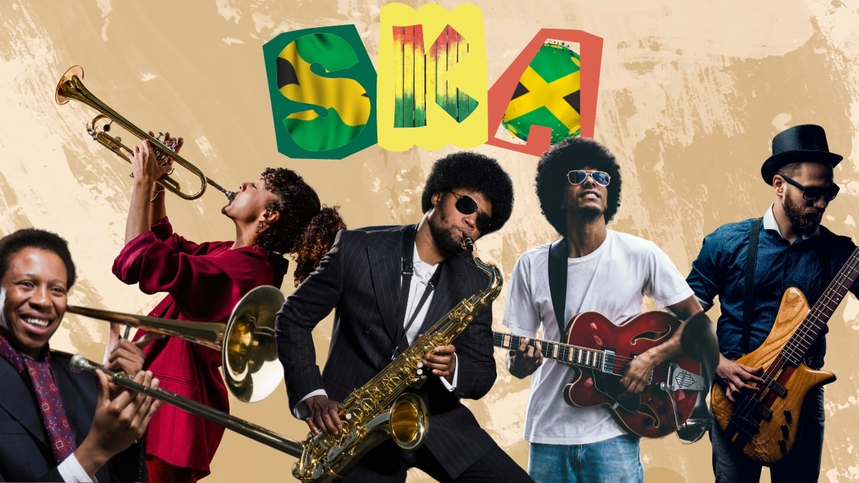

Before dancehall, before reggae, even before rocksteady, there was ska. So what is ska?
It is Jamaica’s first homegrown popular music: a bright, bounding sound built on a walking bass line, a guitar chopping on the off beat and a horn section blazing out front.
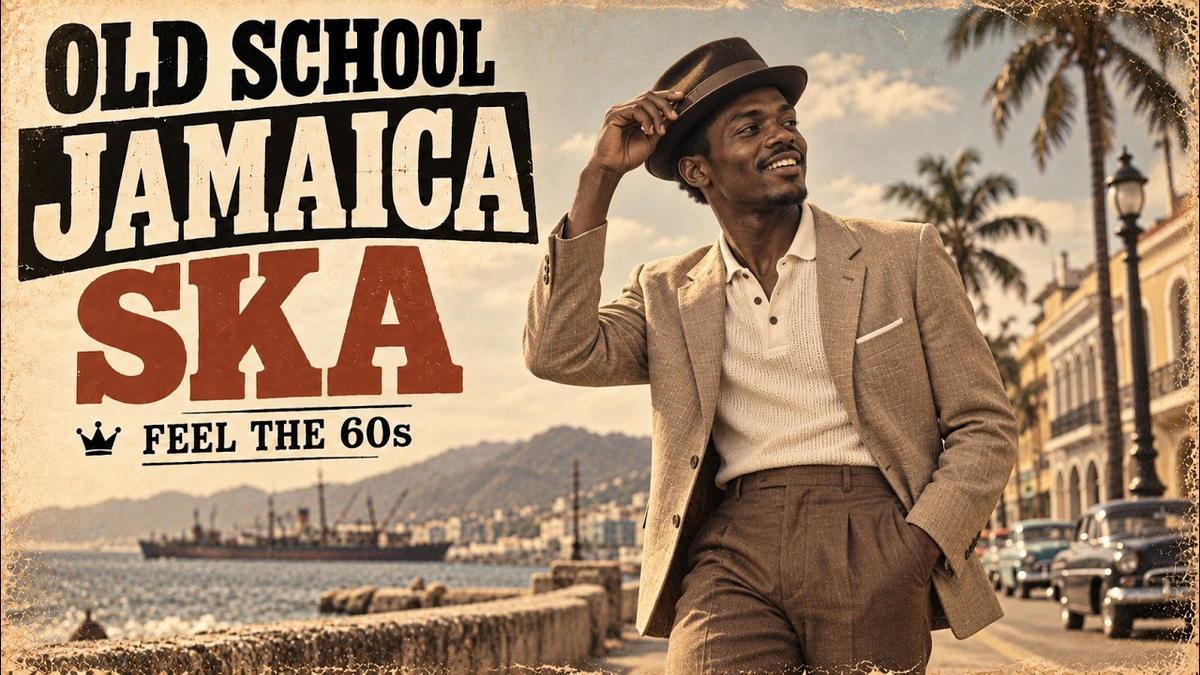
It was born on the island in the late 1950s and carried into the 1960s by the sound systems that ruled every dance.
It was also the soundtrack of a nation finding its voice. Ska rose alongside Jamaican independence in 1962.
It gave the rude boys their swagger, put a Jamaican teenager at No. 2 on the British and American charts, and laid the foundation that rocksteady, reggae and everything after would build on. Here is how the music works, where it came from, and why it never really went away.
The Sound of Ska
At its core, ska is a walking bass line with rhythms accented on the off beat. The guitar plays a short, sharp upstroke on those off beats, the chop known as the “skank.”
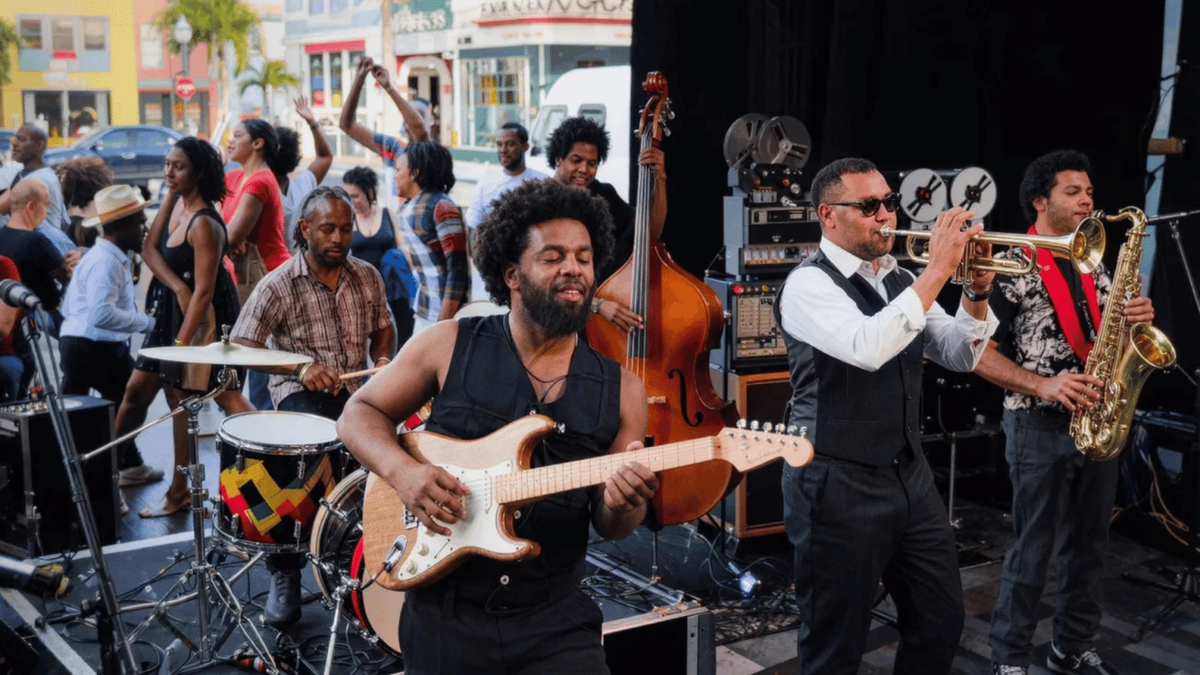
The piano doubles down on the bass line, and the horns take the lead. Saxophone, trombone and trumpet are what set ska apart from the styles around it.
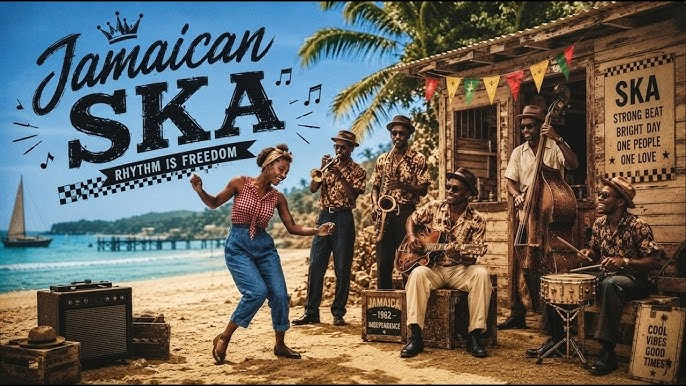
The drums kept 4/4 time, with the bass drum accented on the third beat of each four-triplet phrase. That pulse came from traditional Jamaican drumming and marching styles.
The wider ingredients were Caribbean mento and calypso mixed with American jazz and rhythm and blues. The result was something that felt both familiar and completely new.
Born on the Sound Systems
The story starts with the radio. Armed Forces Radio broadcasts of American R&B and jump blues became hugely popular in Jamaica.
Sound system operators like Prince Buster, Coxsone Dodd and Duke Reid built their rigs to feed that hunger.
When the supply of American imports dried up in the late 1950s, those same men started recording local artists to fill the gap.
The first Jamaican recordings were straight copies of American shuffle blues. Within two or three years they had morphed into ska, leaning hard on the off-beat guitar chop already heard in records like Fats Domino’s “Be My Guest” and Barbie Gaye’s “My Boy Lollypop,” both big on the sound systems.
Early tunes were cut on acetate “soft wax,” the discs later known as dub plates. Dodd and Reid began pressing 45 rpm 7-inch singles, likely in the last quarter of 1959.
Who actually invented ska remains a matter of debate. The general consensus credits Prince Buster with recording it first. One theory places the moment at the inaugural session for his Wild Bells label.
Where the Word Comes From
Even the name has competing origin stories. One version places it at a 1959 Coxsone Dodd session, where bassist Cluett Johnson supposedly told guitarist Ernest Ranglin to “play like ska, ska, ska.”
Ranglin wasn’t having it: “Clue couldn’t tell me what to play!” Another theory traces the word to “skavoovie,” Johnson’s favourite greeting.
Derrick Morgan offered the simplest explanation, describing “Guitar and piano making a ska sound, like ‘ska, ska.
The Sound of Independence
Ska’s rise in the early 1960s gave Jamaica a distinctive national popular music at the exact moment the island won independence from Britain in 1962.
The celebrations had their own anthems, among them Derrick Morgan’s “Forward March” and the Skatalites’ “Freedom Sound.
The music also became bound up with the rude boys, a youth subculture shaped by tough urban working-class conditions and known for its defiant attitude. Overseas, ska found a second home among British mods and many skinheads in the early 1960s.
The Skatalites and Studio One
Clement “Coxsone” Dodd founded Studio One in 1954, having already made his name with the Sir Coxsone the Downbeat sound system.
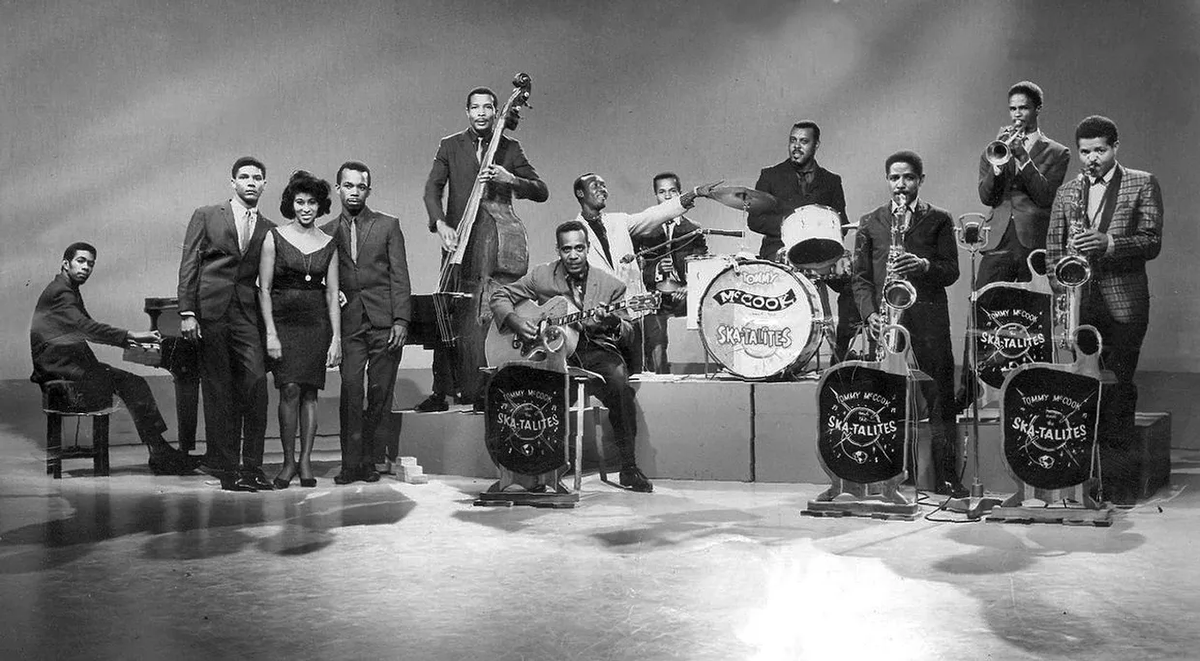
His house band was the Skatalites, the musicians who defined the instrumental side of ska. Saxophonist Tommy McCook was wary of the new style at first, but Dodd persuaded him to lead the group.
Their tunes drew from surprising places. “Coxsone used to use a lot of Cuban tunes and we would write the tune in ska form,” drummer Lloyd Knibb recalled, and bassist Lloyd Brevett pointed to a Mongo Santamaria LP as the source for tracks like “Pussy Cat.” Signature cuts such as “Dynamite,” “Ringo” and “Guns of Navarone” still fill floors.
In spring 1964 the band recorded their first LP, Ska Authentic, at Studio One, and they also played sessions for Duke Reid, Prince Buster, Vincent “King” Edwards, Leslie Kong and Sonia Pottinger.
The Skatalites backed vocal acts too, including Toots and the Maytals, whose close-harmony gospel singing overshadowed another Dodd vocal group of the time, the Wailers. The Skatalites reformed in 1983.
“My Boy Lollipop” Goes Global
The moment ska conquered the world came in 1964, when Millie Small’s “My Boy Lollipop” reached No. 2 in both the US and UK.
It is widely considered the first true international ska hit, with AllMusic putting its sales at more than 7 million copies.
Arranged by Ernest Ranglin, it reworked the Barbie Gaye song first released in the US in late 1956, and it became the first major hit for Island Records.
The success came at a cost to the singer herself. Small always maintained she never received royalties for the record, and she largely stayed out of the public eye. She died on 5 May 2020.
From Ska to Rocksteady and Reggae
By 1965 and 1966, American soul was getting slower and smoother, and Jamaican music followed.
One account of the shift puts it at Studio One in 1966, when Joe Isaacs replaced Lloyd Knibb on drums but could not keep up with ska’s pace, so Jackie Mittoo slowed the tempo down. Rocksteady was born, and many still treasure it.
As Derrick Harriott put it, “Ask any Jamaican musician and they’ll tell you the rocksteady days were the best days of Jamaican music.
By the end of the decade ska had faded in Jamaica, but it never disappeared. Reggae’s direct roots lie in the ska and rocksteady of the 1960s.
The Three Waves
Historians split ska’s story into three waves. The first is the original Jamaican scene. The second is 2 Tone, the late-1970s English revival named by Jerry Dammers, whose 2 Tone Records ran from 1979 to 1985.
Bands like the Specials, the Selecter and Madness fused Jamaican ska with punk energy under a black-and-white checkerboard that doubled as a statement of racial unity.
The Selecter formed in Coventry in 1979 and released their debut, Too Much Pressure, in February 1980.
The third wave grew in America. The Uptones in Berkeley and the Toasters in New York, both formed in 1981, were among the first, and the Toasters’ Robert “Bucket” Hingley launched Moon Ska Records in 1983.
The movement peaked commercially between 1995 and 1998, when Sublime, No Doubt, Reel Big Fish and the Mighty Mighty Bosstones enjoyed big sales, radio play and MTV rotation. Ska punk stripped back much of the R&B feel in favour of faster tempos and distorted guitars.
Meanwhile, Fred Reiter of the New York Ska-Jazz Ensemble coined the term “ska jazz” in 1994, nodding back toward the Skatalites.
Why Ska Still Matters
Ska was the moment Jamaica stopped copying and started creating. It took American R&B off the radio, filtered it through mento, calypso, marching drums and Cuban melodies, and turned it into something unmistakably Jamaican. It also arrived just as the nation itself was being born.
Every chapter that followed traces back to those Studio One sessions and sound system dances. Rocksteady slowed it down, reggae deepened it, and dancehall’s sound system culture comes from the same yards.
Three generations of bands from Coventry to California have kept the off beat alive. Drop the needle on “Guns of Navarone” today, and the horns still sound like freedom.