

Every Marley fan who walked out of the cinema in February 2024 had the same question: how much of that really happened?
The answer to the big bob marley one love movie facts debate is that Reinaldo Marcus Green’s biopic is built on true events but shaped by compression, omission and family oversight.
Rather than telling Bob’s whole life, it zooms in on 1976 to 1978, the stretch that runs from Smile Jamaica through the Exodus sessions to the One Love Peace Concert.
That focus gives the film its power and its blind spots. With Rita, Cedella and Ziggy Marley serving as co-producers, the story arrives with the family’s blessing, and also with the family’s edits.
Here is where One Love keeps faith with history, where Hollywood takes the wheel, and why the argument still matters.
The Film in Brief
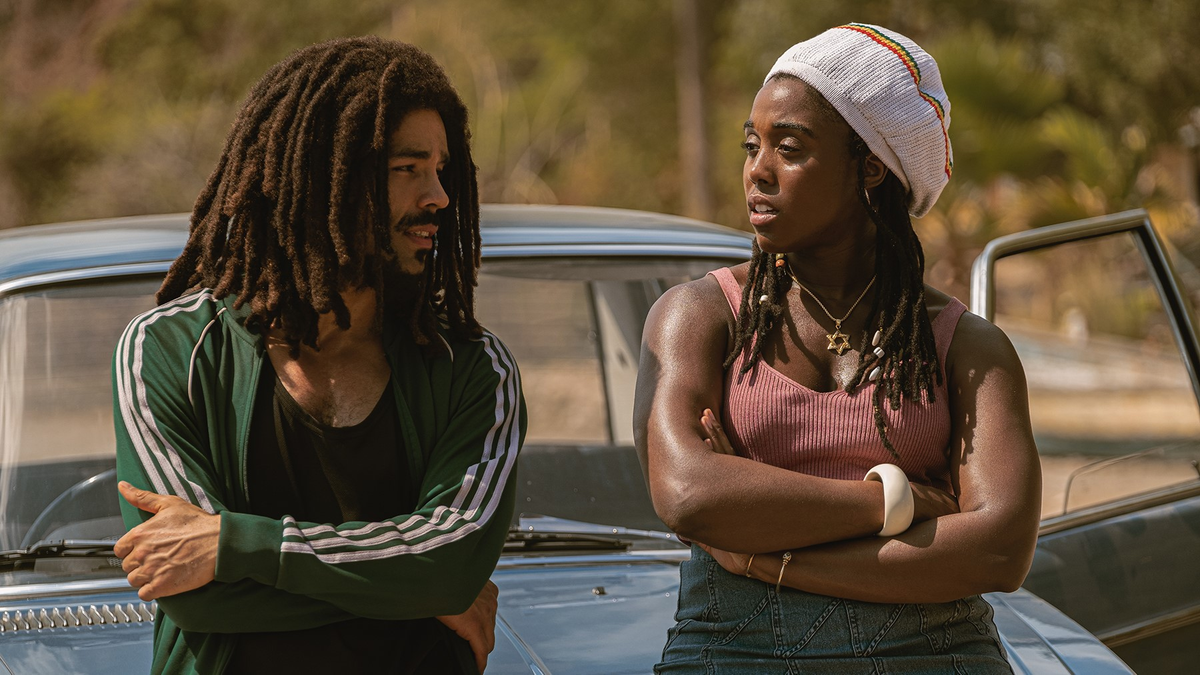
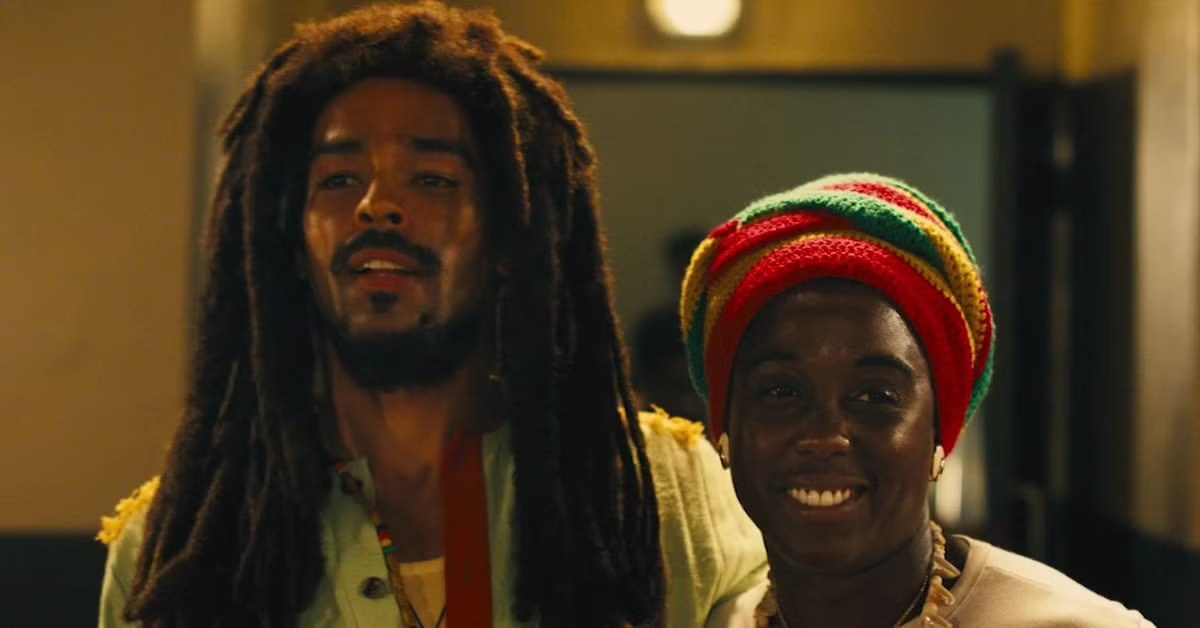
Kingsley Ben-Adir plays Bob, Lashana Lynch plays Rita, and James Norton steps in as Island Records founder Chris Blackwell. Cameras rolled in London and Jamaica from December 2022 to April 2023.
The film premiered at the Carib 5 in Kingston on January 23, 2024, before Paramount opened it in the US and Jamaica on Valentine’s Day. It runs a tight 107 minutes with a PG-13 rating.
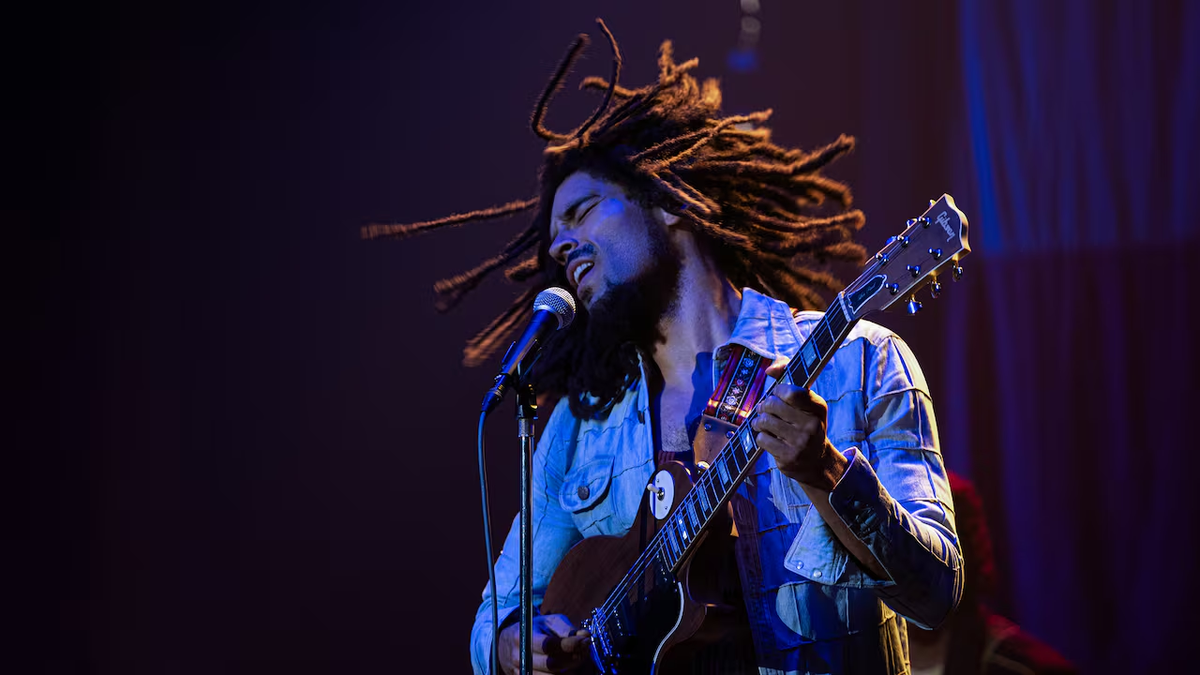
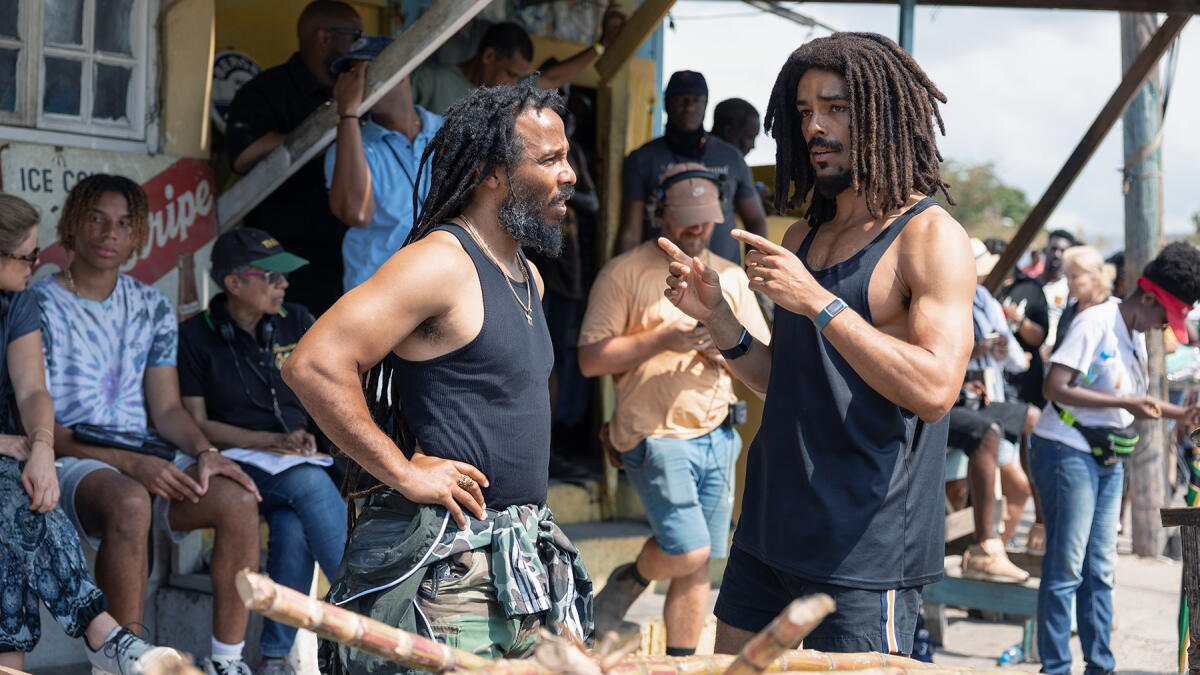
The sound carries real roots credibility. Kris Bowers built his score around Nyabinghi percussion recorded at Tuff Gong, with Ziggy and Steven Marley in the room for the sessions.
That drum is the heartbeat of Rastafari, and it gives the film an authenticity that no script note could manufacture.
What ‘One Love’ Gets Right
The assassination attempt is no dramatic invention. Gunmen came for Marley in December 1976, two days before the Smile Jamaica concert, and the attack nearly killed both Bob and Rita. There were injuries but no deaths.
The real-life detail the film leans on holds up too: wounded and shaken, Marley had promised to perform just one song at Smile Jamaica, yet he went on to deliver far more, a moment that sealed his reputation as a man who would not be scared off his own stage.
Bob’s late-1970s stint in London, including his arrest and detention there, makes it onto the screen. This is the period when exile became creative fuel, and the Exodus sessions form the musical core of the film.
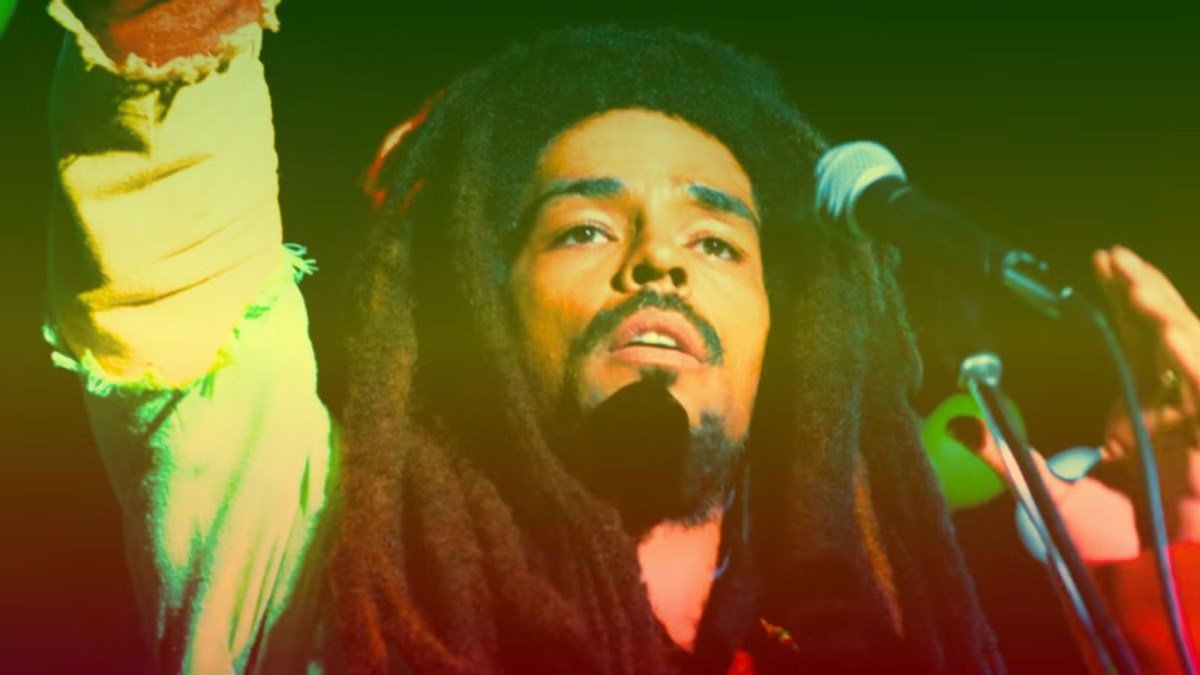
The film closes on the 1978 One Love Peace Concert, cutting to archival footage of Michael Manley and Edward Seaga joining hands on stage.
History records that handshake as reportedly “awkward,” which, if anything, makes Bob’s nerve in forcing it look even braver.
The movie also does not hide that Marley fathered many children with Rita and with other women, though how far it goes with that truth is another matter.
Where Hollywood Takes Over
On screen, Bob heads straight to London after the shooting. In reality, he went to Nassau the next day first.
Reggae Report put it bluntly: “this is a Hollywood movie with Bob’s music.” It is a small compression, but it smooths over the uncertainty of those first days in flight.
The bust-up with manager Don Taylor over money is real, but eyewitnesses say the confrontation lasted longer than the film shows.
The biggest liberty is the ending: the movie hints at a reconciliation, while Taylor himself claimed Marley forced him to end their contract at gunpoint. That is a very different story from the one Ben-Adir and company tell.
The film acknowledges Bob’s affairs but downplays how open his marriage with Rita truly was. Marley had children with at least six other women.
His stepfather and two half-brothers, meanwhile, are absent entirely. With Rita herself among the co-producers, one critic argued that “family oversight shapes every omission.”
One Love ends with Bob learning he has acral lentiginous melanoma after a toe injury refuses to heal, and it stages a scene where Blackwell confronts him about his treatment choices.
Critics argue the film skips much of what that illness actually meant for Marley and leaves the impression he did little to treat it, an incomplete picture of the final chapter that ran until his death in 1981.
Jamaica in the 1970s was a pressure cooker of party violence and garrison loyalties, and the film gestures toward that context without truly digging into it.
One critic said it casts Marley as a “spontaneous pacifying force,” a saintly figure floating above the politics rather than a man moving deliberately through it.
Green, for his part, embraced the gap between legend and screen. His approach, as he put it: “Separate Bob from the character of Bob.”
The Casting Question
When Ben-Adir’s casting was announced in early 2022, it caused a stir at home, and some Jamaicans flatly refused to accept a British actor as Bob.
Even Ziggy, speaking at the family homestead in Kingston, admitted he originally wanted a Jamaican to star. The physical mismatch did not help: Marley stood five-foot-six, while Ben-Adir is six-foot-two.
Ben-Adir started from scratch. “I don’t sing and I don’t play the guitar,” he said of where he stood before taking the part.
For the patois, he studied and transcribed more than 50 rare archival Marley interviews, many supplied by Cedella herself.
His own verdict on the result was modest: “A lady in Jamaica gave me a B+.” Plenty of yard viewers would argue about that grade, but few doubted the work behind it.
Critics vs the People
Reviews were middling at best, with an early critics’ score sitting at 42%. One review declared that “fiction outweighs fact.” The Jamaica Gleaner went the other way, calling it “an instant classic.”
Audiences sided with the Gleaner. One Love earned an “A” CinemaScore and opened to $28.6 million over its three-day weekend and $52 million across the six-day holiday stretch.
Against a $70 million budget, it finished with more than $175 million worldwide, with the U.K. (over $17 million), France ($12 million) and Brazil ($4 million) leading the overseas charge by its third week.
Ziggy summed up the split in one line: “The Critics Don’t Get It, but the People Get It.”
Why the Debate Still Matters
Ziggy promised an “authentic depiction” of his father, and in spirit, One Love delivers it: the shooting, the exile, the Exodus fire and that handshake in 1978 are all true.
What the film trades away is texture, the messy marriage, the Don Taylor ugliness, the political grit and the long fight with cancer. That is the price of a family-approved Hollywood biopic.
For fans, the gap is an invitation rather than a betrayal. Watch the movie, then go back to the records, the interviews and the people who were there.
As Ziggy said, Bob’s “message of peace, love, and unity is clearly connecting with audiences around the world.” If One Love sends a new generation digging for the real story, it has done its job.