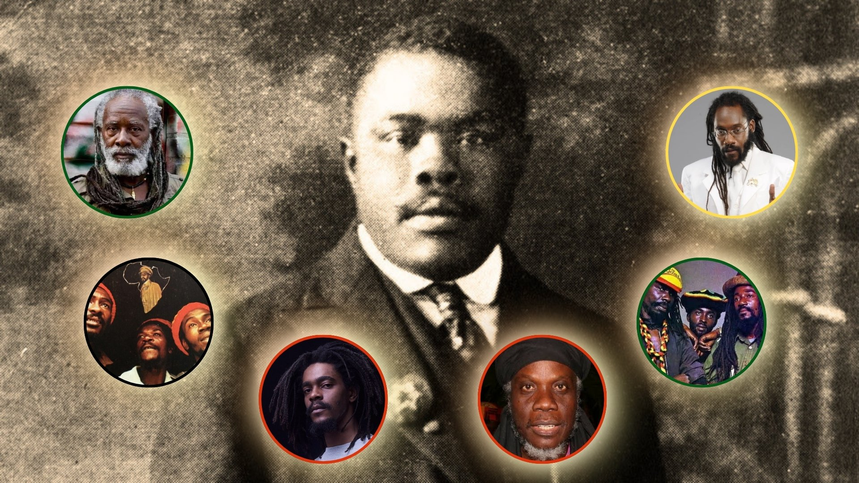

Few figures loom over Jamaican music the way Marcus Mosiah Garvey does. He never heard a one drop rhythm or stood in front of a sound system, yet the Marcus Garvey reggae connection runs through the genre’s deepest roots: the Rastafari faith, the dream of repatriation, the insistence on Black pride and self-reliance. Listen closely to roots reggae and you hear his voice in almost every verse.
The story moves from a boy born in St Ann’s Bay to a movement that spanned oceans, a humiliating exile, a hero’s homecoming, and finally a run of records that carried his name around the world.
Burning Spear chanted it. Bob Marley put Garvey’s words into his most intimate song. Generations of singers and deejays have done the same.
The Prophet From St Ann’s Bay
Garvey was born on 17 August 1887 in St Ann’s Bay, the same parish that would later produce Burning Spear and Bob Marley.
In 1914 he founded the Universal Negro Improvement Association (UNIA) in Jamaica, and two years later he took his mission to the United States.
There he built the Black Star Line, a shipping venture meant to connect the African diaspora and carry its people home to Africa.
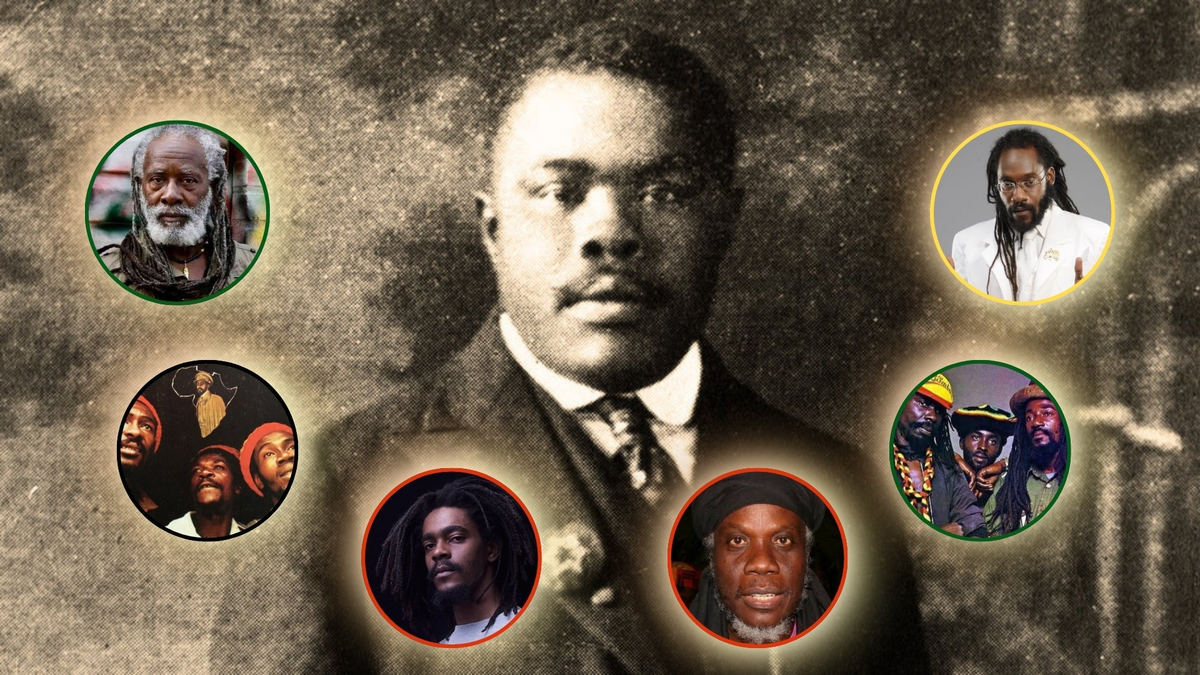
The American chapter ended in prison and deportation. In March 1935 he left Jamaica for England, describing himself as a “broken man, broken in spirit, broken in health, and broken in pocket.” He died in London on 10 June 1940, aged 52.
He was a divisive figure in his lifetime and remains one, but the ideas he left behind proved far stronger than the man’s circumstances: race pride, African unity and self-reliance.
Coming Home: 1964 and a Hero Restored
The Jamaica that produced ska, rocksteady and reggae was also the Jamaica that rediscovered Garvey.
On 10 November 1964 his remains arrived home, brought back on the initiative of Edward Seaga, who was then culture minister.
After a state funeral he was re-interred in National Heroes Park, with an estimated 30,000 people gathered. In 1969 he became Jamaica’s first National Hero.
The timing is important. As the island’s young musicians were working out a sound of their own, Garvey was being moved from the margins of history to the centre of national pride.
A generation of singers grew up with his name on official monuments as well as in yard reasoning sessions.
From Garvey to Rastafari to the Riddim
The bridge between Garvey and reggae is Rastafari. The Reggae Museum describes him as a prophet and intellectual forefather of the faith, whose teachings on Black pride, self-reliance and return to Africa laid its ideological foundation.
Rastas came to read words long attributed to him, telling the people to look to Africa for the crowning of a Black king, as a prophecy of Haile Selassie’s coronation.
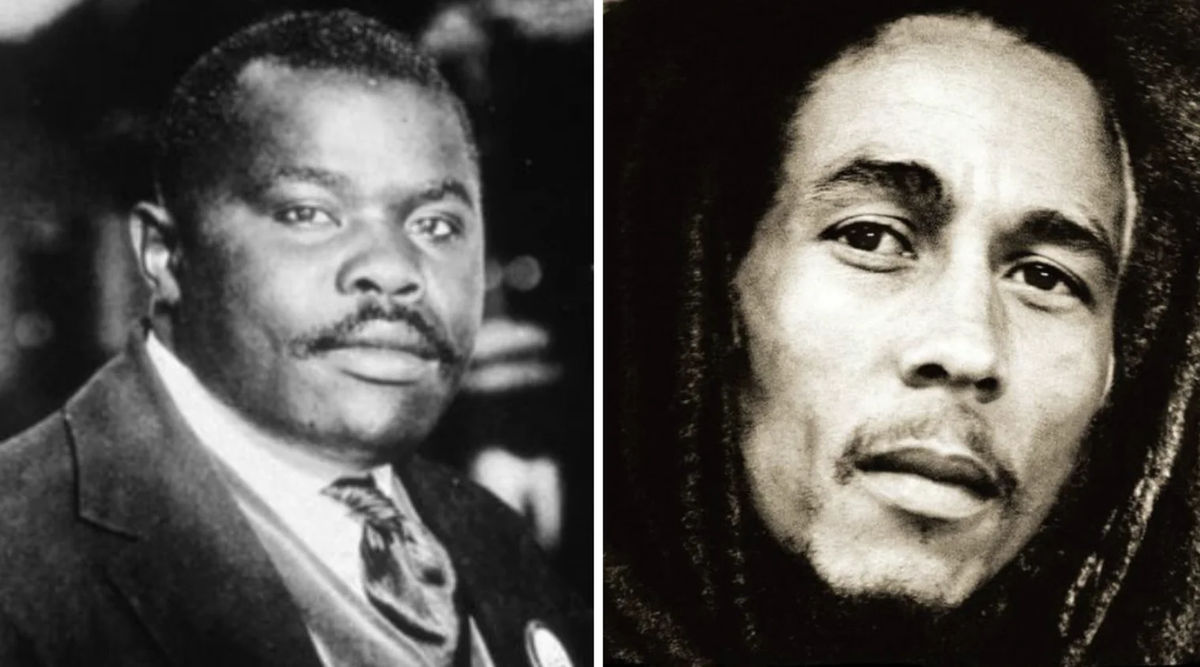
Once Rastafari became the spiritual engine of roots reggae in the 1970s, Garvey’s themes were set to music: repatriation, identity, resistance, self-help, betrayal and redemption.
Writer Leo Gilling summed it up in one line: “Reggae did not make Marcus Garvey relevant. Marcus Garvey made reggae inevitable.”
The influence was never uncritical. The British reggae band Merger, for example, rejected Garvey’s idea that all Black people should return to Africa. That kind of argument within the music shows how seriously his ideas were taken.
Burning Spear Raises the Name
If one record made Garvey’s name a reggae anthem, it is Burning Spear’s Marcus Garvey.
Released in 1975 on Fox Records in Jamaica, and then internationally on Island later that year, it was Winston Rodney’s third album, though many fans still assume it was his debut because his two earlier Studio One sets were overshadowed.
It marked his first work with producer Lawrence “Jack Ruby” Lindo, and the title track reportedly came together at their very first meeting.
Lindo assembled the Black Disciples from members of the Soul Syndicate and the Wailers’ touring band, and the result is heavy, hypnotic and spiritual.
Spear’s chant floats over horns and a rolling rhythm section on songs like “Slavery Days,” “The Invasion” and “Red Gold and Green.” On “Old Marcus Garvey” he asks why other Black nationalists are remembered while the founder of the Black Star Line goes unmentioned.
AllMusic’s Jo-Ann Greene wrote that the album hit Jamaica “like a force ten gale.” Robert Christgau considered it the most African-sounding and most political reggae album released in America at that time. It spread largely by word of mouth, and many fans still call it the greatest reggae album ever made.
In 1976 Island followed with Garvey’s Ghost, a dub version of every track, which turned Garvey’s message into echo, space and bass.
Redemption Song: Garvey’s Words in Marley’s Mouth
Bob Marley closed Uprising (Island, 1980) with something unexpected: a solo acoustic song, with no reggae backbeat and no backing vocals, just Marley and his guitar.
At the centre of “Redemption Song” is a lyric about emancipating yourself from mental slavery, because no one but ourselves can free our minds.
Those words come from Garvey. In a 1937 speech in Nova Scotia titled “The Work That Has Been Done,” later printed in his Black Man magazine, he declared: “We are going to emancipate ourselves from mental slavery because whilst others might free the body, none but ourselves can free the mind.” Marley carried that sentence across four decades and turned it into a hymn.
The song’s reputation has only grown. In 2009 the dub poet Mutabaruka named “Redemption Song” the most influential recording in Jamaican music history. It is probably the most widely heard expression of Garvey’s thought anywhere in the world.
The Black Star Line Sails Through the Catalogue
Garvey’s shipping line, a commercial failure in his lifetime, became one of reggae’s most powerful images.
Fred Locks’ “Black Star Liners,” from the 1976 album Black Star Liner/True Rastaman on Vulcan, turned the ships into a vision of deliverance and is regarded as a roots anthem.
Culture sang “Black Starliner Must Come,” and Steel Pulse took the same imagery to Britain with “Black Star Liner,” picturing a fleet arriving to carry the people home.
Others paid tribute to the man himself. The Mighty Diamonds recorded their own “Old Marcus Garvey,” and over the years Bushman, Johnny Osbourne and even the American hip hop group Brand Nubian have returned to the Black Star Line theme, which shows how far the idea has travelled.
Into the New Generations
Garvey’s presence did not end with the roots era. Damian Marley sampled Garvey’s speeches on “Confrontation,” from his 2005 album Welcome to Jamrock, setting the original voice inside a modern production.

In dancehall, Popcaan dressed as Garvey for the cover of Great Is He, an image that put the National Hero in front of a new audience in a new style.
Why Garvey Still Matters
Garvey died far from home, broke and largely written off. Reggae is one of the main reasons that is not how he is remembered.
Through Rastafari, his ideas gave the music a philosophy. Through Burning Spear, they gave it a rallying cry. Through Marley, they gave it a line that people around the world now know by heart.
Every time a selector plays “Marcus Garvey” or a crowd sings “Redemption Song” back to the stage, his argument is made again: that freedom starts in the mind, and that a people who know their history can face any future. More than eight decades after his death, his ideas are still being sung.