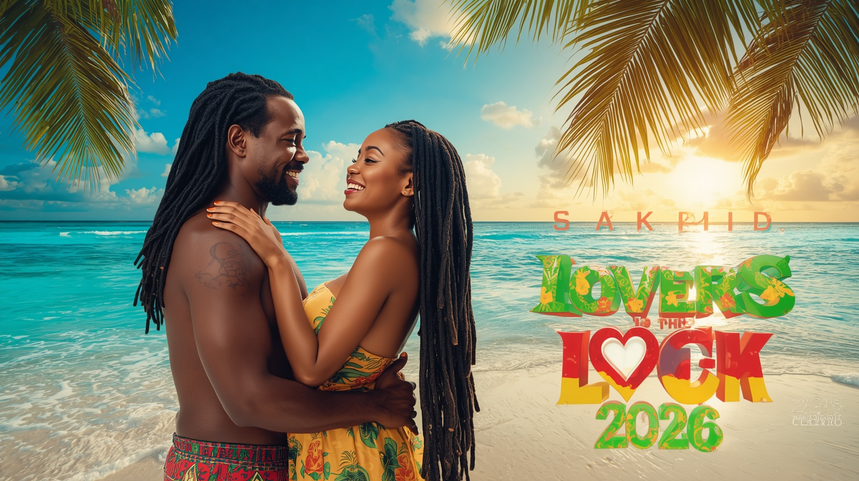

Picture a front room in South London, somewhere around 1979. The lights are low, the speaker box is louder than the landlord would like, and couples are locked together, swaying to a bassline heavy enough to rattle the windows.
On top of it floats a sweet, aching voice singing about first love and heartbreak. That room is where the history of lovers rock really lives. It was a reggae style built for romance, born in Britain and claimed by a generation that had never needed permission to feel.
Love songs had run through reggae since the late 1960s, but it was in London in the mid-1970s that this tender strain got its own focus and its own name.
As the Jamaica Observer put it, ska, rocksteady and roots reggae began in Jamaica, but lovers rock was conceived in Britain by black Britons.
Whether you write it lovers rock, lover’s rock or lovers’ rock, nobody has ever agreed on the spelling. Everyone knows the feeling.
Before the Name: Rocksteady Roots in Britain
The seeds were planted a decade earlier. In the 1960s, rocksteady singers such as Alton Ellis, Delroy Wilson and Ken Boothe built a devoted audience in Britain’s Caribbean communities.
Their soulful, love-soaked records never really went away. Even when roots music dominated radio and dances, the softer side of reggae kept a substantial following.
Lovers rock picked up that rocksteady tradition and carried it forward. It also offered something different from the conscious Rastafarian sound then ruling Jamaica.
Where roots reggae preached about Babylon and repatriation, lovers rock talked about the person across the dance floor. It was largely apolitical, and for many young listeners that was exactly the point.
Sound Systems and Soul
The sound took shape on British sound systems. Lloyd Coxsone is credited with paving the way by dropping soul records into his sets.
That habit of mixing Chicago and Philadelphia soul with rocksteady and reggae basslines became the music’s signature. It was smooth American harmony sitting on unmistakably Jamaican low end.
Systems such as Chicken Hi-Fi, Success Sound and Soferno B made lovers rock a staple.
The audience was the first British-born generation of Caribbean descent, and the music soundtracked their house parties, blues dances and youth clubs.
These were young people building a culture of their own, one that spoke to both their parents’ island heritage and the London streets they had grown up on.
“Caught You in a Lie”: A Teenager Starts Something
The record most often named as the first lovers rock single came from a schoolgirl. Louisa Mark, born in 1960 to Grenadian parents, had come up through Dennis Bovell’s Sufferer sound system and won a talent contest at the Four Aces club in Dalston ten weeks running.
Coxsone arranged her first session at Gooseberry Studios in late 1974, with the band Matumbi backing her.
At 14, she cut “Caught You in a Lie,” a cover of Robert Parker’s song. Bovell played bass, organ, piano and guitar on the track and engineered it too.
Issued on Safari in 1975 and released in Jamaica by Gussie Clarke, it reportedly sold 10,000 copies in its first week.
Mark’s success set the template for the “young girl” vocal sound that defined early lovers rock. She died in Gambia in 2009, but that record still opens most conversations about the genre.
Not everyone accepts it as the starting point. Producer Clem Bushay has argued that UK-produced romantic reggae goes back to 1972, and a Willesden exhibition marked 50 years of UK lovers rock in 2022. The debate itself shows how deep the roots run.
A Label Gives It a Name
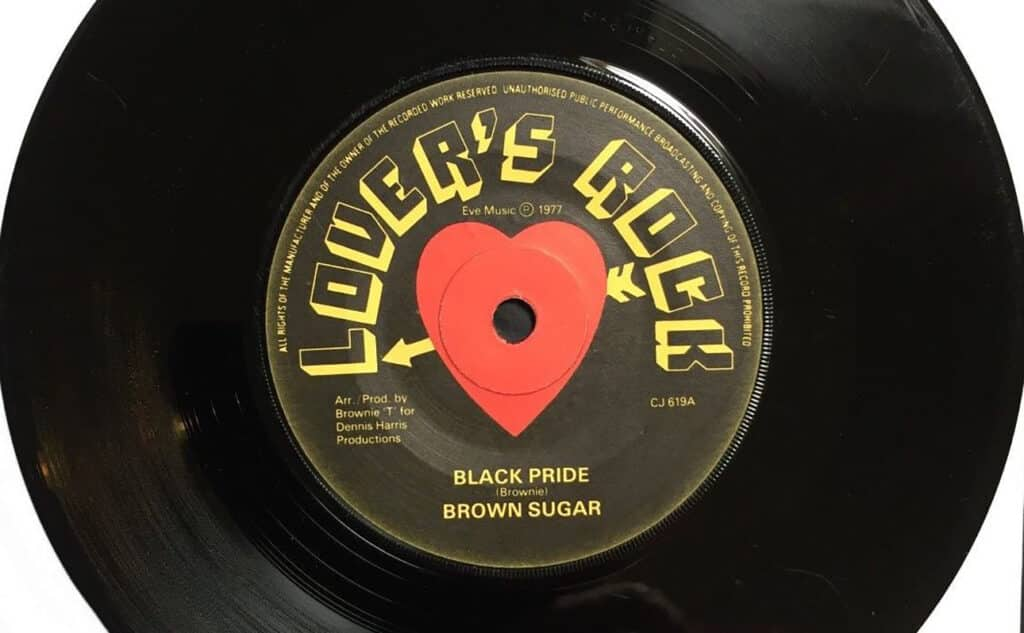
The name came from a record label. Dennis Harris set up Lover’s Rock at his studio on Upper Brockley Road in South East London, working with John Kpiaye and Dennis Bovell.
The Jamaica Observer dates its launch to 1977. Bovell has explained where the title came from: “Augustus Pablo, who I love very much, had a song called ‘Lovers Rock’.”
He thought it was a great title, and he described the music simply as “smooch reggae” for couples dancing.
The label’s first release was Brown Sugar’s “I’m in Love with a Dreadlocks,” which featured a teenage Caron Wheeler, later of Soul II Soul. It became a template for the sound.
Tim Chandell’s The Loving Moods of Tim Chandell followed on the label and, according to PopMatters, sold over 50,000 copies.
Conscious Lovers and the Women at the Mic
Lovers rock was never only about romance. Brown Sugar and Wheeler pioneered what came to be called “conscious lovers,” with songs such as “I’m in Love with a Dreadlocks” and “Black Pride” blending tenderness with politics. Loving a Rasta in late-1970s Britain was itself a statement.
Women gave the genre its voice, but they did not always hold the power. Sociologist Lisa Amanda Palmer argues that the scene’s patriarchal structures meant men were usually the DJs and producers.
Carroll Thompson, the Letchworth-born singer crowned the “Queen of Lovers Rock,” answered by forming her own company to keep creative control.
Crossing Over
Then came “Silly Games.” Janet Kay’s 1979 single, written and produced by Bovell, is the song that took lovers rock far beyond the blues dance. Its soaring high note became a test that singers at parties still attempt.
The same year, The Clash put a song called “Lover’s Rock” on London Calling, carrying the term to a whole new audience.
Bovell, born in Barbados and raised in London, is the figure many call the father of lovers rock, and his fingerprints are all over this era.
Jamaican stars noticed. Dennis Brown’s “Money in My Pocket” reached No. 14 in the UK in 1979, and Sugar Minott’s “Good Thing Going” hit No. 4 in 1981.
Brown even launched his DEB label in England, producing lovers rock acts including Gregory Isaacs. A British invention was now flowing back to the island.
The Eighties and Beyond
Maxi Priest pushed the style further into the mainstream with “Wild World” in 1988 and “Close to You” in 1990, and he carried it onto Jamaican airwaves along the way.
Singers such as Peter Hunnigale and Mike Anthony became virtual superstars among the faithful, keeping the dances full long after the press had moved on.
Small Axe and the Revival
In 2020, Steve McQueen brought it all back with Lovers Rock, the second film in his Small Axe anthology.
Set at a 1980 house party, it builds to a roughly five-minute moment where the crowd sings “Silly Games” a cappella after the music cuts out.
Bovell himself makes a cameo. For younger viewers it was a revelation, and for those who had been there it was a homecoming.
Archival work has kept pace too. Soul Jazz’s 2018 compilation I’m In Love With A Dreadlocks (Brown Sugar And The Birth Of Lovers Rock 1977-80) honoured the pioneers, following the 2011 documentary The Story of Lovers Rock.
Why Lovers Rock Still Matters
Lovers rock gave young black Britons something rare: a music that was entirely their own, rooted in Jamaica but shaped by London living rooms, sound systems and youth clubs. It let them be romantic in a society that often refused to see them as anything but a problem.
It also gave women like Louisa Mark, Janet Kay, Carroll Thompson and Caron Wheeler a platform at a time when the industry around them was firmly male.
The music has never stopped travelling. In February 2026, Kingston hosted “Lovers Rock: A Night of British Reggae” at Pon Top Restaurant, a sign of how far that front room sound has gone.
Turn the lights down, find a partner and let the bass do the rest. The feeling is the same as it was in 1979.