

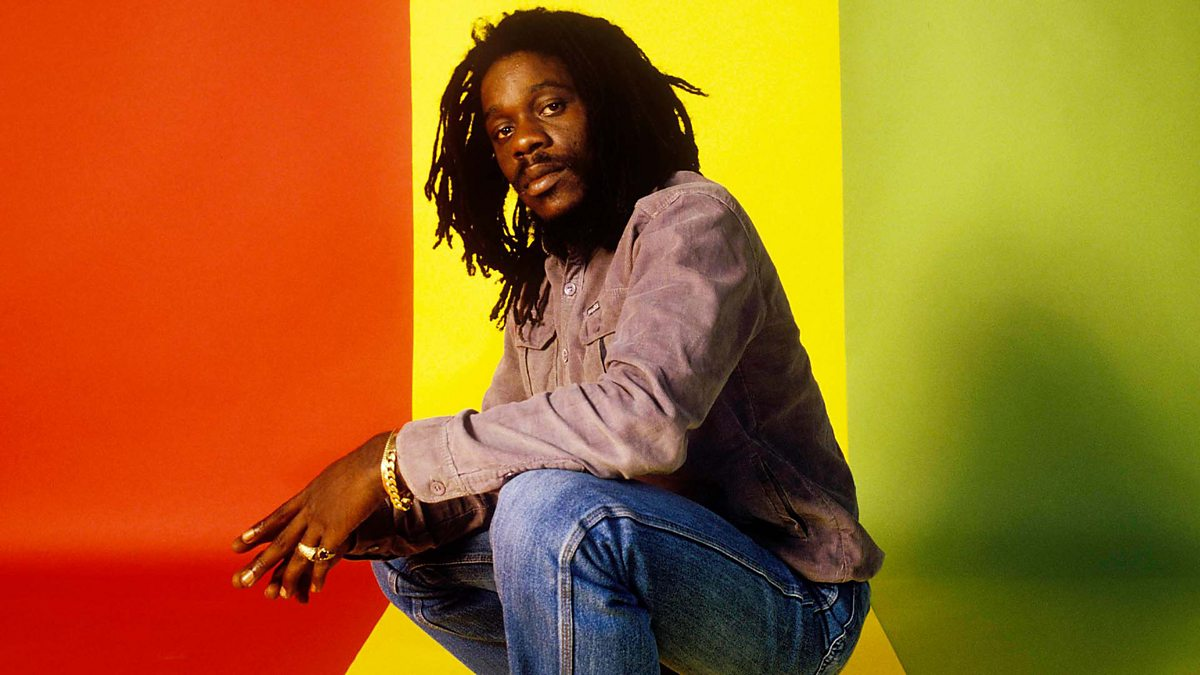
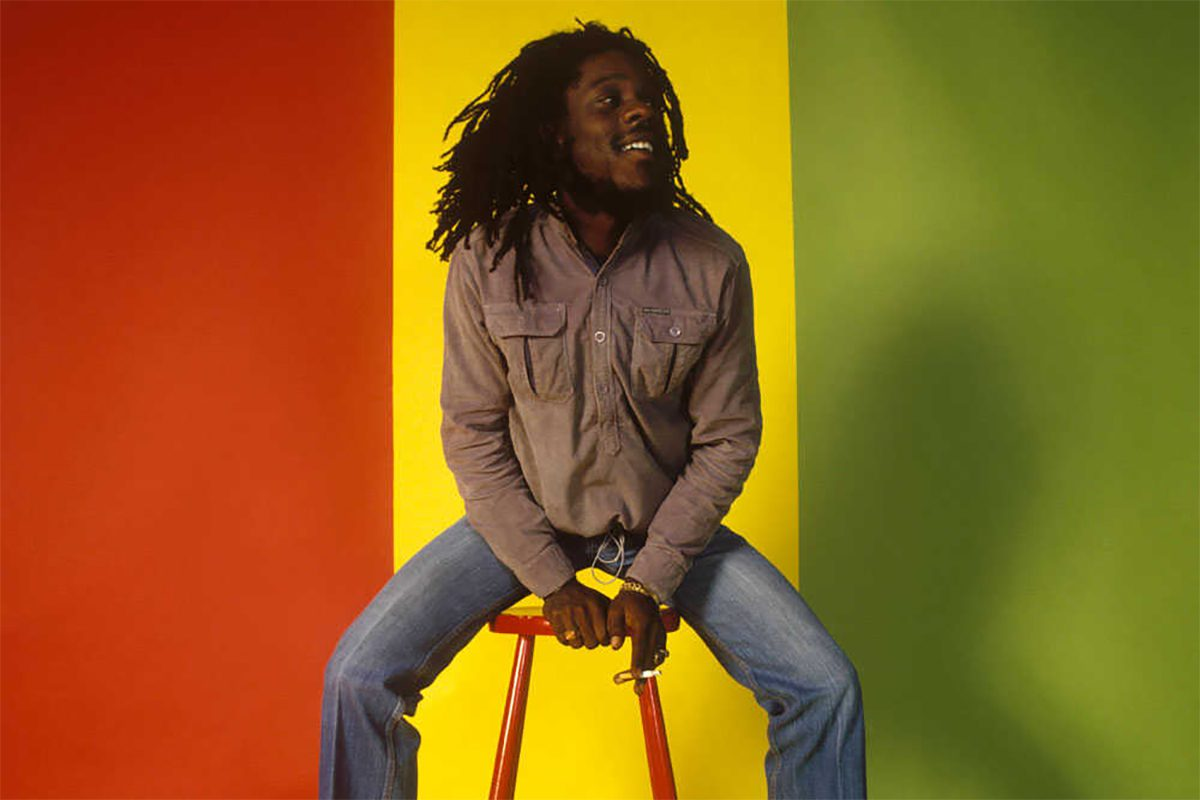
Some voices belong to a single era. Dennis Brown’s voice runs through all of Jamaican music.
He started as a 12-year-old at Studio One and went on to the Observer roots years, the Joe Gibbs hits and the digital-edge Taxi sessions with Sly and Robbie.
Across more than 75 albums, the boy wonder became the Crown Prince of Reggae, and Bob Marley called him his favourite singer.
Picking the best Dennis Brown songs means choosing between lovers’ rock tenderness, Rasta righteousness and riddims that are still being versioned decades later.
Brown was born on 1 February 1957 and left us far too soon on 1 July 1999. What follows is our ranking of the twelve tunes that define him, from sound system staples to chart crossovers.
1. Dennis Brown, “Here I Come” (1977)
No Dennis Brown record carries quite as much swagger. Winston “Niney the Observer” Holness wrote “Here I Come” in his twenties and sang harmony behind Brown.
The pedigree runs deep: Lee “Scratch” Perry co-produced, the rhythm was cut at Randy’s, and the vocal was voiced and mixed at the Black Ark.
You can hear that Ark haze around the edges, a thick and slightly smoky bottom end under one of Brown’s most commanding vocals. It came out as an Observer 7-inch with “Head Shot” on the flip.
Brown returned to it in 1984 for Tad Dawkins on Tad’s. Nearly half a century on, it is still the first Dennis Brown song many new listeners meet on streaming platforms.
2. Dennis Brown, “Revolution” (1983)
By the early eighties, Brown had walked away from Joe Gibbs and the A&M deal. He went back to his raw roots, putting music out on his own Yvonne’s Special label, and “Revolution” was the proof he had made the right call.
Sly Dunbar and Robbie Shakespeare built the riddim, and the song arrived on Taxi as a 12-inch carrying an extended mix plus “Dub Wise” and “Raw Dub” versions. The riddim then took on a life of its own.
Barrington Levy’s 1985 smash “Here I Come” for Jah Screw rides it. Rebel MC’s “Tribal Base”, Ol’ Dirty Bastard, Shyne and the GTA San Andreas soundtrack all carried that DNA to new audiences. A fresh 12-inch repress landed this September.
3. Dennis Brown, “Money in My Pocket” (1972)
Brown was just 16 when he cut “Money in My Pocket” at Joe Gibbs’ Duhaney Park studio. It is a bittersweet confession that cash cannot buy the love he wants, delivered with a lightness that hides the ache. He recorded it twice for Gibbs.
Big Youth toasted the original B-side, but the later cut, with Errol Thompson at the controls, became the hit. After a year of pirate radio play, the tune climbed into the UK pop Top 20 in the summer of 1979 on Lightning.
The 12-inch discomix paired it with Prince Mohammed’s toast “Cool Runnings”, one of the great vocal-and-DJ combinations of the period. The song even fed early British rap, with Funk Masters’ Bo Kool writing lyrics around it.
4. Dennis Brown, “Westbound Train” (1973)
AllMusic calls it “haunting”, and that is exactly right. “Westbound Train” rolls along on a steady, melancholy groove that borrows an element from Al Green’s “Love and Happiness”. Above it, Brown sounds like a man watching love pull away from the platform.
Niney produced it for Observer, and Big Youth toasted on the flip. The riddim, also known as the Cassandra riddim, became one of the most fertile of the decade.
It spawned U-Roy’s “Train From the West”, King Tubby’s “Casanova Dub” and Brown’s own “Ride On” with Big Youth.
The song anchors the 1975 Trojan set Just Dennis. As recently as 2025, Skip Marley drew on it for “In Our Sight”, proving the train is still running.
5. Dennis Brown, “Love Has Found Its Way” (1982)
This was the crossover moment. Recorded under the three-album international deal with A&M and produced by Joe Gibbs with Willie Lindo, “Love Has Found Its Way” wraps Brown’s voice in polished, radio-ready warmth. He wrote it with his wife, Yvonne Brown.
The song topped the Jamaican charts and reached No. 42 on Billboard’s Black Singles chart, likely his biggest Billboard hit.
It also peaked at No. 47 in the UK in July 1982 and stayed six weeks on the chart, while the parent album reached No. 35 on the Black Albums chart.
Purists sometimes grumble about the slick sheen, but the Jamaica Observer rightly hails it as a lovers’ rock anthem, and the dances still agree.
6. Dennis Brown, “Sitting and Watching” (1979)
There is a stillness to “Sitting and Watching” that few reggae records match. Sly and Robbie lay down an unhurried, rolling riddim on Taxi, with “Centre Forward” on the flip. Over it, Brown observes the world with a mix of patience and quiet sorrow.
The tune turned up on his Joe Gibbs album Spellbound and on Island’s Sly & Robbie Present Taxi, so it reached well beyond the yard. Its afterlife has been remarkable.
Shy FX sampled it for the jungle anthem “Simple ‘Tings” in 1995, and Shaggy and Beres Hammond leaned on it for “Fight This Feeling” in 2013. In Brazil, Cidade Negra covered it as “Simples Viagem” in 1996.
7. Dennis Brown, “No Man Is an Island” (1969)
This is where it all started. Clement “Coxsone” Dodd released “No Man Is an Island” at Studio One in late 1969, when Brown was all of 12.
The song is a cover of The Van Dykes’ 1965 soul tune, written by Rondalis Tandy and inspired by John Donne.
In the hands of a schoolboy from Kingston, it became something new: earnest, sweet and startlingly assured. The story has a twist, too.
Derrick Harriott says he brought the record from America intending Brown to cut it for his Crystal label, but the youngster ended up at Coxsone’s. The single built slowly, gathering airplay for almost a year before exploding into his first big hit.
8. Dennis Brown, “Wolf and Leopards” (1977)
If “No Man Is an Island” introduced the child star, “Wolf and Leopards” announced the Rastaman. Niney and Lee Perry produced it, and the writing credit is shared among Brown, Holness and Perry, though Holness says Perry did most of the writing.
The song takes direct aim at criminals hiding behind the dreadlocks and the language of Rastafari, a pointed piece of social commentary delivered with conviction.
The album of the same name marked Brown’s full transformation and was among the last work he did with Holness before moving on to Joe Gibbs. Dub heads should seek out “Mischievous Dub”, which strips the riddim to its menacing bones.
9. Dennis Brown, “Cassandra” (1974)
“Cassandra” shares its foundation with “Westbound Train”, and the National Library of Jamaica ranks it among his ground-breaking work with Niney.
Riding that same aching riddim on Observer, Brown turns the mood more personal and pleading, a lover’s lament that lets his tenor float and crack in all the right places. It sits on Just Dennis alongside its sister tune.
Soul Syndicate, the band behind so much of Niney’s output, released their own instrumental “Cassandra” in 1975.
That tells you how strong the riddim was on its own. Brown thought enough of the song to re-cut it in 1979 for Joe Gibbs and Errol Thompson.
10. Dennis Brown and Aswad, “Promised Land” (1979)
Recorded in London for Simba with Aswad behind him, “Promised Land” is Brown at his most spiritually focused.
It is a hymn of repatriation, and his own liner-note dedication points to Shashamane in Ethiopia as the land in question.
The session sat for years before Simba issued it as a UK 12-inch in 1983, with Yvonne’s Special handling the Jamaican release.
Aswad’s production gives it a heavy, rolling bass weight, and collectors still treasure the dub side, which one Discogs reviewer calls a “true Dub classic”. The song continues to resonate. A live version was released as a single in June 2026.
11. Dennis Brown, “Created by the Father” (1970)
Brown wrote “Created by the Father” himself during those early Studio One sessions. Hearing a teenager compose something this spiritually grounded remains striking.
It followed “No Man Is an Island” as one of his early hits for Coxsone and has been described as one of his most enduring compositions.
The original has a gentle, devotional glow, but Brown clearly felt the song had more to give. He re-recorded it for Niney, and that version sits on Wolf & Leopards. The two versions show his growth from a gifted boy into a mature roots singer.
12. Dennis Brown, “Black Magic Woman” (1972)
Brown could make anyone’s song his own, and his take on Peter Green’s Fleetwood Mac tune proves it.
Produced by Phil Pratt and issued on Sunshot, with a UK release on Explosion, “Black Magic Woman” trades blues-rock bombast for a loping, hypnotic reggae groove.
Brown’s voice slides through the melody with teenage cool. The “Magic Version” B-side gave sound systems a ready-made dub to play with.
It is a reminder that before the roots crown and the chart runs, Brown was already a remarkable interpreter of other people’s songs. Sunshot thought enough of it to reissue the 7-inch in 2001.
Why Dennis Brown Still Reigns
Few singers have covered as much ground as Dennis Brown. He was a child star at Studio One and a Rasta prophet at the Black Ark and Observer.
He was a crossover hope on A&M and a pioneer of the Taxi sound with Sly and Robbie. Through every phase, the voice held steady: warm, pleading, righteous and unmistakable.
That is why his riddims keep resurfacing, from jungle dances to Skip Marley’s catalogue, and why selectors still reach for his records when a session needs soul.
The legendary Crown Prince never got the global superstardom some predicted for him. He got something more lasting instead: a catalogue that every generation of Jamaican music keeps rediscovering, sampling and singing back.