

Sources don’t agree on one “bam bam” meaning. One reference says the Jamaican Patois phrase often refers to a ruckus or commotion, the meaning ascribed to Sister Nancy’s use of the term on her 1982 record of the same name.
Songfacts says “Bam bam” refers to the sound of a gunshot. Toots Hibbert, who wrote the 1966 song that introduced the phrase, said in a 2020 interview that “it has several meanings.”
In Sister Nancy’s version, Songfacts writes that Nancy’s lyrics celebrate her success as a woman in the male-dominated dancehall scene of the ’80s.
Where the Phrase Came From: Toots and the Maytals, 1966
The hook is older than Sister Nancy’s record. In 1966, the Maytals won the first Jamaican Independence Festival Popular Song Competition (which they won again in 1969 and 1972) with Toots’ breakthrough song, “Bam Bam.”
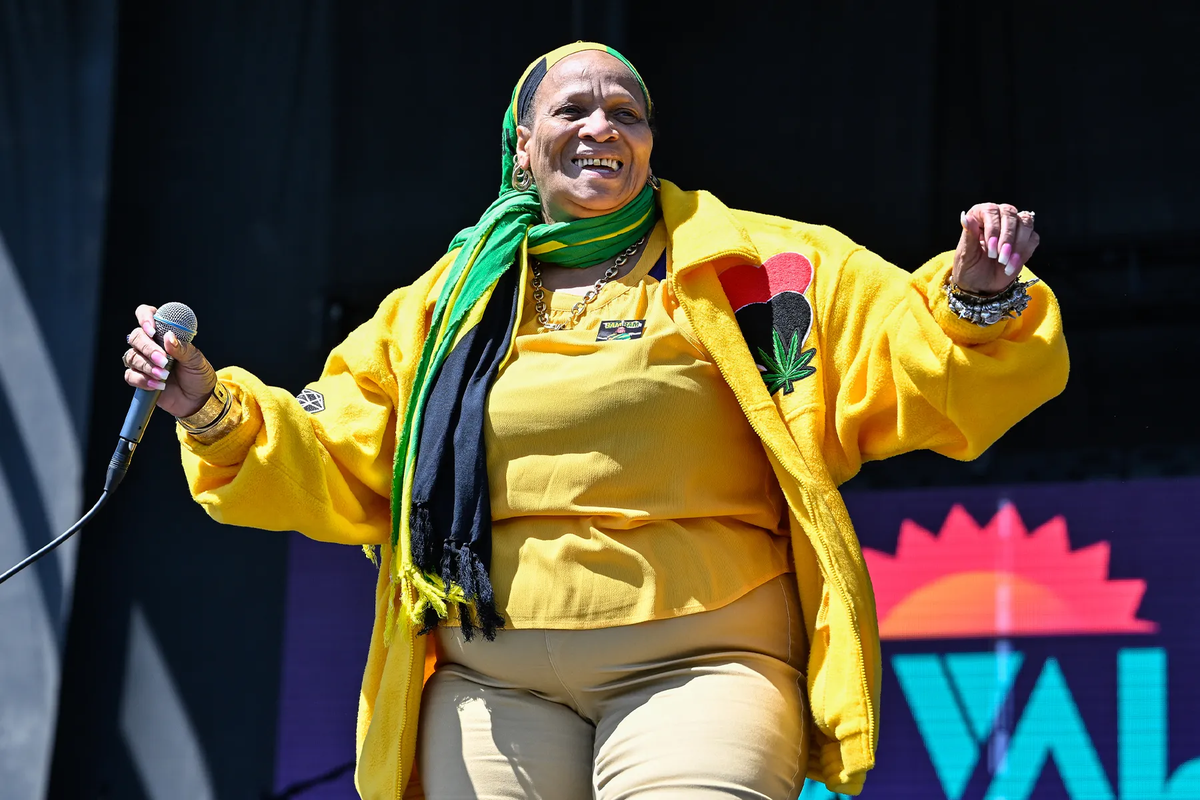
A 2020 DancehallMag report said the theme of Bam Bam is about a righteous man, who, if provoked, will not hesitate to defend himself.
The same report said the song became part of Jamaica’s Independence celebrations and that the term became part of Jamaican Patois.
Hibbert described his thinking when he wrote it: “I came up with ‘What a Bam Bam,’ to talk about what I saw around me, the fighting, the taking of things that wasn’t theirs, the killing.”
DancehallMag’s 2020 analysis found that Sister Nancy used the entire hook and the altered verses from Toot’s original song, ten times throughout her thirteen stanza version, with only three verses being her own original content.
How Sister Nancy Recorded “Bam Bam” in 1982
Sister Nancy was born Ophlin Russell. She recorded the song for her debut album, One, Two. It was released in 1982 on Techniques Records and produced by Winston Riley.
She explained how it came about in a 2017 FADER interview. She had gone to the studio with Yellowman, who was voicing a “Bam Bam” because he also have a “Bam Bam.” She made up the lyrics on the spot and only wrote them down later: “After I freestyle it, I’m going to write it.”
According to a 2024 account of the same story, she couldn’t remember the lyrics she’s used and so had to listen back repeatedly and write them down before memorising them.
The backing track is the Stalag riddim, which began as Ansell Collins’ instrumental “Stalag 17.” Sources give different years for the original.
Wikipedia dates it to 1974, and a 2024 film review says the riddim was mixed in 1974. Sister Nancy brought Stalag Riddim to dancehall with her 1982 hit “Bam Bam”.
Not a Hit at Home at First
The song was slow to take off in Jamaica. A 2025 Gleaner report on the documentary about her said that Sister Nancy had no idea of its success because she never heard it being played on radio there.
Songfacts reports that Sister Nancy didn’t know how popular “Bam Bam” was outside Jamaica until she moved to the US in 1996. She was surprised to hear her song in the 1998 movie Belly and only then recognized how influential it had become.
The Royalties Story
The song’s story is also about who got paid. She discovered that she had unwittingly signed over all her rights to the song to Riley in the original recording session.
The documentary covers her lawsuit against producer, Winston Riley, after her daughter noticed that the song appeared in a Reebok commercial in 2014 and encouraged her to take legal action.
The Gleaner reported that the parties settled with her being compensated for the last 10 years and 50 per cent of the song’s rights.
One 2024 source describes the deal a little differently, saying she received 50% of the royalties from the previous decade.
The same source says the settlement allowed her to quit her job as a bank clerk and revive her music career. The Gleaner also noted that the original master tapes have still not been found.
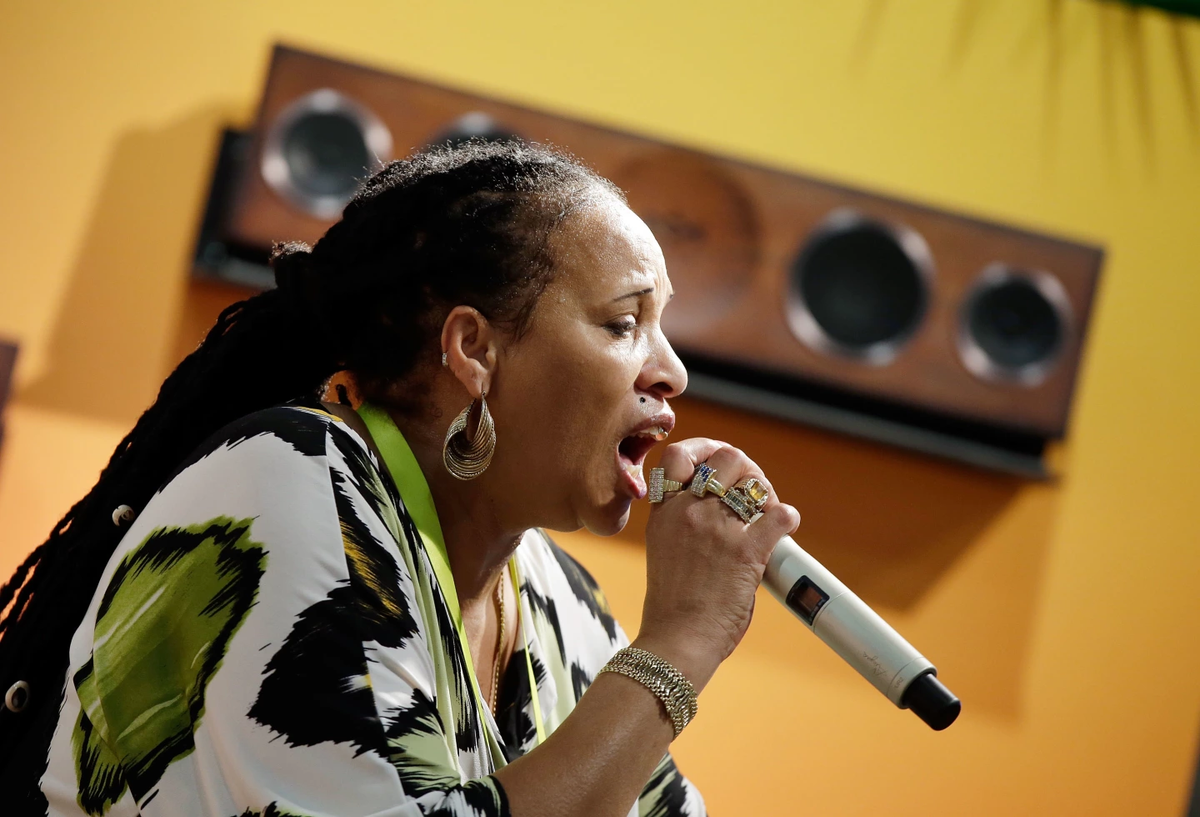
Toots Hibbert had his own royalty claim. In 2020 he said he has instructed a team of intellectual property managers to investigate who has been collecting publishing and royalties for his 1966 Jamaica Festival Song, Bam Bam.
He also remembered meeting Sister Nancy: “She came to me and told me she never knew that it was my song, and the song was done before she was born.”
One of Reggae’s Most Sampled Songs
In 2016, Billboard called the song “a strong contender for the title of most sampled reggae song of all time.” Counts differ by source and date. Okayplayer reported more than 80 and also more than 100.
A 2024 film review put it at over 140 times since its release in 1982. WhoSampled currently lists 184 samples, 4 covers, 4 remixes for Sister Nancy’s catalog as a whole.
Well-known uses include Lauryn Hill’s “Lost Ones” (1998), which features an interpolation of the reggae classic “Bam Bam”, Kanye West’s 2016 “Famous” featuring Rihanna, and JAY-Z’s 2017 “Bam” featuring Damian Marley.
Sister Nancy took part in “Bam” and described her participation on the track as “a blessing.” About West’s sample she said: “When I heard [West] do it I just thought: ‘Well, that’s good for me.'”
The Documentary
Her life story and royalty fight are the subject of Bam Bam: The Sister Nancy Story, a film that looks at both Nancy’s life story and her long fight to get the royalties she was owed. Canadian filmmaker Alison Duke made it, and it premiered at the Tribeca Festival.