

“Who Am I (Sim Simma)” is one of the most recognisable dancehall records ever made, but the meaning of its chorus still confuses casual listeners nearly three decades after its release.
This explainer breaks down what “Sim Simma” actually means in Jamaican patois, where the lyrics come from, and why the song remains a touchstone of global dancehall culture.
Quick Facts: The Record
“Who Am I (Sim Simma)” is a reggae/dancehall single by Beenie Man, produced by Jeremy Harding, with songwriting credited to Anthony Davis (Beenie Man’s legal name).
It appeared on his album Many Moods of Moses, released in 1997, on VP Records and Slammin’ Vinyl, and charted internationally when released as a single in 1998. Many Moods of Moses is Beenie Man’s eighth studio album.
Who Is Beenie Man?
Moses Anthony Davis, born 22 August 1973, is known professionally as Beenie Man and is a Jamaican dancehall DJ. He was born in the Waterhouse district of Kingston.
During the mid to late 1990s, Beenie Man dominated the Jamaican charts to the extent that he had a strong claim to the title of “Dancehall King.”

He did not truly experience international stardom until the late 1990s, and it was specifically upon the release of “Who Am I (Sim Simma)” in December 1997 that he gained that international fame.
Before that breakthrough, Beenie Man had first appeared on the Billboard chart with his 1995 single “Slam.”
How the Song Was Made: The Studio Story
The song is built on the “Playground” riddim, produced by Jeremy Harding. The recording session behind it has become a piece of dancehall folklore.
According to Harding, Beenie Man had heard the Playground riddim on several occasions and loved it, and had already written a tune by the time he arrived at the studio unannounced.
Harding recalled: “I heard a knocking one morning…and couldn’t believe when I saw Beenie Man sitting outside complaining about how long he had been banging down the door.
I turned on the equipment, and he went straight into the booth to record a perfect version of ‘Who Am I’ in what seemed like one take.”
What Does “Sim Simma” Mean?
This is the question most listeners ask, and it does not have a single, fixed dictionary definition. “Sim Simma” can function in two ways in Jamaican speech: as a declaration or recognition of greatness directed at oneself or another person, or as an informal greeting used in place of expressions like “Yo” or “What’s Up.”
According to the song’s own origin story, the word “Simma” carries a personal dimension as well. Beenie Man has described the lyrical origin of the song as beginning with his importation of a new BMW into Jamaica.
That would be the “Bimmer” referenced in the chorus, and his original intention was for the track to serve as an ode to the vehicle.
On the morning he needed access to the car, he could not find the keys, and so asked his brother, who goes by the name of “Simma,” “who got the keys to my Bimmer?” The search proved unsuccessful, so Beenie, being “in a rush,” decided to go with his truck instead. That real-life moment became the hook of one of dancehall’s biggest international hits.
It is worth noting that the lyrics are rendered entirely in Jamaican patois, meaning that without a trained ear for the dialect, some passages of the song cannot be conclusively interpreted.
What the Lyrics Actually Say: A Verse-by-Verse Breakdown
The chorus is the engine of the record. The hook poses a rhetorical question about who holds the keys to Beenie’s luxury BMW, declares himself “the girls dem sugar,” asserts his heterosexuality, and then pivots to his truck when the BMW keys cannot be found.
The phrase “Who am I, I am just the girls dem sugar” translates roughly as a boast that he is the man all the women are attracted to, bragging that females are “sweet” on him.
The first verse describes the narrator’s sexual experiences with women, presenting himself as a highly capable and sought-after lover.
Within the chorus, Beenie also mentions “making love to Precious,” though it is not conclusively clear whether “Precious” is the name of a specific woman or a general term of endearment for women he is attracted to.
The second verse shifts in tone, featuring more affectionate lyrics in which Beenie describes his love for a particular woman and his willingness to give her anything she asks for.
This verse focuses on a woman the singer is genuinely in love with, who appears to be distinct from the woman described in the first verse.
The third verse returns to braggadocio, with Beenie declaring his status as a sex symbol and describing how many women pursue him.
The song as a whole plays on the theme of the artist’s status as a sex symbol and his popularity among women, with the lyrics painting a picture of his casual masculinity, the adoration of women, and a focus on material possessions such as his car and his truck. The track is largely composed of sexual innuendos delivered in Jamaican patois.
Chart Performance and Certifications
The song reached No. 10 on the UK Singles Chart and was Beenie Man’s first top 40 hit in the United Kingdom. In the United States, it was a crossover success, reaching No. 6 on the Billboard Hot Rap Singles chart and No. 15 on the Hot R&B/Hip-Hop Singles chart.
The song is certified RIAA Gold in the United States, a certification that was confirmed in November 2023 and represents a significant milestone for both Beenie Man and producer Jeremy Harding.
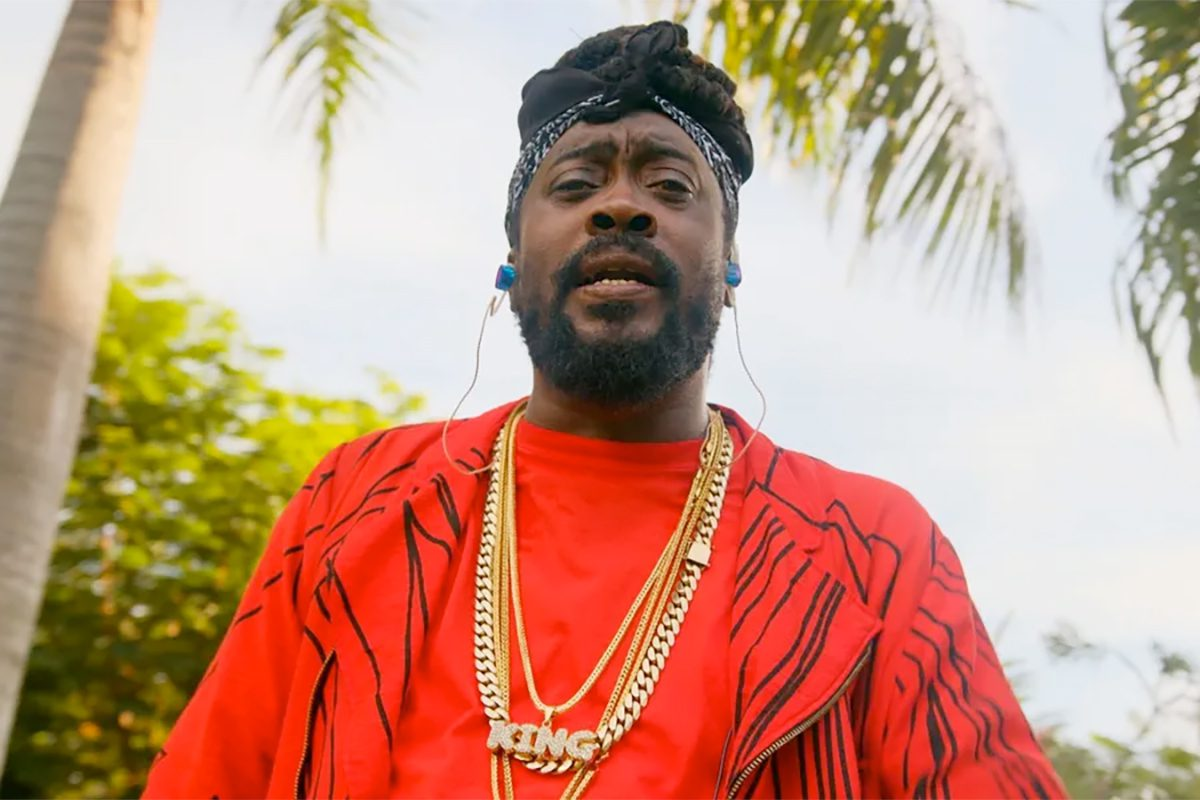
VP Records president Chris Chin noted the song’s enduring influence, including the star-studded #SimmaChallenge that went viral on Beenie Man’s 51st birthday in 2023.
The track also helped introduce Beenie Man to international mainstream media, earning coverage in Newsweek and other major outlets.
Grammy Recognition
Beenie Man received his first Grammy nomination in 1999 for the album Many Moods of Moses, which included “Who Am I.”
After earning three nominations in a row, he won a Grammy for Best Reggae Album in 2001 for Art and Life.
The “Girls Dem Sugar” Connection
“Who Am I (Sim Simma)” directly seeded one of Beenie’s most commercially successful releases. The 2000 track “Girls Dem Sugar,” produced by The Neptunes, was inspired and conceptualized from the 1997 hit and was written by Beenie Man, Pharrell Williams, and Chad Hugo.
In Beenie Man’s own words, the remake was entirely Pharrell’s idea. According to Beenie Man: “It was not my idea; it was Pharrell’s.
He had this great idea to remake ‘Who Am I (Sim Simma).'” The collaboration earned a Grammy Award and the team then added R&B singer Mya to the track.
The Neptunes-produced track featured a snippet of the original “Who Am I” over a new stuttering beat and was well received internationally like its predecessor.
Sampling Legacy
The reach of “Who Am I (Sim Simma)” extended well beyond dancehall and reggae. American rapper Redman sampled the song’s opening line on his 1998 single “I’ll Bee Dat,” produced by Rockwilder. Rapper Nelly also alluded to the chorus on his 2000 single “Country Grammar.”

According to WhoSampled, “Who Am I” and its underlying Playground riddim have been sampled in over 30 other recordings, including Joyner Lucas’ “Zim Zimma” and Mahalia and Burna Boy’s “Simmer.”
The song’s title has also embedded itself in the wider cultural vocabulary. After the song’s 25-year milestone, Beenie Man released his nineteenth studio album titled Simma, a direct nod to the record. Simma was also nominated for Best Reggae Album at the 66th Annual Grammy Awards.
Why the Song Still Resonates
In the words of VP Records president Chris Chin, speaking to DancehallMag in November 2023: “The song has taken on a life of its own over the years.
It’s a defining record in dancehall and pop culture, and Beenie Man’s genius shines through every time the song is sampled and interpolated.”
The combination of a deceptively simple, real-life hook rooted in a lost set of car keys, lyrics delivered entirely in Jamaican patois, a one-take vocal performance over the Playground riddim, and a phrase in “Sim Simma” that functions simultaneously as a personal name, a greeting, and a declaration of greatness helps explain why the song has outlasted countless dancehall records from the same era. Nearly 30 years on, the Bimmer keys are still missing and the track is still playing.