

If you have ever searched “It’s Me Again Jah meaning,” the short answer is this: the song is a Rastafarian prayer, a humble and unflinching confession of human frailty delivered directly to Jah, the divine Creator.
But that single sentence does not come close to capturing why the track has endured for more than three decades as one of the most beloved anthems in roots reggae history.
Below is a full breakdown of the song’s lyrics, spiritual context, production background, and lasting cultural significance.
Who Is Luciano?
To understand “It’s Me Again Jah,” you first need to understand the man who made it. Jepther McClymont, better known as Luciano, is a Jamaican second-generation roots reggae singer, born on 20 October 1964.
He was born in Davyton, Manchester Parish, and raised as the seventh of nine children in a strict Adventist family. That upbringing in scripture and song would prove foundational to everything he later recorded.
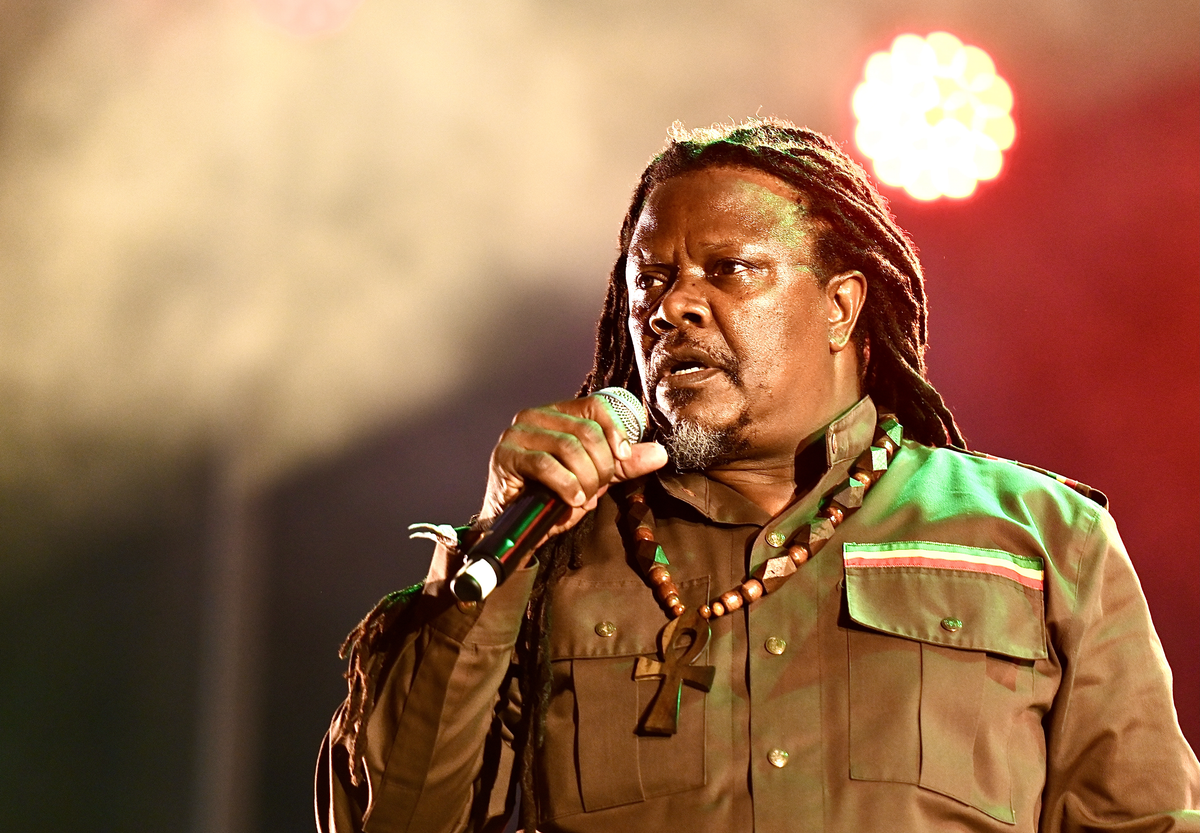
He began his musical career singing in church and moved to Kingston to pursue music professionally. He was dubbed “Luciano” in comparison to the vocals of opera legend Luciano Pavarotti, a nod to the extraordinary range and emotional power that would define his career.
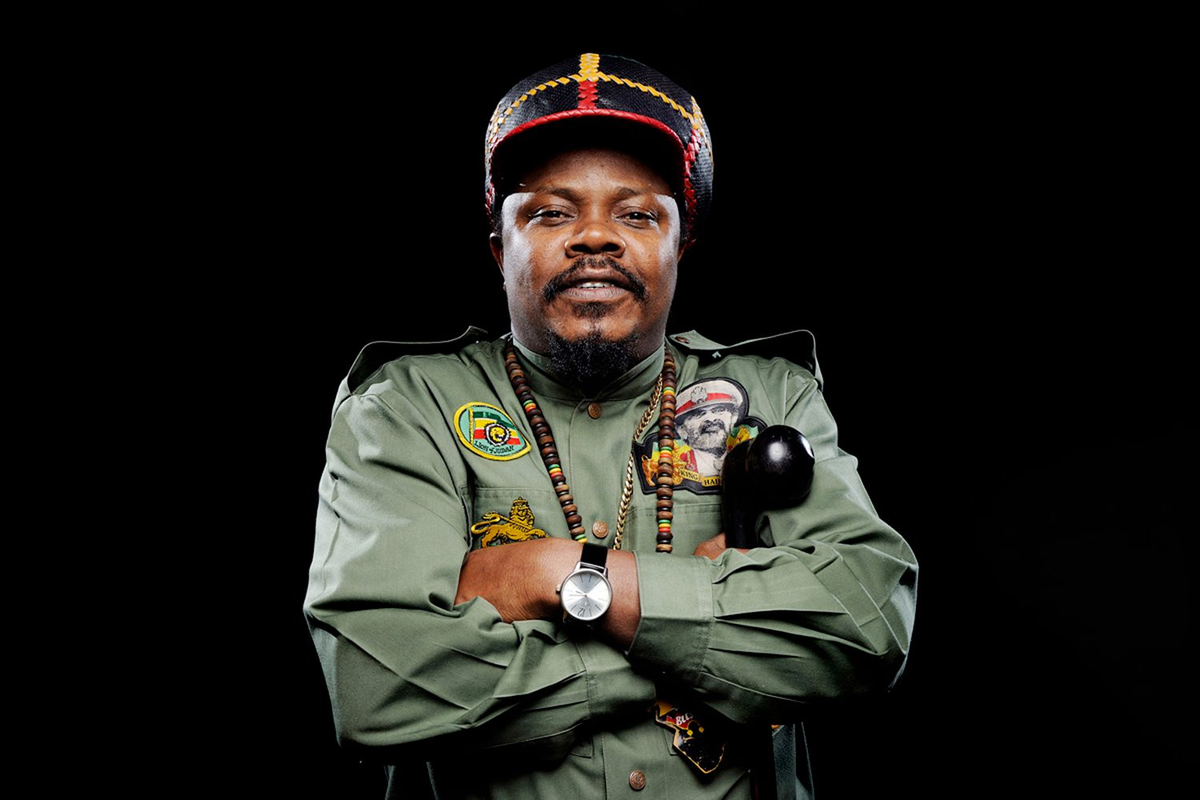
A devout Rastafarian nicknamed “the Messenjah,” his rootsy reggae made him an iconoclastic star in the 1990s.
Luciano is a true conscious singer who sings for Rastafarian edification and African repatriation, and has released more than 30 albums since 1993. His achievements extend well beyond record sales.
He received Grammy Award nominations for Best Reggae Album in 2002 and 2016, and in 2023 was recognized by Rolling Stone magazine as one of the “200 Greatest Singers of All Time.”
Luciano is ranked at number 143 on that list. Rolling Stone noted that when Luciano came on the scene in the nineties, “his tunes like ‘Sweep Over My Soul’ and ‘It’s Me Again Jah’ immediately entered the reggae canon.”
The Album: “Where There Is Life” (1995)
“It’s Me Again Jah” was not released in isolation. It arrived as part of a landmark body of work. Where There Is Life, the album that made Luciano a bona fide roots star, was produced by Philip “Fatis” Burrell and released in late 1995 by Island Jamaica Records.
The pressures of constant recording and performing had caused Luciano to leave the music scene in 1993 to regroup and reconsider his life, but he returned with Where There Is Life, which reflected his sabbatical with its spiritual, contemplative style and found critical acclaim for its artistic integrity and stylistic diversity. The album was listed in the 1999 book The Rough Guide: Reggae: 100 Essential CDs.
Sly and Robbie and saxophonist Dean Fraser played on the album, alongside the Firehouse Crew, a band that included bassist Donald Dennis, keyboardist Paul “Wrongmove” Crosdale, and guitarist Mitchum “Khan” Chin, who formed in Kingston during the mid-1980s as protégés of legendary studio engineer Osbourne “King Tubby” Ruddock.
It’s Me Again Jah” was a number one single in Jamaica. The Where There Is Life collection had some comparing Luciano with Bob Marley for the spiritual content of uplifting songs like “Good God” and “It’s Me Again Jah.”
The historical moment in which the song emerged matters. Luciano had been at the forefront of the “Rasta Renaissance” in dancehall music, a renewal of Rastafarian influence into dancehall that had begun with artists such as Tony Rebel and Garnett Silk.
After Silk’s death in late 1994, many looked to Luciano to continue consciousness in reggae music. Luciano himself acknowledged the weight of that responsibility. Of Garnett Silk, he stated: “Garnett was more like a brother, a father, a tutor, a forerunner.
When he moved on I knew the work for me became harder still.” “It’s Me Again Jah” was, in a very real sense, Luciano stepping into that inheritance.
What Does “Jah” Mean?
Before the lyrics can be fully unpacked, the word “Jah” deserves its own explanation. In Rastafarian theology, Jah is the name of God, drawn from a shortened form of Yahweh, the Hebrew name for the divine found in the Old Testament.
Rastafarians use “Jah” in prayer, in daily speech, and in music as an ever-present acknowledgment that the Creator is both immanent and sovereign.
When Luciano sings “It’s me again Jah,” he is addressing the divine directly, without intermediary, in the intimate tones of personal prayer.
The phrase “Most High” used throughout the song is an equally common Rastafarian honorific for the same Creator.
A Full Lyric Breakdown and Meaning
The song opens with an act of worship before any petition is made. Luciano glorifies Jah as “King of Kings, and Lord of Lords, worthy to be praised,” ascribing to him “dominion, power and grace.” This is a deliberate and structurally significant choice.
The track is a classic Rastafarian one-drop production, and the opening establishes the hierarchical relationship at the centre of the song: the singer is a fallible human being; Jah is the eternal, unchanging Most High.
The worshipper does not approach Jah as an equal. He approaches with reverence, and only then does he make his confession.
The title line is the emotional and theological core of everything. Each chorus returns to the same two-line petition: falling on the knees, asking for help, and pleading not to be “carried away.”
The phrase “it’s me again” is the key to understanding the song’s enduring resonance. It is not triumphant. It is honest.
The singer is a repeat visitor at the altar. He has been here before, has received grace before, and has still found himself drifting, only to return once more in need.
This humility is unusual in popular music, which tends to traffic in declarations of strength or at least recovered strength. “It’s Me Again Jah” offers no resolution arc.
It simply presents the ongoing human condition: the cycle of supplication, the struggle to stay spiritually grounded, and the relief of knowing that the door to Jah is always open.
The second verse expands the personal prayer into a social observation. Luciano looks around a world full of “Pharisees and backbiters taken up in vanity.”
The Pharisees are a direct Biblical reference, figures associated in the Gospels with religious hypocrisy, a corruption of outward piety masking inner emptiness.
“Backbiters” is a term drawn from the epistles of Paul, describing those who speak ill of others behind their backs.
Together, the couplet paints the world the singer must navigate daily: one where false devotion and social venom are everywhere.
Crucially, Luciano does not respond to this world with anger or self-righteousness. He responds by doubling down on his dependence on Jah: “But I know you control my destiny, and from you all blessings flow.” The song refuses to be a protest anthem. It is, instead, a testimony of trust.
The third verse is perhaps the most theologically dense and the most personally candid. “My heart is willing, my flesh is weak,” the singer admits, borrowing language that echoes Matthew 26:41, when Jesus speaks to his disciples in the Garden of Gethsemane. It is a universal confession: the intention to do right and the body’s consistent failure to follow through.
The song also draws on Psalm 27, where David describes his enemies encamping against him. Luciano mirrors this directly in the line “Though my enemies encamp at me, I know I’ll be still, forevermore under your banner.”
The 2022 re-recorded version of the song, available on Luciano’s official website, extends this prayerful dimension even further.
It includes a spoken prayer section that acknowledges how “modern technology has taken over the hearts of people,” calling for Jah to return love and grace to the people.
This update demonstrates that the song, far from being a relic of the 1990s, continues to grow in meaning as the world it describes becomes more recognizable.
Why the Song Still Resonates in 2026
It’s Me Again Jah” has accumulated over two million streams on Spotify in its original studio form alone, a figure that speaks to a listener base reaching well beyond the traditional reggae audience.
Its power rests in a specific quality that very little contemporary music possesses: it does not promise transformation. It promises only that you are welcome back, however many times you have stumbled.
Revered as “The Messenjah,” Luciano is celebrated for his soulful voice, spiritually uplifting lyrics, and unwavering commitment to conscious Rastafarian roots reggae, and with beloved songs like “It’s Me Again Jah,” “Lord Give Me Strength,” and “Sweep Over My Soul,” he has become one of reggae’s most influential and enduring artists.
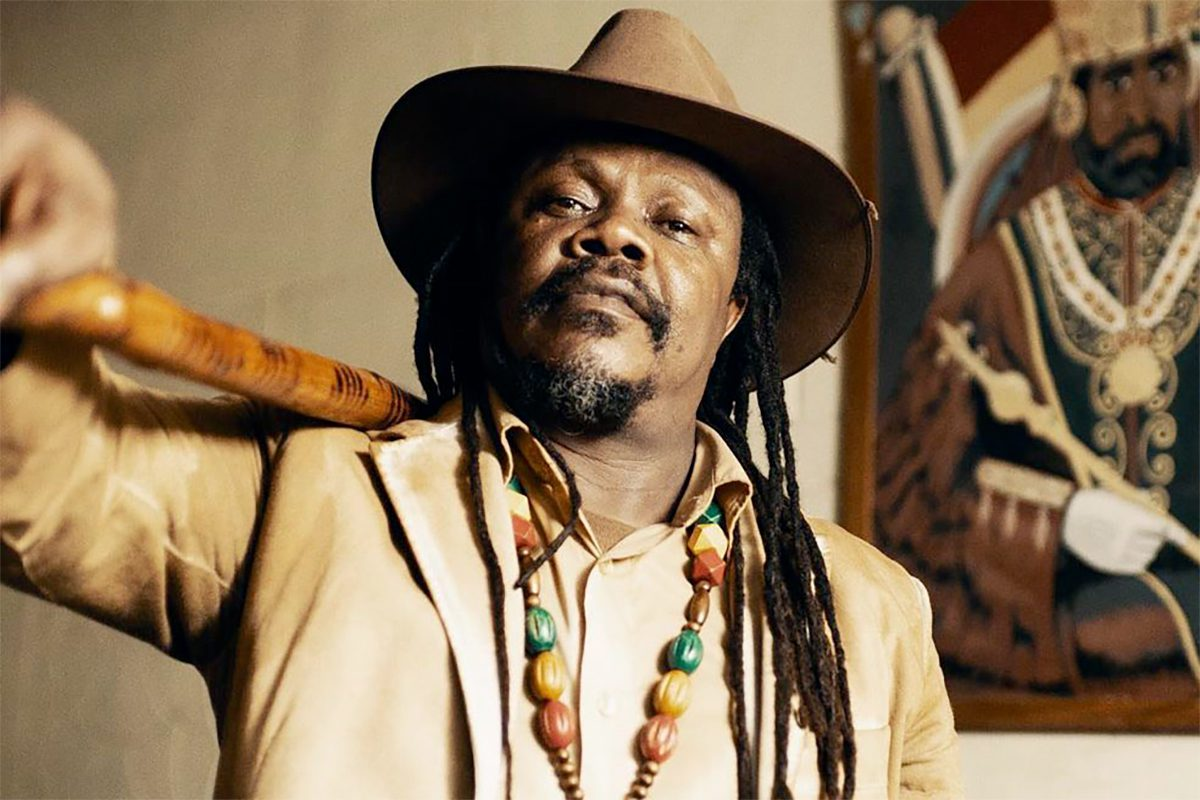
The song also resonates because of what surrounds it musically. The one-drop rhythm, a defining feature of roots reggae in which the drum emphasizes the third beat of the bar, creates a groove that feels simultaneously urgent and restful, the sonic equivalent of the lyric’s emotional tension between human weakness and divine steadiness.
Philip “Fatis” Burrell’s approach with the Xterminator label was anchored in roots and culture themes of a better humanity, and that lyrical style came to define Luciano’s entire songwriting catalogue.
In 2007, the Jamaican government bestowed on Luciano the Order of Distinction for his contribution in the field of positive entertainment.
His achievements also include receiving the Key to Kansas City in 1999, performing with the Royal Philharmonic Orchestra in 2014, and having “Luciano Day” declared in Hartford, Connecticut, in 2015.
The Legacy: A Prayer That Became an Anthem
What “It’s Me Again Jah” ultimately means is something that resists a single, fixed definition, which is exactly why it has lasted.
For Rastafarians, it is a liturgical text, a formalized act of devotion to the Most High. For secular listeners, it functions as a meditation on humility and the limits of self-reliance.
For anyone who has ever returned, broken or worn, to something larger than themselves and asked simply to be held together for another day, the song offers not an answer but a companion.
Luciano himself has said: “I am a child of a king and I just want my family and my fans to receive the blessings that God has given through me as a messenger and an instrument of peace.”
That statement is “It’s Me Again Jah” in prose. The song is not the product of a performer. It is the testimony of a messenger.