
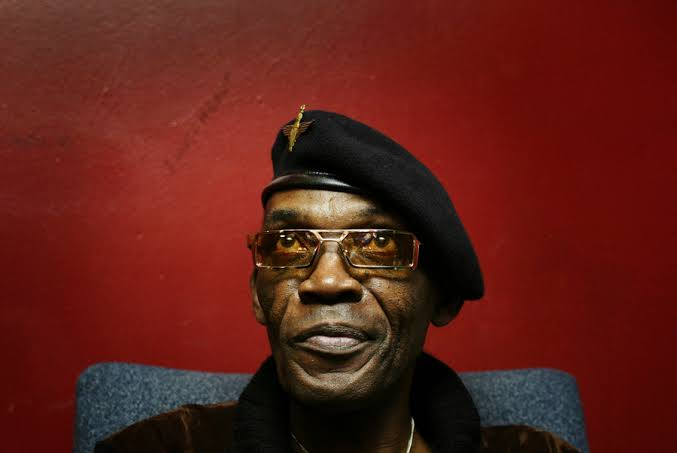

Few recordings in the history of popular music carry the weight of a single repeated word the way Desmond Dekker’s “Israelites” does.
Released in December 1968 and a global chart phenomenon by 1969, the song asks listeners to sit inside the skin of the working poor, borrowing one of the Bible’s most loaded designations to give that poverty a spiritual gravity.
Understanding the Israelites meaning in Dekker’s hands requires tracing three intersecting threads: the Biblical concept of God’s suffering chosen people, the Rastafarian tradition that recast that suffering in a Jamaican context, and the very specific, human story Dekker heard one ordinary day and chose to immortalise in song.
Who Was Desmond Dekker?
Desmond Dekker (16 July 1941 to 25 May 2006) was a Jamaican ska, rocksteady and reggae singer-songwriter and musician.
Born Desmond Adolphus Dacres in Saint Andrew Parish, Kingston, Jamaica, he was orphaned young and spent part of his childhood in the parishes of St. Mary and St. Thomas, raised in part by a grandmother and aunt whose devotion to church hymns left a lasting impression on his sense of melody.
He found work as a welder, a job he shared for a time with another young man who sang on the factory floor to pass the hours, Bob Marley.
It was Dekker who later urged record producer Leslie Kong to give Marley an audition, leading to Marley’s first recordings.
Dekker’s own workplace singing had drawn the attention of his co-workers, who encouraged him to pursue a career in music.
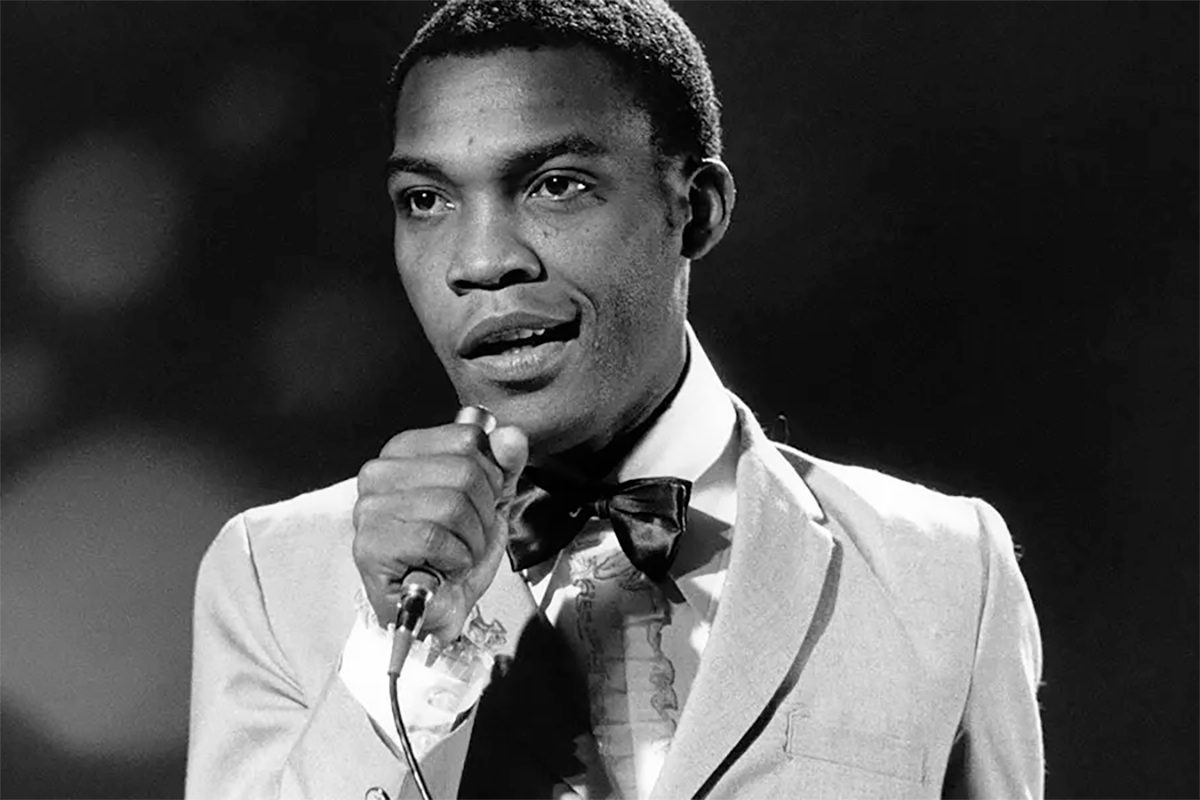
In 1961 he auditioned for Coxsone Dodd at Studio One and Duke Reid at Treasure Isle, though neither audition was successful. He then auditioned for Leslie Kong’s Beverley’s record label and was awarded his first recording contract.
In 1963 Kong released “Honour Your Mother and Father,” which became a Jamaican hit and established Dekker’s musical career.
Dekker was successful with songs like “007 (Shanty Town),” which reached number 14 in the British charts in April 1967.
Before the ascent of Bob Marley, Dekker was the best-known Jamaican musician outside of his country, and one of the most popular within it.
The Origin of “Israelites”: Where Did the Song Come From?
The single was written by Desmond Dekker and Leslie Kong, recorded in 1968, and released in December of that year on the Pyramid label in the UK and the Uni label in the US.
Dekker told writer John Masouri that he had the idea to write the song after overhearing a conversation between a man and his wife: it was about the couple’s financial difficulties and the man was complaining about working very hard every day without making much money, hence the first words of the song. That eaves-dropped exchange between struggling spouses gave the track its emotional truth.
The narrator wakes before dawn, labours all day, and still cannot put food on the table or keep his clothes from falling apart. The singer is being abandoned by his wife for being too poor.
The lines about a torn shirt and worn-out trousers “also surely count as one of the first examples of socially conscious lyrics in Jamaican music.”
Rather than address that poverty in the language of politics, Dekker reached for something older and more resonant: a Biblical self-identification.
What Does “Israelites” Actually Mean?
The Israelites were the inhabitants of Israel descended from Jacob. The word can also be used to describe one of God’s chosen people.
In the Old Testament, the Israelites endure generations of bondage in Egypt, wander in the wilderness, and experience exile in Babylon, always clinging to the identity of a people set apart by God yet perpetually tested by suffering.
“Israelites” is based on the biblical symbolism of the Israelites who were enslaved in Babylon, and that word was to be featured in many Rastafarian and reggae songs in the 1970s, but in 1968 and 1969, as reggae was just starting out, Rastafarian influences were still very rare in Jamaican music.
To understand the full weight of the term, it helps to understand how Rastafari reads that Biblical history. The Babylonian exile compelled Israelites to rethink their relationship to God, reassess their standing as a chosen people, and rewrite their history.
This episode has obvious appeal to Rastafarians, who consider themselves in exile from their African homeland, which they call Zion, and living under an oppressive European power system they refer to as Babylon.
Within the Rastafari world view, “Babylon” represents the corrupt and oppressive dominant society, epitomised by European colonialism, global capitalism, the police, and the African slave trade, along with the resulting racism, suffering and injustice.
Reggae is the most popular musical expression of Rastafari, a belief system that took hold in the 1930s among poor, rural Jamaicans of African descent who had immigrated to Kingston, where they felt alienated from roots and traditions.
Dekker’s identification of the song’s narrator as an Israelite plugs into this entire theological framework: the poor Jamaican labourer is not merely broke; he is a chosen person enduring an ancient and cosmic trial.
Dekker uses the Israelites meaning in the context of God’s chosen people, as he sings about his struggles while repeatedly invoking the term.
The relationship between religious philosophies fostered in Israel and Rastafarianism are complex and rich.
Some have speculated that Dekker and Kong used the word to equate the struggling subject of the song with that of God’s “chosen people” of Israel.
The refrain “poor me, Israelites” is therefore simultaneously a lament and a claim of dignity: the narrator is impoverished but belongs to a lineage that God has not forgotten.
Lyric Breakdown: Section by Section
The song opens with the narrator describing his daily grind, rising each morning to slave for bread so that his family can eat.
The imagery is bleak and immediate. The line “slaving for bread,” appended with the deferential “sir,” is hard to miss. No matter how pretty the voice or beguiling the rhythm, its opening casts the song in desperation.
The domestic crisis deepens as the song progresses. The narrator’s wife has left him, taking the children. His clothes are in tatters.
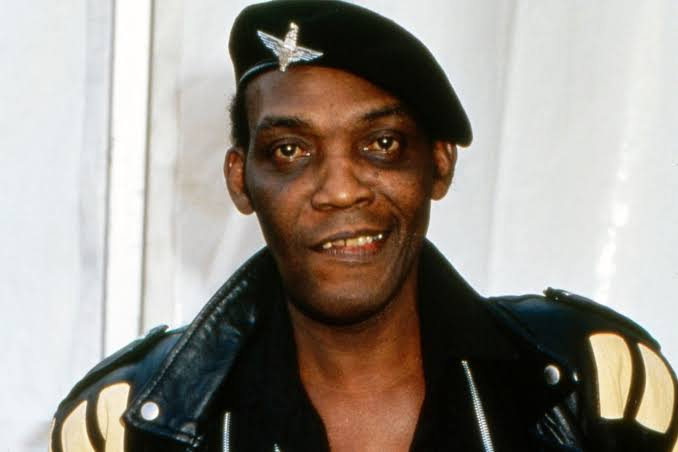
He acknowledges that a storm must bring calm, but also that his alarm has been raised by forces beyond his control.
The closing aside, “I wonder who I’m working for,” is perhaps the most quietly devastating line in the song, a question that every person who has laboured without seeing the fruits of that labour will immediately recognise.
With The Aces’ harmony welling up under the verse-closing “Israelites,” this struggle could be from contemporary Kingston or the Old Testament.
That is precisely the song’s genius: the specific and the universal are allowed to occupy the same space, held together by a single resonant noun.
The Misheard Lyrics Phenomenon
Part of the song’s unlikely global career rests on a paradox. There were fears that Dekker’s heavy Jamaican accent on the recording would limit international appeal, as listeners would find it difficult to understand the lyrics, and indeed jokes abound about the many mishearings of the lyrics.
The opening line “Get up in the morning, slaving for bread sir” was misheard as “Get up in the morning, baked beans for breakfast,” and comedian Lenny Henry famously joked about how many people thought the “ooh, mi Israelites” line was actually “oooh, mi ears are alight.”
In 1989, the song was used as part of an advertising campaign by Hitachi’s Maxell tapes brand. The concept for the campaign was based on the tendency for pop lyrics to be unintelligible and comically misunderstood.
A reggae fan holds up a number of boards as the music plays, upon which the misheard lyrics are written. For example, for the chorus line “The Israelites,” the handwritten board reads “Me ears are alight.”
Chart Performance and Historical Significance
“Israelites” hit number one in the United Kingdom, the Netherlands, Jamaica, and West Germany. In June 1969, the record reached the top ten in the United States, peaking at number nine on the Billboard Hot 100.
The disc was released in the UK in March 1969 and was number one for one week, selling over 250,000 copies. A global million sales figure was reported in June 1969.
It was the first UK reggae number one, and among the first reggae recordings to reach the US top ten. Dekker was the first Jamaican artist to have a hit record in the US with Jamaican-style music, other than Millie Small, who had a hit with Jamaican style music in 1964.
The single also made the top ten in more than a dozen other countries, including Canada, Australia, and several European nations.
The song did not stop there. In 1975, it was re-released in the UK, making number 10 in a version credited to just Desmond Dekker. In 1994, the Vitalite company, which marketed margarine made from sunflower oil, used and parodied Dekker’s tune by adapting the lyrics, which revived the popularity of this song.
Legacy: Why “Israelites” Still Resonates
“Israelites” was the first reggae song to top the charts in England and the United States, quite a few years before Bob Marley became popular.
Probably no other Jamaican artist brought more international acclaim to his island home than Desmond Dekker, barring Bob Marley, but Dekker came first.
The song mapped out thematic territory that reggae would spend the following two decades exploring. The identification of Black Jamaicans with the biblical Israelites in bondage, the framing of daily economic hardship as a spiritual trial, the use of Old Testament language to protest contemporary injustice: all of it would recur in the work of artists from Burning Spear to Bob Marley.
This was the 1960s, when social struggle was as viable a theme as heartbreak. The song is compelling still, even after Marley’s megastardom made reggae Jamaica’s biggest export since bananas and bauxite.
Desmond Dekker became a UK resident in 1969, the year of “Israelites.” He died of a heart attack on May 25, 2006, at his home in London.
He was just 64. He left behind a body of work that permanently changed the geography of popular music, and a single word, repeated softly over a lilting reggae groove, that carries more theological and historical weight than most artists manage in an entire career.
The Israelites meaning, at its core, is this: a man at the end of his resources looks upward, claims kinship with an ancient people whom God loved in their suffering, and refuses to be merely poor. He is, in his own declaration, chosen.