

When Peter Tosh declared that he did not want peace but needed equal rights and justice, he was not being provocative for provocation’s sake. He was drawing the clearest possible line between two ideas that the powerful have always tried to conflate.
The equal rights meaning embedded in his 1977 title track, and in the album that surrounds it, is specific, urgent, and theological: justice is the foundation; peace without it is a surrender.
Nearly five decades after its release, the song remains one of reggae’s most uncompromising political statements.
Who Was Peter Tosh?
Peter Tosh was born Winston Hubert McIntosh on 19 October 1944 in Grange Hill, Jamaica. His parents abandoned him as a child and he was raised by an aunt in Grange Hill; by age sixteen, his aunt had died and he moved to Kingston. Trench Town, a Kingston slum notorious for its challenging living conditions, became the crucible for his musical ambitions.
During the early 1960s, as an aspiring musician, he went to vocal teacher Joe Higgs, who gave free music lessons to young people, and it was through that contact that he met Robert Nesta Marley and Neville O’Reilly Livingston, later known as Bunny Wailer.
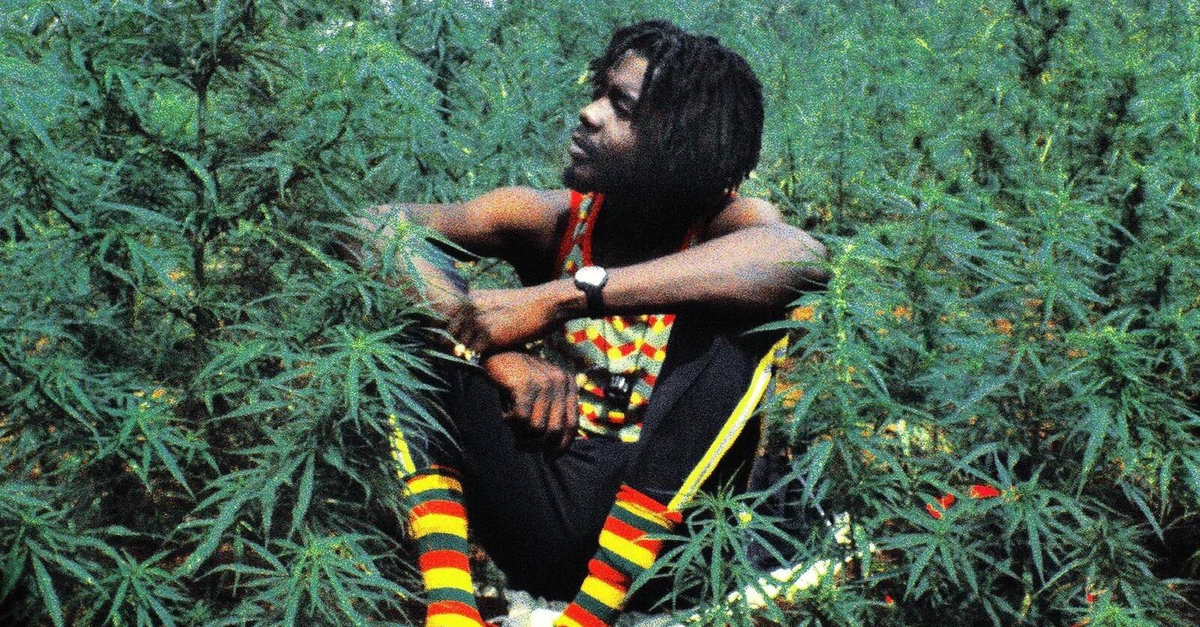
Tosh, Bob Marley, and Bunny Wailer formed the Wailers in 1963 in the Kingston ghetto of Trench Town. In addition to his rich baritone, Tosh brought to the Wailers his versatile musicianship and songs such as “Get Up, Stand Up,” which he co-wrote with Marley, and “Stop That Train.”
By 1974, jealous of the attention focused on Marley as the Wailers’ popularity grew, Tosh left the group to pursue a solo career.
His albums, most notably Legalize It (1976), Equal Rights (1977), and No Nuclear War (1987), featured uncompromising political messages about subjects ranging from the legalization of marijuana to the abuse of power. He spoke out against police brutality, advocated for drug law reform, and demanded equal rights and justice.
The Album: Context and Creation
Equal Rights was released in 1977 on Columbia Records, recorded at Dynamic Sounds in Kingston, Jamaica, and self-produced by Tosh. It was his second studio album, following Legalize It the previous year.
The album was recorded in Jamaica, a nation in crisis. Power cuts, rationing, roadblocks, and outbreaks of violence made it difficult to get around; Tosh, Robbie Shakespeare, Sly Dunbar, and others recorded on a 12-track Ampex at Randy’s in Kingston.
His music had never sounded better than on this album, his first collaboration with the legendary rhythm twins Sly and Robbie, who, accompanied by Wailers musicians Tyrone Downie, Al Anderson, and Wia Lindo, as well as Bunny Wailer, provided a dense, hot musical backdrop that was rootsy and funky at the same time, thanks to tight riddims and rich clavinet, guitar, and percussion arrangements.
Tosh’s then-manager Herbie Miller says Tosh was moved by political unrest in Jamaica and beyond: “Across the world, in Africa, the Caribbean, North America, minorities were struggling for some sort of humanity and equity and dignity.”
Miller added that “a lot of Equal Rights was made in response to that, so it was not a record made solely for local consumption. It was quite global.”
Miller has also said that the struggle to liberate southern Africa, specifically Zimbabwe, Namibia, and South Africa, was a key influence on the album: “The theme of this whole record is to do with that particular struggle, of the Africans in Africa, and the Africans outside Africa.”
Tosh had wanted to document this struggle with “machine-gun lyrics in a suite tying together songs that all related to those both within and without Africa.”
The Equal Rights Meaning: A Close Reading of the Title Track
Equal Rights was Tosh’s most political album, and the title track, which opens the record, is an anthem for freedom and a call for people to stand up for their rights, a powerful message and an inspiration for people to fight for justice, especially in the face of oppression.
The song’s central argument is deceptively simple: peace without justice is meaningless. On the title track, Tosh sings that he does not want peace, but that he needs “equal rights and justice.” This is not nihilism.
It is a philosophical insistence that a peace maintained through oppression is not peace at all, but a more comfortable form of subjugation.
It is here that he asserts his message most powerfully. By dismissing peace so easily, he maintains that what is needed will not come without a fight.
The song broadens its scope as it progresses. Tosh broadens the scope of his message to encompass global struggles for justice, highlighting movements in places like Palestine, Angola, Botswana, Zimbabwe, and Rhodesia.
By identifying these struggles, he frames the fight for equal rights and justice as a universal plight, transcending geographical boundaries.
This collective acknowledgement of oppression fosters a sense of solidarity among those fighting for similar rights, suggesting that the quest for justice is a shared human endeavor.
The song also includes a pointed biblical reference, invoking the parable of rendering unto Caesar what belongs to Caesar. In Tosh’s hands, the passage becomes a demand for material and social equity, not merely spiritual comfort.
Tosh’s lyrics serve as a rallying cry, urging listeners not just to seek peace but to demand justice, as it is the foundation upon which true harmony can be built, and he envisions a world where equity prevails, reducing crime and injustice.
The Rest of the Album: A Track-by-Track Political Suite
Equal Rights brought together Peter Tosh’s dedications to the revolutionary movements growing in Africa and the mysticism of his personal growth as a prophet, poet, preacher, and musical trailblazer.
The album included a number of songs that became human rights anthems over the following two decades: “Get Up, Stand Up,” “Downpressor Man,” “African,” “Apartheid,” and the title tune.
The song “Get Up, Stand Up,” co-written by Bob Marley, was originally a single by Tosh’s previous band, the Wailers, from their 1973 album Burnin’. Tosh’s re-recorded version for Equal Rights carries additional weight in context.
Miller says Tosh had to alter the lyrics to that song so the Broadcasting Commission of Jamaica would not ban it. Setting out his position with this track, Tosh makes clear that equal rights will not come without a fight.
“Downpressor Man” is a cover of the traditional folk song “Sinner Man.” “Downpressor Man” functions as a warning to any and all oppressors of him and his brethren.
The song is a thick mix of pianos and keyboards and noodling guitars that are almost impossible to untangle, but together make Tosh’s biggest sound on the album.
The New York Times considered “Stepping Razor” one of the best songs of the year, calling it “infectious, urgent music, brilliant lyrics and an inherent sense of drama equal to the great punk anthems of the past.” The song, by Joe Higgs, was claimed by Tosh as his own before a legal battle forced him to credit Higgs.
As much as the album is informed by Tosh’s struggle for justice, it is influenced equally by his faith. Tosh had been exposed to the teachings of the Rastafari as far back as 1963, and by the time he released Equal Rights he was a convert.
Dealing with identity in the track “African,” Tosh makes clear that to be black is to be African, one of Marcus Garvey’s key teachings. The final track, “Apartheid,” opens with the sound of gunshots.
Eight years before the Artists United Against Apartheid were put together by Steven Van Zandt, Peter Tosh was singing about places in Africa where, in his words, a black man received no recognition.
The Production and the Persona
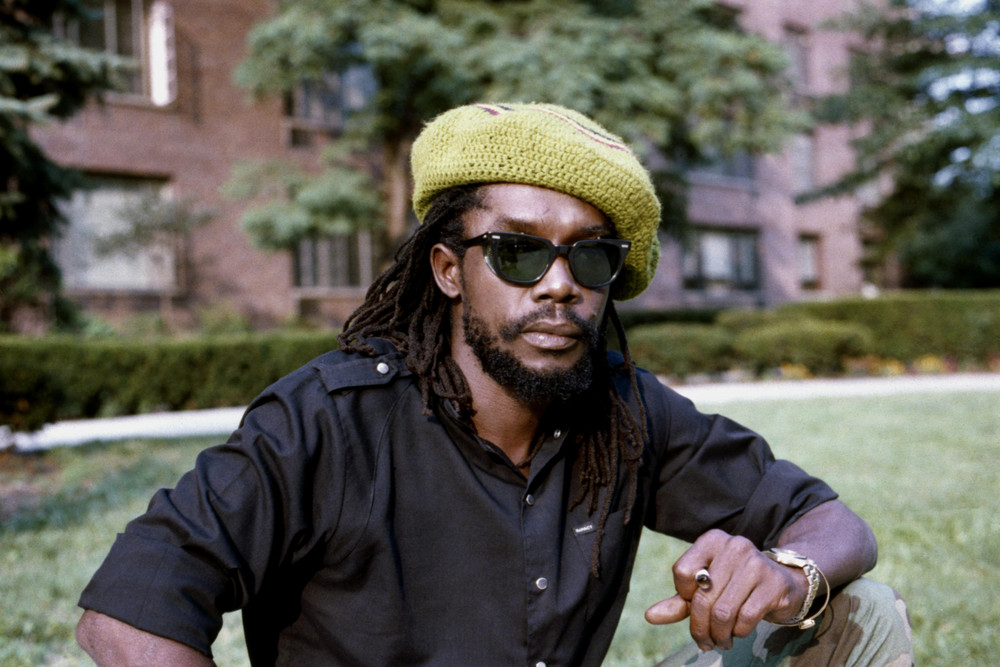
Tosh appears on the cover of Equal Rights in a Che Guevara-style beret and sunglasses, all part of a militant persona that led reggae archivist Roger Steffens to describe Marley as reggae’s Martin Luther King and Tosh as its Malcolm X.
Steffens, who wrote liner notes for one of the album’s reissues, observed that Tosh was “almost beaten to death on several occasions by Jamaican police, basically for his antiestablishment views,” adding that “he didn’t just talk the talk, he walked the walk too and people respect that all over the world to this day.”
Both as musician and voice of dissent, Tosh is at his best on Equal Rights. It is his defining statement against the corruption of power, against oppression, and for the people, for living in a peace defined not by placation, but by justice and fairness.
Reception and Legacy
Equal Rights was intended to be the album that propelled Peter Tosh to the top of the reggae world as the rival to his onetime fellow Wailer Bob Marley.
Time has shown that lofty aspiration was not borne out, but Equal Rights remains among the handful of best and most influential reggae albums ever recorded.
Before he was gunned down during a home invasion in 1987, Tosh was one of reggae’s most militant performers, a civil rights agitator who co-wrote “Get Up, Stand Up” as a member of the Wailers.
Equal Rights was important not only because of its powerful message but also because of its influence. It inspired many other artists and helped to shape the sound of the reggae genre, and helped to spread the message of social justice and human rights around the world.
“Stepping Razor” reached a wider audience thanks to its inclusion on the soundtrack to the film Rockers by Theodoros Bafaloukos, and for many reggae enthusiasts, Equal Rights embodied what Peter Tosh represented: a dread seriousness, a militant stance, and powerful songs with strong rhythms.
Peter Tosh was murdered in 1987. He did not live to see the ending of enforced racial segregation in South Africa, nor Nelson Mandela’s election as the country’s first black president. The equal rights meaning he spent his career articulating, that justice is the prerequisite for any durable peace, is the measure by which he wanted his life and music to be judged. By that standard, the verdict is unambiguous.