
Few pop songs from the early 2000s have maintained the kind of enduring appeal that “Angel” by Shaggy has.
The angel meaning at the heart of the track is straightforward on the surface: it is a declaration of gratitude to a woman who stood by a flawed man through his worst moments.
But beneath that sunny reggae-fusion melody lies a more complicated story of neglect, loyalty, incarceration, and redemption.
This explainer breaks down every layer of the song, from its production origins and lyrical themes to the chart records it shattered around the world.
Who Is Shaggy, and Where Did “Angel” Come From?
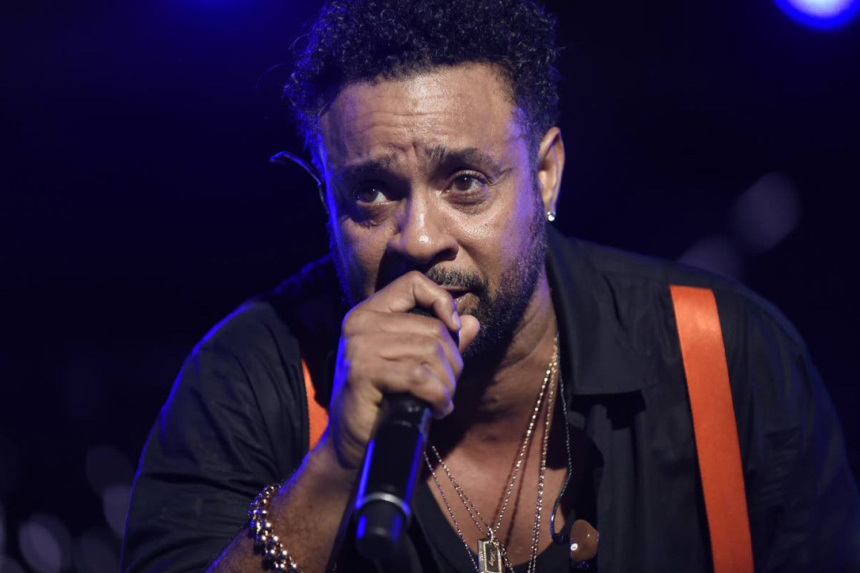
Shaggy was born Orville Richard Burrell on October 22, 1968, in Kingston, Jamaica, and later moved to New York City, where his mother worked as a medical secretary. He took the nickname “Shaggy” from the Scooby-Doo television cartoon character.
Before music consumed his life, Shaggy enlisted in the United States Marine Corps in 1988, obtaining the MOS of 0811 (Field Artillery Cannon Crewman), and served with a Field Artillery Battery in the 10th Marine Regiment during the Persian Gulf War.
He would eventually leave the Marines as a lance corporal after being demoted twice for unauthorized absences, repeatedly leaving his duty station to work on his music career in New York.
Born in Kingston, Shaggy emerged in 1993 with his infectious cover of the Folkes Brothers’ 1960 ska classic “Oh Carolina.” His 1995 single “Boombastic” followed, climbing all the way to number three on the Hot 100. Then came a period of setback.
It was a big rebound for Shaggy, who had been dropped by his label over disappointing sales of his 1997 album Midnite Lover.
The vehicle for his comeback was the fifth studio album, Hot Shot. Hot Shot was released on August 8, 2000, by MCA Records, and features the international hit singles “It Wasn’t Me” (featuring RikRok) and “Angel” (featuring Rayvon), both of which topped the Billboard Hot 100 chart.
The Production: Two Classic Songs Collide
The sonic foundation of “Angel” is one of the most recognizable elements of the track, and it was built on borrowed DNA from rock and country music.
The track samples the bassline from the Steve Miller Band’s 1973 hit “The Joker” and incorporates the chorus melody from “Angel of the Morning,” originally written by Chip Taylor in 1967 and popularized by Merrilee Rush in 1968.
The chorus interpolates the melody of “Angel of the Morning,” written and composed by American songwriter Chip Taylor, a song that has been recorded numerous times and has been a hit single for various artists, including American singers Merrilee Rush and Juice Newton.
The song was produced by Shaun “Sting” Pizzonia, and the credited songwriters are Steve Miller, Ahmet Ertegun, Eddie Curtis, and Chip Taylor. The beat came together first on the track, and then Shaggy added the lyrics.
Shaggy has shared the creative process behind the song: “Angel was written by me, Dave Kelly, and Rik Rok.
Sting International had sampled Steve Miller Band’s ‘The Joker,’ and Dave and I thought the vibe of the beat felt similar to The Fugees’ ‘Killing Me Softly,’ so we wanted to create a similar atmosphere.
The blending of a classic rock groove with a melody drawn from country-pop history gave the song its unique genre-crossing quality, a hallmark of the reggae fusion sound that Shaggy had been perfecting throughout his career.
Rayvon: The Voice Behind the Chorus
“Angel” is not a solo performance. The track’s soaring, melodic chorus belongs to Rayvon, a collaborator who had been part of Shaggy’s inner circle well before the song was recorded.
Shaggy is not the only charming voice on “Angel.” For the song’s chorus, Shaggy turned to a regular collaborator, Bruce “Rayvon” Brewster.
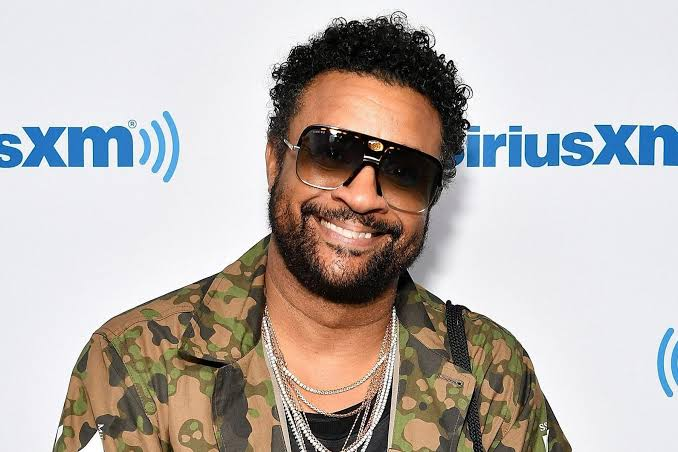
Rayvon is identified in the credits as a Barbadian singer. The West Indian vocalist Rayvon sang on this track, and Shaggy helped him put together a solo album in return.
The division of labor in the song is intentional and dramatically effective. Shaggy’s spoken-word, toasting vocal style carries the verses, grounding the narrative in a rougher, more confessional register.
Rayvon then lifts the chorus into something transcendent, turning a story of personal failure into an open-hearted tribute.
“Angel” Meaning: A Line-by-Line Lyrical Breakdown
Shaggy’s “Angel,” featuring Rayvon, is a reggae fusion song that celebrates the steadfast love and support of a significant other.
The song’s lyrics convey a deep appreciation for a partner who has been a constant source of comfort and friendship, especially during challenging times.
The song serves as a tribute to loyal and supportive women, with Shaggy describing it as “plain homage to the women that hold it down.”
The chorus, with its repeated lines about the partner being the singer’s “angel,” emphasizes the singer’s view of his partner as a guardian figure, someone who has been closer than even his closest friends when he needed support.
The word “angel” here does not carry a religious connotation so much as a deeply personal one: the angel meaning is a person who showed up without being asked and without conditions.
The verses of “Angel” are where the real emotional weight accumulates. Rather than simply celebrating his partner, Shaggy uses the narrative to confront his own failures.
The verses of “Angel” reflect on the transient nature of youth and the importance of having someone to rely on as life progresses.
Shaggy acknowledges past mistakes and a lack of attention to his partner, but also highlights her loyalty, even during his incarceration.
Shaggy’s narrator spent too long messing around on a woman, taking her for granted, but she stuck with him through all sorts of hardships, including a prison stint.
Shaggy is overcome with gratitude, “growling about all the great things that this person has done for him: ‘She was there through my incarceration / I wanna show the nation my appreciation.'”
This lyric is the emotional pivot of the song. It moves the angel meaning from a vague romantic compliment to something earned through real sacrifice and real suffering.
Shaggy admits to his flawed behavior in spite of which his partner still sees him as her savior, yet recognizes that her love has been a saving grace.
The tender surrender mentioned in the lyrics indicates a vulnerability and a willingness to change, inspired by the partner’s love and support.
Taken as a whole, “Angel” is not just a love song; it is an ode to a life-changing relationship that has weathered the storms of life and emerged stronger.
Chart Performance: A Global Number One
“Angel” was released to radio on January 9, 2001, as the follow-up to Shaggy’s international number-one hit, “It Wasn’t Me.” Few could have predicted just how far it would travel.
“Angel” proved to be equally successful, reaching number one in 12 countries, including Australia, Germany, Ireland, the United Kingdom, and the United States.
On the Billboard Hot 100, the song debuted at number 81 in December 2000 and first entered the top 40 at number 39 in January 2001, climbing to number one by March.
It was Shaggy’s second and last number one on the US Billboard Hot 100, where it peaked for one week.
Internationally, “Angel” achieved number-one status in multiple markets, including the UK Singles Chart, where it peaked at number one for one week on June 9, 2001, and remained on the chart for 18 weeks. In Ireland, it became the 20th-highest-selling single of all time.
Australia delivered the song’s most dominant chart performance. In Australia, the song topped the ARIA Singles Chart for eight consecutive weeks starting in June 2001 and placed fourth on the ARIA year-end chart for 2001.
Overall, “Angel” was the 17th most successful song in the United States in 2001, with over 1.49 million digital copies sold as of April 2016.
In the United States, “Angel” was certified Platinum by the RIAA in 2001 for 1,000,000 units shipped.
The Album That “Angel” Built
“Angel” did not exist in isolation. It was the second explosive single from an album that redefined what dancehall and reggae fusion could achieve in mainstream pop markets.
“Angel” was the follow-up to “It Wasn’t Me”; both songs went to number one in America and helped the Hot Shot album sell 6 million copies.
Hot Shot reached number one on the Billboard 200 for six non-consecutive weeks in early 2001 and became the second best-selling album of that year in the United States, with over 4.5 million copies sold domestically during 2001 alone.
Neither of those songs were pegged as surefire hits: “Dance And Shout” was released as the album’s first single, and it struggled when it was issued in the summer of 2000. It was not until six months later that “It Wasn’t Me” took off and Shaggy was everywhere.
Meanwhile, “It Wasn’t Me” became Shaggy’s first Billboard Hot 100-topper in February 2001, as well as the UK’s best-selling single of that year, and a Grammy nominee for best pop collaboration.
As the only diamond-selling dancehall artist in music history, Shaggy has sold more than 40 million album units to date, in addition to landing eight singles on the Billboard Hot 100 and seven albums on the Billboard 200.
The 20th Anniversary: “Angel” With Sting
The legacy of “Angel” was formally honored two decades after its release. To celebrate the 20th anniversary of Hot Shot, Shaggy released a brand-new album entitled Hot Shot 2020, featuring updated versions of the biggest hits and most beloved fan favorites across his catalog, along with a number of never-before-heard tracks.
This edition incorporates hip-hop elements through collaborations, including an updated “It Wasn’t Me (Hot Shot 2020)” featuring Rayvon and “Angel (Hot Shot 2020)” with Sting.
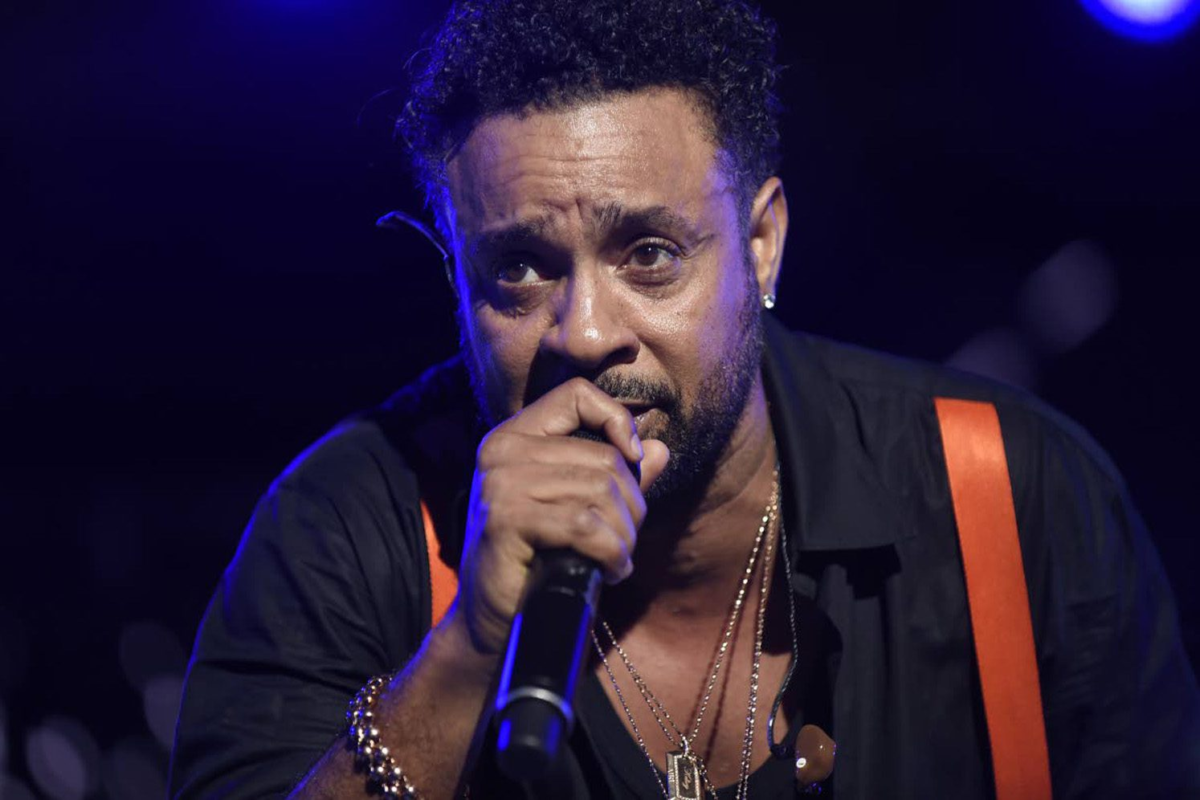
The anniversary project was recorded in both New York City and at the legendary Anchor Recording Studio in Jamaica, and called on a stellar lineup of producers including Martin Kierszenbaum, Shane Hoosong, Dave Aude, and Dwayne “iLL Wayno” Shippy.
The choice of Sting to revoice Rayvon’s part for the anniversary version was not random. Shaggy and Sting had already forged a creative bond, with Shaggy winning two Best Reggae Album Grammys, in 1996 for Boombastic and in 2019 for his Sting collaboration 44/876.
Why “Angel” Still Resonates in 2026
The angel meaning embedded in Shaggy’s 2001 hit has proven to be one of the more durable emotional propositions in modern pop music. It is not a song about perfection. It is a song about being deeply imperfect and finding someone who stays anyway.
That specific gratitude, the kind that comes with the awareness of how much you did not deserve the loyalty you received, is a feeling that does not age.
Shaggy has noted that the song was written collaboratively, with Dave Kelly and RikRok contributing to its creation alongside him, which helps explain why its emotional core feels layered rather than transactional.
“Angel” endures on streaming platforms, in retrospective playlists, and in dancehall and pop culture discussions because the central metaphor remains legible to anyone who has ever leaned on another person during a difficult stretch of life and known, in full honesty, that the debt could never truly be repaid.