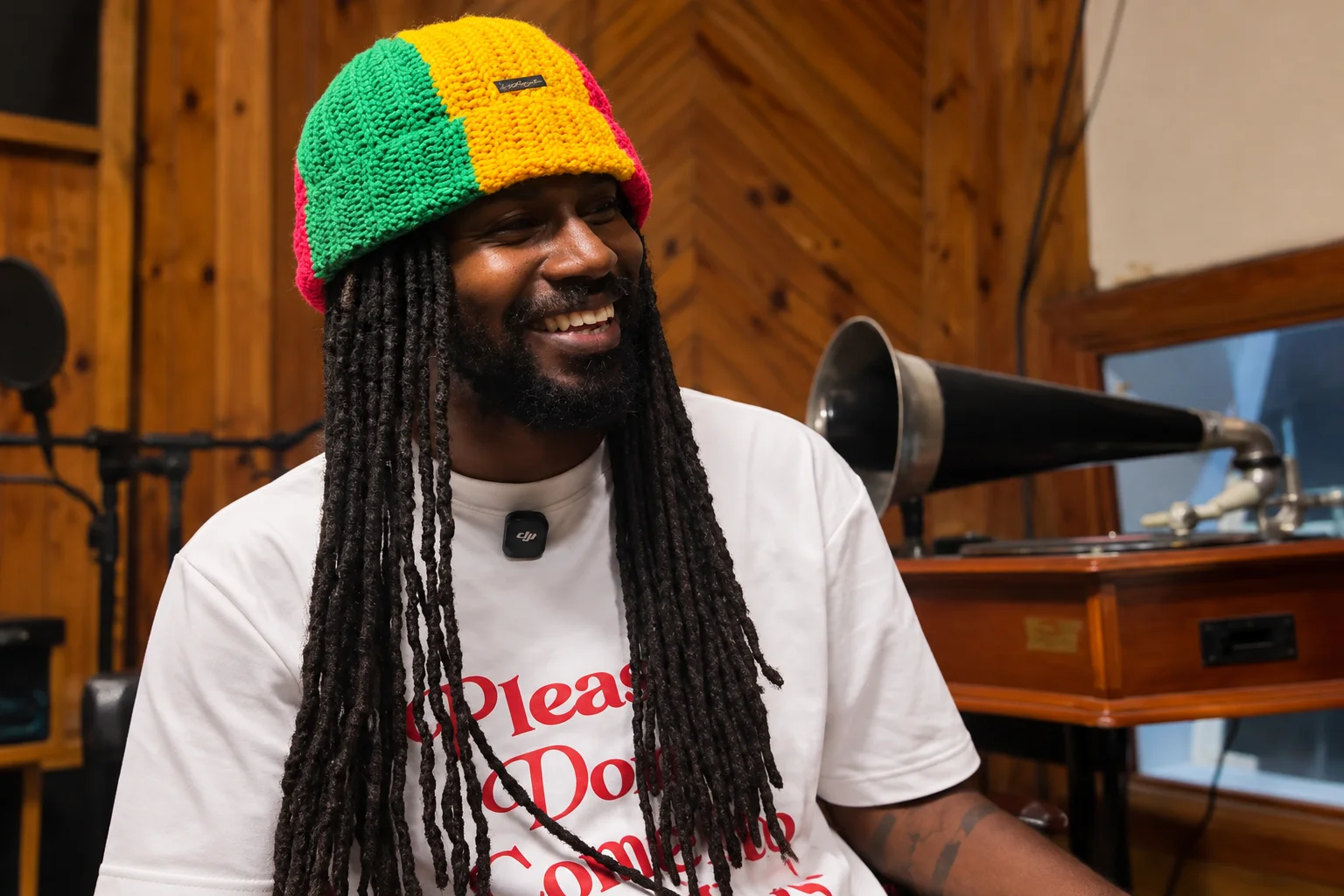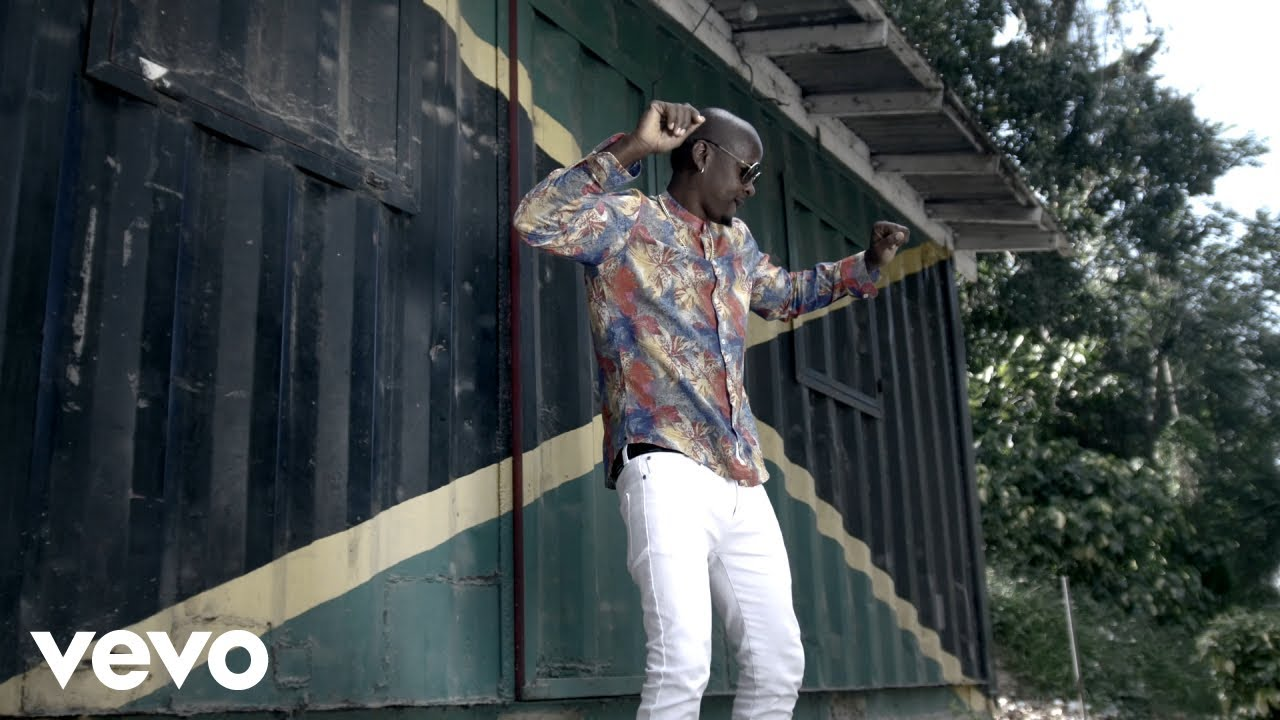

Few voices in modern reggae have carried as much ache as Jah Cure’s. Few careers have been shaped so completely by courtrooms.
The Jah Cure case is really two cases, separated by more than two decades and an ocean. The first was a 1999 conviction in Jamaica that put him behind bars just as his music was taking hold.
The second was a 2021 stabbing in Amsterdam that has kept him locked up in the Netherlands ever since.
Born Siccature Alcock on 11 October 1978 in Hanover Parish, and given the name Jah Cure by Capleton, he built a following that refused to separate the man from the music, for better and for worse.
Here is how it unfolded, from a traffic stop in Montego Bay to an appeal verdict in Amsterdam.
Montego Bay, 1998: The Arrest
In November 1998, police pulled Jah Cure over in Montego Bay. He was arrested and charged with gun possession, robbery and rape.
A local woman had identified him to police as the man who raped and robbed her at gunpoint. She would later say the attack happened in Ironshore, Montego Bay.
The case went before the Gun Court. On 26 April 1999 he was convicted on two counts of illegal possession of a firearm, along with rape and robbery with aggravation. He was sentenced to 15 years and would serve eight of them.
Behind Prison Walls: 1999 to 2007
What happened next is one of the strangest chapters in reggae history. Jah Cure was moved to the Tower Street Adult Correctional Centre, which had a digital recording studio inmates could use. From inside, he kept releasing music.
Three albums came out while he was incarcerated: the Free Jah’s Cure album (2000), Ghetto Life (2003) and Freedom Blues (2005).
The singles cut deepest. “Longing For” and “Prison Walls (Reflections)” turned his confinement into the subject of his art.
His tender, pleading tenor rode over roots and lovers rock arrangements, and he became a cause as much as a singer.
Many people protested his innocence, arguing that the case was full of inaccuracies and unanswered questions. The conviction became a lightning rod for wider criticism of the Jamaican legal system.
Jah Cure himself has consistently maintained that “the truth” will come out and that God will exonerate him.
Freedom and Its Limits: 2007 to 2015
On 28 July 2007, Jah Cure was released on parole. Within weeks he was on stage in Europe.
His first concert as a free man was at Reggae Sundance in the Netherlands in August 2007. It was a symbolic return in a country that would later become the setting of his second legal ordeal.
Freedom came with restrictions. Around four years after his release, he said he still had no visa for the United States, England or Canada, which locked him out of some of reggae’s most important touring markets.
The complainant also spoke out. In a 2011 interview she said several high-profile entertainers had offered her money to drop the case or to support an early release. Her message was blunt: “I JUST WANT HIM TO ADMIT.”
Smaller Storms: 2015
The years between the two major cases were not entirely quiet.
In 2015, Jah Cure was detained at a police station in Port of Spain, accused of taking payment for a performance he did not show up for. He also had disputes with promoters in The Bahamas and Trinidad and Tobago.
Those matters were resolved without court action, but they hinted at the kind of money conflict that would explode years later.
Dam Square, 2021: The Stabbing
On 1 October 2021, in broad daylight on Amsterdam’s Dam Square, Jah Cure stabbed promoter Nicardo “Papa” Blake in the stomach. He was arrested on the spot. The dispute was over unpaid performance fees.
At trial in March 2022, the singer argued self-defence. He said he carried a knife because he was wearing expensive jewellery.
In one widely reported moment, when the judges did not recognise him as a celebrity, he told them to Google him.
On 8 March, prosecutors sought eight years on charges including attempted murder, attempted manslaughter and aggravated assault.
His lawyer, Tim Scheffer, took an unusual line on the threatening messages his client had sent, calling them “part of the Jamaican reggae culture.” The court did not accept the framing.
The First Verdict: March 2022
On 22 March 2022, the Amsterdam court convicted Jah Cure of attempted manslaughter and sentenced him to six years, with credit for time served. It rejected his self-defence claim but acquitted him of attempted murder.
The judges described the incident as an “apparently fairly trivial conflict” that he had escalated. He was also ordered to pay Blake €9,452.49 in damages.
Neither side was satisfied. Prosecutors appealed the attempted murder acquittal, and his lawyer appealed the manslaughter conviction. The appeal was filed on 5 April 2022.
That same month, prosecution press officer Tuscha Essed predicted, “It will most likely be a matter of months before the case is on trial again.”
It would take far longer.
The Long Wait: 2022 to 2025
Years passed with Jah Cure in custody and the appeal unheard. Across Europe, selectors and DJs ran an informal “mute Jah Cure” campaign calling for a boycott of his music.
It was a striking turn on the continent where he had once celebrated his freedom.
A substantive appeal hearing was finally set for 18 June 2025. Then it collapsed because the court interpreter failed to attend.
The hearing was adjourned and he remained in custody. When the case resumed in October 2025, prosecutors demanded 9.5 years for attempted murder.
The Appeal Verdict: October 2025
On 30 October 2025, the Amsterdam Court of Appeal delivered the outcome Jah Cure’s camp had feared.
“The court of appeal, unlike the district court, finds the defendant guilty of attempted murder,” the ruling stated. He was sentenced to eight years and four months.
The decisive evidence was his own voice. In messages sent before the attack, he said he had picked up a knife and planned to stab the promoter. One line, quoted by NL Times, read: “I’ll go to jail for you in any fucking country.”
The court found the messages proved intent and premeditation, and it dismissed self-defence once again. It also noted that the case had run almost seven months past the reasonable time of 16 months.
The ruling landed hard. Before the harsher verdict, Jah Cure had posted an Instagram message from prison telling fans, “See you in one year and few months.” He was reportedly sentenced to serve his time at the Dutch prison in Ter Apel.
In November 2025, Blake spoke publicly. He said he feels no malice toward Jah Cure, and he said he never released the voice notes.
Where the Jah Cure Case Stands
As of 2026, Jah Cure remains imprisoned in the Netherlands. His story is one of reggae’s most uncomfortable.
The same voice that sang “Prison Walls” from a Jamaican cell, and made a generation of fans believe in his innocence, has spent another half decade behind bars, this time convicted on his own recorded words.
For listeners, the tension has never resolved. Some still hear the longing in his early catalogue and can’t let it go.
Others, from the complainant in Montego Bay to the selectors who muted him in Europe, have drawn a firm line.
Either way, no account of Jah Cure’s music can now be separated from the courtroom.