Every dancehall session eventually comes down to the waist. The selector drops a tune, the floor tightens, and suddenly everybody’s hips are telling the story.
If you have ever stood at the edge of that moment wondering how to whine (or wine, as plenty of people spell it), this guide is for you.
The short answer: soften your knees, free your waist, and let the rhythm move your hips in smooth circles.
The longer answer is more rewarding. The whine is not just a party trick or a viral clip. It is a movement with deep roots, a culture behind it, and real technique that rewards patience.
Learn it with respect and it will feel good on any floor, from a Kingston street dance to your living room.
What a Whine Actually Is
“Whine” and “wine” are two spellings of the same dance, and you will see tutorials titled with both.
The word comes from the Caribbean pronunciation of “wind up,” meaning to move your hips on the dance floor. At its simplest, wining is hip and waist movement done to the rhythm.
Its roots run far deeper than any single era. Talawa Technique’s lecture notes trace the wine back to African dance forms built around circular hip movement, and describe it as a symbol of identity and empowerment in Caribbean culture.
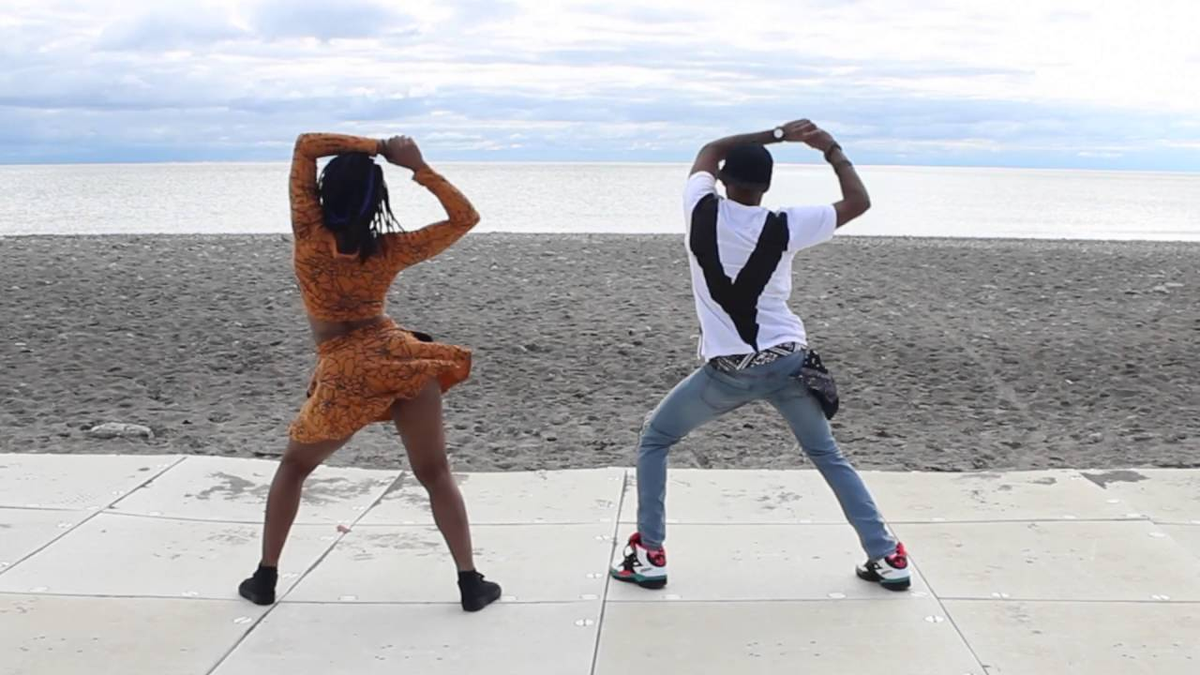
In Jamaica, it found its modern home in dancehall, a word that names both the music and the dance style.
That culture grew out of the dance halls where sound systems played records, with origins in late-1970s Jamaica, especially Kingston.
Sensual hip work and body rolls became the signature of the dancehall floor, and the wine sits at the centre of all of it.
Before You Start: Respect the Culture
Here is something newcomers often miss. Dancehall dance is a catalogue of named steps with known creators, not a loose freestyle free-for-all.
Gerald “Bogle” Levy alone gave the culture the Willie Bounce, the Urkle Dance, Zip It Up, the World Dance and Row di Boat before he was murdered in Kingston on 20 January 2005.
Names like John Hype, Ice and Ding Dong carry the same weight. When you learn a step, learn who made it.

Where authorship is disputed, as with the Butterfly, which is credited to both Carlene Smith and Bogle, give both their flowers.
Know, too, that the wine is for everybody. The Talawa notes point out that the male wine has been stigmatised and pushed to the margins within dancehall culture, but it is finding its way back into popular dances. Guys, you are welcome here.
Finally, do not confuse wining with daggering. Daggering is a separate, more recent and far more controversial dance tied to the 2006 wave of dancehall, and Jamaican doctors have warned about injuries linked to it. A whine is about your own body and the riddim.
How to Whine, Step by Step
Find your stance. Stand with your feet a little wider than your hips and bend your knees softly. Locked knees are the enemy of a good wine. Many beginners rest their hands on their knees to steady themselves and feel the movement in the waist.
Isolate the hips. Keep your upper body as calm as you can and let the movement come from your pelvis and waist. Push your hips to one side, then back, then to the other side, then forward. Join those points together and you have a circle.
Go slow first. The slow whine is the foundation. Circle your hips at half speed, keeping it smooth rather than jerky. Some instructors treat the slow whine as a warm-up and core workout that keeps the quads working, which tells you how much strength sits underneath a relaxed-looking wine.
Lock in with the beat. Once the circle feels natural, match it to the music. Let the drum guide you. One beginner guide puts it simply: feel the music and let your body respond.
Add variations. With the basic circle in place, there is a whole family to explore. Tutorials teach the hand-on-knees reverse whine, the slow ride and the knee whine, along with the tick whine and the fast whine. When you are ready, try “walk and whine,” where you keep the hips rolling while you move across the floor. Going lower, as in a whine down low, comes after you have built control.
Build Strength and Know Your Limit
Wining looks effortless when it is done well, but it asks a lot of your body. The Jamaica Observer once described the go-go wine as a coordinated effort involving most of the body’s muscles, “a complete workout.” Expect your thighs and core to feel it.
Respect your limits, especially with the more extreme variations. When the Dutty Wine took over, the Observer noted wryly: “Some made it look so easy, others ended up in neck braces.”
Some doctors went further, warning that the Dutty Wine’s aggressive head and neck action could cause serious muscle trauma and ligament damage. Build up gradually, warm up first, and never force a range of motion your body is not ready for.
If you want something gentler to pair with your wine, the Observer pointed to the Della Move as manageable for any age or flexibility.
Practice Tracks and Tutorials
You learn a wine by doing it to music, so build a playlist. Tony Matterhorn’s “Dutty Wine” became a number one in 2006 and pushed the dance everywhere.
Kat DeLuna’s “Whine Up,” released 15 May 2007, topped Billboard’s Hot Dance Club Play chart and won Latin Dance Club Play Track of the Year at the 2008 Latin Billboard Music Awards.
Mya’s dancehall-pop “Whine,” which carries a writing credit for Bounty Killer, got a dance-version video on 10 October 2023 featuring Dance Jamaica dancehall queens Latonya Style, Sara Bendii, Kissy McKoy and Shanice Caterpillar, who share some lessons along the way.

For guided practice, Matt Steffanina’s 2014 tutorial with Dancehall Funk creators Lorenzo & Dionne breaks the wine down for both girls and guys.
Shee Benito teaches the whine and the bruk back in Spanish to Mr Eazi and Major Lazer’s “Oh My Gawd.
Chriss Choreo, whose channel mentions a physiotherapy background, has a whine down low tutorial worth studying for control.
French speakers can try Evee Smile’s three-minute beginner breakdown. And once you feel confident, the #RollAndWhineChallenge on TikTok is a fun way to test yourself.
Make It Yours
The best whiners never look like they are following instructions. That is the goal. Once the basic circle is in your body, dancehall invites you to bring your own personality, because the culture prizes individuality and self-expression.
Watch the dancers who built this, credit them when you borrow their steps, and keep listening to the music, since the riddim is always the real teacher.
The whine has travelled from African circular hip traditions to Kingston dance halls to global charts and phone screens, and it still belongs to the people who keep it alive on the floor.
Learn it slowly, protect your body, and show it some respect. Then go wind up.