
Turn the lights down, turn the bass up, and let the echo do the talking. Choosing the best dub albums means going back to the Kingston studios where engineers treated the mixing desk as an instrument, pulling vocals out, dropping drums in and sending a single guitar chop spinning into infinity.
What started as B-side versions for sound systems became a full art form, and those long players still rattle speaker boxes and rewire producers’ brains today.
This list runs from the roots era of King Tubby, Lee “Scratch” Perry and Augustus Pablo through Scientist’s early-eighties horror shows and the UK scene, ending with a Berlin duo who carried the gospel into the new millennium. These are the albums every serious collection needs, ranked strongest first.
1. Augustus Pablo & King Tubby, “King Tubbys Meets Rockers Uptown” (1976)
If dub has a holy text, this is it. Pablo’s melodica floats like smoke over rhythms recorded between 1972 and 1975 at Randy’s and at King Tubby’s studio.
The bass is carried by Family Man Barrett, Leroy Horsemouth and Robbie Shakespeare, with Carlton Barrett on drums, and it lands like weather.
The title cut takes Jacob Miller’s “Baby I Love You So,” another Pablo production, and dissolves it into echo until only the ghost of the vocal remains.
“Keep On Dubbing” and “555 Dub Street” are just as hypnotic. First issued on Yard Music in Jamaica and later kept alive by Shanachie, it placed second in Mojo’s 2024 list of the 50 best reggae albums ever. It is still the record heads hand to anyone asking where to start.
2. The Upsetters, “Super Ape” (1976)
Lee Perry built this one at the Black Ark on four-track equipment. He stacked overdub upon overdub and bounced tracks down until the tape seemed to sweat.
Credited to his studio band the Upsetters, it reached Jamaica in July 1976 as Scratch the Super Ape, before Island issued a reshuffled version that August.
The raw materials were Perry’s own 1976 rhythms, including Max Romeo’s “War in a Babylon” and “Chase the Devil,” the latter reborn as “Croaking Lizard” with Prince Jazzbo.
Purists still argue that all the singing makes it something stranger than a pure dub album, and they have a point.
Lloyd Bradley hears it as the culmination of the Black Ark years, and the dense, foggy arrangements explain why. Record Store Day brought it back as a double vinyl in November 2013.
3. The Upsetters, “Blackboard Jungle” (1973)
Only 300 copies, pressed in Jamaica and nowhere else. That is how humble the start of the dub album was.
Perry and King Tubby, who went uncredited, reworked existing Upsetter music cut between 1970 and 1972 into 14 tracks.
In the process they delivered the first stereo dub album and the first to splash on reverb. Pauline Morrison has called it the first dub album, full stop.
Wailers material runs right through it, with “Dreamland Skank,” “Mooving Skank” and “Kaya Skank” credited to the group.
Collectors, beware: later pressings titled Blackboard Jungle Dub, including a 12-track 1981 edition, shuffle the running order and are routinely mistaken for the original.
Week-End Records puts the real thing back on vinyl on 20 November 2026, limited to 3,000 copies, with liner notes by David Katz and an interview with Adrian Sherwood.
4. Keith Hudson, “Pick a Dub” (1974)
Before Pick a Dub, dub mostly lived on the flip side of a 45. Keith Hudson changed that. His set is widely considered the first deliberately thematic dub album, with tracks mixed in the dub style so they would sit together as a statement. It was also the first dub album released in the UK.
The personnel reads like a roll call. Carlton and Aston Barrett hold down the engine room, Augustus Pablo adds melodica, and fragments of Hudson, Horace Andy and Big Youth drift through the mix.
There is a dub of “We Will Work It Out” and the basic track for “S-90 Skank,” dressed with a fresh Pablo melodica line.
When Blood & Fire reissued it in 1994, The Wire called it “one of the first dub albums” and a “must-have,” and John Peel put it back on British radio.
5. Yabby You & King Tubby, “King Tubby Meets Vivian Jackson” (1976)
Few dub records carry as much spiritual weight as this one. Vivian Jackson, the visionary producer known as Yabby You, spread his sessions across what amounts to a map of seventies Kingston: King Tubby’s, Channel One, Joe Gibbs’, Dynamic Sounds, Harry J’s and the Black Ark.
The first half belongs to Yabby You’s own material with his band the Prophets, heavy and prayerful, before Tubby takes the faders and strips everything back to bone and shadow.
The album has travelled under many names, including Chant Down Babylon, Walls of Jerusalem and King Tubby’s Prophesy of Dub, which tells you how often it has been pressed and repressed.
Reissues on Pressure Sounds and Blood & Fire have kept it in circulation for new generations of selectors.
6. Scientist, “Scientist Rids the World of the Evil Curse of the Vampires” (1981)
By 1981, Tubby’s young protégé was ready to haunt the house. Henry “Junjo” Lawes supplied Roots Radics rhythms laid at Channel One, and Scientist mixed them at King Tubby’s for Greensleeves.
He drew on cuts by Michael Prophet, Wailing Souls, Johnny Osbourne and Wayne Jarrett, so “Voodoo Curse” is really the Wailing Souls’ “Oh What a Feeling” dragged into a crypt.
Scientist worked the levels, mutes and effects live at the desk, leaning hard on a Roland Space Echo. The result has an unpredictable, lurching structure that suits the B-movie theme perfectly.
The Orb later sampled the “I” from “I WANT BLOOOOOD” for “U.F.Orb.” Tracks also turned up on the Grand Theft Auto III soundtrack, a moment that ended in Scientist’s unsuccessful lawsuit against Greensleeves over royalties.
7. Scientist, “Scientist Wins the World Cup” (1982)
Jamaica did not qualify for the 1982 World Cup, but on Tony McDermott’s cover art they are beating England anyway. That cheeky fantasy, released in May 1982, wraps one of Scientist’s tightest sets.
It is billed as his final session at King Tubby’s, with Junjo Lawes producing and the Roots Radics in full flight: Flabba Holt on bass, Style Scott on drums and Bo Pee on lead guitar.
The source material includes tracks by Hugh Mundell, Wayne Jarrett and Johnny Osbourne, all bent into elastic, rubbery shapes. The album has since been caught in the rights dispute between Scientist and Greensleeves and VP.
In 2016 it returned as Junjo Presents: Wins the World Cup, billed as the only authorised reissue, with his name removed and a second disc of the original vocals.
8. Lee Perry & the Upsetters, “Revolution Dub” (1975)
Super Ape gets the headlines, but Revolution Dub is where Perry first proved the Black Ark could carry a full dub album.
Released on Cactus, it was the first pure dub set recorded at his Washington Gardens studio, though some of the production work reaches back as far as 1968. Nine pared-down dubs make up the running order.
The mood is lean and mischievous rather than murky, and you can hear Scratch testing what happens when he leaves almost nothing in the mix.
Matador described it as “super-stripped down” yet some of Perry’s best work, and that tension is the appeal. For anyone tracing how the Black Ark sound grew from sketch to swamp, this is the essential first chapter.
9. Linton Kwesi Johnson, “LKJ in Dub” (1980)
Here is how the UK answered back. Dennis Bovell, credited as Blackbeard, took tracks from Linton Kwesi Johnson’s Forces of Victory and Bass Culture and remade them for Island, turning militant poetry into pure pressure.
“Victorious Dub” and “Brain Smashing Dub” let the horns and bass carry the message once LKJ’s voice falls away. Opinions split from the start.
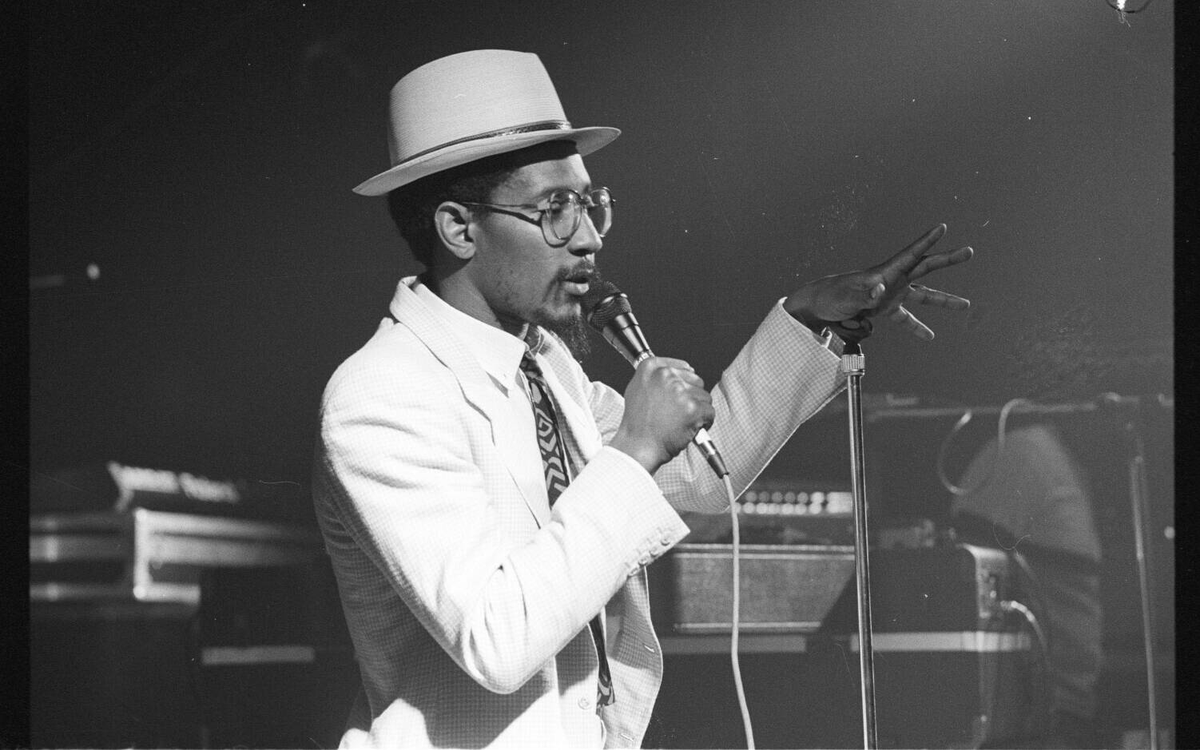
AllMusic’s John Dougan called it probably the least essential LKJ recording, while The New York Times found it “less gimmicky, more emotionally satisfying” than Bovell’s own I Wah Dub.
Matador ranks it among the most influential UK dub albums. Its standing was confirmed when it was paired with Bass Culture for a two-LP Record Store Day set, remastered at Abbey Road.
10. The Upsetters, “Return of the Super Ape” (1978)
There is a feeling of something ending all over this record, and with good reason. Issued in Jamaica on Lion of Judah, it was the last Upsetters album released before Perry closed down the Black Ark.
By 1978, stress and outside influences were taking a heavy toll on Scratch and his studio, which eventually burned down.
Knowing that history, it is hard not to hear the album as a final transmission from one of the strangest rooms in music.
The sound is still thick with that Black Ark haze, restless and unpredictable, the work of a man pushing his equipment and himself to the limit. Diggers often name it in the same breath as the original Super Ape, as a sequel worthy of the title.
11. Prince Jammy, “Kamikaze Dub” (1979)
As the seventies closed, another Tubby graduate was stepping forward. Kamikaze Dub, released on Trojan, gathers many of Kingston’s top session players on rhythms cut at Channel One. Prince Jammy then mixed them at King Tubby’s studio.
The result sits right on the hinge between eras. It has the rugged roots weight of the late seventies, but you can already hear the harder, punchier drum sound that the dancehall would soon demand.
Jammy would go on to lead the digital revolution of the following decade and reshape Jamaican music again.
For a dancehall audience this album is a crucial bridge, showing where the King Jammy story starts and how much it owes to the Waterhouse school of mixing.
12. Rhythm & Sound, “w/ the Artists” (2003)
Dub was always a global export, but few outsiders honoured the source like Berlin’s Mark Ernestus and Moritz von Oswald.
On w/ the Artists, released on their Burial Mix label, they gathered the vocal sides of eight ten-inch singles issued between 2001 and 2003.
Most feature veteran roots and lovers rock singers, among them Cornel Campbell on “King in My Empire” and Love Joy on “Best Friend.”
Dusted’s 2003 review put the method neatly: dub made with the fewest possible elements, rhythm and sound.
The basslines are subterranean, the space is enormous, and the singers sound timeless against it. The instrumental B-sides appeared separately on The Versions, but this is the set that ties Berlin back to Kingston.
Why Dub Still Echoes
Run these twelve albums back to back and you hear a whole philosophy of sound. Tubby, Perry, Hudson and Yabby You proved that taking music away could be as powerful as adding it. Scientist and Jammy carried those lessons into the Roots Radics era and toward the dancehall.
Bovell and LKJ showed that the method could travel to London and speak to a new struggle, and Rhythm & Sound showed it could survive in a Berlin techno studio without losing its soul.
Every remix, every bass drop and every version side owes something to these records. The best dub albums are not museum pieces.
They are working tools, still played loud, still reissued, and still teaching each new generation that the mixing desk can be an instrument.