

If you have ever wondered about the “you don’t love me (no no no) meaning,” you are tracing a thread that runs from American blues in the 1950s, through the rocksteady dancehalls of Kingston in the 1960s, and into a global chart sensation of the 1990s.
Dawn Penn’s 1994 recording is one of the most durable songs in the reggae and dancehall canon, a lament of abandonment that resonates as powerfully today as it did when it first lodged itself in the ears of the world.
This guide explains the song’s lyrical message, its tangled musical genealogy, the comeback story behind its release, and the reason artists from Rihanna to Beyonce keep returning to it.
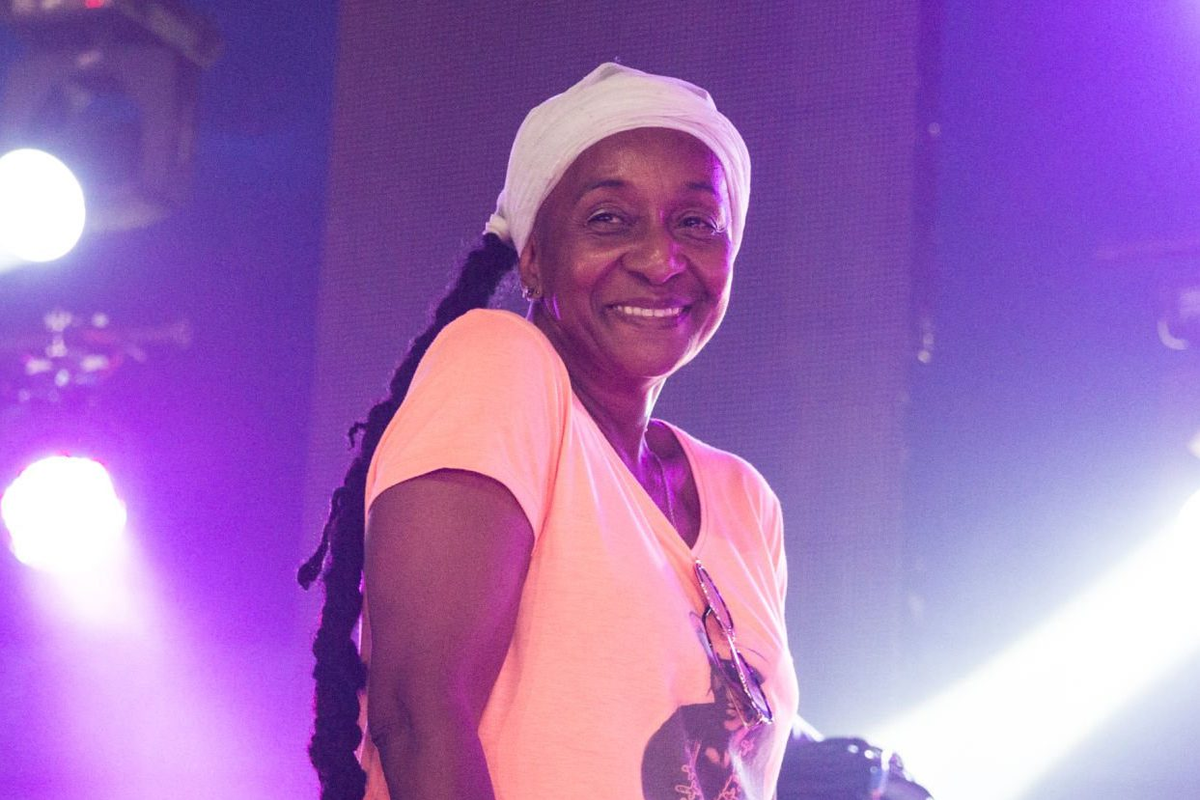
Who Is Dawn Penn?
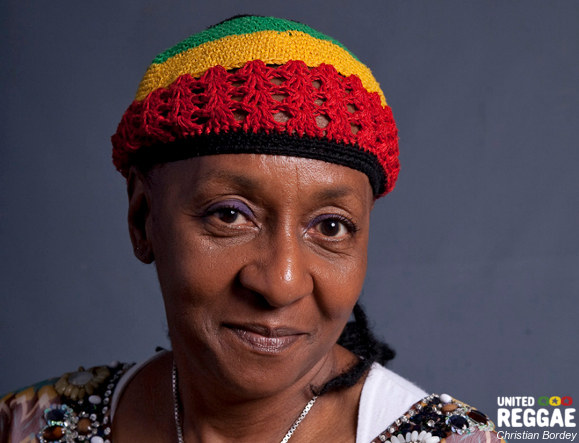
Dawn Penn was born on 11 January 1952 in Kingston, Jamaica, and works across the genres of reggae, rocksteady, and dancehall.
She grew up in a musical family, studying piano and classical violin and performing with her sisters Pat and Audrey in churches. Her first recording, “When I’m Gonna Be Free,” dates to 1966.
In 1967, she recorded the rocksteady single “You Don’t Love Me,” produced by Coxsone Dodd at Studio One. That early success, however, did not translate into a sustained career.
Just three years later, after stints recording for Leslie Kong, Duke Reid, and Bunny Lee, she left the business and Jamaica for Tortola in the British Virgin Islands and stayed there for almost two decades. During that time she left the music business and worked for accounting firms, banks, and airlines.
The Song’s Meaning: A Portrait of Abandonment
The core message of “You Don’t Love Me (No No No)” is one of the simplest and most universal in popular music: a person confronting the reality that a romantic partner no longer cares for them. The narrator does not plead or rage.
Instead, she states the truth plainly and repeatedly, letting the refrain do the emotional work. The “no no no” acts as both confirmation and resignation, an acknowledgment that denial is no longer possible.
Penn’s lyrical innovation was the substitution of “no no no” for the more guttural “aw aw aw” of earlier versions, which she has said was inspired by church music’s “yes yes yes” refrains.
That gospel inversion gives the lyric a paradoxical quality: the most definitive word of refusal is delivered with the gentle, melodic cadence of devotional song. The narrator is not screaming in grief. She is testifying.
As J.D. Considine of The Baltimore Sun wrote, “few singers can put that point across as convincingly as Dawn Penn does,” noting the way her “languid, drawling delivery plays off the slow, hypnotic pulse” of the track. Larry Flick of Billboard magazine felt Penn’s “sultry vocal presence on this sailing, instantly memorable dancehall jam belies the pensive nature of the song’s story of lost love.”
The sparse production reinforces the lyric’s emotional directness. Rather than surrounding the voice with busyness, producers Steely and Clevie let the groove breathe, which places all the weight on Penn’s delivery and on the listener’s memory of having once felt exactly what the narrator is describing.
A Blues Genealogy: Bo Diddley, Willie Cobbs, and the Song’s Roots
Understanding the “you don’t love me (no no no) meaning” also requires understanding where the song’s raw material originated, because this is a melody that has travelled across several decades and continents.
The song originates with “You Don’t Love Me,” a rhythm and blues-influenced blues track recorded by American musician Willie Cobbs in 1960.
Adapted from Bo Diddley’s 1955 song “She’s Fine She’s Mine,” it is Cobbs’ best-known work and features a guitar figure and melody that has appealed to musicians in several genres.
Cobbs himself has claimed that he heard a field hand singing a haunting melody one morning and that this inspired him to write the song.
Although it became a regional hit when it was released in Memphis, Tennessee, copyright issues prevented its further promotion and national chart success.
Most modern listeners likely first encountered it on The Allman Brothers Band’s 1971 album At Fillmore East, which featured the band jamming on “You Don’t Love Me” for 19 minutes, filling an entire album side.
Dawn Penn recorded “You Don’t Love Me” in 1967 after being introduced to the song by producer Coxsone Dodd, who imported American rhythm and blues records to play for his sound system entertainment businesses.
Most of the Bo Diddley/Willie Cobbs melody and lyrics were used, but her version featured a rocksteady backing arrangement instead of the original guitar riff.
The song’s lyrics on Penn’s 1994 recording are credited to Penn, Bo Diddley, and Willie Cobbs, with production handled by Steely and Clevie. Penn herself noted in an interview with The Guardian, “the royalties were split three ways and some of my payments are still held up today.”
The Comeback: How a 1967 Song Became a 1994 Global Hit
The path from Penn’s original 1967 rocksteady recording to the 1994 dancehall version is one of the more remarkable second-act stories in Caribbean music.
In the late 1980s, Penn returned to Jamaica in the hopes of reviving her career. In the summer of 1992, she was invited to appear on stage at a Studio One anniversary show, where she performed “You Don’t Love Me” with Steely and Clevie as backing musicians.
The performance was a success, and she returned to the recording studio to re-record the song for the tribute album Steely and Clevie Play Studio One Vintage.
The version that reached the world featured an updated dancehall arrangement courtesy of the noted Jamaican production team.
Penn explained: “Steelie and Clevie were asked by Mr. Dodd to do an album project for Heartbeat, celebrating Studio One’s 35 years in the music industry.”
In 1993, Big Beat (Atlantic Records) signed Penn to an eight-year album deal, and by the following year she was back on the charts with her re-recorded dancehall version.
The single was released on 17 February 1994, recorded at The Mixing Lab in Kingston, Jamaica, and runs four minutes and 37 seconds.
Chart Performance and Commercial Impact
The commercial results of the 1994 release were substantial and worldwide.
In the United Kingdom, the song debuted at number nine on the UK Singles Chart during the week of 11 June 1994, later peaking at number three and remaining in that position for two consecutive weeks. It also reached number one on the UK Dance Singles chart by Music Week in the same period.
In the United States, the single charted at number 58 on the Billboard Hot 100 and at number 42 on the Hot R&B Singles chart. It hit number one in Penn’s native Jamaica.
The single also charted at number 13 in Austria, number eight in Belgium, number 41 in France, number 41 in Germany, and number 17 in Switzerland.
According to Penn’s official website, the single charted in 68 countries, was featured in advertisements for Nissan and Churchill, and the album was nominated for a Grammy Award.
The song was also nominated in the category for 12-Inch Single at the NAIRD 1994 and for Tune of the Year at the 1994 International Dance Awards in London.
The Album: No, No, No (1994)
Penn’s debut studio album, also titled No, No, No, was released in 1994 on Big Beat/Atlantic Records, with a runtime of 57 minutes and 44 seconds, produced by Sly Dunbar, Clive Hunt, Steely and Clevie, Geoffrey Chung, and Dylan Powe.
The album’s release marked a decisive moment: after nearly three decades of recording, Penn finally had a full-length studio project behind her name.
On the charts, the album peaked at number 25 in Austria, number 53 in Germany, number 51 on the UK Albums Chart, and number five on the US Top Reggae Albums chart.
Why the Song Keeps Getting Covered
The endurance of “you don’t love me (no no no)” as a song and as a cultural reference point has proven itself across multiple generations of popular music.
Artists who have covered or drawn on the song include Beyonce, Rihanna, Sean Paul, Wu-Tang Clan, Eve, Jae Millz, Mims, and Lily Allen, among many others.
Penn’s rendition inspired versions by Rihanna, who recorded it in 2005 with Vybz Kartel for her debut album Music of the Sun, and Beyonce, who performed her take on the I Am… World Tour live CD and DVD release.
Beyonce performed the song as part of a medley with her own “Baby Boy” on her I Am… World Tour concert tour, and after being lowered to the B-stage, she finished “Baby Boy” and continued with Penn’s song. It was later included on the CD/DVD release of the tour.
During her Homecoming concert film shot at Coachella, Beyonce again moved from “Baby Boy” into a faithful cover of the song.
R&B veteran Mary J. Blige sampled the intro for her single “Amazing” in 2021.
In 2023, Penn featured on the track “Crocadillaz” alongside De La Soul on Gorillaz’s album Cracker Island.
The song’s longevity comes from the way Penn’s interpretation fuses several musical worlds. As one music writer observed, “You Don’t Love Me No No No” distills earlier structures into a mysterious but effective form, both innovative and soaked in tradition.
The blues DNA supplies the raw emotional content, the rocksteady heritage gives the groove its swagger, and the dancehall production update made it accessible to the 1990s generation without stripping away any of its essential character.
Dawn Penn’s Lasting Legacy
The Jamaica Reggae Industry Association honoured Penn as an icon at its 2023 ceremony at the Jamaica Conference Centre in Kingston.
In 2001, she received the Martin Luther King Award from Caribbean Images in recognition of her contribution to Jamaican music.
As one of the first Jamaican women to reach international acclaim in reggae, Dawn Penn paved the way for later female icons like Marcia Griffiths, Judy Mowatt, Sister Nancy, and Lady Saw.
Still active in music, Penn continues to perform around the world and is celebrated as a legend of Jamaican music.
The “you don’t love me (no no no) meaning” ultimately extends beyond any single era or genre. It is a song about clarity: the moment when a person stops hoping and simply names what is true.
That the melody carrying that statement has passed from a blues field in Arkansas to a Chicago recording session to a Kingston studio to the stage at Coachella says something significant about how grief, when it finds the right vehicle, becomes universal.