
If you have ever found yourself humming an irresistible chain of “na na nas” and wondering what the here comes the hotstepper meaning actually is, you are far from alone.
The 1994 dancehall and hip-hop hybrid from Jamaican artist Ini Kamoze topped charts in multiple countries, yet its core message, cultural roots, and construction remain widely misunderstood.
In short, the song is a swagger-soaked self-proclamation from a “hotstepper,” a Jamaican patois word for a fugitive or man on the run from the law, reframed here as a boastful, almost comedic declaration of lyrical dominance. The full story, however, runs much deeper than that single definition.
Who Is Ini Kamoze?
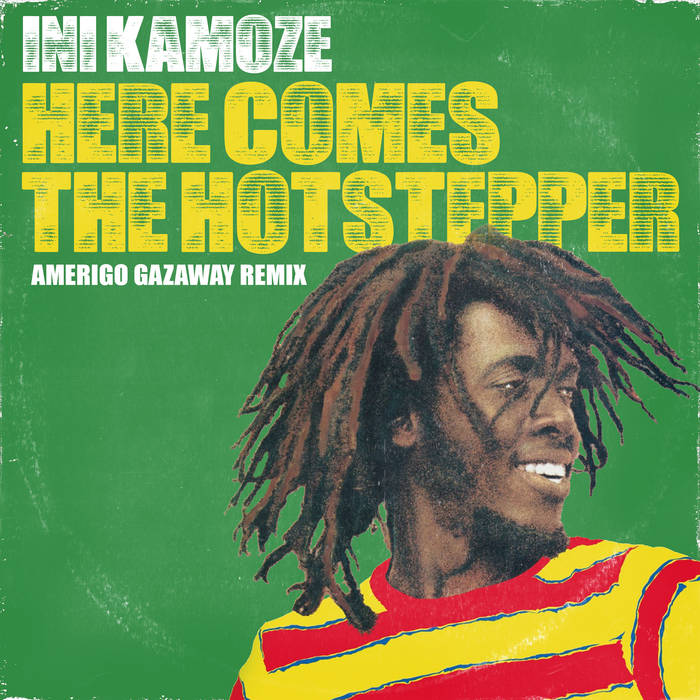
Ini Kamoze, born Cecil Campbell on 9 October 1957, is a Jamaican reggae singer who began his career in the early 1980s and rose to prominence in 1994 with the signature song “Here Comes the Hotstepper.”
He made his first recordings in the early 1980s, cutting his first single, “World Affairs,” in 1981, and gained a following in his native country, earning the nickname “Voice of Jamaica.” He was picked up by Sly and Robbie, the influential musical duo who led the Taxi label. His self-titled debut album was released in 1984 as a six-track mini-LP on Island Records.
Born in a seaside shack in Jamaica, Kamoze was the son of an authoritarian police superintendent nicknamed “The Scorpion” and a factory worker mother.
As a young boy, Kamoze went to live with his grandfather, where he showed great promise, but he eventually dropped out of high school and hitchhiked to Kingston, where he hustled in the Bond Street area and took to the Rastafarian way of life.
By 1988, however, Kamoze had effectively disappeared from the music scene following lukewarm reactions to his intermittent releases.
He had already cranked out dozens of singles, but there is a three-year gap in his discography where he released nothing, and even on his own website’s bio, Kamoze would not say what was happening during that time or comment on the rumors that he was locked up for a stretch.
The Origin of “Here Comes the Hotstepper”
“Hot Stepper” being patois slang for “fugitive,” Kamoze had recorded a dancehall track called “Hot Stepper” with Jamaican producer Philip “Fatis” Burrell in 1990.
That original was a pure dancehall record. What eventually became the global hit was a different and far more ambitious creature.
The song “Here Comes the Hotstepper” was originally recorded in early 1992 and was passed over by several labels.
The song was originally recorded with Philip “Fatis” Burrell and later remixed by Salaam Remi, and initially featured on a reggae music compilation titled Stir It Up, released by Epic.
Kamoze recorded “Here Comes the Hotstepper” in New York with Salaam Remi, a Queens-based producer who went on to work with the likes of Fergie, Amy Winehouse, Alicia Keys and Nas.
The resulting track was a hip-hop and dancehall hybrid, a formula that had just worked on another improbable crossover, Snow’s “Informer.”
It took the track years to break through, finally finding success after director Robert Altman wanted it for his fashion satire film Ready to Wear.
It was released in 1994 by Columbia Records as the lead single from his 1995 album of the same name, as well as the soundtrack to the film Pret-a-Porter.
What Does “Hotstepper” Mean?
The title and the central persona of the song hinge on a single piece of Jamaican patois. “The Hotstepper” is Kamoze’s nickname; it is a Jamaican term for a man on the run from the law.
Ini Kamoze’s lyrics boast of a character that is both dangerous and charming, a “hotstepper” which in Jamaican culture is a term synonymous with someone on the run from the law, yet holds a sense of flamboyance that turns the conceit into a boast.
With Kamoze, it goes beyond mere definition. The character he portrays is an anti-hero of the dancehall, flipping the script to create a persona that is untouchable, evasive, and yet righteously cool.
Crucially, Kamoze is not boasting about literal criminal activity. Kamoze is a lyrical gangster committing metaphorical murder, unlike the American gangsta rappers whose bars were more literal and menacing. In this context, the song comes off as fun and uplifting, and it is hard to be scared of a man who rhymes “extraordinary” with “strawberry.”
Breaking Down the Key Lyrical Phrases
One of the most iconic sections of the track is the call-and-response chorus: “Here come de hotstepper, murderer; I’m de lyrical gangsta, murderer,” which has lit up clubs worldwide, with the word “murderer” often misheard as “word it up.”
The voices in the background chanting “murderer” after Kamoze declares himself the lyrical gangster function as the song’s defining counterpoint.
Within the Jamaican dancehall tradition, the word “murderer” is used as hyperbolic praise, equivalent to saying a performance or lyric is so devastating it “kills” the competition. It is a term of supremacy, not a confession.
The “hotstepper” referred to in the song is the singer himself, boasting about being a skilled and charismatic figure who commands the respect of those around him.
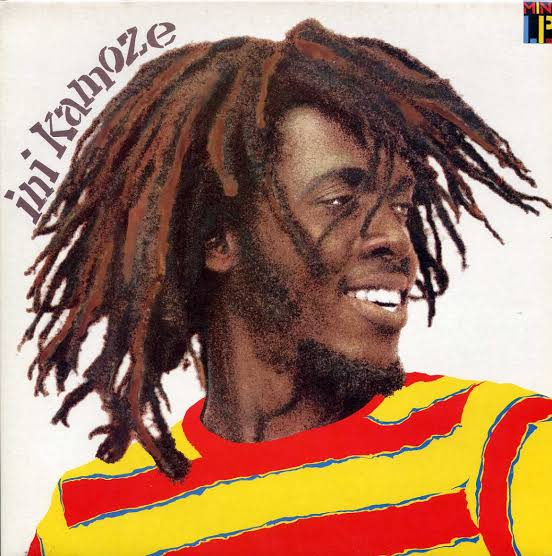
He introduces himself as the “lyrical gangster” and boasts about his ability to “pick up the crew in-a de area,” while suggesting he has a certain authority when he tells the listener to “act like you know, Rico.”
Though “hotstepper” is a Jamaican slang reference to someone on the run from the law, that is about all the Jamaican the listener gets.
Kamoze consciously simplified every lyric for the mainstream American audience, and his allusions are all American pop culture, for example “Bo Knows” and “homie don’t play that.”
This deliberate code-switching between Jamaican patois identity and American pop vernacular is part of what makes the song such an effective crossover artifact.
For the uninitiated, Kamoze’s thick patois may seem impenetrable, but each verse is a doorway into understanding the lexicon of Jamaica’s streets.
The song is an upbeat and lively track with a mix of reggae and hip-hop elements, with lyrics heavily influenced by Jamaican music culture and language, as well as African American slang.
This paradoxical meld of outlaw status with coveted cool became a staple for those claiming authority in style and sound within their communities.
The Song’s Construction: A Web of Samples
One of the most remarkable aspects of “Here Comes the Hotstepper” is that it is essentially an expertly engineered collage. The track is a Long Island iced tea of literally dozens of samples.
The samples include vocals from the 1968 “The Champ” by The Mohawks (used for the “Hey” on the intro and throughout), the 1972 “Hot Pants” by Bobby Byrd (used for the “I’m Comin'” on the intro and throughout), the 1985 “La Di Da Di” by Doug E. Fresh and Slick Rick (used for the “Hit it” on the intro), and the 1964 “Land of 1000 Dances” by Cannibal and the Headhunters (used for the “na na na na” chant).
Instrumentally, the song draws on the drums and bass from the 1981 “Heartbeat” by Taana Gardner, guitar notes from the 1974 “Hung Up on My Baby” by Isaac Hayes, and the verse vocal melody incorporates elements from The Beatles’ “Come Together.”
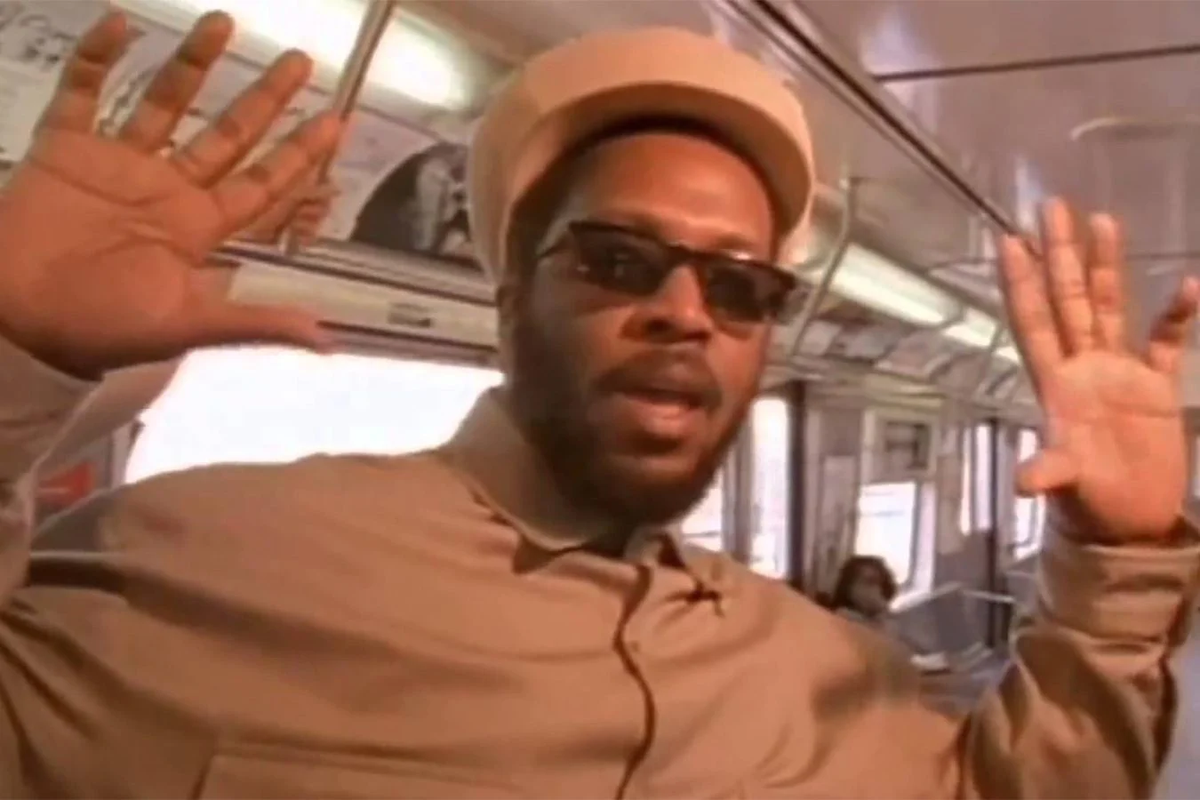
The “na na na” chorus that defines the song’s global identity has its own layered history. The “na na na” embellishment originated with Francisco Garcia, lead singer of East LA garage rock band Cannibal and the Headhunters, who covered “Land of 1000 Dances” in 1965 and took their version of the song to No. 30.
Chris Kenner received a writing credit on “Hotstepper” even though he died 18 years before Kamoze recorded the song and even though the “na na na” thing was not his.
The song was not an entirely new composition, having roots in “Land of 1000 Dances,” which was a No. 1 R&B hit for Wilson Pickett in 1966 and was first recorded by Chris Kenner in 1962 and reprised in 1963 by Fats Domino.
The track was built from a patchwork of samples, with the key drum and bass sample coming from Taana Gardner’s “Heartbeat.” Salaam Remi’s father had worked with Gardner as an arranger.
Chart Performance and Certifications
The song’s commercial trajectory is remarkable by any measure. Here Comes the Hotstepper charted on multiple Billboard charts in 1994, peaking at number one on the Hot 100 chart on December 17, where it remained for three weeks.
At the very end of 1994, “Here Comes the Hotstepper” took the crown for a couple of weeks, disrupting the reign of the Boyz II Men smash “On Bended Knee.”
It also became a number-one hit in Denmark, New Zealand, and Zimbabwe and a top-10 hit in 13 other countries.
The track charted at No. 1 in Canada, Denmark, New Zealand, the UK and the US, and also charted in Spain, Germany, Switzerland, France, Australia and many more countries.
On the certifications front, the song’s commercial life has only grown with time. Ini Kamoze’s iconic “Here Comes the Hotstepper” celebrated its 30th anniversary in 2024 with a double platinum certification in the United States.
The Recording Industry Association of America (RIAA) announced the certification on August 9, 2024, marking the sales and streaming equivalent of two million units sold in the country.
The song had previously racked up gold certifications in France and Germany and platinum in New Zealand, the United Kingdom, and Australia.
In 2005, former American music trade magazine Blender ranked “Here Comes the Hotstepper” No. 492 in their list of The 500 Greatest Songs Since You Were Born. In 2019, Billboard ranked it No. 126 in their list of Billboard’s Top Songs of the 90s.
The Prêt-à-Porter Connection and Cultural Legacy
The success of “Here Comes the Hotstepper” led to its inclusion in the soundtrack of the 1994 fashion-themed film Pret-a-Porter (also known as Ready to Wear), directed by Robert Altman.
Among the major Hollywood stars who appeared in the film are Sophia Loren, Kim Basinger, Forest Whitaker, Lauren Bacall, and Julia Roberts.
The placement gave the song a cultural halo effect, linking a raw dancehall anthem from Kingston’s streets to the glossy world of haute couture.

The track’s 2024 resurgence began when it topped the US iTunes Reggae Songs chart for over two weeks after being featured in a Starbucks commercial. Three decades after its release, the song was still finding new audiences.
In terms of genre history, the impact of the song cannot be overstated. The song’s enduring popularity stems from its pioneering role as the first dancehall track to reach number one on the Billboard Hot 100 in 1994, blending reggae rhythms with hip-hop elements that appealed to broad audiences and influenced subsequent genre fusions.
Ini Kamoze played an integral role in shaping the reggae and dancehall genres and paved the way for future artists like Sean Paul, Shaggy, and Beenie Man.
Why the Song Still Resonates
The here comes the hotstepper meaning has proven durable because it operates on multiple levels simultaneously.
On the surface it is a party anthem built from an irresistible loop of borrowed hooks. Underneath, it is a boastful declaration of lyrical mastery dressed in the language of Jamaican outlaw culture.
When Ini Kamoze stepped onto the global music stage with the track, he carried with him the heat of dancehall vibes straight from the heart of Jamaica.
The song, which exploded on the charts in the mid-90s, is more than just a catchy tune; it is an expression of self-assuredness wrapped in the patois-powered allure of the Caribbean isle.
Known as “The Hotstepper,” Kamoze advocates change through what he calls “intelligent and constructive militancy” rather than random acts of violence.
That philosophy is audible in every bar of the song. The murderer is a lyrical one. The danger is metaphorical. The flamboyance is the point.
This party starter remains the only mainstream hit for the Jamaican reggae singer Ini Kamoze, yet that one track was enough to cement his place in both dancehall history and the broader pop culture conversation.
Thirty-plus years later, it still moves dancefloors, turns up in commercials, and sends listeners straight to the dictionary looking for a word that lives at the intersection of patois, bravado, and irresistible groove.