

Understanding the chase the devil meaning in Max Romeo’s 1976 roots reggae classic requires peeling back layers of biblical imagery, Rastafarian philosophy, and the desperate political climate of mid-1970s Jamaica. At its core, the song is not a supernatural war story.
It is a declaration that negativity, oppression, and moral corruption can be expelled by sheer strength of spirit.
This guide breaks down the lyrics, the recording history, and the song’s remarkable afterlife across five decades of popular music.
Who Was Max Romeo?
Maxwell Smith, born on November 22, 1944, in Saint Ann Parish, Jamaica, and known professionally as Max Romeo, was a Jamaican reggae and roots reggae recording musician who achieved chart success in his home country and in the United Kingdom.
His breakthrough came in 1968 with the provocative single “Wet Dream,” produced by Bunny “Striker” Lee.
Though banned by the BBC for its explicit lyrics, the song became a hit and marked Romeo’s emergence as a solo artist. It would be a sharp pivot in artistic identity that made his later works all the more striking.
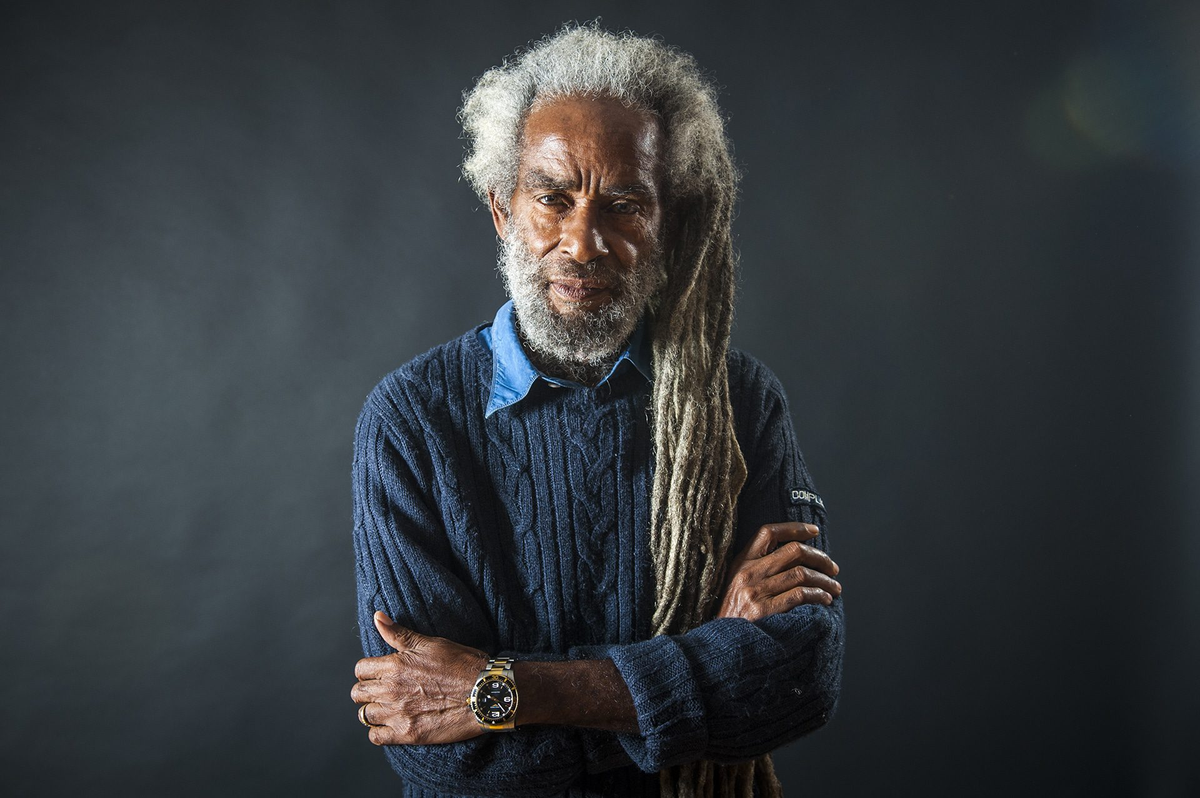
By the 1970s, Romeo had shifted toward politically and spiritually conscious roots reggae material, aligning with the growing Rastafari movement, and he began a landmark collaboration with producer Lee “Scratch” Perry.
Romeo died of heart complications at a hospital in Saint Andrew Parish, Jamaica, on 11 April 2025, at the age of 80.
The Song: Basic Facts
“Chase the Devil” is a reggae song, recorded in 1976 by Max Romeo, with the backing of Lee “Scratch” Perry’s house band, The Upsetters.
Composed by Perry and Romeo, “Chase the Devil” was released on the album War Ina Babylon in 1976. The single was released on the Island label and runs 3:25.
In 1976, Romeo released War Ina Babylon, an album perceived as his best work. The politically and religiously themed album included the popular single “Chase the Devil,” which would become one of his most known songs.
The Historical Context: Jamaica in 1976
To fully grasp the chase the devil meaning, the listener must situate themselves in the Jamaica of 1976. Jamaica in the mid-1970s was a country in turmoil, besieged by a collapsing economy, poverty, inflation, and clashing political gangs that turned sections of Kingston into a war zone. 1976 began especially tragically, with more than 160 politically motivated killings tallied by June, leading Prime Minister Michael Manley to declare a state of emergency.
Romeo entered Perry’s Black Ark studio to record what would become a defining album in both artists’ catalogs: 1976’s War Ina Babylon, featuring Perry’s Upsetters and part of the “holy trinity” of albums, along with Junior Murvin’s Police and Thieves and the Heptones’ Party Time, that Perry produced at Black Ark.
Opened in late 1974 in the Washington Gardens suburb of Kingston, Black Ark was part mad scientist music laboratory, part mystical Rasta communal grounds.
Within its famously graffiti-festooned walls, Scratch employed state-of-the-art studio gear, a cast of versatile session players called The Upsetters, and the practice of continually bouncing layers of recordings down to a single track in order to add successive recorded layers, yielding an indelibly swampy sonic milieu.
Romeo spent two weeks in the studio without going home. “Lee, he worked night and day. He rarely sleeps during a production,” Romeo told Rolling Stone. “It was a crazy scene, but good music always comes out of a crazy mind.”
The Lyrics Explained: Line by Line
Romeo’s soulful and radical opening asserted a confrontation with Lucifer, described as the “Son of the Morning.” This reference is both biblical and obviously metaphorical.
Max’s reference to Lucifer as the “Son of the Morning” is consistent with the description conferred on Christianity’s Devil in Isaiah 41:12.
Far from being a simple horror-movie invocation of evil, this opening salvo established the song firmly within scripture. Romeo was signaling to his Rastafarian audience that what followed was grounded in a specific, studied theology.
This is the song’s most memorable and symbolically loaded image. The recurring phrase “I’m gonna put on an iron shirt and chase the devil out of Earth” serves as a powerful metaphor.
The “iron shirt” symbolizes spiritual protection and strength, suggesting that the singer is arming themselves with faith and righteousness to confront and overcome the malevolent forces represented by Satan.
This image of the iron shirt implies that the singer is ready to defend their faith and values against all odds.
Romeo himself was explicit about what the image represented. He explained to the BBC in 2011 that “chasing the devil means chasing the negativity out of humanity, and letting it be controlled by positive, which you would call God, then.”
This is not a lyric about spiritual combat with a mythological creature. The devil is internalized; the iron shirt is psychological fortitude.
This verse amplifies the song’s defiance with a streak of cosmic ambition that is characteristic of the Lee “Scratch” Perry production aesthetic.
The imagery of banishing evil not just from one’s community but from the planet itself reflects the Rastafarian concept of repatriation and spiritual cleansing on a universal scale.
The devil, expelled from Earth, must seek a new host somewhere in the cosmos. It is a refusal to negotiate with darkness.
At its core, the song addresses the theme of spiritual resistance and the triumph of righteousness over evil. The central narrative revolves around the singer’s determination to confront and defeat Satan, who is portrayed as an embodiment of evil.
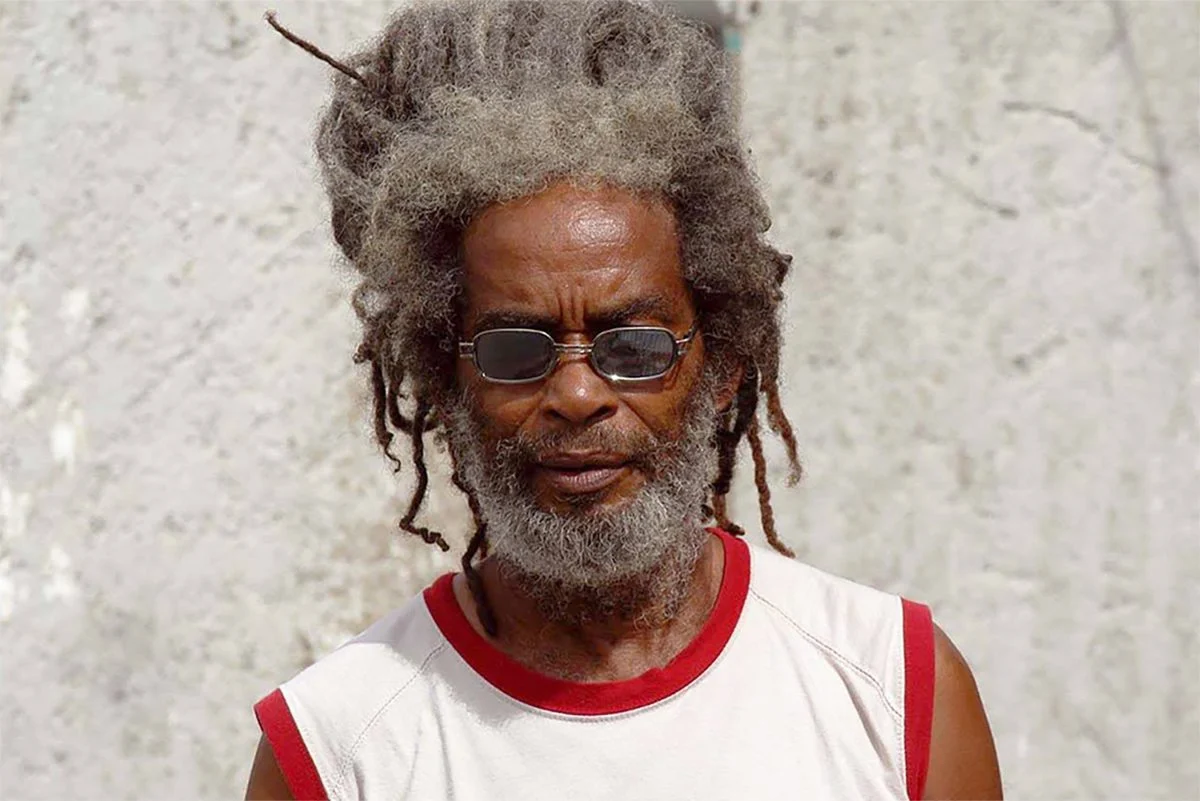
In a BBC interview recorded in 2010, Romeo describes the meaning of the song, explaining that the devil is everything negative in our minds, and the iron shirt is our strength of spirit that allows us to cast out the devil.
The verse “Satan is an evilous man, but him can’t chucks it on I-man” uses Rastafarian patois to assert an unshakeable personal identity. “I-man” is a Rasta construction emphasizing the spiritual self, the inner being that cannot be conquered by external wickedness.
Romeo describes Satan as a wicked figure who cannot overpower him. The use of “I-man” shows confidence and self-identity.
The Song Romeo Almost Cut from the Album
The story behind “Chase the Devil” is one of the more remarkable anecdotes in reggae history. Romeo credits Perry with saving what became the album’s standout single. “
Actually, when the album was completed, it was the only track that I didn’t like. I went to [Perry] the next day after listening to ‘Chase the Devil’ and I told him, ‘The whole album is brilliant, beautiful, but one track is stupid to me.’ He looked at me and said, ‘Chase the Devil?'”
Perry told Romeo to go home and get some rest, “because I was trying to cut the best track on the bloody album.” Romeo deferred: “I said, ‘Okay, if you feel that way about it.’ And it turned out to be true, it was the most successful track on the album.”
The producer’s instinct proved decisive. A track the singer found too strange or too direct became the defining statement of the entire record.
Versions, Remixes, and the Dub Life of the Song
Also in 1976, The Upsetters recorded a version with different lyrics. The track, called “Croaking Lizard,” and credited to The Upsetters and Prince Jazzbo, was included in their album Super Ape. Later, Perry made a dub remix of both versions, called “Disco Devil.”
This pattern, where a single riddim spawned multiple vocal interpretations and at least one dub descendant, was standard practice at Black Ark and a hallmark of reggae’s communal approach to composition.
The Song’s Cultural Legacy: Five Decades of Samples and Covers
The reach of “Chase the Devil” extends well beyond the reggae world, making it one of the most sampled tracks in the genre’s history.
The Prodigy sampled the song for “Out of Space” in 1992. That track became a 1992 UK Top 10 hit for the British dance act.
Kanye West used samples from “I Chase the Devil” to produce Jay-Z’s hit song “Lucifer,” which appeared on Jay-Z’s 2003 release, The Black Album.
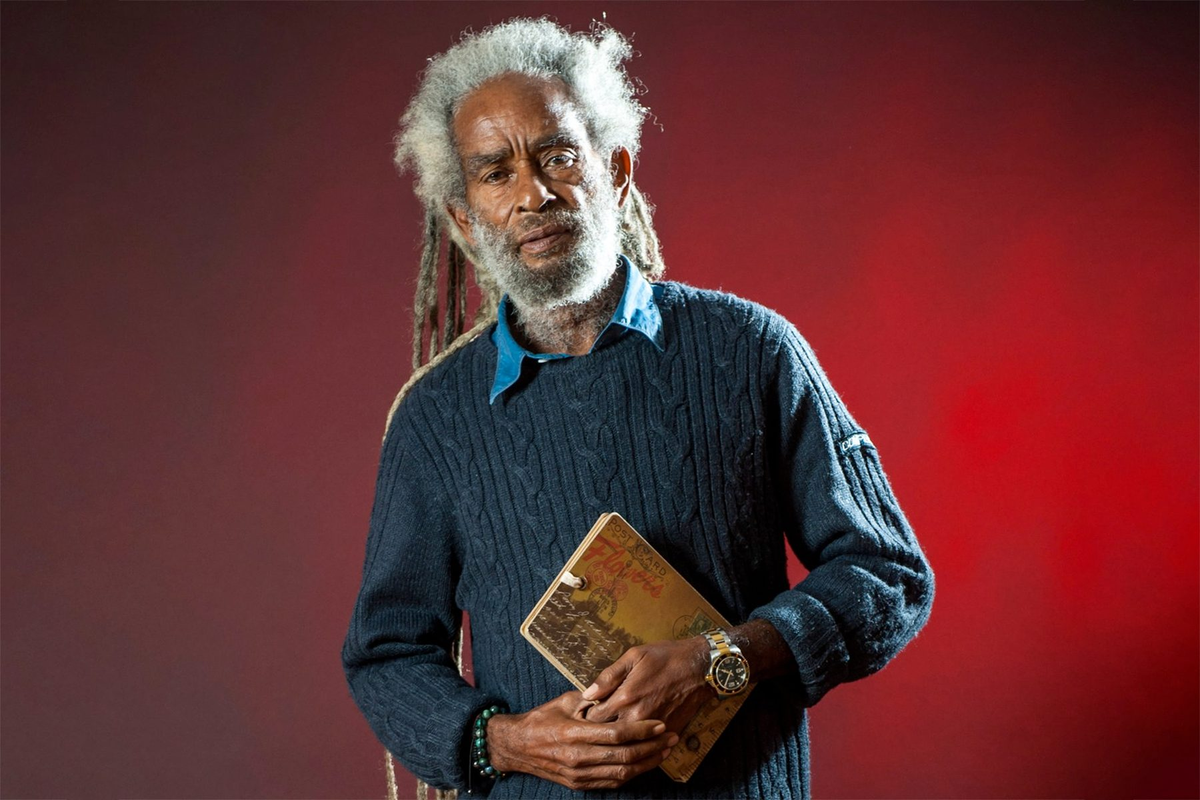
Jay-Z has spoken publicly about the song’s thematic connection to the source material. “A song like ‘Lucifer,’ it’s really about the struggle and really about dealing with death and having that feeling.
The evil is inside of you, not this mythical character with pitchforks and things like that. Dealing with a feeling of wanting revenge.”
The conceptual overlap between Jay-Z’s reading and Romeo’s original is striking: both artists locate the devil within human experience rather than in supernatural cosmology.
The song was featured on the reggae radio station K-Jah West in the popular video game Grand Theft Auto: San Andreas, released in October 2004.
Madness covered the song for their album The Dangermen Sessions Vol. 1, released in 2005.
The song was blasted into the spotlight again when it was featured in Netflix’s Luke Cage.
Why “Chase the Devil” Still Resonates
Whether a listener is religious or not, the basic message of “Chase the Devil” is to steel oneself against challenges and attack them head-on.
That universality is the secret to the song’s durability. It operates on at least two levels simultaneously: as a Rastafarian spiritual declaration rooted in scripture and Jamaican political urgency, and as a secular anthem about human resilience in the face of systemic evil, personal failure, or social injustice.
“Chase the Devil” is a spiritually charged reggae song that uses vivid imagery and symbolism to convey the singer’s unwavering faith in the face of evil.
The iron shirt represents strength and protection, and the repeated refrain highlights the singer’s determination to chase evil away and create a world where goodness prevails.
The song’s message is one of hope, resilience, and the belief that evil can ultimately be defeated through faith and righteousness.
Recorded in a two-room studio in the middle of one of Kingston’s bloodiest political years, co-written by one of reggae’s most creative producer-artist partnerships, and nearly discarded by its own singer, “Chase the Devil” survived to become the kind of song that belongs to everyone who has ever needed to put on their own iron shirt.
A Note on Max Romeo’s Legacy
Max Romeo, the beloved reggae singer best known for recording such widely sampled songs as “War Ina Babylon” and “Chase the Devil,” died in Saint Andrew Parish, Jamaica on Friday, April 11, at age 80.
More recently, in 2023, Romeo had filed a lawsuit against Universal Music Group and PolyGram Records, accusing them of withholding royalty payments dating back to the mid-1970s.
The suit was a reminder that even the most canonical recordings in reggae history have not always translated into financial security for the artists who created them.
His body of work, and “Chase the Devil” above all, stands as proof that conviction, the right producer, and an unwillingness to accept defeat can produce music capable of outlasting any political moment.