
Sister Nancy’s “Bam Bam” samples are everywhere, and there is a reason for that. Built around a sample of Ansell Collins’ “Stalag 17” riddim, “Bam Bam” is arguably the most sampled and recognizable dancehall song in music history.
Since the track first appeared in 1982, it has turned up on albums by Kanye West, Jay-Z, Lauryn Hill, Lizzo, and dozens of others, threading together multiple generations of hip-hop production.
According to WhoSampled, a user-generated website cataloguing samples, “Bam Bam” has appeared, in some form, in over 130 tracks as of 2022. This guide breaks down the original recording, its DNA, and every major song that sampled it.
Who Is Sister Nancy?
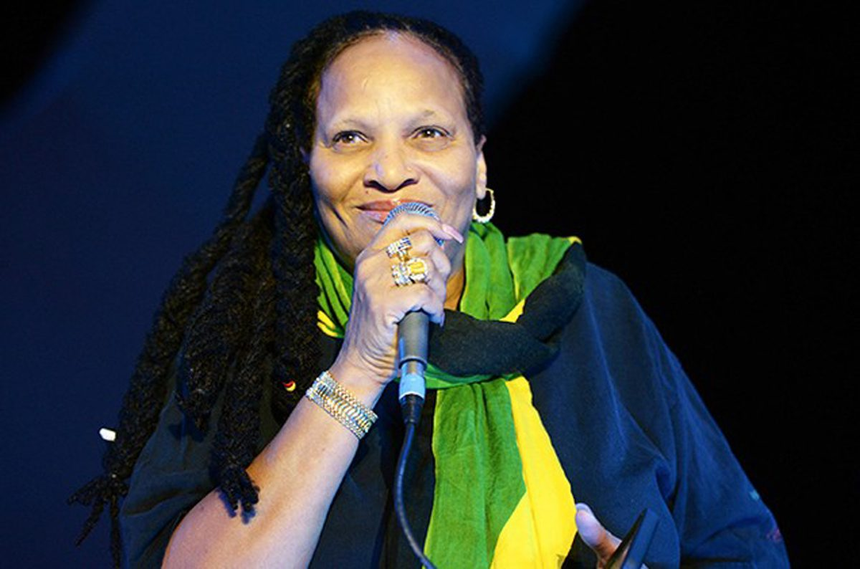
Ophlin Russell, born 2 January 1962, is better known as Sister Nancy, a Jamaican dancehall deejay and singer. She is known as the first female dancehall DJ and was described as being a “dominating female voice for over two decades” on the dancehall scene.
Born in Kingston, Jamaica into a large family, she began her time as a dancehall DJ and singer in the late 1970s and early 1980s, alongside her brother Brigadier Jerry and sound systems including Chalice, Blackstar, Stereophonic, and Jahlovemuzik.
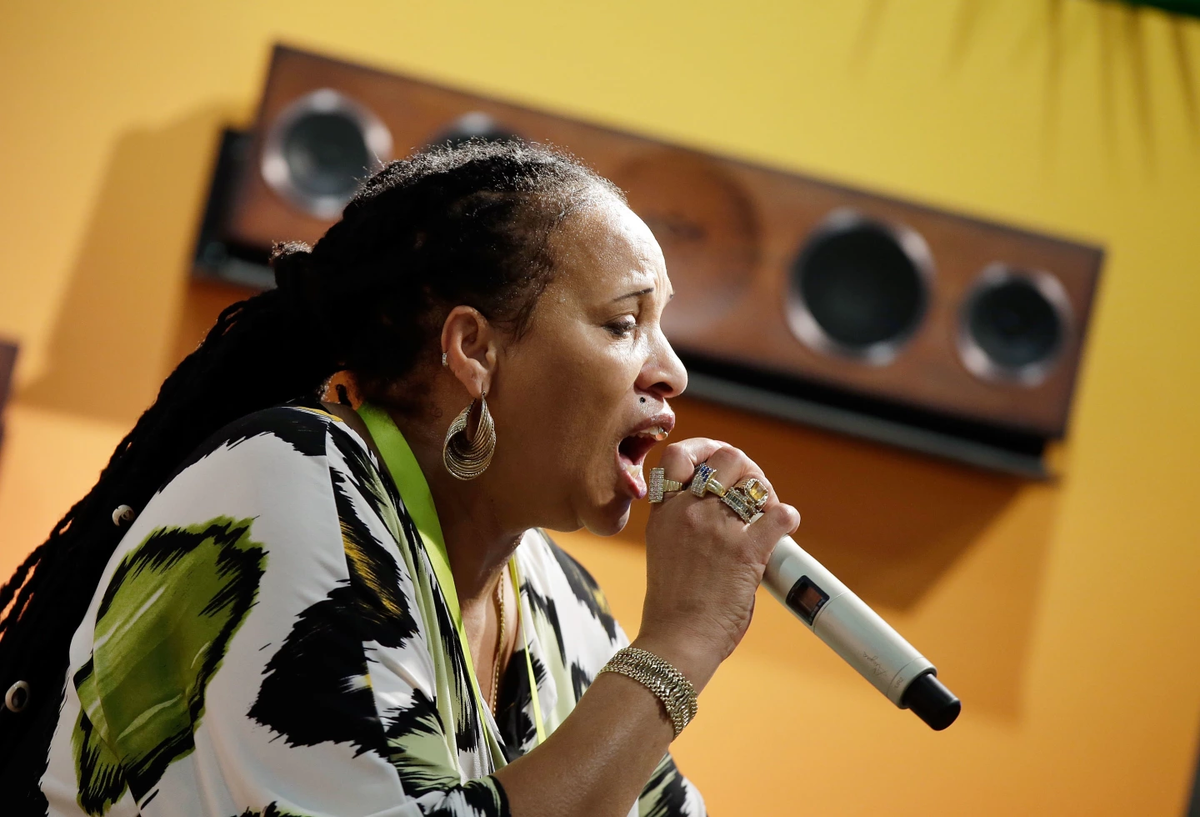
After learning of her talents from artist General Echo, Winston Riley of Kingston’s storied Techniques Records label brought her into the studio to record her first single, “Papa Dean,” in 1979.
Russell went on to perform at Reggae Sunsplash, making her the first female deejay ever to perform there, and she is also the first female Jamaican deejay to tour internationally.
The DNA of ‘Bam Bam’: A Song Built on Samples
Before examining how “Bam Bam” has been sampled, it is essential to understand that the record is itself a product of the Jamaican sampling tradition.
“Bam Bam” is a 1982 song recorded at Channel One Studios, released on Techniques Records. Its chorus was inspired by the 1966 song of the same name by Toots and the Maytals and Byron Lee and the Dragonaires.
The Stalag riddim was first introduced in a reggae song called “Stalag 17,” written and performed by Ansell Collins and released by Winston Riley’s Techniques record label in 1973.
In effect, “Bam Bam” is itself a product of careful sound-splicing, interpolating a hook from the 1966 Maytals song of the same name and repurposing a well-known regional riddim by Ansel Collins.
Co-opting a lyrical refrain from Toots and the Maytals’ identically named 1966 hit, Sister Nancy created an anthem of female empowerment, repurposing the skepticism she encountered as the lone woman on the sound system circuit into a supremely confident mission statement.
Sister Nancy’s breakthrough hit initially appeared on her 1982 debut album, One, Two, garnering far more notoriety internationally than in Jamaica. Though not a chart hit upon its release, the song has grown into an indisputable classic around the world.
It reached international prominence after being featured in Hype Williams’ 1998 film Belly, starring DMX and Nas. “Bam Bam” ranks at number 454 on Rolling Stone’s 2021 edition of the “500 Greatest Songs of All Time.” Pitchfork has also ranked it the best dancehall song of all time, according to the Kennedy Center’s biography of the artist.
The Major Songs That Sampled ‘Bam Bam’
Sister Nancy’s “Bam Bam” is one of the most sampled reggae songs of all time, starting in 1992 with Pete Rock and C.L. Smooth’s “The Basement.”
In the early 1990s, it was sampled by golden-era rap acts including Pete Rock and CL Smooth. The track is widely credited as the moment that introduced “Bam Bam” to the hip-hop community in New York, planting a flag that dozens of producers would follow in the years ahead.
Too $hort sampled “Bam Bam” on his 1993 song “Blowjob Betty (Get In Where You Fit In).” The placement demonstrated how quickly the record was travelling beyond reggae circles and into the full breadth of early-90s West Coast rap.
One of the most celebrated Sister Nancy “Bam Bam” samples of all time arrives on Lauryn Hill’s debut solo album.
The track “Lost Ones” was written and produced by Hill, alongside Vada Nobles and Che Pope, and features an interpolation of the reggae classic “Bam Bam” by Sister Nancy.
While Hill does not explicitly name individuals in the song, it is widely believed to address her former Fugees bandmate Wyclef Jean.
Although not released as an official single, “Lost Ones” received significant radio play in the United States, peaking at number 27 on the Billboard R&B/Hip-Hop Airplay chart.
Of all the hip-hop deployments of “Bam Bam,” Hill’s interpolation remains among the most spiritually aligned with the source: a woman using music as a declaration of self-determination.
Groove Armada sampled “Bam Bam” on their 2001 song “Fogma.” The placement on a British electronic act’s record illustrated that the song’s reach had extended well beyond New York hip-hop into global dance music.
If any single moment brought Sister Nancy “Bam Bam” samples to a mass mainstream audience in the 21st century, it was Kanye West’s “Famous.” “Famous” is easily the most talked-about track on Kanye West’s The Life of Pablo.
The track, which features guest vocals from Swizz Beatz and Rihanna and production from a committee that includes Havoc of Mobb Deep, prominently features a sample from Sister Nancy’s “Bam Bam.”
Time noted that West “weaves The Life of Pablo’s hardest-knocking beat, chords cribbed from Nina Simone, and Sister Nancy’s reggae classic ‘Bam Bam’ into a vibrant tapestry.”
In 2016, Nancy received what the Kennedy Center described as “the ultimate co-sign” when Kanye West used “Bam Bam” prominently on “Famous,” arguably the most controversial song and video of his always-provocative career.
The track reignited a global conversation about sample clearance and artist compensation that would follow Sister Nancy for years.
Beyonce used a sample interpolated with her live performance of “Hold Up” in 2016 on the album Lemonade. Coming within months of the Kanye West placement, the Beyonce interpolation cemented “Bam Bam” as the defining sample touchstone of that year in pop music.
The classic reggae anthem “Bam Bam” has been sampled in over 100 songs, including in Lizzo’s “Truth Hurts,” which Lizzo claims was just a placeholder that made the cut.
Lizzo sampled the song in 2017 on “Truth Hurts.” The track went on to become one of the biggest pop hits of the decade, bringing the “Bam Bam” sample to yet another generation of listeners.
The Jay-Z song prominently features Damian Marley and samples verses from works by Sister Nancy, Jacob Miller, and Inner Circle.
It appears on the Jay-Z album 4:44, released in 2017. Producer No I.D., who produced the album 4:44, stated that he felt “Bam” was “the most difficult” song on the album to assemble.
Crucially, this is the sample that Sister Nancy herself has singled out as her favourite. As reported by Billboard, she praised Jay-Z’s approach to clearances, saying he “did the right thing,” in pointed contrast to others who had used her voice without compensation.
Sister Nancy spoke publicly about Jay-Z’s sample while also discussing her new documentary and her long fight for “Bam Bam” royalties.
The most recent high-profile Sister Nancy “Bam Bam” sample came on Janelle Monae’s critically acclaimed project.
In 2024, Janelle Monae’s The Age of Pleasure, on which Sister Nancy is both featured on “The French 75” and sampled on “Water Slide,” earned a Grammy nomination for Album of the Year.
The dual credit, as both featured artist and sample source, reflects a new era in which Sister Nancy’s contributions are finally being recognized and compensated.
Other Notable ‘Bam Bam’ Samples and References
The list above represents the headline-grabbing placements, but the sample’s reach is considerably wider. Artists who have sampled or interpolated “Bam Bam” include Groove Armada on the 2001 song “Fogma,” Chris Brown’s recording of “Bomb” featuring Wiz Khalifa in 2011, Kat DeLuna on her 2015 song “Bum Bum,” and Kanye West on the 2016 song “Famous” featuring Rihanna. Chaka Demus and Pliers also recorded a song of the same name in 1992 that drew on the source material.
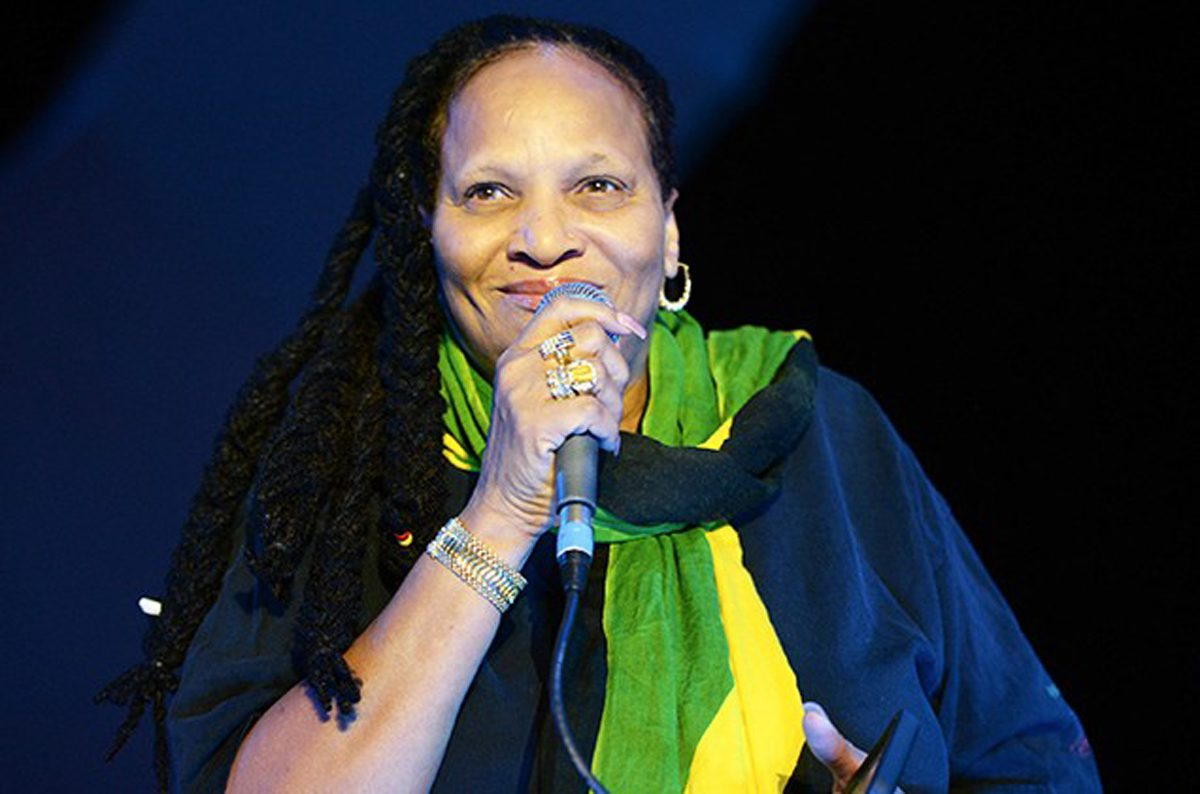
Other tracks that have sampled or interpolated “Bam Bam” include Tamar Braxton’s “Run, Run.” The song was used on the TV series Ozark in the 2022 episode “The Beginning of the End” and also plays in a nightclub in the 2008 “The Lion Sleeps Tonight” episode of Dexter. It was also featured in the films Belly (1998) and The Interview (2014).
The Royalties Battle and Sister Nancy’s Legacy
In the 40 years since she recorded it, the song has been sampled over 100 times by other artists, including Lauryn Hill, Lizzo, Main Source, Chris Brown, Kanye West, Beyonce, and Jay-Z, among dozens of others.
Sister Nancy was aware that other artists were using her material and that she was not receiving any royalties or recognition, but it was not until 2014 that she decided to do something about it.
A few decades removed from the release of “Bam Bam,” Sister Nancy finally seized the opportunity to tell her remarkable story in a new documentary titled Bam Bam: The Story of Sister Nancy.
Written and directed by Oya Media Group founder Alison Duke, the documentary follows the arc of Sister Nancy’s life and career, culminating in her victorious battle to win back years of unpaid royalties due to unauthorized samples. The film was an official selection at the 2024 Tribeca Film Festival.
R. Henry Gordon, N. N. McCarthy, and Frederick “Toots” Hibbert hold the copyright to the original version of the song, but were never compensated royalties for use of the song by Sister Nancy or any artist who sampled her cover.
The copyright chain around “Bam Bam” is, in this sense, a compressed illustration of how value flows, and often fails to flow, through generations of Black music.
Sampling has provided Sister Nancy and her seminal recording as many lives as there are producers still itching to chop it, helping her become a Jamaican music legend in the process.
Four decades after a young woman from Kingston stepped up to a microphone at Channel One Studios, the Sister Nancy “Bam Bam” samples keep coming, and the original shows no signs of releasing its grip on producers worldwide.