

Dancehall has always lived close to the street, and sometimes the street sends a bill. The story of dancehall artists in prison is not a footnote to the music.
It runs straight through it: a Grammy accepted by a son while his father faced a federal case, a Gaza boss who dominated the charts from a cell for more than a decade, a firebrand deejay still waiting on a courtroom in Kingston.
What follows traces the biggest cases in rough order, from the late 1990s to the docket that is still moving in late 2026. Some of these artists came home to stadium crowds and record deals. Some are still inside.
All of them changed how the culture talks about freedom, loyalty and the price of the life the music describes.
Jah Cure: Two Sentences, Two Countries
Siccature Alcock’s first stretch came in Jamaica, where he received 15 years for firearm possession, robbery and rape. He served eight and was paroled in 2007.
Those years made him a strange kind of star, a lovers rock voice heard mostly through releases made while he was locked up, with three albums and a run of singles reaching the outside world.
The second chapter played out in Amsterdam. In October 2021 he stabbed concert promoter Nicardo “Papa” Blake on Dam Square in a dispute over unpaid performance fees.
In March 2022 a Dutch court gave him six years for attempted manslaughter. Then, on 30 October 2025, the Amsterdam Court of Appeal went further.
“The court of appeal, unlike the district court, finds the defendant guilty of attempted murder,” it ruled, raising the sentence to eight years and four months.
Voice messages in which he said he had picked up a knife proved decisive, and he was reportedly ordered to pay nearly €9,500 in compensation.
A day before the verdict he had posted, “See you in one year and few months.” Instead, he remains imprisoned in the Netherlands as of November 2026, reportedly at Ter Apel, while his lawyer pursues an appeal against the conviction.
Buju Banton: The Long Walk Home
Mark Myrie was arrested in Florida in December 2009 on a cocaine conspiracy charge. His first trial in 2010 ended without a verdict, and a 2011 retrial convicted him.
Between those two trials came Before the Dawn, released 28 September 2010. It won Best Reggae Album at the Grammys on 13 February 2011, with his son walking up to accept it.
The sentence was 10 years, later trimmed by about two when a judge dismissed the gun charge.
Buju has never budged on his innocence, telling ABC News he was guilty only of “running my mouth,” and supporters have long argued he was entrapped by a government informant.
He walked out of McRae Correctional Institution in Georgia on 8 December 2018 after seven years and was deported to a hero’s welcome.
Culture Minister Olivia “Babsy” Grange set the tone: “Buju was loved long before he was convicted and he will be loved just the same, even if he comes home in handcuffs.” On Instagram he wrote, “Having survived, I want to share the good news and strength of my music.
On 16 March 2019 around 30,000 people filled the National Stadium in Kingston for Long Walk to Freedom.
He told them it had been “eight years, six months, 27 days, 13 hours, five minutes and 26 seconds” since his last show, and he left the case alone.
Upside Down 2020 followed on 26 June 2020 through Gargamel Music and Roc Nation. On 13 July 2024 he played UBS Arena in New York, his first US show since the arrest.
Vybz Kartel: The Cell, the Charts, the Door
No case gripped the dancehall like this one. Adidja Palmer was taken into custody in 2011 and charged with the murder of Clive “Lizard” Williams alongside Shawn “Shawn Storm” Campbell, Kahira Jones and Andre St. John. After a 64-day trial, the longest in Jamaican history, the men were sentenced to life in April 2014.
Kartel’s minimum of 35 years was later cut to 32.5 on appeal, and the Court of Appeal dismissed their first appeal in 2020.
Prison never silenced him. King of the Dancehall arrived in 2016 and debuted at No. 2 on Billboard’s Reggae Albums chart. The voice kept coming through, and the dancehall kept answering.
The final appeal went to the Privy Council in London on 14 and 15 February 2024, with lawyer Isat Buchanan pushing for speed because of Kartel’s Graves disease and a heart condition.
On 14 March 2024 the Law Lords quashed the convictions “on the ground of juror misconduct,” saying that letting a compromised juror stay was “fatal to the safety of the convictions.” It was not a finding of innocence, and the case went back to Jamaica.
On 31 July 2024 a three-judge panel of Justices McDonald-Bishop, Williams and Fraser unanimously ruled against a retrial. After roughly 13 years in custody, Kartel and his co-accused were free.
The comeback has been relentless. He signed with Defiant Records, opening with “Pretty Girl.” “God Is The Greatest” passed 30 million video views by late May 2026.
God & Time was slated for 5 June 2026 with Farruko, Skillibeng and Shenseea on board, and he was billed to headline Reggae Sumfest on 18 July 2026 alongside Mavado, with a London O2 date on 9 September.
Ninja Man: Still Waiting
The original gun-talk firebrand has spent this decade behind bars. Desmond Ballentine was convicted in November 2017 and sentenced in December to life for the 2009 murder of Ricardo Johnson, alongside his son Janeil and Dennis Clayton. He must serve at least 25 years before parole, the younger men at least 15.
His appeal has crawled. His lawyer Valerie Neita-Robertson, who planned to argue he never got a fair trial after 17 trial dates and 23 mentions before it even began, died on 25 February 2025.
A December 2025 hearing slid to March 2026, and by 20 July 2026 the Gleaner was reporting yet another delay, with the hearing set to open that week.
Visual identification sits at the heart of the challenge, and Ninja Man remains inside awaiting the outcome.
Tommy Lee Sparta: A Short Stretch Under a New Law
On 14 December 2020 Leroy Russell was arrested with a 9mm Glock and an extended magazine holding 18 rounds.
He pleaded guilty and in March 2021 received three years for the firearm and two for the ammunition, running together, sidestepping a possible 15-year term. He walked out of the Horizon Remand Centre on 23 March 2023, released early for good behaviour.
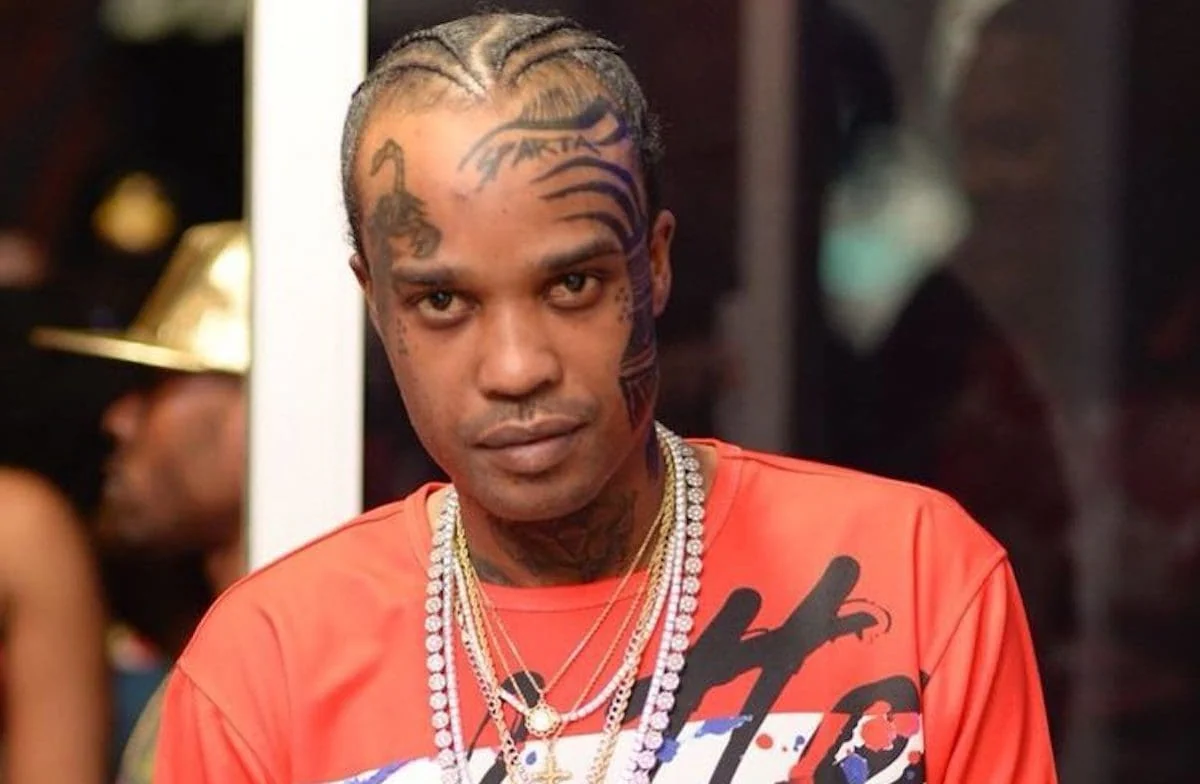
The timing matters: since late 2022 Jamaica’s Firearms Act has carried 15 years to life for illegal gun possession.
While he was away, his “Protocol” collaboration with Skeng kept his name loud, its video shot in New York without him.
The New Docket
The cases have not stopped. Squash was sentenced in Miami on 24 November 2025 to 27 months for possessing a firearm while undocumented.
Prosecutors cast him as head of a “transnational criminal organization,” a label his team rejects. He is listed for release on 25 January 2027, with immigration action to follow.
Chronic Law faces a federal charge of being an alien in possession of a firearm after a 15 November 2025 traffic stop in Turner County, Georgia, allegedly turned up four guns.
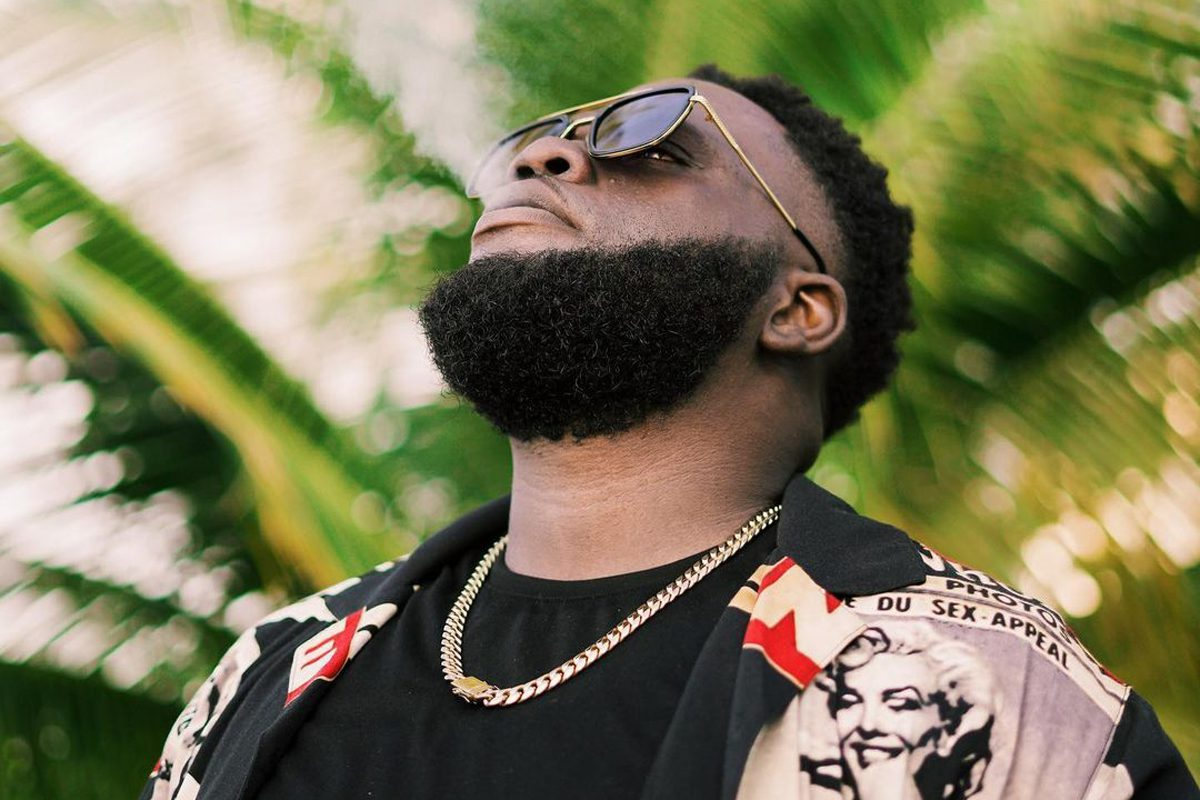
He pleaded not guilty, was denied bail and remains in US Marshals custody, with a suppression hearing set for 9 December 2026 in Albany, Georgia.
Producer Countree Hype, who has worked with Intence, Alkaline and Konshens, got five years and 10 months in Miami on 24 June 2026 for smuggling guns into Jamaica.
What Came After
Line these stories up and a pattern emerges, though not a simple one. Buju came home to a stadium, a Roc Nation release and a New York arena.
Kartel walked out of a life sentence and straight onto festival bills and a new label, his catalogue never having cooled. Tommy Lee Sparta did his time and found the law had hardened behind him.
Others are still writing their endings from the inside, and the younger generation is learning that American federal courts do not grade on reputation.
The music has always told these stories in the first person. Its stars keep reminding the culture what those stories cost when the riddim stops and the judge starts talking.