Spring 1976. Bob Marley had just conquered London with Live!, his former bandmates were about to drop solo statements of their own, and America still hadn’t fully caught on.
Then came Rastaman Vibration, the Bob Marley & The Wailers album that finally cracked the US top 10.
Released on 30 April 1976 through Island Records, it gave Marley the biggest American chart run of his lifetime.
It is also one of the most misunderstood records in his catalogue. Sitting between the fire of Live! and the global sweep of Exodus, Rastaman Vibration often gets treated as a stepping stone.
Fifty years on, it deserves a closer listen: a record of rebel theology, Shantytown grief, sly publishing warfare, and a band learning to speak to the world without losing its roots.
The Road to 1976
By the mid-seventies the original Wailers trio had split, and 1976 made the separation plain. Alongside Rastaman Vibration, Bunny Wailer released Blackheart Man and Peter Tosh released Legalize It. Three paths branched out of one Trench Town harmony group in the same year.
Marley’s path pointed outward. Island was betting that this version of The Wailers, built around the Barrett brothers’ rhythm section, could reach rock audiences and American radio without diluting the message.
In the Studio
The album was cut in late 1975 and early 1976 in Kingston, at Harry J’s and Joe Gibbs Studio, then mixed at Criteria Studios in Miami.
Production is credited to Bob Marley & The Wailers, with Aston “Family Man” Barrett and Chris Blackwell handling the mix.
Engineers included Errol Thompson, Sylvan Morris, Alex Sadkin and Jack Nuber, and Neville Garrick designed the cover.
The band was formidable. Family Man held down bass, Carlton Barrett played drums, Tyrone Downie was on keyboards, and Alvin “Seeco” Patterson added percussion.
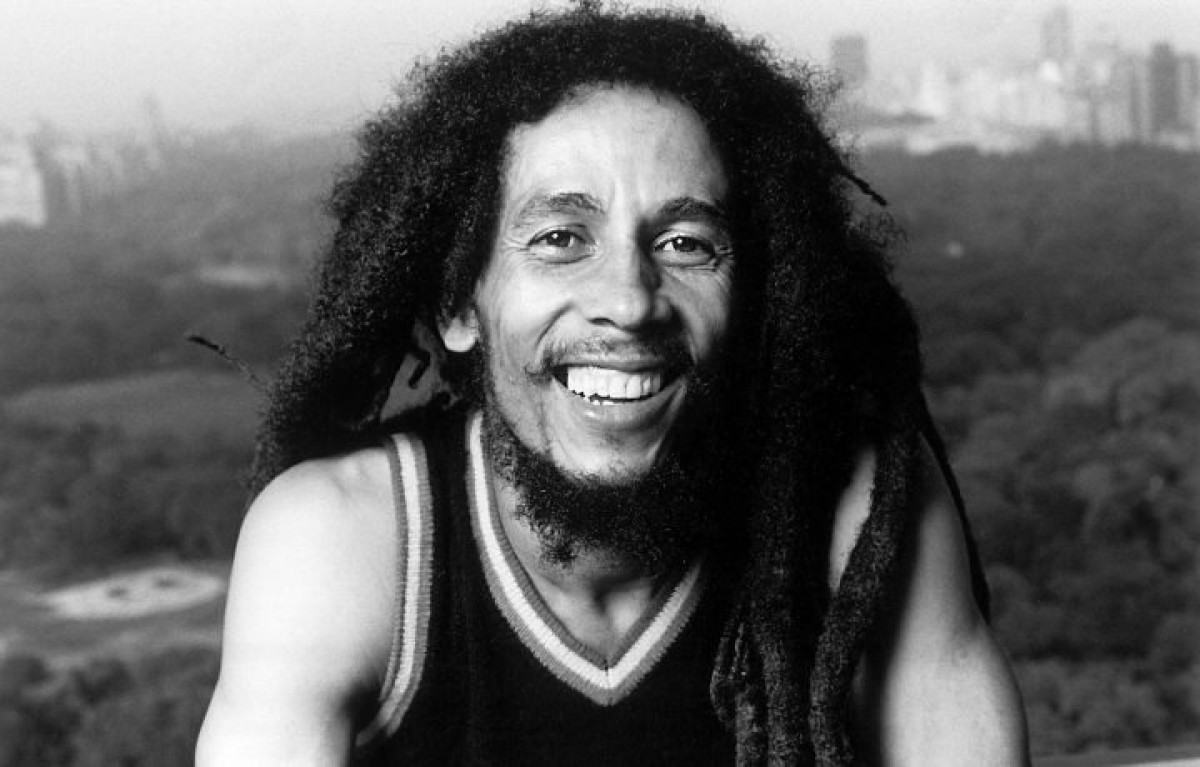
Donald Kinsey and Earl “Chinna” Smith shared guitar, with Kinsey overdubbing on “Johnny Was” and “Roots, Rock, Reggae. Al Anderson took lead guitar on “Crazy Baldhead”.
Tommy McCook brought his saxophone to “Roots, Rock, Reggae”, and the I Threes wrapped everything in harmony.
Synthesizers sit prominently in the mix next to rock-leaning guitar, a sound engineered for bigger rooms than any Kingston dancehall. At 35 minutes and 21 seconds, it is a lean, focused record.
The Songs
Side one opens with “Positive Vibration”, a gentle invitation that sets the album’s spiritual temperature before “Roots, Rock, Reggae” turns up the charm.
Many listeners hear the latter as Marley pleading directly with US radio to play his music, and he recycled lyrics from his earlier “Rainbow Country” to do it. The ploy half-worked. The song reached No. 51 and became his only entry on the Billboard Hot 100.
“Johnny Was” is the emotional core: a mother mourning a son killed in the street, sung with devastating restraint. Its pain travelled far, and punk band Stiff Little Fingers later covered it on Inflammable Material.
“Cry to Me” and “Want More” close the side, with the album reaching back into early Wailers material for fresh recordings.
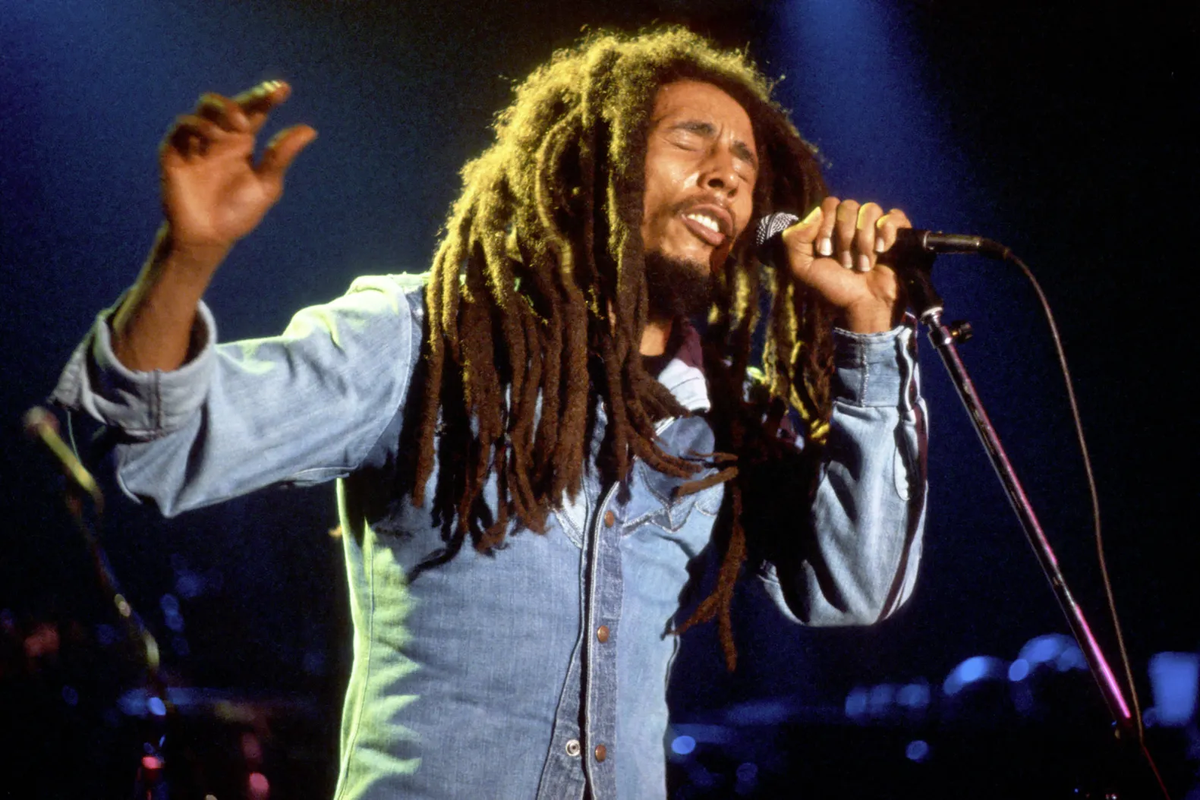
Side two hits harder. “Crazy Baldhead” is defiant and unsparing, “Who the Cap Fit” is a warning to false friends, and “Night Shift” draws on working life.
Then comes “War”, the album’s towering moment. Marley set to music Haile Selassie’s 4 October 1963 address to the UN General Assembly, trimming the “that” before each “until” and driving the word “war” home again and again.
It turned a diplomatic speech into a rallying chant that still rings out at sound systems and festivals.
The closer, “Rat Race”, carries the line “Rasta don’t work for no C.I.A.”, a lyric Caribbean Beat reads as a mix of protest and paranoia.
It suits a Kingston gripped by political tension in that period. Later CD and digital editions add “Jah Live”, the Marley and Lee Perry song.
The Credits Question
Look at the songwriting credits and you’ll find names like Vincent Ford, Rita Marley, Aston Barrett, Carlton Barrett and Allen Cole.
Ford is credited on “Positive Vibration” and “Roots, Rock, Reggae”, while Cole and Carlton Barrett share “War”.
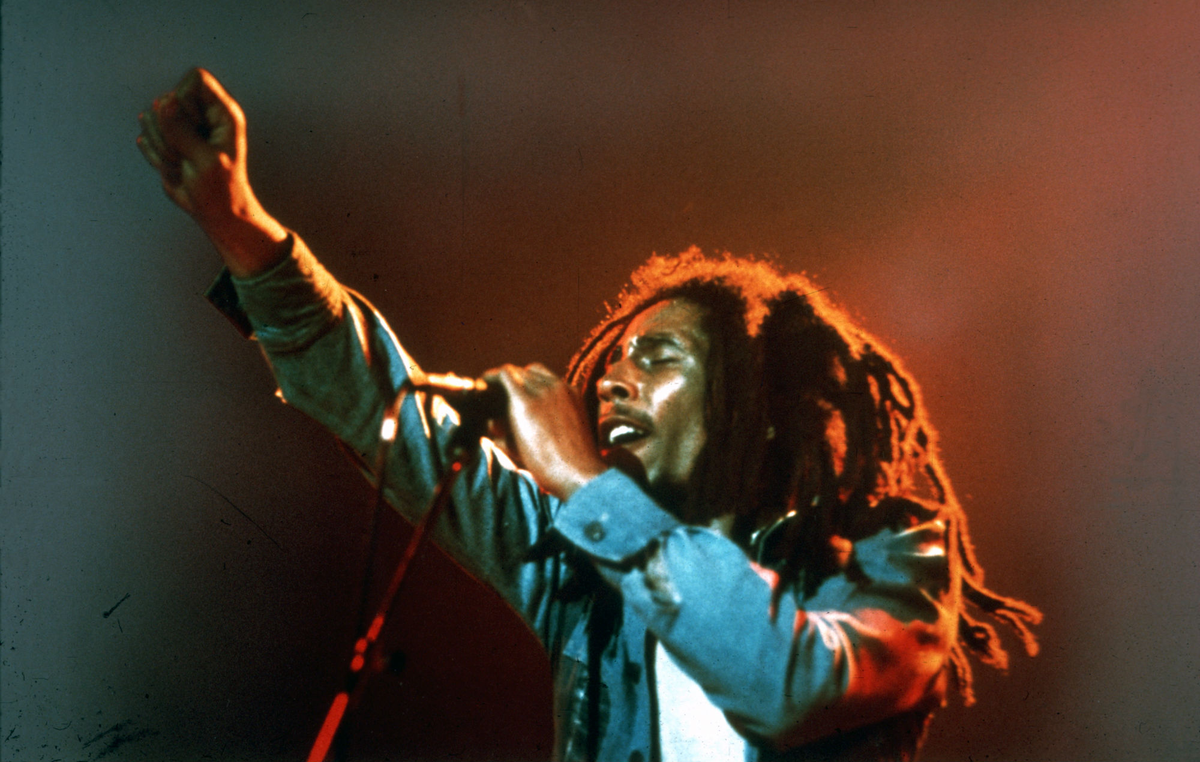
The material was Marley’s own. Locked in a dispute with Cayman Music over a 1968 publishing deal, he spread credits among friends and family so his new songs wouldn’t feed that contract.
The move echoed for years. Rita Marley and former manager Danny Sims later went to court over royalties and ownership of the Ford-credited songs, and a 1987 case confirmed the estate’s ownership of the catalogue.
Some pressings still carry Cayman Music as publisher on certain tracks, a small footnote from a big fight.
Taking It to America
Island pushed hard. The US tour kicked off in Pennsylvania on 23 April 1976, a week before release, and Marley played four sold-out shows at New York’s Beacon Theatre across 30 April and 1 May.
The label bought a billboard on Sunset Boulevard in Hollywood. The 26 May show at the Roxy was captured and later released as Live at the Roxy, which became disc two of the 2002 Deluxe Edition.
The US run wrapped at the Santa Barbara Bowl on 31 May before the band crossed to Europe, including six shows in four days at London’s Hammersmith Odeon.
The payoff was real. Rastaman Vibration climbed to No. 8 on the Billboard 200 and No. 15 in the UK.
Outside the posthumous Legend, no other Marley album reached the American top 10. Rolling Stone named Bob Marley & The Wailers its Band of the Year for 1976.
A Divided Reception
Critics admired it and argued with it. Rolling Stone said the album took an “apparently inconsistent stand halfway between revolution and the Hot 100,” while also observing that Marley “plays to the hilt a dual role as spokesman for the Third World’s disadvantaged and avatar of a highly commercial brand of popular music”.
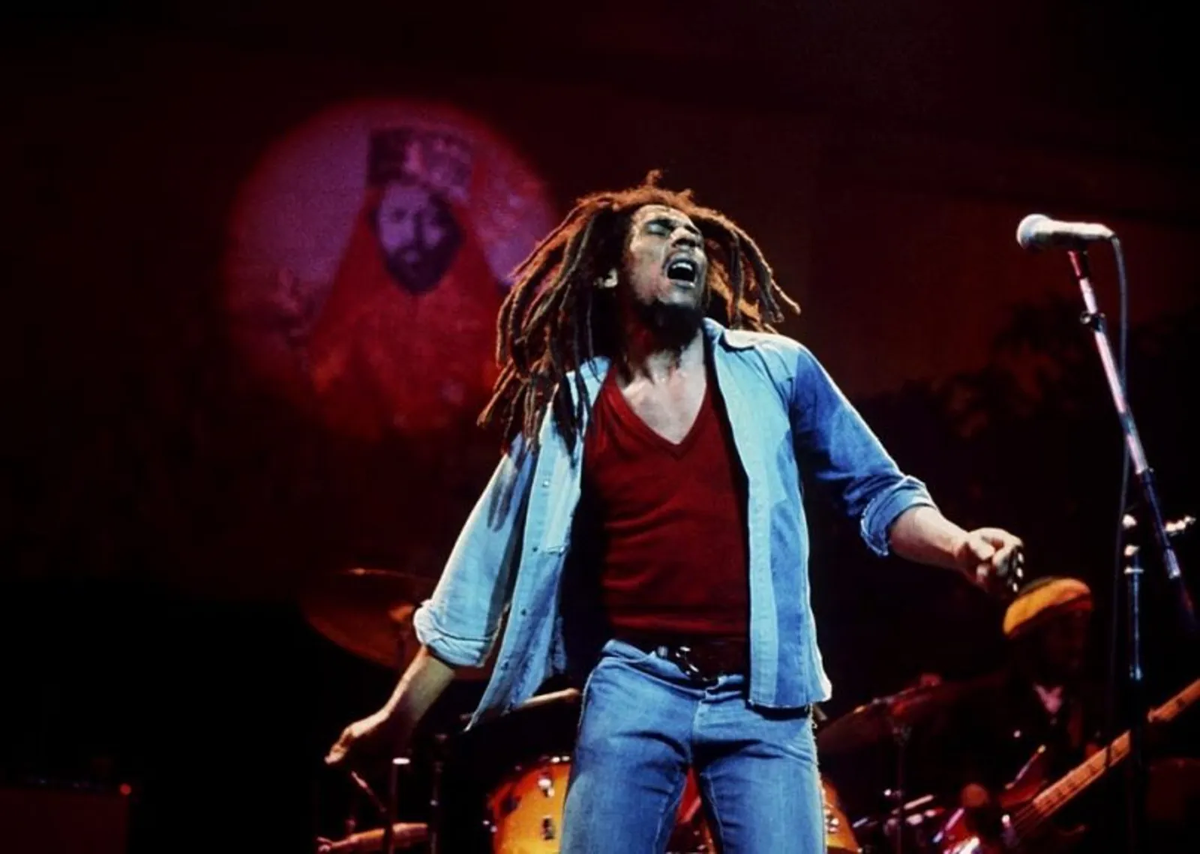
Robert Palmer felt it lacked the intricate force of the earlier Wailers lineup, yet insisted that “the sensitive, careful listener will learn from Rastaman Vibration something of the pain, rage and determination of Shantytown”.
That tension explains its reputation. Caribbean Beat argues that American audiences cheered “Roots, Rock, Reggae” and “Rat Race” while overlooking the album’s wider meditation on the Black experience across the Americas.
Pressed Again and Again
Vinyl collectors have kept the record spinning. There was the 2001 Definitive Remasters vinyl, the 2002 Deluxe Edition, a 2020 half-speed Abbey Road master, a 2022 Analogue Productions UHQR box set, and a 2023 Jamaican pressing series stamped at Tuff Gong in Kingston.
In late 2022 a vinyl reissue pushed the album onto Billboard’s Reggae Albums chart for the first time, debuting at No. 4 just beneath Legend. For the 50th anniversary in 2026, a limited Green Swirl vinyl edition arrived.
Why It Still Matters
Rastaman Vibration is the sound of Marley at a crossroads, reaching for American radio with one hand and holding Selassie’s words with the other.
It gave him his commercial breakthrough in the States, his only Hot 100 single, and “War”, a song that still carries the weight of a sermon.
It also showed his street sense in business, outmanoeuvring a publishing deal with a pen and a list of trusted names.
Half a century later, the record’s supposed contradictions look like its strength. Revolution and the Hot 100 were never opposites for Marley. They were the same mission, and Rastaman Vibration is where he first proved it could work.