
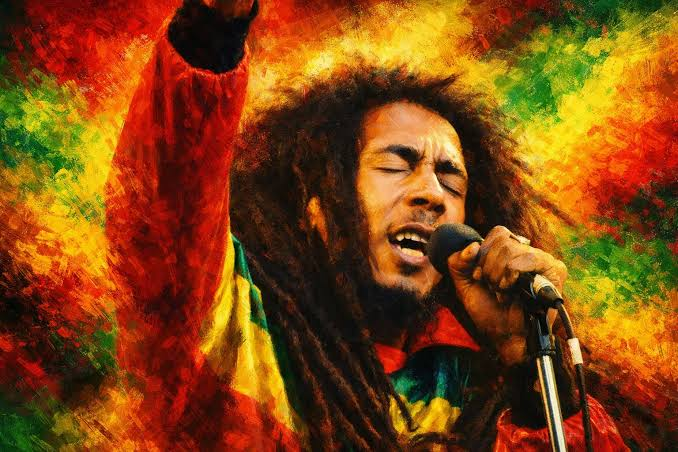

Fifty two years on, Natty Dread still sounds like a man stepping forward alone and finding a bigger crowd waiting for him.
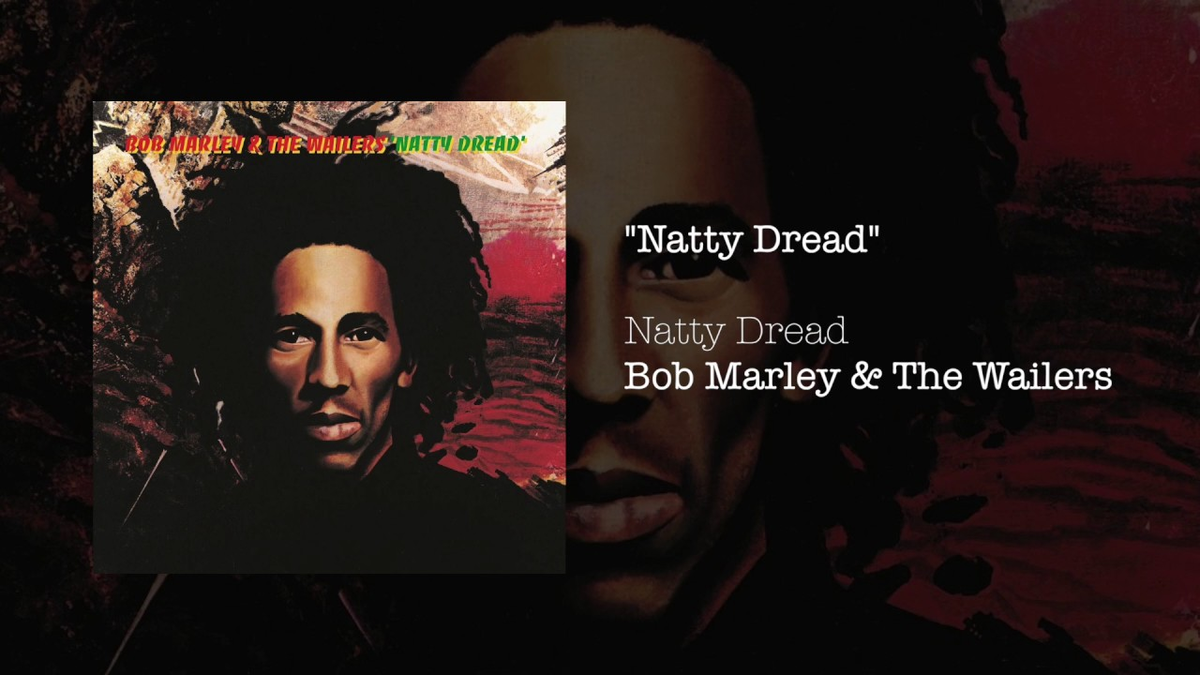
Released on 25 October 1974 through Island and Tuff Gong, Natty Dread was the Bob Marley album that changed the name on the sleeve and the shape of the band behind him.
Peter Tosh and Bunny Wailer were gone. The I-Threes had arrived. Tucked into side A was a Trenchtown hymn that would soon carry Marley around the world.
This is the story of how the record was made, who played on it, how its songwriting credits ended up in court, and why so many critics now rank it among the greatest reggae albums ever pressed.
A New Name on the Sleeve
Burnin’ in 1973 had been the last album before Marley, Tosh and Bunny Wailer went their separate ways.
When the next record arrived, it carried a new billing: Bob Marley & The Wailers, not simply The Wailers.
That change has caused years of confusion over how the group’s catalogue is marketed, enough that a 1999 Tuff Gong Settlement Agreement tried to separate the group’s work from Marley’s solo output.
Some writers call Natty Dread his solo debut. Hi-Fi News frames it as the first Island LP with the re-formed Wailers.
Both descriptions hold some truth. The core of the old band was gone, but in its place came something new and powerful. Rita Marley, Marcia Griffiths and Judy Mowatt, the I-Threes, sang on a Marley album for the first time.
Their harmonies gave the music a warmth and a churchy lift that became part of his signature for the rest of his career.
Kingston to London: Making the Record
The sessions moved between two cities. Tracks were cut at Harry J Studios in Kingston, with Syl Morris engineering, and at Island Studios in London, with Phil Ault at the desk. The mix was finished at Basing Street Studios in London by Syd Bucknor.
Chris Blackwell and The Wailers share the production credit, which suits a record that balances yard grit with the polish Island wanted for the international market.
The band locked in around the Barrett brothers. Aston “Family Man” Barrett played bass and Carlton Barrett played drums and percussion, giving the album that rolling, unhurried foundation. Al Anderson brought lead guitar lines with a rock edge.
Bernard “Touter” Harvey, only 19 at the time, handled piano and organ. Jean Roussel added Hammond organ and keyboards and arranged “No Woman, No Cry,” “Natty Dread” and “Lively Up Yourself.”
The look was just as deliberate. Tony Wright painted the cover, and photography by Dennis Morris and Adrian Boot rounded out the package, with Boot’s “Dread” images on the inner sleeve.
Side by Side: The Songs
The original UK LP, catalogue number ILPS 9281, ran nine tracks. Side A opens with “Lively Up Yourself,” moves into “No Woman, No Cry” and “Them Belly Full (But We Hungry),” and closes with “Rebel Music (3 O’Clock Roadblock).” Side B runs through “So Jah Seh,” “Natty Dread,” “Bend Down Low,” “Talkin’ Blues” and “Revolution.”
It is a record of hunger, faith and pressure. “Them Belly Full” turns poverty into a warning. “Rebel Music” captures the tension of a checkpoint at night.
The title track takes its name from an idealised personification of the Rastafari movement. Along with “So Jah Seh” and “Lively Up Yourself,” it shows Marley’s growing devotion to the faith. “Bend Down Low” offers a romantic break from the heavier themes.
Some of the material was reworked from older songs; an unreleased 1973 demo of the Island version of “Lively Up Yourself” exists. Marley himself called the album “one step forward for reggae music,” according to Hi-Fi News.
One more song from the sessions, “Am-A-Do,” stayed in the vault until it appeared on Talkin’ Blues on 4 February 1991. Universal reissued a remastered edition with a bonus track in 2001.
The liner notes credit a spread of family, friends and band members. Rita Marley and Allen Cole are listed for “Natty Dread,” Rita Marley and Willy Francisco for “So Jah Seh,” and Aston Barrett and Hugh Peart for “Rebel Music.” All the songs, however, were written by Marley.
The most famous case is “No Woman, No Cry,” credited to Vincent “Tartar” Ford. Ford was a childhood friend who ran a soup kitchen in Trenchtown’s government yard.
The song looks back on that same ghetto, and its title is Patois for “Woman, don’t cry.” Listeners still sometimes misread it as a claim that having no woman means having no reason to cry.
There are two stories about the credit. Far Out says Marley named Ford so the royalties would keep the community’s Casbah running.
Former manager Danny Sims claimed Marley assigned the credit to Ford to avoid contractual obligations. Ford was also credited on “Positive Vibration” and “Roots Rock Reggae” from Rastaman Vibration.
A 1987 court decision sided with the Marley estate, which took full control of the songs. Ford died on 28 December 2008, aged 68.
The studio cut is lovely, but the world came to know “No Woman, No Cry” through the Natty Dread Tour. The band recorded at London’s Lyceum Theatre on 17 and 18 July 1975.
The 17 July performance became the definitive version, released as a single on 29 August 1975, then on Live! and later on Legend.
It became Marley’s first hit outside Jamaica and marked 1975 as the year of his international breakthrough.
Jimmy Cliff covered it on Follow My Mind that same year, and Fugees released their version as a single in November 1996.
Charts, Receipts and Reputation
Natty Dread did its best business in Britain. It peaked at No. 43, sold more than 100,000 copies and was certified gold. In the US it reached No. 92 on the Billboard 200 and No. 44 on the Black Albums chart.
At home it was well received. Harvey later recalled seeing Tuff Gong sales receipts that shocked him at the time.
Its critical standing has only grown. Rolling Stone placed it at No. 181 on its 500 Greatest Albums list in 2003 and kept it there in the 2012 revision.
When the magazine published its 74 Best Albums of 1974 on 20 November 2024, Natty Dread sat at No. 4. It and Toots and the Maytals‘ In the Dark were the only Jamaican albums on that list.
It also appears in 1001 Albums You Must Hear Before You Die, and Hi-Fi News notes that many critics now call it the greatest reggae album of all time.
Why Natty Dread Still Matters
Natty Dread is the hinge in the Marley story. Before it came the trio that built the Wailers sound. After it came the global prophet who filled stadiums.
The album captures the moment in between, with a teenage keyboardist, a family rhythm section and three women whose voices gave the music a new light.
Its songs about roadblocks, empty bellies and Jah still feel close to the street. Its biggest song came out of a Trenchtown soup kitchen and went on to reach the whole world.
Half a century after its release, it remains the sound of reggae taking the step forward Marley promised.