

The “Night Nurse” meaning is both simpler and more layered than it first appears. On the surface, Gregory Isaacs conjures the image of a bedside caregiver.
At its emotional core, the 1982 song is a lovers rock ballad in which a man devastated by heartbreak insists that no doctor or prescription can cure him, only the devoted attention of a particular woman.
It is one of the most elegant extended metaphors in reggae history, and more than four decades after its release, it endures as the defining song of Isaacs’s career.
Who Was Gregory Isaacs?
Before unpacking the song, it helps to understand the man behind it. Gregory Anthony Isaacs was born on July 15, 1950, in Kingston, Jamaica, and died on October 25, 2010, in London, England.
As a youth, Isaacs was influenced by American soul artists like Sam Cooke and Otis Redding, whose smooth vocal styles would later shape his own unmistakable croon.
One of Jamaica’s most beloved vocalists, Gregory Isaacs’s career stretched from the heady days of reggae through lovers rock, a genre he virtually invented, and into the 21st century.
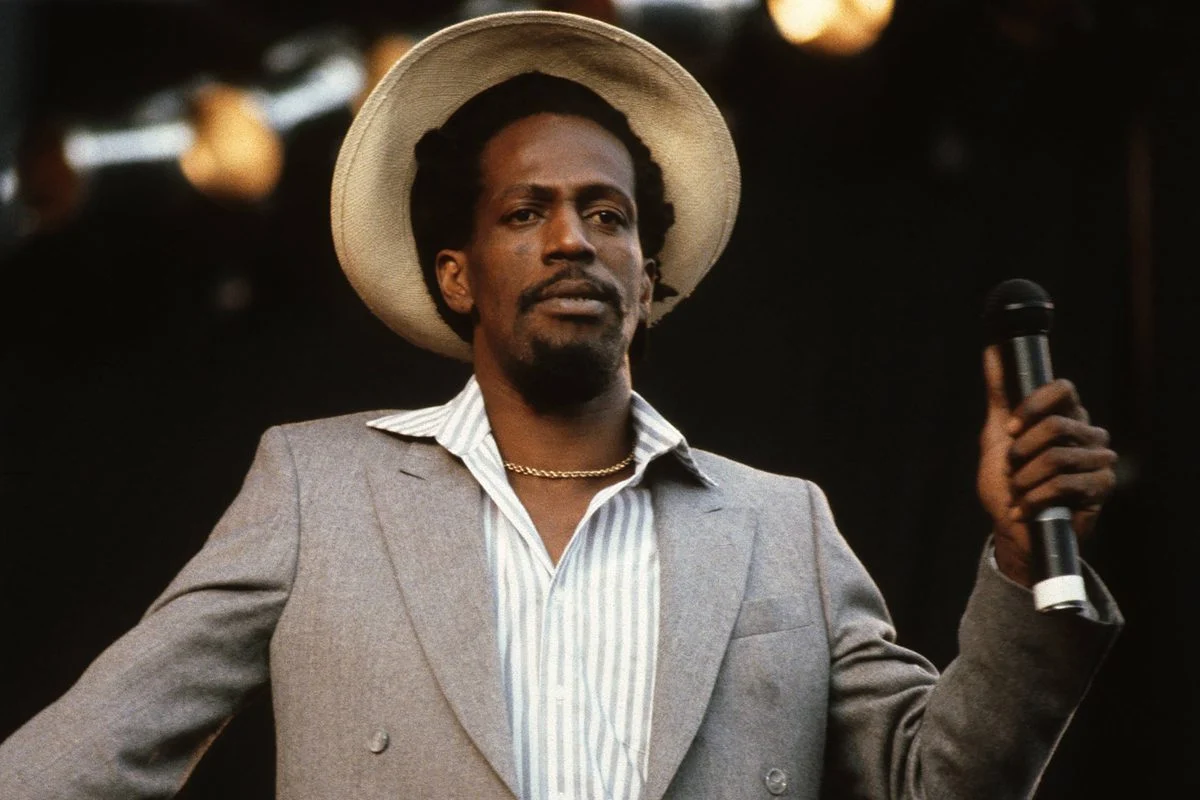
The “Cool Ruler” nickname perfectly captured the singer’s musical vibes: nonchalant and laid-back, yet definitely in charge. Milo Miles, writing in The New York Times, described Isaacs as “the most exquisite vocalist in reggae.”
Isaacs’s recordings largely revolved around themes of love and heartbreak, embracing the flourishing lovers rock sound.
Lovers rock emphasised romantic yearnings over the more traditional political themes that had become synonymous with reggae.
It has been estimated that Gregory Isaacs released over 500 records in his career, which includes singles and compilations.
The Creation of “Night Nurse” (1982)
“Night Nurse” was released as a single in 1982 after Isaacs signed to Island Records. The song was written by Gregory Isaacs and Sylvester Weise, and produced by Gregory Isaacs and Flabba Holt. It was recorded at Tuff Gong Studios in Kingston, Jamaica.
Backing on the album came from the Roots Radics, with additional synthesizer added by Wally Badarou. The result was a sound that AllMusic described as “the kind of slicked-up roots sound that emerged in the early days of dancehall-era reggae.”
In addition to effortlessly delivering the same smooth, “lonely lover” vocals that graced his many successful sides from the 1970s, Isaacs, along with bassist “Flabba” Holt, also produced the eight high-quality tracks here.
The 12-inch single version runs to around seven minutes, allowing Isaacs’s signature falsetto and smooth, emotive vocal delivery to unfold gradually over a sparse, rhythmic backing.
What Does “Night Nurse” Actually Mean? The Lyrics Explained
The lovers rock ballad metaphorically portrays a man’s emotional pain from heartbreak and his yearning for his lover’s soothing care as a “night nurse,” rather than conventional medical remedies.
The medical world serves as the song’s entire theatrical setting, but the ailment is never physical. The “night nurse” becomes a symbol for the person who can heal his emotional affliction, someone who provides comfort during the darkest hours.
Isaacs has a cardiac emergency and only a particular medical professional can fix it. “I’m hurt by love,” he purrs, turning his nose up at the offer of a doctor and medication.
In his refusal to “see no doc,” Isaacs channels a universal skepticism towards conventional medicine and, metaphorically, the expected norms of seeking help.
Lyrically, “Night Nurse” employs a metaphor of seeking solace from a “night nurse,” with lines such as “I don’t wanna see no doc / I need attendance from the woman who has nursed me through the years” and the chorus pleading, “Night nurse / Only you alone can quench this thirst / Jah nurse / Oh the pain is getting worse.” This imagery evokes a thirst-quenching relief, blending seduction with vulnerability.
The word “Jah” in the chorus is significant. It is a shortened form of Jehovah used in Rastafarian speech and Jamaican culture to invoke the divine.
By calling out “Jah nurse,” Isaacs elevates the beloved to something almost sacred: the one appointed by a higher power to restore him.
Isaacs’s insistence on his “night nurse” being the “one, the only remedy” is a lyrical testament to the exclusivity of true healing.
Just as certain ailments require specific treatments, the artist’s heartbreak needs the irreplaceable care of his beloved.
It is a poetic acknowledgment that when it comes to matters of the heart, generic solutions simply will not do.
As imposing as the night, with its capacity to amplify feelings of solitude, Isaacs’s lyrics tap into the universal need for companionship and understanding.
It is a ballad of dependency not on substances, but on the irreplaceable and often life-saving connection between two souls.
Because Isaacs was publicly known to struggle with cocaine addiction during this period of his career, some listeners have interpreted “Night Nurse” as a veiled reference to substance dependence.
This success for Isaacs coincided with problems with cocaine. His drug use had a significant impact on his health, and Isaacs later stated that he lost most of his teeth as a result.
Isaacs said of his addiction in 2007: “Drugs are a debasing weapon. It was the greatest college ever, but the most expensive school fee ever paid, the Cocaine High School.”
However, a drug-addiction reading does not hold up against the lyrical text itself. The song metaphorically portrays a man’s emotional pain from heartbreak and his yearning for his lover’s soothing care, countering common interpretations linking it to drug addiction.
There is nothing remotely lewd about the lyrics; the passionate power of “Night Nurse” resides entirely in Gregory’s oh-so-certain delivery and that murmuring tone that made him one of reggae’s most arresting voices. The medical metaphor is clean, controlled, and in complete service of a romantic narrative.
The Sound: How the Music Reinforces the Meaning
The production choices on “Night Nurse” are inseparable from its lyrical message. Musically, “Night Nurse” features a polished reggae rhythm with steady bass, rhythmic guitar skanks, and a minimal but hauntingly effective arrangement.
Isaacs’s vocals glide over the instrumental with an understated passion, creating a sound that was both romantic and universally appealing.

The sparseness of the track mirrors the vulnerability of the narrator: there is no bombast, no distraction, just a man and his need.
Nicknamed the “Cool Ruler” for his relaxed, velvet-toned delivery, Isaacs embodied the suave yet vulnerable archetype that perfectly suited romantic reggae.
Chart History and Commercial Impact
Isaacs signed to Island Records and released “Night Nurse,” the title track from his first album for the label.
Although “Night Nurse” was not a chart hit in either the UK or US, it was popular in clubs and received heavy radio play, and the album reached number 32 in the UK. At the time, “Night Nurse” was hugely popular in the clubs and received heavy radio play.
In January 2023, the single was certified Silver by the British Phonographic Industry (BPI) for exceeding 200,000 combined sales and streams in the United Kingdom.
“Night Nurse” Beyond Gregory Isaacs: Covers and Cultural Life
The song’s longevity is confirmed by the number of artists who have returned to it. The song was later used in adverts for a GlaxoSmithKline cold and flu remedy of the same name on British TV and radio.
The irony, appreciated or otherwise, was that a lyric built entirely on rejecting conventional medicine became the soundtrack to selling a pharmaceutical product.
A cover version was recorded by Jamaican duo Sly and Robbie featuring the English band Simply Red. It was released as a single in September 1997 by EastWest Records, and appears on Sly and Robbie’s album Friends (1997), as well as Simply Red’s sixth album, Blue (1998).

The song reached No. 13 on the UK Singles Chart in September 1997, and remained on the chart for eight weeks. It is Sly and Robbie’s second biggest hit in the United Kingdom, after 1987’s “Boops (Here to Go)” at No. 12.
In 2005, Lady Saw produced another version of “Night Nurse,” with her toasting over the original lyrics.
BBC Radio 1 disc jockey Chris Goldfinger named “Night Nurse” one of his favourite songs in 1996. The record also influenced UK sound systems, where it became a slow-dance anthem and a staple in the Lovers Rock playlist, blurring the boundaries between Jamaican reggae and its British romantic offshoot.
Gregory Isaacs’s Legacy
Isaacs died of lung cancer in 2010 at his home in London, at the age of 59. In 2016, the Jamaican government posthumously awarded Gregory Isaacs the Order of Distinction (Officer Class) to recognise his contribution to the country’s music.
Gregory Isaacs believed his music was universal. I represent love,” he once said, “and people fall in love every day.” No single record proves that conviction more completely than “Night Nurse.”
The song’s genius lies in its restraint: by dressing heartbreak in the clinical language of care and medicine, Isaacs found a metaphor wide enough to hold every listener who has ever felt that no remedy on earth could touch the particular pain of losing love.
Night Nurse is reggae artist Gregory Isaacs’s most well-known album, and its title track remains his most enduring contribution, a quiet, urgent plea that asks only one question: is there a nurse who can tend to a broken heart?