

The “Police and Thieves” meaning is rooted in one of the most turbulent chapters of Jamaican history. Released in 1976, the song is a direct, unflinching portrait of the violence engulfing Kingston’s streets, the corruption of those sworn to uphold the law, and the terror visited on ordinary citizens caught between two destructive forces.
Decades after its recording, the track endures as one of the defining protest anthems in reggae, its message crossing oceans, soundtracking riots, and inspiring artists across multiple genres.
Who Was Junior Murvin?
Junior Murvin was born Murvin Junior Smith in Port Antonio, Jamaica, in either 1946 or 1949, with his birth year debated among sources.
He was raised by his great-grandmother after losing his father at a young age, while his mother emigrated. As a child, he worked the pump for the pipe organ at a local Methodist church, but was too shy to join the choir.
Rhythm and blues inspired him early, and by age six he was entertaining neighbors with songs by Billy Eckstine, Louis Armstrong, Sam Cooke, and Curtis Mayfield, whose falsetto helped inspire his own.
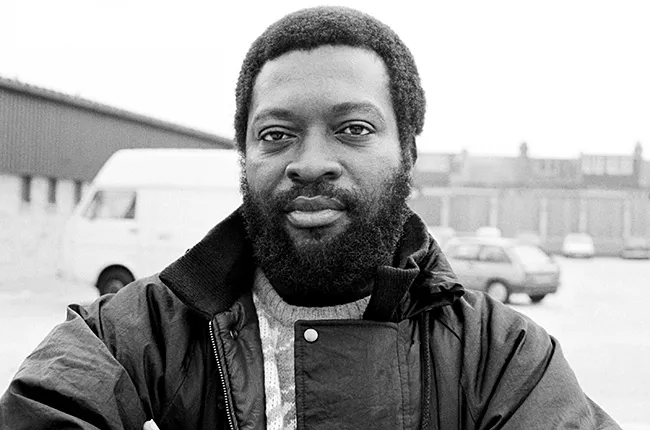
His early career saw him record under the name Junior Soul, releasing rocksteady hits such as “Glendevon Special” for Derrick Harriott and “Miss Cushie” with Sonia Pottinger.
The song would eventually relaunch a second phase of Murvin’s career, which had initially gotten off the ground as a rocksteady singer, as well as a songwriter for artists such as Derrick Harriott and Keith and Tex. By 1976, however, his fortunes were about to change dramatically.
The Context: Jamaica on the Brink
Any examination of the “Police and Thieves” meaning must begin with the political climate that forged it. Inspired by the violence and political tensions in the lead-up to the 1976 General Election in Jamaica, “Police and Thieves” tells a story of escalating violence and distrust between law enforcement and the community, particularly in Kingston.
Murvin was writing songs that wove biblical references and dread maxims drawn from Rastafari into his account of the turf wars and social upheaval in Trench Town. Jamaica was being ravaged by an unprecedented period of economic and political strife.
Lyrically, the number succinctly summed up the battleground that Jamaica had become in the run-up to the national election held that same year.
In the frenzied political atmosphere, Murvin’s new release “Police and Thieves” was banned by Jamaica’s two main radio stations: RJR Radio Jamaica and JBC Jamaica Broadcasting Corporation.
That a song about violence and state corruption would be suppressed by state-aligned broadcasters only underscored how precisely it had struck its target.
The Recording: One Afternoon at Black Ark
The story goes that it was Murvin who approached Perry in May 1976 and auditioned the song at Perry’s legendary Black Ark Studio in Kingston, Jamaica. Perry loved it so much that he decided to record it that afternoon, not before making a few minor lyrical tweaks.
The studio band was jamming and Murvin was playing with words at Perry’s Black Ark Studio when suddenly sound, rhythm, melody, and lyrics appeared in a structured form, and Perry decided to record the song the same afternoon.
Players on the track included Boris Gardiner on bass, Ernest Ranglin on guitar, Sly Dunbar on drums, Keith Sterling on keyboards, and Joe Cooper on organ, with backing vocals provided by Barry Llewellyn and Earl Morgan of the Heptones.
The next day, dub versions were mixed and versions with different lyrics recorded. By the end of that week the record was released and gaining heavy airplay in Jamaica.
Building around Boris Gardiner’s vibrating bass line, Sly Dunbar’s metronomic beats, and Ernest Ranglin’s incendiary guitar riff, the song quickly took shape, abetted by Keith Sterling’s keyboards and Joe Cooper’s echoing organ.
The result is fractious, with a low throb of bass, the sharp clacks of cymbals, and heavy syncopation, yet Perry still conjures an almost languorous, smoky atmosphere.
Overhead, Murvin’s falsetto soars like a fresh breeze, backed by the warm, ethereal harmonies of the Heptones’ Earl Morgan and Barry Llewellyn.
What Do the Lyrics of “Police and Thieves” Actually Mean?
“Police and Thieves” is a politically charged anthem depicting violent struggles between law enforcement and Kingston street gangs.
With its simple but sobering observations, delivered through a sweetly high-pitched croon, Murvin set himself apart from his roots reggae peers.
The song’s central argument is a moral equation: that police and criminals have become indistinguishable from one another.
The song talks about the uneasy relationship between law enforcement and Jamaican citizens. Murvin sings about how the police are stealing from the people, while thieves are exploiting the situation to commit crimes.
The song also touches on the power dynamics at play, with the police trying to control citizens through fear. The chorus preaches unity and resistance, with a call to arms against those that oppress and restrain the people.
The song is enduring precisely because it bore witness to the suffering caused when society turns on itself, when, in Murvin’s own words, “all the peacemakers turn war officers.”
That single line crystallizes the “Police and Thieves” meaning in a way that transcends its Jamaican origins: it is about the moment when institutions created to protect a community become instruments of its destruction.
Murvin’s unmistakable, Curtis Mayfield-modeled falsetto carries the lilting reggae classic about violence in the streets of Kingston, be it from police brutality or warring street gangs.
The choice of falsetto is itself meaningful: a voice of such delicacy and sweetness singing of such brutality creates a tension that amplifies the horror of what is being described.
Murvin’s tale of tooled-up cops and robbers battling for supremacy while ordinary people were terrified caught the biblically apocalyptic mood of the era in Jamaica.
The Notting Hill Carnival: Life Imitates Art
What elevated “Police and Thieves” from a Jamaican hit to a global statement was a sequence of events that seemed almost scripted.
By the time Junior Murvin released his debut album, the lead single had already become the sound of political unrest.
The song blared out of sound systems and bars on a hot August day in London during the Notting Hill Carnival in 1976, where tensions between Black Caribbean youth and white police officers boiled over into a full-blown riot, and 160 people were hospitalized.
There were conflicting reports about how the violence began; supposedly the arrest of a suspected pickpocket acted as the catalyst, though that was really only the spark.
The ongoing harassment of locals by police officers provided the powder keg. Life had seemingly imitated the very song that soundtracked the events that unfolded.
Murvin’s line describing “police and thieves in the street scaring the nation with their guns and ammunition” was now not a tune from back home but felt like a news report from London.
Given the universal language used, and the fact that the British police were facing accusations of institutional racism at the time, the track quickly became an anthem for both Black and white protesters against the status quo.
The Clash Cover and the Punk Reggae Collision
That same year Murvin’s street anthem would be given a radical punk rock reinterpretation by The Clash, whose members Joe Strummer and Paul Simonon were, in fact, present at the Notting Hill Carnival riot. After the rioting, they were inspired to cover the song in a style they labelled “punk reggae.”
The track made it onto their debut album, though at first it was not intended to. However, after a break in the recording sessions, the band rearranged it and liked the results.
It is one of the first examples of a rock band fusing their sound with reggae, and at six minutes long, it nearly doubled the length of Murvin’s original.
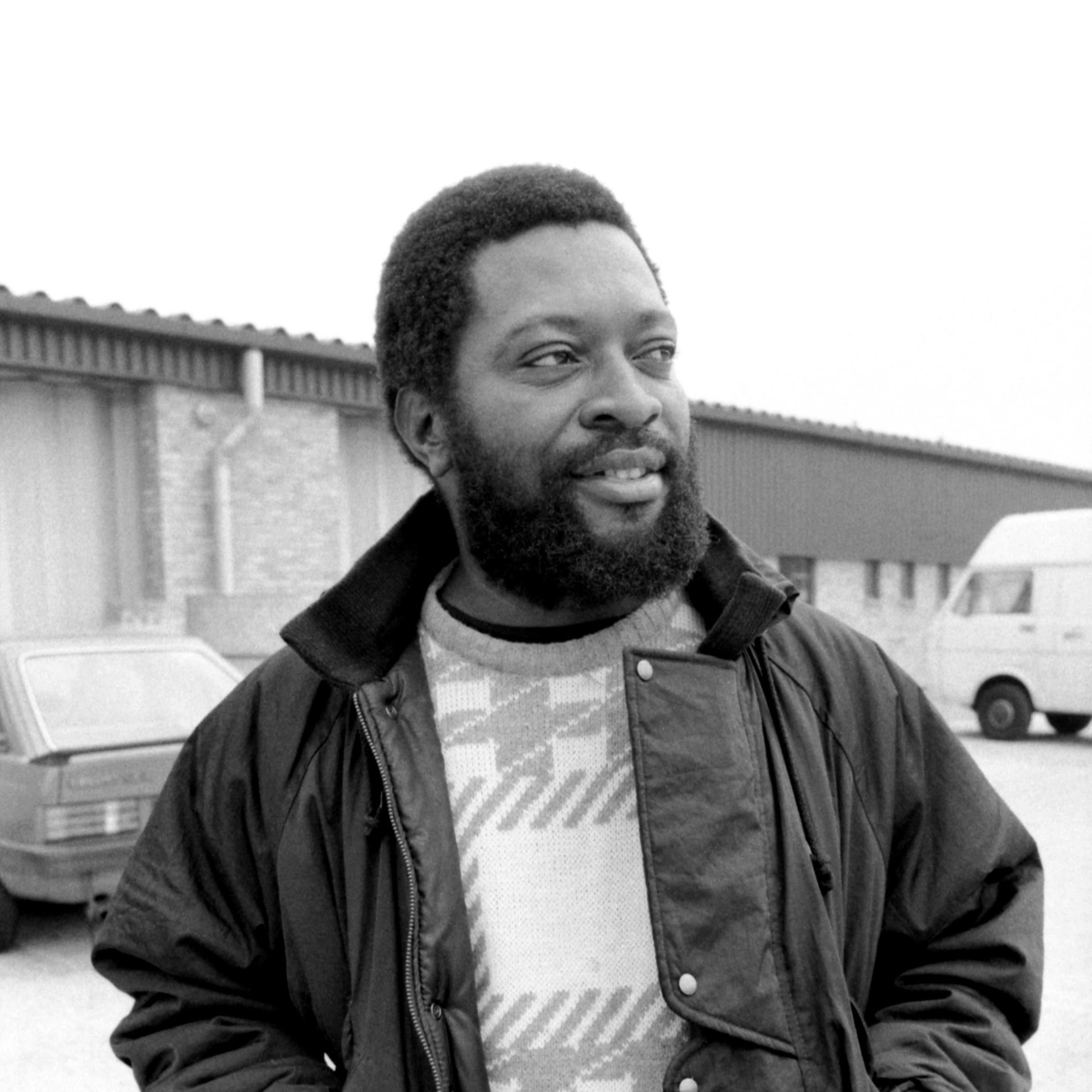
The band were incredibly nervous about being a white rock band covering a reggae song so deeply entrenched in Jamaican roots.
The track had become hugely popular in the UK club scene, particularly among punk rockers thanks to exposure by DJ Don Letts, who championed many reggae songs.
Neither Murvin nor Perry welcomed the result. Murvin’s first commentary was “They have destroyed Jah work!” Perry considered that the Clash had “ruined” the song with their version, but later agreed to work with them nonetheless.
It ended up working out for Murvin in the end when his original single re-entered the charts in 1980 following The Clash’s rise in popularity.
The song achieved modest success in the UK Singles Charts, reaching number 23 in 1980 and earning Junior Murvin a British TV appearance on Top of the Pops.
The Album and Its Place in Reggae History
Murvin and Perry co-wrote more songs together and completed an album for Island Records, also titled Police and Thieves, released in 1977 and regarded as one of Perry’s best productions.
The album is regarded as one of three albums in a so-called Black Ark “Holy Trinity,” alongside The Heptones’ Party Time and Max Romeo’s War ina Babylon, that established Perry as a figure who helped shape and advance the sound of roots reggae.
Throughout 1976, as Lee Perry was working with the likes of Max Romeo, Gregory Isaacs, and Dennis Brown, decrying the violence and instability of Jamaican politics and the harsh injustices of Jamaican society, he was also collaborating with Murvin on what would become one of the most famous statements of protest and solidarity in reggae history.
A Legacy That Refuses to Date
Junior Murvin’s reggae classic “Police and Thieves” achieved Silver certification in the United Kingdom on January 31, 2025, marking 200,000 units recorded in the country.
The song’s reach into popular culture has been extraordinary. Its impact extended to film and pop culture, appearing in movies including Rockers (1978), Lock, Stock and Two Smoking Barrels (1998), After the Sunset (2004), Knocked Up (2007), and 21 Jump Street (2012).
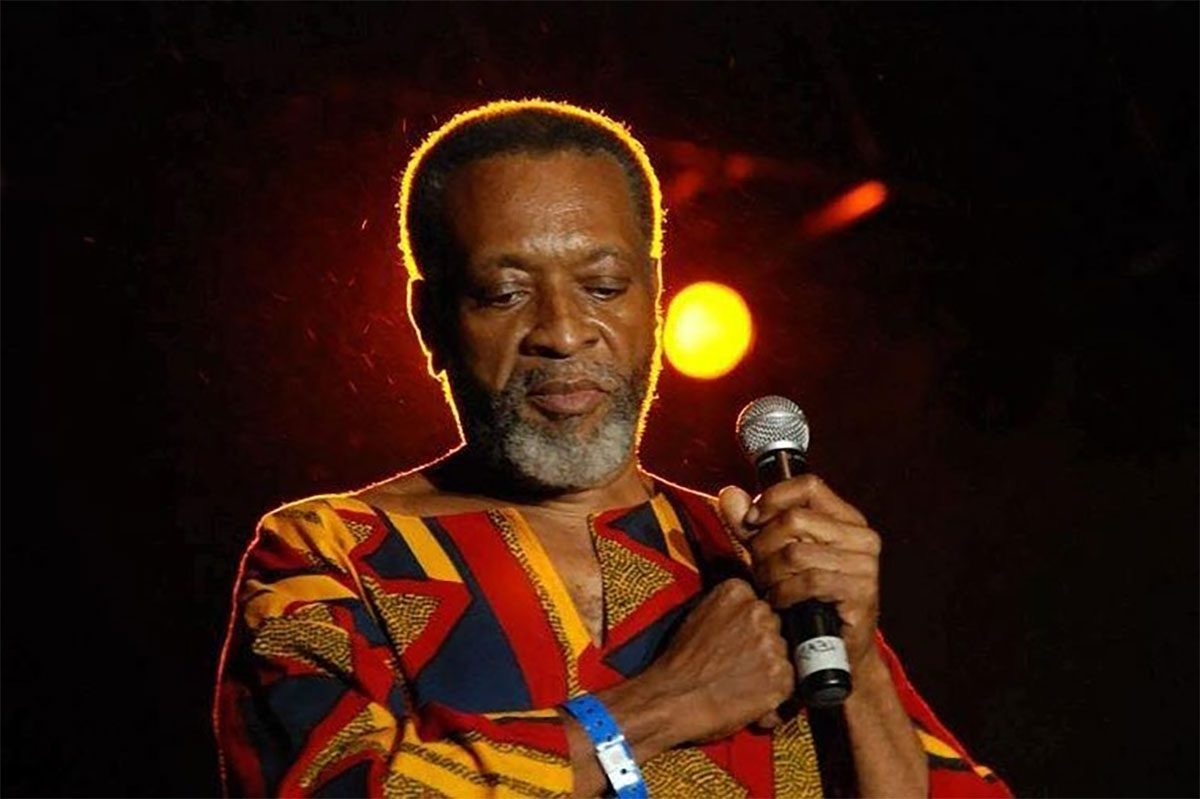
In 1987, the anthem was re-recorded by Murvin for one of digital dancehall’s key architects, King Jammy, reimagined for a new generation.
An acoustic version was also included on the 2007 album Inna de Yard, and a new version was released in 2008 on a Ralston Brown-produced single.
Other covers include a drum and bass rendition by the group Dubversive in 1997, a version by Foo Fighters singer Dave Grohl for the Reno 911!: Miami film, and further covers by The Orb, Charlie Harper of the UK Subs, and Culture Club.
Junior Murvin died at the Port Antonio Hospital in Portland, Jamaica, on December 2, 2013. He was 67 years old.
His 1976 hit “Police and Thieves” had earned him international acclaim, and a year after its release it was covered by The Clash on their debut album.
The “Police and Thieves” meaning ultimately rests on a simple, timeless truth: that when authority becomes indistinguishable from the lawlessness it claims to oppose, it is the community that suffers.
Murvin articulated that truth over a sublime roots rhythm built in a single Kingston afternoon, and the world has been listening ever since.