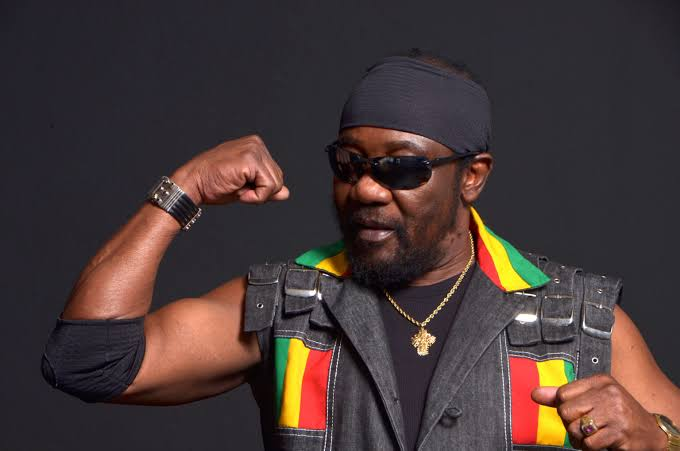

The question of what “54-46 Was My Number” means has a direct, verifiable answer: 54-46 was Frederick “Toots” Hibbert’s inmate identification number during a period of incarceration in the 1960s.
Written from firsthand experience and delivered with the raw intensity of a man who believed he had been framed, the song became one of the most significant records in the history of Jamaican music.
A follow-up version released a year after the original, “54-46 Was My Number” was one of the first reggae songs to receive widespread popularity outside Jamaica and is seen as one of the defining songs of the genre.
Who Were Toots & The Maytals?
Before unpacking the song itself, it helps to understand the stature of the man who wrote it. Frederick “Toots” Hibbert was born on 8 December 1942 in May Pen, Jamaica.
His parents were both strict Seventh-day Adventist preachers, so he grew up singing gospel music in a church choir.
During the 1960s, working first in the ska and rocksteady styles, Hibbert’s three-piece vocal group the Maytals, formed with Henry “Raleigh” Gordon and Nathaniel “Jerry” Mathias in 1962, were the biggest act in Jamaica.
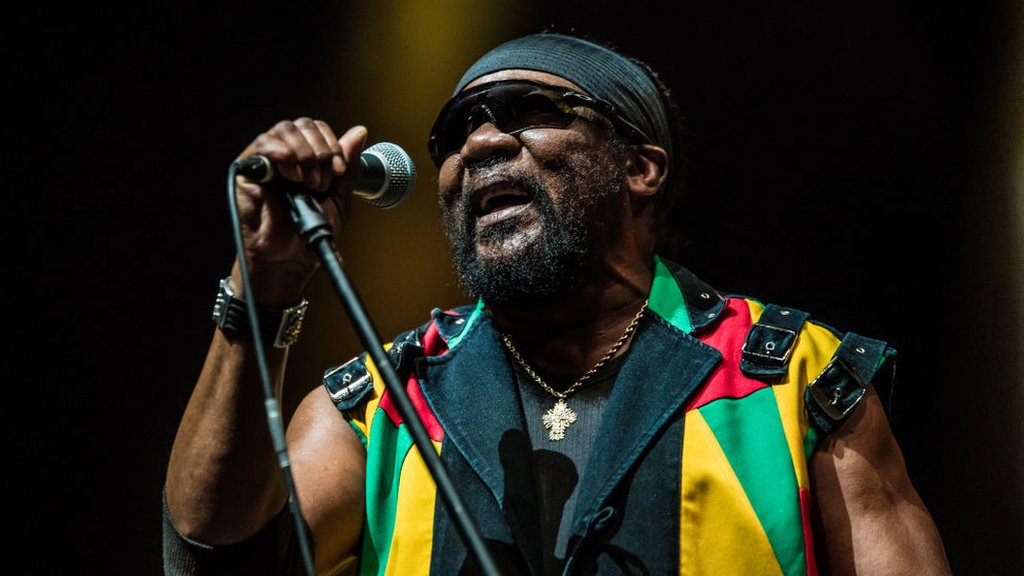
Hibbert’s legacy extends beyond any single song. His 1968 song “Do the Reggay” is widely credited as the genesis of the genre name reggae. It was the first popular song to use the word “reggae” and defined the developing genre by giving it its name.
At that time, “reggay” had been the name of a passing dance fashion in Jamaica, but the song’s connection of the word with the music itself led to its use for the style of music that developed from it.
Hibbert passed away on 11 September 2020 at the age of 77, the reggae giant who helped bring the genre to the world with the pioneering Maytals.
The True Story Behind the Number 54-46
The lyrics describe Toots’ time in prison after being arrested for possession of marijuana. The precise circumstances, however, are disputed, and Toots maintained his innocence for the rest of his life.
The imprisonment of Frederick “Toots” Hibbert shortly after he won the inaugural Festival Song Competition is viewed by the singer as a deliberate attempt to sabotage his career.
He was imprisoned at the Richmond Farm prison on a marijuana possession charge after winning the competition in 1966 with “Bam Bam.” It destroyed his prospects of going on his first overseas tour.
The length of the sentence is itself a matter of some dispute across sources. Wikipedia’s account of the band states the group’s musical career was interrupted in late 1966 when Hibbert was jailed for 18 months for possession of marijuana.
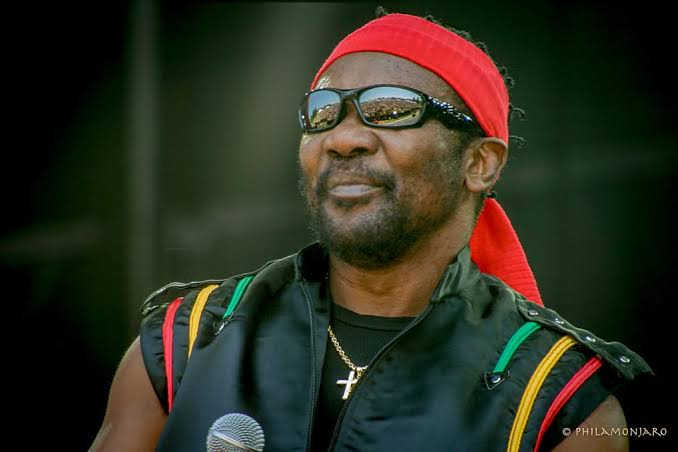
However, Hibbert himself told a different story. In his own words, he served approximately eight months, not the full sentence of 18 months, and insisted he had never smoked herb at that point. He noted he was not yet 18 years old at the time, and his life up to then was all about the Church.
Toots was unequivocal about what he believed had happened. According to Hibbert, as quoted in the book Reggae Routes, “The arrest was a thing that was planned, but I didn’t know about it until a policeman told me afterwards.
A promoter planned it. They didn’t want me to go to England and hit first. That act affected my career seriously because I was about to go on the biggest tour of my career.”
In a 2020 interview with Uncut magazine, Toots was equally direct. He told the publication: “I never smoked weed in those times. I never do nothing like that. They bring me to a special place, where I have my own clothes, I got my own food from my home, I got my guitar, I got all the comforts that I have at home.
They get to hold me back from my success.” He described the conspirators in elliptical terms: he said “it was three persons” he would not name, but believed “they all died now” and that “they were in the music industry, or something like that.”
Hibbert maintained his innocence throughout his life, insinuating it may have been a setup concocted by music-industry rivals, though he never went so far as to name names.
54-46 was Toots’ prisoner ID number during his incarceration; he made the recording shortly after his release. 54-46 was simply his inmate prison number.
The title is therefore not a metaphor or coded phrase; it is a literal serial number stamped onto a man who believed the justice system had been weaponised against him.
The defiance embedded in reclaiming that number as the title of a triumphant piece of music is central to the song’s power.
Two Songs, One Story: “54-46 That’s My Number” vs. “54-46 Was My Number”
A common source of confusion is that two related but distinct recordings carry nearly identical titles.
The original, “54-46 (That’s My Number),” was released on 1 January 1968, produced by Leslie Kong, and released on the Beverley’s label in Jamaica and the Pyramid label in the UK. It was a huge reggae hit in Jamaica.
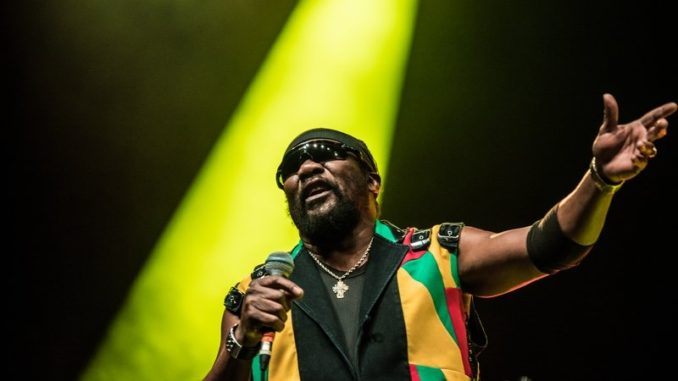
The original features a riddim drawn from “Train to Skaville” by the Ethiopians. A follow-up version released a year later, “54-46 Was My Number,” was one of the first reggae songs to receive widespread popularity outside Jamaica. Toots and the Maytals later included that track on their 1973 international album In the Dark.
There are also variations in how the title appears on record labels. Early Jamaican single releases have the title as “5446 Was My Number” and “‘5446’ Was My Number,” while the first UK release used “54-46 Was My Number.” Listeners and collectors should be aware that they are dealing with a family of closely related recordings rather than a single definitive version.
What the Lyrics Mean
The song functions simultaneously as personal testimony, protest against injustice, and defiant celebration of survival.
The central lyric, which gives both versions their title, asserts ownership of the prison number that the authorities assigned to reduce Hibbert to a statistic. By singing the number back at the world, he reclaims his identity.
After a show in 1966, Toots was arrested and jailed for one year for marijuana possession. He insisted he was framed.
The lyrics, written and shaped by that experience, carry the character of a man justifying himself before an audience he trusts more than any court.
He positions himself not as a criminal but as a victim of deliberate sabotage, and the arrangement, rooted in American soul and funk as much as in Jamaican rhythm, amplifies that righteous indignation.
Fredrick “Toots” Hibbert had not just one of the greatest voices in reggae, but one of the all-time great voices in popular music.
He was unique among the major reggae stars because rather than focusing on reggae’s otherworldly one-drop backwards beats, his music instead emphasised the connection reggae had with the soul and funk pouring out of the U.S., especially James Brown and Otis Redding, both of whom come through loud and clear on “54-46 Was My Number.”
Upon his release, Toots and the Maytals recorded “54-46, That’s My Number,” a song of righteous indignation inspired by Hibbert’s incarceration that became the group’s first major hit outside Jamaica. The song was actually written during his prison sentence.
The writing process in confinement gave it an immediacy that studio-constructed songs rarely achieve; the number was not chosen for artistic effect but because it was the only number that mattered to Hibbert at that moment in his life.
Legacy and Cultural Footprint
Toots and the Maytals’ “54-46 That’s My Number” became the first international reggae hit, establishing the group’s presence outside Jamaica and defining the early sound of the genre.
The song’s impact was so totemic that the title itself became shorthand for the Maytals’ entire catalogue: it has been anthologised repeatedly and the titles of several reggae anthologies include “54-46” in their title, including Trojan Records’ two-disc retrospective 54-46 Was My Number: Anthology 1964-2000.
The song’s commercial certification confirms its enduring reach. The “54-46 (Was My Number)” recording has been certified Gold in the United Kingdom by the BPI, representing 400,000 units, and Gold in New Zealand by the RMNZ, representing 15,000 units.
The closing refrain of The Clash’s 1978 track “Jail Guitar Doors” features Joe Strummer singing “54-46 was my number, right now someone else has that number” in tribute to this song.
That a group as lyrically rigorous as The Clash chose to embed the lyric into their own work about wrongful imprisonment speaks directly to how universal the song’s theme of institutional injustice had become in the hands of Toots Hibbert.
The song’s bassline proved irresistible to a new generation of UK producers. Rebel MC and Double Trouble’s “Street Tuff,” released in 1989 on the Desire label, became a commercial success and the biggest hit of both performers’ careers, peaking at number three on the UK Singles Chart.
The track contains samples of both “54-46 That’s My Number” and “54-46 Was My Number” by Toots and the Maytals.
The reach of “54-46 Was My Number” extends well into screen culture. The song appears in the sci-fi film Repo Men and in the television series Narcos: Mexico. It is also used as the soundtrack to the opening titles of Shane Meadows’ 2006 film This Is England.
Each placement reinforces the song’s core theme: authority, confinement, and the individual pushing back against a system designed to erase them.
On 29 November 2016, Major Lazer and Bad Royale released “My Number,” a track that samples “54-46 That’s My Number.” Pitchfork describes the original as “a genre-defining classic from legendary ska/reggae group Toots and the Maytals.”
The 2016 release contains newly recorded vocals from Toots Hibbert specifically designed for Major Lazer, changing the original lyrics to incorporate the group into the song while keeping the original melody.
Later in life, Hibbert won the 2005 Grammy Award for Best Reggae Album for True Love. Each song on the record was a collaboration with some of his biggest fans, among them Eric Clapton, Bootsy Collins and The Roots, Willie Nelson, Keith Richards and Jamaican greats Shaggy, Marcia Griffiths and Ken Boothe.
Why “54-46 Was My Number” Still Matters
Nearly six decades after it was first recorded, the “54-46 was my number” meaning remains as legible as it was in 1968: a person reduced to a number by institutional power refuses to stay reduced.
Pitchfork has described it as “a genre-defining classic.” The song’s life across film soundtracks, punk records, hip-house charts, and streaming playlists in 2026 is proof that righteous indignation, delivered with great soul, does not age.
Toots Hibbert turned the ugliest episode of his early career, an imprisonment he believed was engineered to silence him, into the record that introduced reggae to the world. The number 54-46 no longer belongs to a prison ledger. It belongs to the music.