

The sleng teng story begins not in Kingston but in a Casio office in Tokyo, and it ends with a genre reborn. Introduced in 1985 through “Under Mi Sleng Teng” by Wayne Smith and produced by King Jammy, the Sleng Teng riddim marked a definitive shift from live instrumentation to computerized production that no one in the reggae world had asked for, and no one could ignore once it arrived.
Forty years on, the track remains the clearest dividing line in the history of Jamaican popular music: analog before, digital after.
Part One: The World Before Sleng Teng
Before 1985, dancehall was primarily analog. The late 1970s and early 1980s saw a raw, gritty evolution of reggae music that focused on stripped-down rhythms, often performed in dance halls rather than on big sound stages.
Artists like Barrington Levy, Yellowman, Eek-A-Mouse, and Josey Wales had made their names riding live bands and dub-heavy roots rhythms.
In the late 1970s and early 1980s, Jamaican dancehall evolved out of roots reggae and sound-system culture, with live or semi-live “rub-a-dub” bands backing deejays.
Dub’s studio experimentation and sound-system competitiveness primed producers to adopt new technology as soon as it became accessible and rugged enough for dancefloor use.
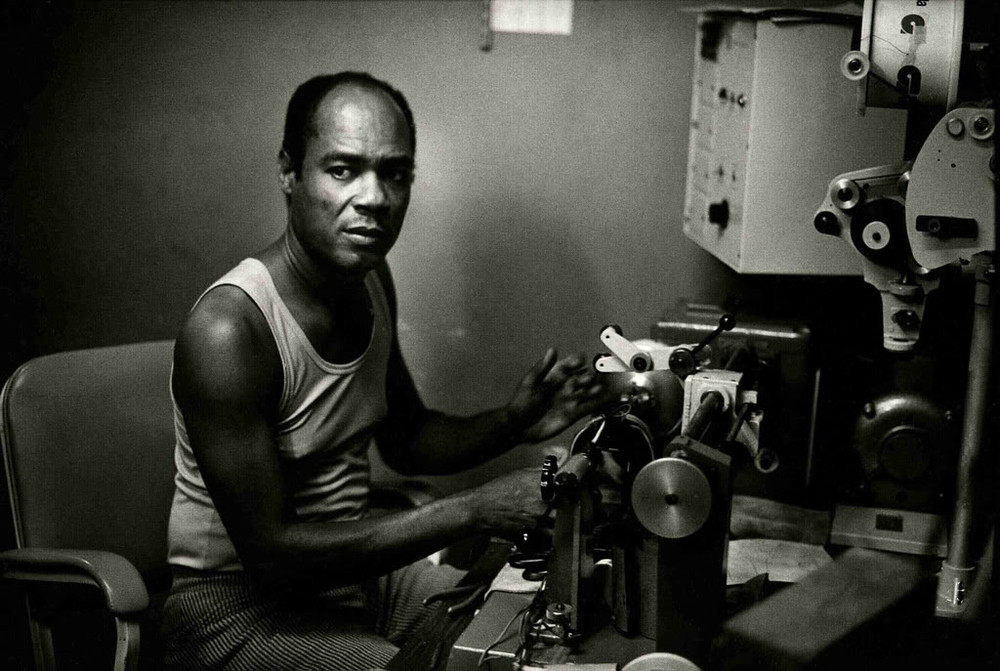
Into this world stepped Lloyd James, the producer at the center of the sleng teng story. While he established his credentials during the 1970s and early 1980s, when he was known as Prince Jammy, through seminal production work for Black Uhuru and Sugar Minott as well as dub albums with genre pioneers King Tubby and Scientist, he singlehandedly changed the face of reggae with his all-electronic production of Wayne Smith’s 1985 hit “Under Me Sleng Teng,” ushering in the digital dancehall era.
His studio was located in Waterhouse, a dense, musically fertile neighborhood on the western edge of Kingston. It was there that a teenage singer named Wayne Smith had already found his footing.
Smith performed with sound systems and began recording in 1980 at age 14, initially working with producer Prince Jammy, his next-door neighbour, who produced his debut album Youthman Skanking (1982).
Part Two: The Keyboard That Nobody Wanted
In mid-1984, Jamaican musician George “Buddy” Haye went on tour in the United States with the Wailing Souls.
Before he left Jamaica, Buddy had promised a young musician named Noel Davey that he would buy a synthesizer while in the United States and bring it back to him.
Davey was hoping for a Yamaha DX7 synthesiser, but Haye returned with the much cheaper Casio keyboard, which was not a synthesiser at all. What Haye brought back was a Casio Casiotone MT-40.
Launched in 1981, the cream machine came with 37 keys, 22 different instrument sounds, six onboard rhythms and a dedicated mini bass keyboard.
Overall, the MT-40 looked very much like a toy instead of a serious musical instrument, but it did come with a very low price tag. The Casiotone MT-40 sold for 35,000 yen.
The sleng teng story has a hidden chapter that remained secret for decades. The preset was composed in 1980 by a then newly hired music engineer at Casio named Okuda Hiroko.
Okuda joined Casio in April 1980, upon graduation. Her first assignment was to develop six two-bar rhythm and bass preset backing tracks which would be used in the Casio MT-40 and Casio’s other contemporaneous keyboards.
The six styles were “rock,” “samba,” “disco,” “waltz,” “swing,” and “pop.” The “rock” style was soon to be made famous in Jamaican dancehalls.
Okuda had been hired fresh out of music school, where she had produced one of Japan’s first graduate theses on reggae.
In 2022 she described herself as having been immersed in reggae for several years before her 1980 hire by Casio; the previous year, during Bob Marley’s only visit to Japan, Okuda had attended more than three performances from the tour.
That reggae obsession, she later suggested, was not incidental. Okuda says: “In those days, my head was full of reggae. Even when I was trying to come up with a rock beat, I think it just naturally came out as something that would work in reggae as well.”
The process Okuda used to create these presets was highly technical and far removed from traditional musical composition.
To compose the presets involved converting “a musical score into code, recording the code onto a ROM, and then inserting the memory into a specialized machine. Only then could you listen to the rhythm pattern you had written.”
There has been longstanding speculation over which rock song, if any, the preset was modeled on. The preset is not based on the Eddie Cochran track, as some have claimed.
Nor, as others theorize, was it a facsimile of the Sex Pistols’ “Anarchy in the UK.” The question of the preset’s ultimate source remains unresolved, and Okuda has declined to name a specific influence.
To the present day, Casio’s response to clearance requests for the “rock” preset has been an acknowledgement that the song “uses a sound file taken from a Casio MT-40,” and no fee.
Part Three: Building the Riddim
In mid-1984, Davey and Wayne Smith arranged the first version of the Sleng Teng riddim, which was considerably faster than the final release.
Legend has it that the pair discovered the preset by accident but lost it, then spent two weeks trying to find it again.
Smith then rehearsed a toast over the riddim, with lyrics inspired by Barrington Levy’s “Under Mi Sensi,” a hit in 1983.
Davey and Smith brought the riddim and toast to noted producer and dub mixer King Jammy in December of 1984.
Jammy slowed the riddim down, matched it to Smith’s singing key and placed piano and clap tracks over it.
In his own words, King Jammy described the moment Davey and Smith arrived at his studio: “It was created at my studio really, by Noel Davey and Wayne Smith who brought it to my studio and they didn’t know how to get the tempo right, to get it to the reggae tempo. A me play the percussion tempo on it,” King Jammy told World Music Views.
While Jammy recalled knowing immediately that he had helped create something special once he listened to the final mix, he also said he was still completely unprepared for the response to “Sleng Teng”‘s first public performance. The riddim was entirely digital, with no live instruments used.
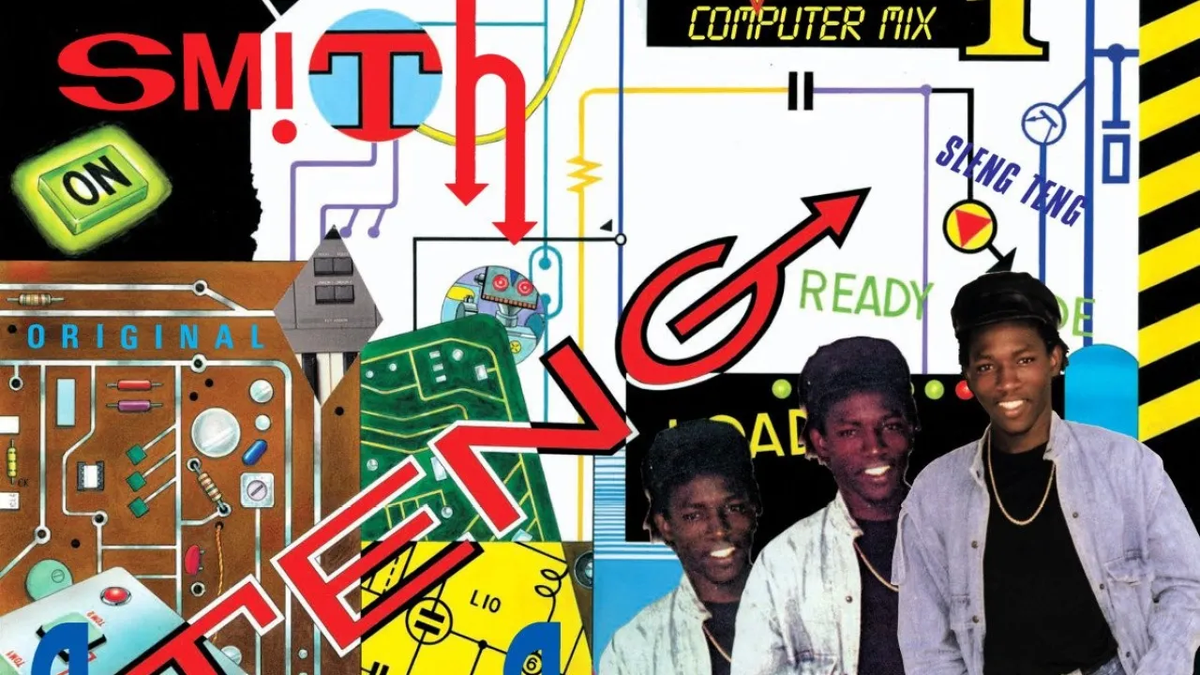
The final single was credited to songwriters Ian “Wayne” Smith, Noel Davey, and Lloyd “King Jammy” James, and released on Jammy’s label in a deal with Greensleeves Records. In Jamaican patois, “sleng teng” refers to a cannabis cigarette and also a slim attractive woman.
Part Four: The Night Everything Changed
The sleng teng story reached its public detonation point not on radio or in a record shop, but at a sound clash.
On the night of 23 February 1985, a soundclash to end them all was in full swing on a big lawn off Waltham Park Road in Kingston, Jamaica.
Black Scorpio sound system’s Jah Screw kicked off the event with an onslaught of fresh dubplates from the likes of Frankie Paul, Johnny Osbourne and Earl Sixteen.
A heaving crowd begged for more as the mic passed down a lineup of deejays, from General Trees to Sassafrass to Culture Lee, all hyping the dancers into a frenzy.
Across the park, Lloyd “King Jammy” James looked beyond the sea of bouncing heads, to his opponents, Black Scorpio, who were slaying the session before him.
He should have been worried, but Jammy had a trick up his sleeve, and handed a freshly cut dubplate to his selector, Tupps, who placed the thick black slate on his turntable and dropped the needle.
Jammy won the clash by acclamation, with the audience demanding “Under Mi Sleng Teng” be played over and over.
According to Jammy, the opposing sound, Black Scorpio, had to “lock off the sound” because no one wanted to hear Scorpio anymore.
The reach of Sleng Teng that same night extended far beyond that Kingston lawn. The riddim also featured prominently in Barry G and David Rodigan’s on-air radio soundclash which was broadcast on the same day by JBC in Jamaica and Capital Radio in London.
By February 1985, it was rising in the UK reggae charts as well as spawning copycat versions of the riddim on other labels.
Part Five: The Fallout
Other reggae artists, such as Tenor Saw and Johnny Osbourne, recorded hits of their own over the instrumental, known as the Sleng Teng riddim, inspiring a run on further computerized dancehall tracks.
Built on a preset from the Casio MT-40 keyboard and augmented with drum machine programming, “Sleng Teng” showed that a fully computerized riddim could mash up dances, triggering a rapid shift away from live backing towards drum machines, synth basses, and digital stabs. Within months, dozens of versions appeared, and the “computerised” sound swept Jamaica.
The ensuing transition from live instrumentation to digital production sent shockwaves through the Jamaican music business, putting studio musicians out of work and contributing to the downfall of top Kingston studios such as Channel One, according to David Katz’s 2003 reggae history Solid Foundation.
Sleng Teng opened the door for producers and musicians with limited access to traditional studios. All that was needed was a drum machine or keyboard, making it possible to produce dancehall riddims from small studios or even bedrooms.
It is worth treating the “first fully digital riddim” designation carefully. Calling the Sleng Teng the absolute first digital dancehall riddim is a claim worth treating carefully.
Other Jamaican artists and producers were already experimenting with electronic and computerized rhythms, and Anthony Red Rose has long argued that his “Tempo,” recorded at King Tubby’s, preceded Sleng Teng. What is not in dispute is that the Waltham Park Road clash made Sleng Teng the track that converted the entire industry.
The success of “Under Mi Sleng Teng” cemented a new identity for its producer. Many credit this song as reggae’s first digital rhythm, leading to the modern dancehall era and Prince Jammy’s recognition as King Jammy.
Part Six: The Riddim’s Reach, Then and Now
The Sleng Teng riddim took the Jamaican riddim tradition to an unprecedented scale. Named after the song in which it was first used, it has inspired as many as 450 different songs, with some estimates placing the total even higher.
The rhythm influenced early UK jungle and ragga scenes, became a staple in hip hop sampling, and found its way into pop and electronic music globally. Its success is widely credited with single-handedly transitioning reggae from analog to computerized production.
This transition to digital music production using synthesizers, drum machines and samplers prefigured the computerization of hip-hop music, which, like reggae, had been recorded with a band and traditional musical instruments.
A trail extends beyond ragga, beyond jungle and into grime and dubstep. The change to digital was to have long-term effects in music, namely in its significant influence on ragga and the creation of jungle music, rave and drum and bass.
The legacy of the MT-40 lives on in later Casio keyboards, such as the SA-46 and SA-76, where the Sleng Teng “rock” preset has been included under the name “MT40 riddim.”
For decades, the woman who authored the preset remained silent. For over 40 years, Hiroko chose to have her name and face veiled from the public but finally broke her silence with her first worldwide radio interview with BBC Outlook.
Okuda only learned of her part in “Under Me Sleng Teng”‘s global success in August 1986, when she read an article titled “The Sleng Teng Flood” in Japan’s Music Magazine.
The article described the wave of dozens and dozens of reggae songs being produced in Jamaica, all based on a Casiotone keyboard preset.
In her own words: “People in Jamaica discovered the preset rhythm I created for the MT-40 and used it to make one great song after another.
This product, which sold for just 35,000 yen, made it easier for people to make and record their own songs, and also led to digitalization, which injected new life and energy into reggae.”
The recognition culminated in the International Music Journalism Award 2022 for the Nippon.com feature covering her story.
Part Seven: Wayne Smith, the Voice at the Center
Wayne Smith was born Ian Flemmings Smith on 5 December 1965 in Kingston, Jamaica. Despite being the voice most associated with the sleng teng story, Smith spent much of his later career in relative obscurity, never replicating the commercial scale of that 1985 breakthrough.
Smith was admitted to Kingston Public Hospital on February 14, 2014 with severe stomach pains, suffered a heart attack, and died on February 17, 2014, aged 48. He was survived by five children and three grandchildren.
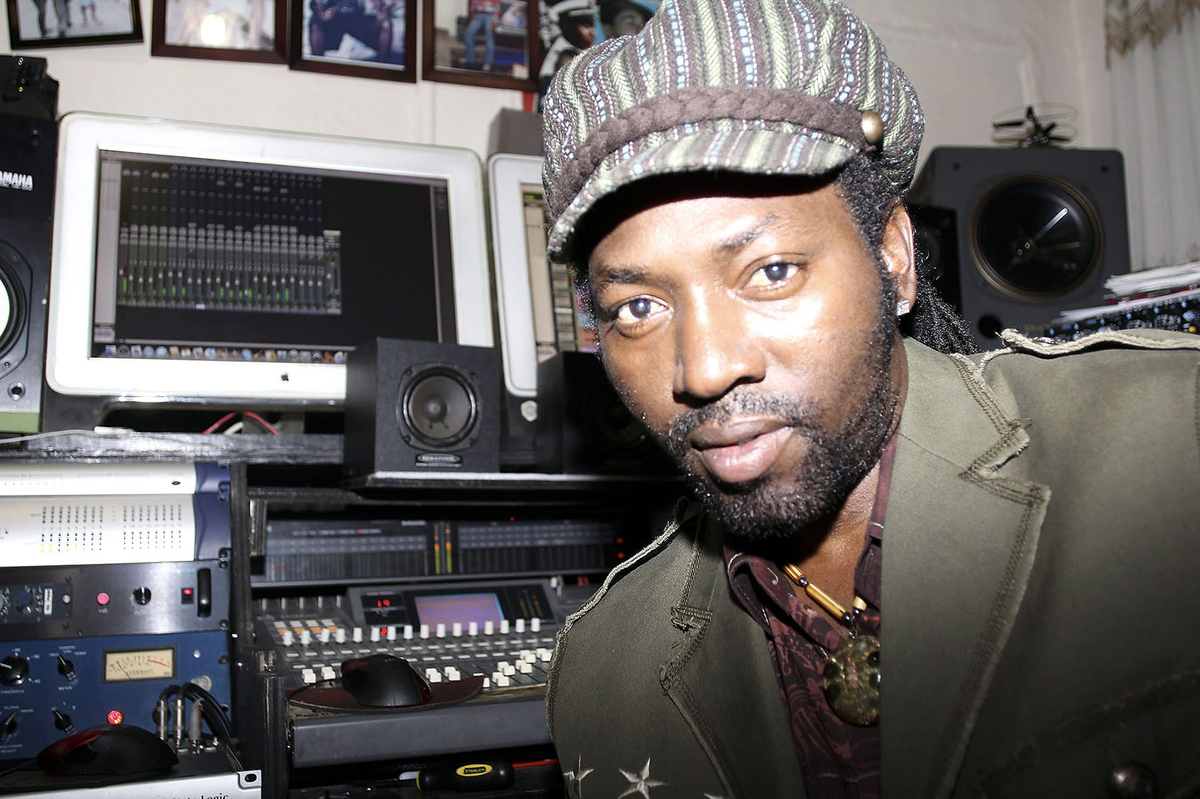
Wayne Smith, the reggae vocalist whose 1985 single “Under Mi Sleng Teng” reshaped Jamaican music by popularizing digital production in the genre, died in Kingston at the age of 48.
His death prompted an outpouring of recognition for a contribution that had quietly shaped the sound of popular music far beyond Jamaica’s shores.
The Sleng Teng Story, 40 Years On
Four decades after a Casio keyboard preset traveled from a Tokyo office to a Waterhouse studio to a Kingston lawn, the sleng teng story has lost none of its instructional power. It is a reminder that the most consequential technological shifts in music rarely announce themselves as revolutions.
They arrive in the hands of people who are simply looking for a sound, on equipment they did not necessarily choose, shaped by an engineer who did not know her work would outlive her career.
More than forty years after its release, the Sleng Teng riddim stands as the clearest dividing line in dancehall history: analog before, digital after.
Every producer who has ever loaded a digital audio workstation, triggered a drum machine, or voiced a riddim without a live band owes something to the cheap Casio keyboard that Wayne Smith and Noel Davey found their way to in 1984, and to the Waterhouse studio where King Jammy heard the future and turned up the volume.