

The diwali riddim is one of the most consequential backing tracks in the history of popular music.
Built from a cascade of syncopated handclaps and rooted in the sonic traditions of South Asia, it propelled multiple simultaneous Billboard Hot 100 hits in 2003, introduced dancehall to a generation of mainstream listeners, and continued casting its shadow over global pop for two decades afterward.
If you have ever heard Sean Paul’s “Get Busy,” Wayne Wonder’s “No Letting Go,” or Rihanna’s “Pon De Replay,” you have heard the diwali riddim.
Who Made the Diwali Riddim? Meet Producer Steven “Lenky” Marsden
In 1998, Steven “Lenky” Marsden, a keyboardist in dancehall star Buju Banton’s band, created a beat out of swirling, syncopated handclaps, synth hits, and a winding sitar riff.
The concept was unconventional by the standards of Jamaican dancehall at the time.
Though Lenky prided himself on being a musician above all, by the late 1990s he was interested in producing new sounds and was encouraged by Sly and Robbie to toy with different elements in order to create his own magic. “At the time, regular dancehall beats were similar to the ones from the ’80s,” he explained.
The result was a rhythm that did not sound like anything else on the island. Named after the Hindu festival of lights, it consists of a series of distinct, syncopated handclaps, a hypnotic sound harking to the music played at Punjabi folk dances called Giddha.
The rhythm which ties the handclaps and Giddha together is also characteristic of that commonly associated with the Dhol, a large, double-headed drum whose origins can be traced back to the 15th century, first used in the ceremonies of Sufi mystics and their followers.
Despite its originality, the beat initially struggled to find takers. Marsden explained that he initially struggled to get artists to take part in the production as they labeled it “the loud rhythm with the annoying clap.”
The diwali riddim was originally produced back in 1998 by Lenky, but because Dave Kelly was dominating the dancehall scene in the 1990s, dancehall was not ready to receive the sound at that time.
The 2002 Compilation: Greensleeves Rhythm Album #27
Steven “Lenky” Marsden’s diwali riddim landed in 2002 on Greensleeves Rhythm Album #27 and through 40/40 Productions, the label Marsden founded after years as a musician and sideman. The compilation was released on May 21, 2002, on the Greensleeves label.
The 2002 compilation Greensleeves Rhythm Album #27: Diwali survives as a testament to Marsden’s defiant attitude. It traces the contours of dancehall culture at the beginning of the millennium across 19 diwali-backed tracks.
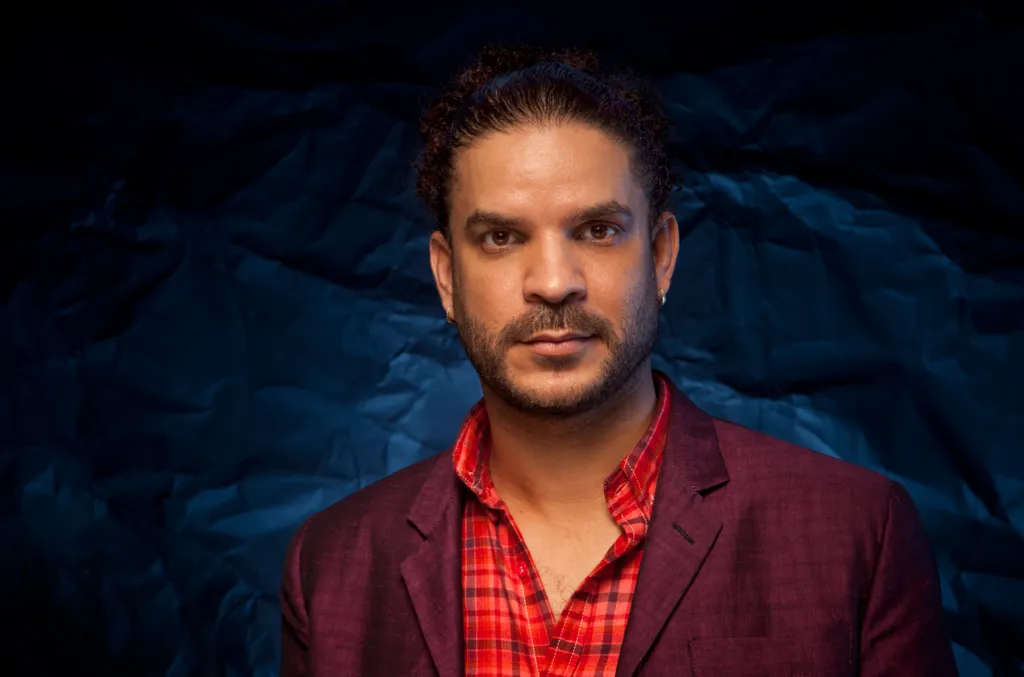
Rather than put diwali into mass production, Lenky decided early on that he would overdub the track to create variations more suited to the individual styles of his collaborators. This move not only showed the range of his talent but also increased the shelf life of the track.
Though the rhythm itself does not change, “Get Busy” features the addition of keyboard synths and vocal sound effects, while the claps do not appear until the chorus of “No Letting Go,” providing a strictly R&B vibe until then.
The New York Times described the riddim as “one of the most popular reggae rhythms of all time, spawning hits, sequels and inevitably rip-offs. If ever there was a beat that deserved its own Behind the Music, this is it.”
Every Major Song on the Diwali Riddim
Get Busy” was originally released as a 7-inch single in 1999, then released internationally in 2003, topping the US Billboard Hot 100 for three weeks that May.
Thanks to a major boost in airplay, Sean Paul’s “Get Busy” ended the nine-week reign of 50 Cent’s “In Da Club” on Billboard’s Hot 100.
The song also reached number one in Italy and the Netherlands, becoming a top-10 hit in an additional 11 countries. In the UK, the single peaked at number four and spent five weeks in the top ten.
The song was the only track on the diwali riddim that never made the “Diwali” rhythm album on Greensleeves Records.
Marsden later recalled how late Paul actually came to the project: “Sean Paul come when the riddim done and done buss…and him get number one,” said Marsden.
Reggae and R&B artist Wayne Wonder utilized the diwali riddim on his 2003 hit “No Letting Go.” Wonder was one of the first major artists to come calling once the beat began circulating.
Wayne Wonder, who was in New York at the time, called Lenky and said he loved the riddim and had a tune for it. Wonder flew to Jamaica the next day to record “No Letting Go.” The song peaked at number 16 on the Billboard Hot 100.
Three songs featuring diwali — Sean Paul’s “Get Busy,” Lumidee’s “Never Leave You (Uh Ooh, Uh Ooh),” and Wayne Wonder’s “No Letting Go” — hit the top 20 on the Billboard Hot 100 during a three-month span in mid-2003, undeniably making it the defining beat of the year. Lumidee’s “Never Leave You” peaked at number three on the Billboard Hot 100 later in 2003.
Busta Rhymes also featured on the remix of Lumidee’s “Never Leave You (Uh Oooh, Uh Oooh),” fusing hip-hop with Caribbean flavors.
The moment of peak saturation on the charts was historic. On May 31, 2003, Lenky had three placements in the top 20: “Get Busy” at number one, “Never Leave You” at number three, and “No Letting Go” at number 19. With that, the so-called annoying, clappy-clappy riddim had made chart history.
Bounty Killer and Wayne Marshall’s “Sufferer” gives the riddim weight and social bite, while Sean Paul’s “Get Busy” turns the same pulse into a full-blown party anthem.
It stands as one of the more musically serious cuts on the original compilation, demonstrating the riddim’s tonal range.
T.O.K.’s “Galang Gal” is among the foundational cuts on the original Greensleeves compilation. Elephant Man, Beenie Man, Bounty Killer, Wayne Wonder, and T.O.K. all used the riddim.
The track showcases T.O.K.’s signature group harmonics draped over Lenky’s handclap architecture, making it a popular selection on the original album.
Cecile’s “Respect Yuh Wife” is one of the original compilation’s standout female-voiced cuts, demonstrating that the riddim was capacious enough to accommodate social commentary from dancehall’s women alongside the party anthems.
Another album original, Tanya Stephens contributed “Can’t Touch Me No More,” adding her characteristically sharp lyricism to the diwali frame. Both the Cecile and Tanya Stephens cuts appear on the original Greensleeves pressing.
In the UK, Jay Sean and Juggy D’s “Dance With You,” produced by Rishi Rich, was a collaboration between three Punjabi desi diasporic artists from the south of England, and the B-side features a rare “Diwali Dancehall” 12-inch remix of the single featuring Wayne Wonder.
The microphone baton passes between Wonder and Jay Sean over a virtually untouched version of the original diwali riddim, save for some accentuated Tumbi elements.
“Pon De Replay” is the debut single by the Barbadian singer Rihanna from her debut album Music of the Sun, released on May 24, 2005. It was written and produced by Vada Nobles, Alisha Brooks, Carl Sturken, and Evan Rogers.
Rihanna’s debut single sampled key elements of the diwali pattern, crediting Marsden and integrating it into a pop-dance framework that reached number two on the Billboard Hot 100.
Brick and Lace’s “Love Is Wicked” was released to iTunes on May 22, 2007 as the second single from the duo’s debut album. The songwriting credits include Steven “Lenky” Marsden alongside Nailah Thorbourne, Nyanda Thorbourne, and Tasha Thorbourne.
Although their single “Love Is Wicked” was not released until 2007, Brick and Lace are among the artists most associated with the diwali riddim’s legacy.
Lenky’s diwali riddim was sampled in the runaway hit “Let Me Love You,” the Justin Bieber and DJ Snake collaboration. The single peaked at number six on the Billboard Hot 100.
Ed Sheeran further amplified the riddim’s influence in 2017 with “Shape of You,” where the riddim’s percussive loop underpinned the global hit’s tropical house vibe.
The song became one of the best-selling singles of all time, carrying the fingerprints of a beat conceived in a Jamaican studio nearly two decades prior.
The Sound Explained: What Makes the Diwali Riddim Unique
The riddim’s first defining characteristic is its sharp, handclap-driven pattern, rubbery low end, and bright, almost festive bounce, giving the whole thing a lifted, contagious feel that immediately separates it from the darker 2002 pull-up style.
Its cross-cultural DNA is inseparable from its appeal. To understand how the traditional instrumentation of the Punjabi region of pre-partition India and Pakistan came to be the blueprint for some of dancehall’s biggest crossover hits requires rewinding to the 1980s and tracing the migrations of South Asian musical traditions into the Caribbean and British diasporic communities.

The result is a riddim that, consciously or not, synthesizes centuries of percussion culture into a two-bar loop.
While dancehall artists gravitated to the beat first, the selling point of the diwali riddim across genre lines is its versatility, something that Lenky made sure of while crafting it.
That versatility is precisely why “Sufferer” sounds like social protest and “Get Busy” sounds like a beach party even though they share the same foundation.
Short of the 180 listed entries of the track on the Riddimbase archive, there are hundreds that use its infectious framework still waiting to be categorized.
Legacy: Why the Diwali Riddim Still Matters in 2026
Despite its commercial climax in mid-2003, diwali continues to thrive. The sound is so timeless and beloved that it all but guarantees chart placement five, ten, even twenty years after the fact.
Fast-forward hundreds of years and the diwali riddim has looped back on itself, with collaborations with UK desi diasporic musicians as well as US and Caribbean hip-hop, dancehall, and R&B artists.
The through-line connecting a 15th-century Sufi drum tradition to a 2017 Ed Sheeran global smash is, almost improbably, a single producer working in Jamaica in 1998.
Marsden has always kept perspective on what the chart success means to him personally. “I wasn’t doing it for no Billboard hits, I was doing it for the music,” the producer noted during an interview with World A Reggae.
As Marsden himself put it: “Diwali used a different set of overdubs on each song, that’s what made it unique and set it apart from other dancehall riddims in that time.
The beat was just an experiment, I was just trying to make something different and the rest, is history,” said Marsden, who is the founder of the Jamaica-based labels 40/40 Productions and Diwali Records.
The diwali riddim undoubtedly belongs in the pantheon of dancehall classics alongside other enduring tunes like Stalag/Bam Bam and Sleng Teng.
As a piece of recorded music, it is something rarer still: a beat so elemental that pop producers across three continents and two decades have kept returning to it, often without fully explaining why. The clap, it turns out, was never annoying. It was inevitable.